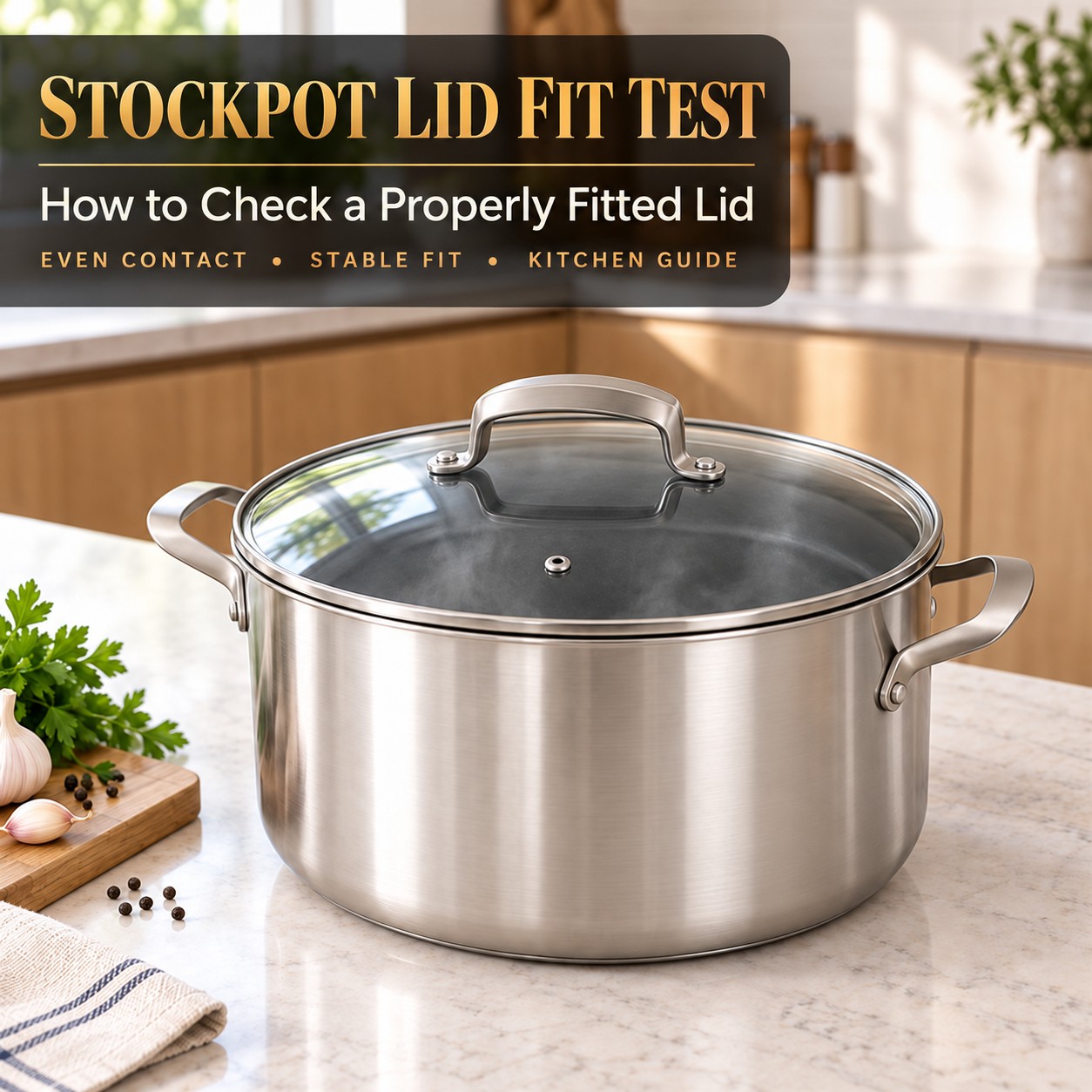
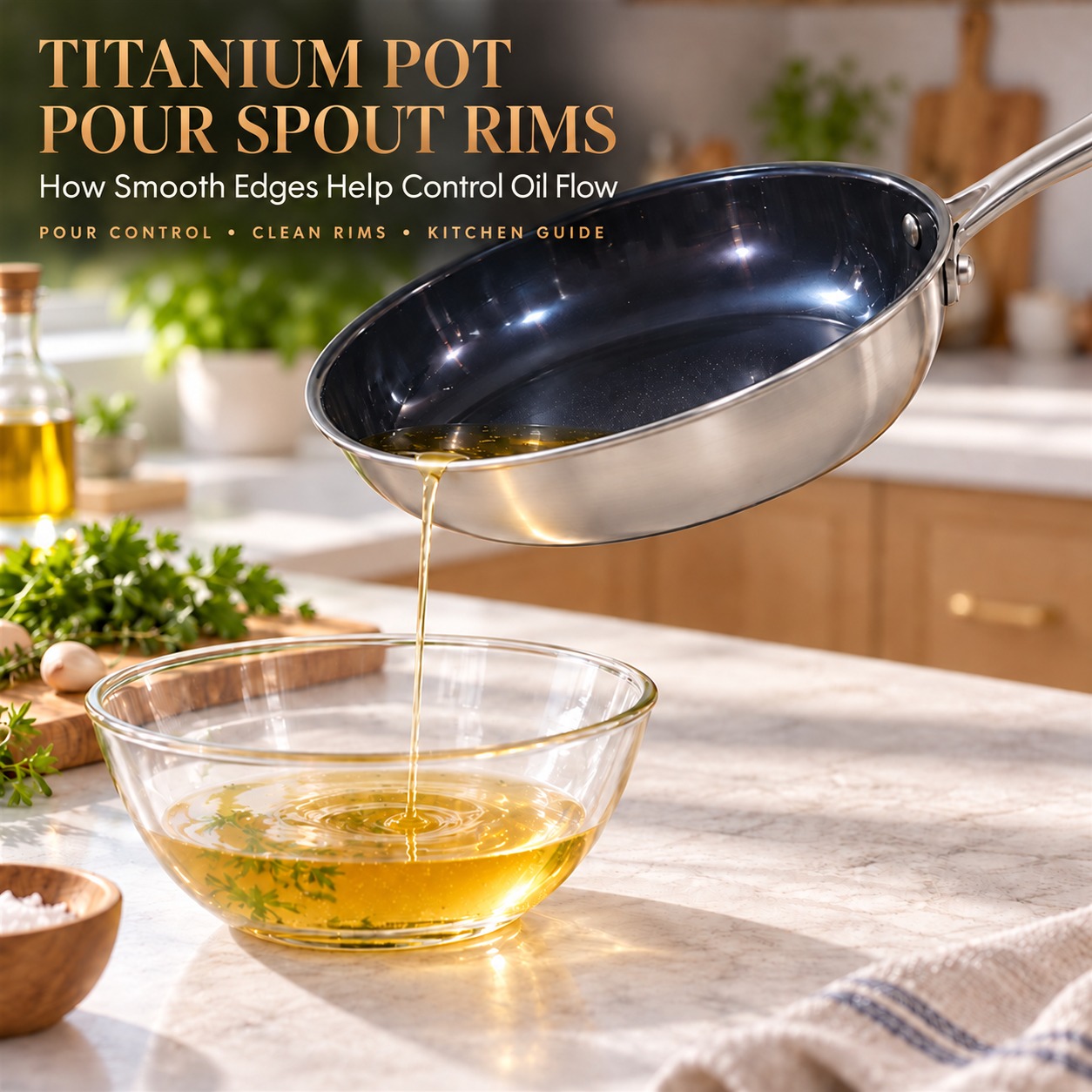
People usually ask about titanium vs Teflon cookware as if they are comparing two surfaces in the same category. They are not. Teflon usually means a PTFE-based nonstick coating. Pure titanium is a metal cooking surface. That difference changes both the cooking feel and the long-term cost.
If the question is “which one is cheaper today?”, Teflon usually wins. If the question is “which one costs less once I keep replacing pans?”, pure titanium often becomes the better value. The answer depends on how often you cook, how hard you use the pan, and whether you want to buy a coating or buy a surface that is meant to stay the same.
That is why this page should not be read as a generic nonstick review. It is a decision guide for buyers who want to understand the real tradeoff behind titanium vs Teflon cookware. For a deeper explanation of why titanium behaves well as a food-contact material, see Why Titanium Is Biocompatible for Food Contact.
1. What this comparison really means
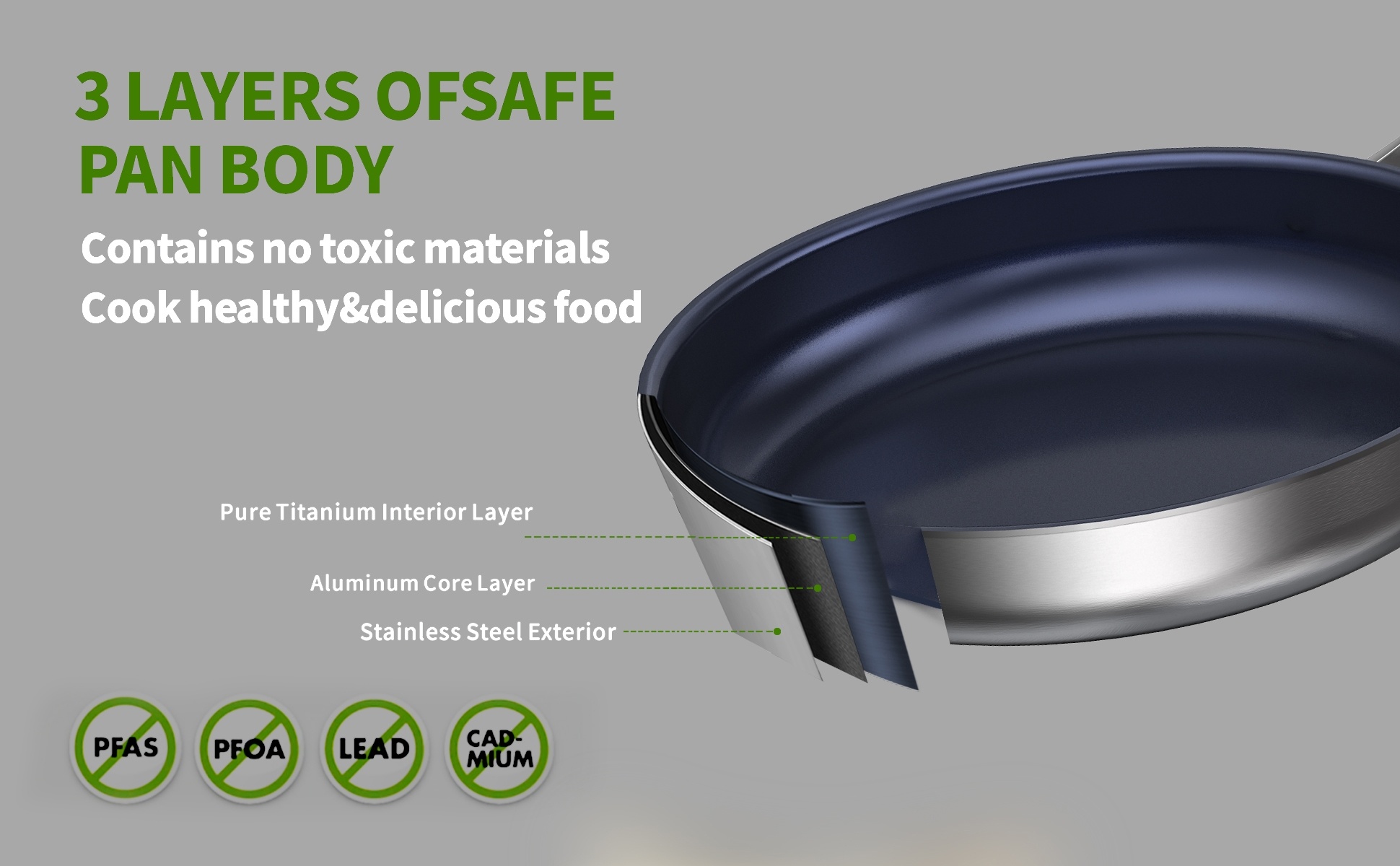
The first mistake is treating every product with the word titanium as if it were solid titanium. Some pans are truly made with a titanium food-contact surface. Others are titanium-reinforced nonstick pans, titanium-colored pans, or coated cookware that borrows the word titanium in the marketing copy. Those are not the same thing, and they should not be compared as if they were.
Teflon is different because it is not a metal surface at all. It is a nonstick coating system. That means the food is not touching a titanium sheet; it is touching a coating that has to stay intact if the pan is going to behave the way the buyer expects. Once that coating wears, the pan stops being the same product from a cooking standpoint.
So the real comparison is not “which label sounds better.” It is “do I want a lower-cost coating that performs well early, or a metal surface that asks for a higher starting spend but avoids coating failure?” That is the frame used by serious buyers, and it is the frame that makes the cost discussion useful instead of rhetorical.
If you want a related material comparison, the page on Pure Titanium Cookware vs Stainless Steel is a good next read because it helps separate material choice from coating choice.
2. Where Teflon costs show up over time
Teflon cookware looks inexpensive because the entry price is low and the first few uses feel effortless. Eggs slide. Fish releases. Cleanup is quick. That is the part consumers remember, and it is the reason PTFE cookware remains popular. But the price question changes once the pan becomes a repeated purchase instead of a one-time purchase.
The hidden cost is replacement frequency. A buyer may not notice the total spend when a coated pan is used only a few times a week. But once the coating loses release, becomes scratched, or starts to behave unpredictably, the user often replaces it rather than repairing it. That replacement cycle is the main reason Teflon can become more expensive than it looked at the start.
There is also a maintenance cost that does not always show up on a receipt. A coated pan asks for more caution: gentler utensils, lower heat, softer cleaning tools, and more attention to storage. None of that is impossible, but it is real friction. If the household or kitchen is busy, that friction becomes a practical cost even when nobody writes it down.
| Cost factor | Teflon/PTFE cookware | Pure titanium cookware | Buyer takeaway |
|---|---|---|---|
| Upfront price | Usually lower | Usually higher | Low entry cost favors PTFE |
| Replacement cycle | Can become frequent with heat, wear, and cleaning | Typically much less dependent on a fragile surface layer | Repeated replacement is where PTFE gets expensive |
| Heat discipline | Needs more control | Still benefits from good technique, but not because of a coating layer | Bad heat habits shorten coated-pan value faster |
| Cleaning sensitivity | Higher | Lower, if the pan is genuinely solid titanium | The more careful the care routine, the more the coated surface costs in time |
That table does not mean PTFE is always a bad purchase. It means the buyer should be honest about the full spend. If the pan is cheap but replaced often, the total cost rises. If the pan is used carefully and replaced rarely, PTFE can remain the right budget choice. The point is to compare the actual lifecycle, not the packaging price.
3. Why pure titanium costs more at the start
Pure titanium costs more because the buyer is paying for a more difficult material story. The metal itself is not just a cosmetic layer. It has to be sourced, formed, welded, finished, and checked in a way that keeps the food-contact surface honest. A thin coating can be easier to apply than building a real titanium surface that remains flat, usable, and consistent.
That is one reason the manufacturing conversation matters. If a supplier says a pan is titanium, buyers should ask whether the food-contact surface is pure titanium, titanium-lined, tri-ply titanium, or only titanium-reinforced nonstick. Those categories have different costs because they require different structures. The page on TITAUDOU Titanium Cookware Manufacturer & OEM/ODM Supplier explains why construction detail matters in production, not just in marketing.
A second reason is quality control. Real titanium cookware has to maintain surface flatness, fit, and finish without relying on a fragile nonstick layer to mask defects. If the product is going to be sold as premium cookware, the edges, welding, handle attachment, and surface treatment all have to support the final experience. That adds cost, but it also adds credibility.
This is where TITAUDOU’s solid-sheet approach matters. A coating-free food-contact surface lets the brand speak about the material directly instead of hiding behind a “titanium” label on top of a PTFE system. The product can be positioned as something the buyer keeps for a longer period, not something the buyer expects to replace when the coating becomes tired.
4. The comparison becomes unfair when “titanium” is only marketing
A lot of confusion comes from titanium-looking cookware that is not actually a pure titanium surface. Some products are titanium-reinforced PTFE pans. Others are titanium-infused ceramic pans. Some are ordinary coated pans with titanium language added to the listing title. When buyers compare those products to real titanium, the comparison is already broken.
That is why the right question is not “Is titanium better than Teflon?” The right question is “What surface is touching my food?” If the surface is PTFE, you are still in the coated cookware category. If the surface is real titanium, you are in a metal-surface category with a very different cost and durability profile. The page on Titanium Cookware vs Ceramic is useful here because ceramic-coated cookware faces the same style of identity problem.
For a buyer, this matters because it changes what you should verify. With coated cookware, ask about coating chemistry, wear limits, and cleaning rules. With real titanium cookware, ask about the grade, the structure, and the finished surface. If a seller cannot explain the difference clearly, the product description is too vague for a serious buying decision.
This is also the reason TITAUDOU keeps stressing solid sheet material. The buyer is not paying for a coating story. The buyer is paying for a stable metal surface that can be explained, verified, and used without the usual fear that the top layer will become the weak point. In practice, that means the buyer should stop asking only “Is it titanium?” and start asking “Is it solid titanium, a coated surface, or a marketing label attached to another material?”
Once that question is answered, the price discussion becomes much cleaner. PTFE and other coated surfaces are judged by coating life. Solid titanium is judged by material quality, build quality, and finish consistency. Those are different buying standards, and comparing them honestly is the only way to make the titanium vs Teflon cookware conversation useful.
5. Which one is actually cheaper for which buyer?
The cheapest choice depends on the buyer profile. A person who cooks lightly, wants effortless release, and is happy to replace pans when the coating ages may still be best served by Teflon. A person who wants to stop buying new pans every time a surface wears out will usually see more value in pure titanium. The cost winner is not universal; it is usage-dependent.
For a household that cooks often, the replacement cycle starts to matter more than the first purchase price. For a buyer who expects restaurant-like abuse, the cycle matters even more. That is why long-term cost is not just a materials conversation. It is a behavior conversation. The pan that lasts longest in the hands of the buyer is usually the lowest-cost pan in practice, even if it was not the cheapest at checkout.
For brands and distributors, the equation is similar. PTFE/nonstick can be easier to sell when the message is only about convenience. But it also creates more questions when customers expect the coating to survive abuse. Pure titanium creates a clearer premium story because the promise is simpler: real metal, no coating layer, longer service life, and fewer disappointment points. That is why the titanium vs Teflon cookware question is often really a brand-positioning question in disguise.
If you want a practical shortcut, use this rule: choose Teflon for the cheapest easy-release start, choose pure titanium for the cleanest long-term material story. If you want a strong comparison page for buyers, do not sell either side as perfect. Sell the tradeoff honestly.
| Buyer scenario | Better choice | Why | What to verify |
|---|---|---|---|
| Lowest upfront spend | Teflon/PTFE | Usually cheaper at the start | Replacement expectations and heat limits |
| Lowest long-term hassle | Pure titanium | No coating layer to manage | Material grade and surface finish |
| Buyer wants a premium material story | Pure titanium | Easier to explain and harder to fake when documented properly | Food-contact evidence and build details |
| Buyer wants the easiest immediate release | Teflon/PTFE | Still the easiest first-use nonstick surface | Handle heat carefully and accept replacement risk |
6. What to verify before buying a titanium pan
Before paying for titanium, check the food-contact surface first. Is it GR1 pure titanium, a titanium-lined structure, or a coated product using titanium language? That one question eliminates most confusion. If the seller cannot answer it clearly, the page is not giving you a real titanium vs Teflon cookware comparison; it is giving you a branding comparison.
Next, check the build. A real titanium pan may still benefit from better heat distribution, depending on whether it is pure sheet, tri-ply, or another layered structure. That is where the product architecture matters. For a broader supplier view, the page on TITAUDOU Titanium Cookware Manufacturer & OEM/ODM Supplier is a useful reference because it shows how material, structure, and production thinking fit together.
Then check the use guidance. Good titanium cookware should come with honest instructions about heat, cleaning, and cooking technique. Good Teflon cookware should also come with realistic care rules. The best product pages do not hide the maintenance side; they explain it. That is a sign the seller understands the real ownership experience instead of only chasing the first sale.
Finally, check the communication style. A product page that promises “best ever,” “no need to think,” or “perfectly safe in all conditions” is usually overselling. A stronger page explains what the surface is, what the buyer gets, what the buyer gives up, and how the pan should be used. For this topic, honesty is not a soft skill; it is the basis of the entire comparison.
For a related explanation of how real titanium differs from coating-based products, see Titanium Cookware vs Ceramic. For the material-safety angle, see Why Titanium Is Biocompatible for Food Contact. Those pages support the same buyer logic from a different angle and help the reader understand why the TITAUDOU solid-sheet approach is positioned as coating-free.
Conclusion
Titanium vs Teflon cookware is not a simple “which one is better” question. It is a question about time. Teflon usually wins on upfront price and immediate release. Pure titanium usually wins when the buyer cares about buying once, avoiding coating failure, and keeping the food-contact surface in the same material category over a longer period.
If the buyer wants the easiest short-term nonstick experience, PTFE still has a place. If the buyer wants a coating-free surface and a more durable long-term material story, pure titanium is the stronger answer. That is the value proposition TITAUDOU is trying to build with solid-sheet titanium cookware: not a temporary nonstick film, but a real surface that stays part of the pan.
In other words, the right decision is not the cheapest pan in the cart. It is the pan whose total ownership cost, maintenance burden, and food-contact story match the way the buyer actually cooks.
Frequently Asked Questions
Q1: Is pure titanium cookware cheaper than Teflon cookware?
Usually not at the checkout counter. Pure titanium generally costs more upfront. The long-term question is different: if the buyer replaces coated pans more often, the total spend can move in titanium’s favor over time.
Q2: Is titanium naturally nonstick like Teflon?
No. Titanium is not a PTFE nonstick coating. It is a metal surface. It can be a better long-term material choice, but it still needs proper heat control and cooking technique.
Q3: Should I avoid every pan that says titanium?
No, but you should verify what the word titanium actually refers to. Some products are solid titanium, some are titanium-reinforced coatings, and some are only using titanium in the marketing language. Always check the food-contact surface before deciding.