1. High Strength and Low Density
2.1 Comparison with Aluminum Alloys
3. Excellent Corrosion Resistance
4. Superior Low-Temperature Performance
4.1 Performance at Low Temperatures
5.1 Reactivity with Gas Molecules
6. Low Thermal Conductivity and Elastic Modulus
7. Industrial Applications of Titanium Sheet Metal
Titanium sheets are an indispensable part of modern industrial applications
Titanium, a metal with remarkable properties, has found widespread use in various industrial applications. Its performance characteristics are closely related to the levels of impurities such as carbon (C), nitrogen (N), hydrogen (H), and oxygen (O). For example, the purest iodide titanium contains less than 0.1% impurities, resulting in low strength but high plasticity. Industrial-grade titanium, such as 99.5% pure titanium, exhibits the following properties:
Density (ρ): 4.5 g/cm³
Melting Point: 1725°C
Thermal Conductivity (λ): 15.24 W/(m·K)
Tensile Strength (σb): 539 MPa
Elongation (δ): 25%
Reduction of Area (ψ): 25%
Elastic Modulus (E): 1.078 × 10⁵ MPa
Hardness (HB): 195
This article explores the key characteristics of titanium sheet metal and its performance in industrial applications.
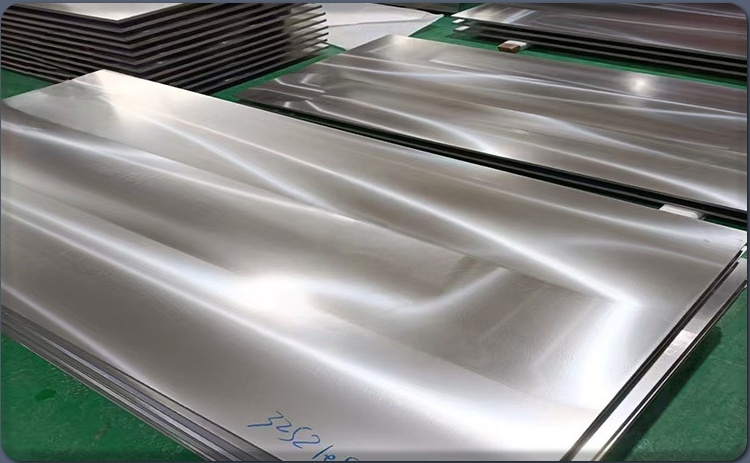
1. High Strength and Low Density
Titanium alloys boast a density of approximately 4.5 g/cm³, which is only about 60% of the density of steel. Despite its low density, titanium alloys can achieve strength levels comparable to or even higher than many structural steels.
The specific strength (strength-to-density ratio) of titanium alloys far exceeds that of other metallic structural materials. This makes them ideal for producing components that are:
Lightweight
High in strength
Excellent in rigidity
1.2 Applications:
Aerospace Components:
Aircraft engine parts, frames, skins, fasteners, and landing gear are commonly made from titanium alloys to reduce weight without compromising strength.
Automotive Industry:
Used in high-performance vehicles to improve efficiency and handling.
2. High Thermal Strength
Titanium alloys retain their strength at elevated temperatures, outperforming aluminum alloys, which lose strength significantly at temperatures above 150°C. Titanium alloys can operate reliably at temperatures up to 450–500°C, making them suitable for medium-to-high temperature applications.
2.1 Comparison with Aluminum Alloys:
Titanium Alloys: Maintain high specific strength from 150°C to 500°C.
Aluminum Alloys: Experience a noticeable drop in strength above 150°C and are typically limited to use below 200°C.
2.2 Applications:
Aerospace Industry: Components in engines and exhaust systems, where high thermal strength is critical.
Energy Sector: Heat exchangers, turbines, and reactor components.
3. Excellent Corrosion Resistance
Titanium alloys exhibit outstanding corrosion resistance, especially in humid atmospheres and marine environments. They are highly resistant to:
Pitting corrosion
Acid corrosion
Stress corrosion cracking
Titanium also withstands exposure to aggressive chemicals, including:
Alkalis
Chlorides
Nitric acid
Sulfuric acid
However, titanium has poor resistance to reducing agents such as oxygen-free chromium salts.
3.1Applications:
Marine Engineering: Used in shipbuilding, offshore platforms, and desalination plants.
Petrochemical Industry: Ideal for chemical processing equipment and storage tanks.
4. Superior Low-Temperature Performance
Titanium alloys maintain their mechanical properties even at low and ultra-low temperatures.
4.1 Performance at Low Temperatures:
Titanium alloys retain excellent ductility and strength at temperatures as low as -253°C.
Alloys with minimal interstitial impurities, such as Grade 6 (GR6), exhibit enhanced plasticity under extreme cold conditions
4.2 Applications:
Cryogenic Applications: Used in liquid hydrogen and liquid oxygen storage tanks.
Space Exploration: Low-temperature resilience makes titanium alloys suitable for spacecraft components.
5. High Chemical Reactivity
Titanium's chemical reactivity is both a strength and a challenge:
5.1 Reactivity with Gas Molecules:
Titanium reacts with oxygen, nitrogen, hydrogen, carbon monoxide, and other gases at high temperatures:
Formation of Hard Layers:
TiC forms when carbon content exceeds 0.2%.
TiN forms on the surface in nitrogen-rich environments.
Above 600°C, titanium absorbs oxygen, resulting in a hard, brittle surface layer.
Hydrogen uptake can lead to embrittlement.
Adhesion and Friction:
Titanium has high chemical affinity, which causes it to adhere to friction surfaces, leading to increased wear and tool damage during machining.
5.2 Applications:
Titanium's reactive nature is managed through advanced coatings and machining techniques, enabling its use in chemical processing and medical implants.
6. Low Thermal Conductivity and Elastic Modulus
Titanium’s thermal conductivity (λ = 15.24 W/(m·K) is much lower than other metals:
Approximately 1/4 that of nickel
1/5 that of steel
1/14 that of aluminum
Titanium alloys have even lower thermal conductivity, reducing their ability to dissipate heat efficiently.
6.2 Elastic Modulus
The elastic modulus of titanium alloys is approximately 1/2 that of steel, which results in:
Reduced rigidity
Higher deformation under stress
This makes titanium unsuitable for manufacturing slender rods or thin-walled components, as it is prone to deformation.
Titanium's low modulus causes significant spring-back on machined surfaces, approximately 2-3 times greater than stainless steel, leading to:
Tool wear.
Adhesion and friction-related damage.
7. Industrial Applications of Titanium Sheet Metal
7.1 Aerospace and Aviation:
Engine components, heat shields, and structural parts.
Lightweight yet strong titanium improves fuel efficiency and performance.
Used in ship hulls, propellers, and desalination systems for its corrosion resistance.
7.3 Energy Sector:
Heat exchangers, condensers, and piping in power plants.
Storage tanks, reactors, and piping for corrosive chemicals.
Ideal for implants and prosthetics due to its biocompatibility and non-magnetic properties.
Titanium sheets are an indispensable part of modern industrial applications.
Titanium sheet metal offers an unparalleled combination of strength, corrosion resistance, thermal performance, and low-temperature resilience, making it indispensable in modern industrial applications. However, challenges such as low thermal conductivity, low elastic modulus, and chemical reactivity must be managed through advanced manufacturing techniques.
As industries continue to innovate, the demand for titanium sheet metal in aerospace, marine, energy, and medical applications is only expected to grow.
Need titanium sheet metal for your next project? Contact us today to explore high-performance titanium solutions tailored to your industry.