If you are asking how to make pure titanium cookware naturally non stick at home, the honest answer is this: you cannot turn bare titanium into a PTFE-style nonstick coating in your kitchen. What you can do is make the surface much more stick-resistant by using clean metal, controlled preheating, a thin oil film, dry food, patient release, and complete residue removal after cooking.
That distinction matters. Pure titanium cookware is valuable because the food-contact surface is real metal, not a synthetic coating that wears away. But a coating-free surface still needs technique. Eggs, fish, tofu, chicken, starches, and sauces can grab any metal pan when the temperature is wrong, oil is missing, food is wet, or burnt oil from a previous meal is still on the surface.
This upgraded guide keeps the original purpose of the article: helping cooks understand why food sticks to pure titanium pans and how to fix it. If you are asking, do things constantly stick to pure uncoated titanium cookware, the answer should be no when the pan is clean, properly preheated, lightly oiled, and the food is allowed to release. But uncoated titanium is still real metal, so technique matters. The guide also explains where TITAUDOU's GR1 pure titanium surface, tri-ply structure, and hardened surface can help in daily cooking.
1. The Direct Answer: Natural Stick Resistance Is a Routine, Not a Coating
The first rule is to stop looking for a permanent at-home treatment that makes titanium behave like a disposable nonstick pan. Pure titanium does not become Teflon because you heat oil on it once. It can develop a temporary cooking film during use, and that film can help food release, but it should not be confused with cast iron seasoning. If the oil layer turns sticky, dark, or uneven, it becomes a sticking problem rather than a solution.
A better answer to how to make pure titanium cookware naturally non stick at home is a repeatable process. Start with a fully clean pan. Preheat it gradually. Add oil after the metal is warm. Add food that is not dripping wet. Let proteins set before moving them. Clean the pan back to a smooth surface after cooking. This is not difficult, but it is less forgiving than a coated pan that hides poor heat control for the first few months of its life.
The word "naturally" should be used carefully. It can mean coating-free, low-residue cooking with normal oil and correct heat. It should not mean zero oil, zero preheating, or no sticking under every condition. TITAUDOU's position is that real pure titanium cookware should be explained honestly: it is durable, corrosion resistant, and free from chemical nonstick coating, but it still follows the physics of metal cooking.
2. Clean the Surface Before You Try to Improve Release
Many sticking complaints begin before the pan reaches the stove. A thin film of old oil, starch, protein, or mineral residue can make a good titanium surface feel sticky. The pan may look clean from a distance, but if a fingertip feels tacky areas, brown varnish, or rough patches, food will find those spots. The next meal then sticks faster, burns faster, and leaves even more residue.
Before trying any "natural non stick" method, wash the pan with warm water and dish detergent. For normal food film, a sponge or non-abrasive pad is enough. For sticky polymerized oil, soak the pan and use a stronger pad suitable for the product surface. Because pure titanium has no chemical coating to peel, it can tolerate more thorough cleaning than PTFE-coated cookware. TITAUDOU's hardened titanium surface is designed to support this cleaning reset more confidently than ordinary soft metal surfaces.
Cleaning is not the opposite of seasoning; it is the foundation of predictable cooking. If a user keeps adding oil on top of burnt residue, the pan becomes less consistent every week. A clean titanium surface lets the cook control the new oil film for each meal. For detailed cleaning methods, see TITAUDOU's guide on how to clean titanium cookware.
| Home Step | What to Do | Why It Helps |
| Clean and dry | Remove old oil, protein film, starch, and water before preheating. | Food releases better from a smooth clean surface than from burnt residue. |
| Preheat gently | Use low to medium heat until water droplets bead and move. | A stable warm surface helps oil spread thinly and reduces cold-pan sticking. |
| Add oil after heat | Add a thin oil film shortly before the food goes in. | Fresh oil reduces direct food-metal contact without turning smoky or gummy. |
| Dry the food | Pat fish, tofu, meat, and vegetables before frying. | Less surface water means faster browning and less steaming-stick behavior. |
| Wait before turning | Let proteins set before scraping or flipping. | Many foods release naturally once the first side forms a crust. |
3. Preheat Correctly, Then Add Oil at the Right Moment
Preheating is the most important controllable step, and the easiest home signal is the Leidenfrost effect. When a titanium pan is still too cool, water drops spread flat and boil in place. When the surface is hot enough, a thin vapor cushion forms under the drops, so they bead up and glide across the pan. That gliding stage is the useful signal for cooking; it means the pan is ready to accept oil. If the water flashes away instantly or jumps violently, the pan is too hot, especially for eggs, fish, or tofu.
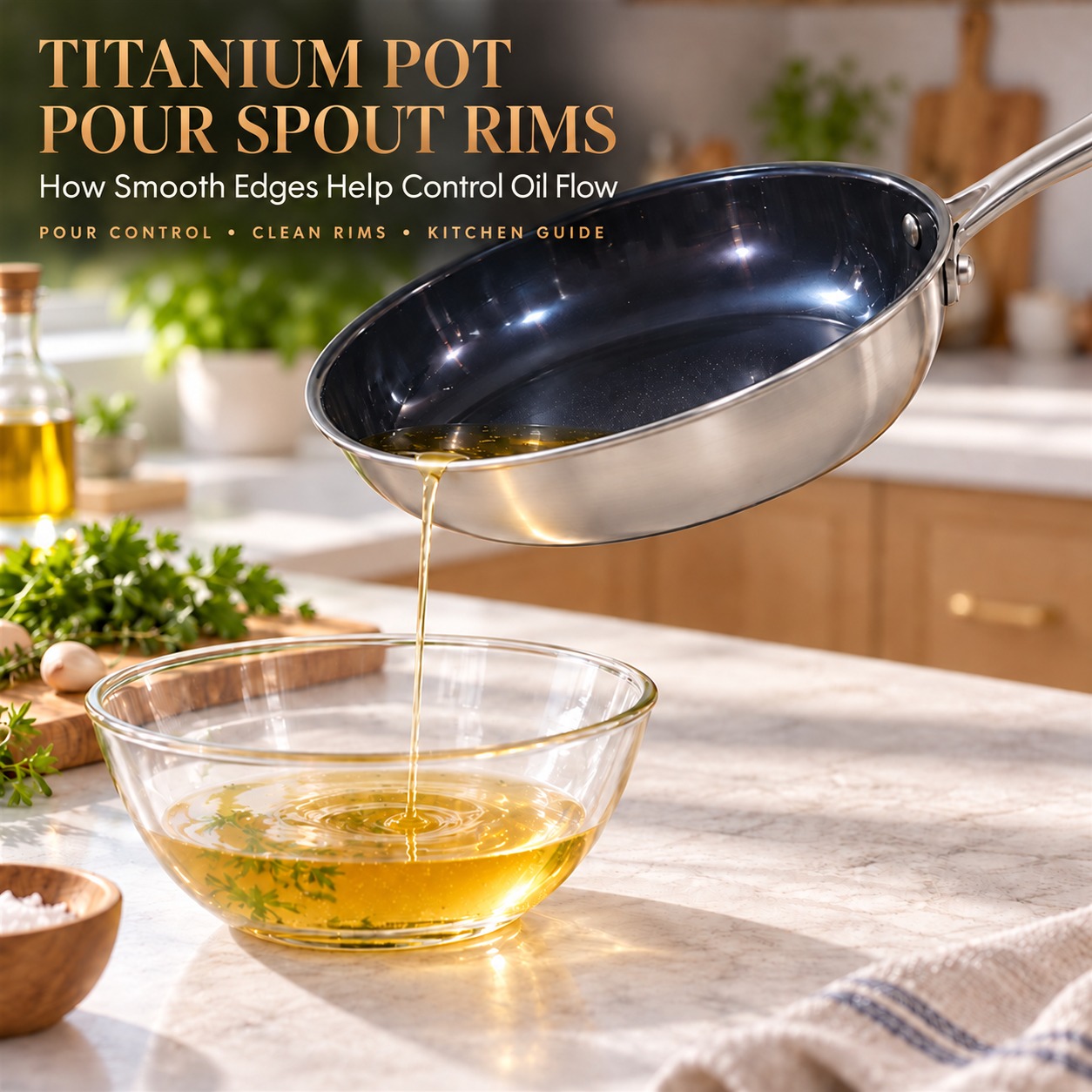
The operating method is simple: put the clean dry titanium pan on low to medium heat, wait briefly, flick in a few drops of water, and watch the result. Flat boiling means wait longer. Smooth beading means lower the heat slightly for delicate foods, add oil, spread it thinly, then add food. Instant smoke, sharp sizzling, or burnt oil smell means cool the pan and restart. Do not use maximum heat to "activate" the pan.
Oil added too early may overheat while the cook is still preparing ingredients. Oil added too late may not have time to spread before food touches bare metal. The practical timing is simple: preheat the pan first, then add oil shortly before food. If the oil smokes heavily, the pan is too hot. Let it cool, wipe out burnt oil after it is safe to handle, and restart. Burnt oil is residue, not a useful natural nonstick layer.
This is where the newly upgraded TITAUDOU preheating guide is useful. If you need a deeper step-by-step explanation, read how to properly preheat a pure titanium skillet before cooking. That page explains stove type, water-drop testing, oil timing, and why long cast-iron-style dry preheating is not the right habit for titanium cookware.
4. Use the Right Food Technique: Moisture, Batch Size, and Patience
The pan is only half of the release system. Food brings water, proteins, starches, sugars, and cold mass into the skillet. If the food is wet, it steams before it browns. If the pan is crowded, the surface temperature drops and water collects. If the cook pushes food too early, the thin browned layer tears and leaves protein stuck to the metal. These are cooking problems, not proof that pure titanium has failed.
Eggs show this clearly. Egg whites are mostly water and protein, so they expose every mistake in temperature, fat level, residue, and timing. For eggs, use lower heat than you think, let the pan warm gently, add butter or oil after preheating, then let the egg set before moving it. A pan that works for vegetables may still need a more careful routine for eggs. TITAUDOU's separate guide on why eggs stick to titanium pans goes deeper into that single food category.
For fish, tofu, and lean chicken, pat the surface dry and avoid flipping until the first side has formed enough structure. For vegetables, work in smaller batches so steam can escape. For meat, let the surface dry and use enough heat to brown without burning the oil. The same titanium pan can feel sticky or smooth depending on these decisions. That is why how to make pure titanium cookware naturally non stick at home is really about controlling the pan, oil, and food together.
5. Do Not Confuse Pure Titanium with Titanium-Coated Nonstick
Many shoppers see the word "titanium" and assume every titanium pan should behave the same. That is a major source of bad expectations. A titanium-coated nonstick pan is usually an aluminum pan with a synthetic release coating that may contain titanium particles or titanium-themed marketing language. It may feel very slippery when new, but the cooking behavior is controlled by the coating, not by a solid titanium food-contact surface.
Pure titanium cookware is different. The food touches metal. There is no chemical nonstick layer to peel, so you do not get the same effortless egg release as a new PTFE pan. In exchange, you get a coating-free surface that can be cleaned more thoroughly and is not built around a disposable release film. For a detailed comparison, see titanium-coated vs real titanium cookware.
The phrase "naturally non stick" should therefore be attached to technique and material honesty, not to unrealistic coating claims. A pure titanium pan can be made more naturally stick-resistant at home because you can clean it well, preheat it correctly, and use a fresh oil film. It should not be sold as a pan that needs no fat, no preheat, and no skill.
6. Why TITAUDOU's Structure Helps the Home Routine
TITAUDOU does not rely on a hidden chemical coating to solve sticking. Its cookware structure is built around a GR1 pure titanium food-contact surface, a 1050 aluminum core for heat spreading, and a 430 stainless steel exterior for induction compatibility and structural support. That matters because a thin single-wall titanium pan and a tri-ply titanium pan do not heat the same way. Better heat spreading makes the home routine easier to repeat.
The hardened titanium surface is also relevant. TITAUDOU's surface-hardening process is designed to improve scratch resistance compared with ordinary soft pure titanium surfaces, so users can clean more confidently when residue appears. This does not mean no scratching is possible, and it does not mean the pan becomes a chemical nonstick product. It means the user has more practical room to reset the surface after mistakes, which is important for long-term stick resistance.
For buyers comparing samples, the question should not be "does the pan feel slippery on day one?" A better question is whether the cookware can keep performing after many cycles of preheating, frying, cleaning, and reuse. That is where coating-free construction, tri-ply heat behavior, and cleanability become more valuable. TITAUDOU's titanium pots and pans page gives the product structure for buyers who need a manufacturing-level explanation.
| Problem at Home | Most Likely Cause | Correction |
| Food sticks immediately | Pan too cold, too little oil, or wet food. | Preheat gently, add a thin oil film, and dry food before cooking. |
| Oil smokes before food enters | Pan is overheated or oil was added too early. | Lower the heat, wipe burnt oil after cooling, and restart with fresh oil. |
| Pan worked before but now sticks | Invisible residue or uneven burnt oil film. | Deep clean the surface instead of adding more oil on top. |
| Food browns unevenly | Burner mismatch, thin pan, or excessive heat. | Use a burner close to the base size and consider tri-ply titanium for frying. |
7. B2B Guidance: Teach the Honest Home Method
For brands, importers, wholesalers, and e-commerce sellers, the nonstick message needs discipline. If a product page says pure titanium is "naturally nonstick" without explaining heat, oil, and cleaning, buyers may expect a coating performance that the product was never designed to deliver. That creates reviews that complain about sticking even when the cookware is made correctly.
A better user manual should explain how to make pure titanium cookware naturally non stick at home as a practical method: clean the pan fully, preheat on low to medium heat, add oil after the metal is warm, dry ingredients, avoid crowding, wait for release, and clean residue after cooking. The manual should also say what not to do: do not dry-burn an empty pan on maximum heat, do not build thick sticky oil layers, and do not promise coating-style release.
For OEM/ODM projects, TITAUDOU can help align product descriptions, packaging copy, and care instructions with the actual cookware structure. That is especially important for coating-free titanium products, where the material story is a strength only when expectations are clear. The best long-term claim is not "never sticks"; it is "coating-free, cleanable, durable, and easier to make stick-resistant when used correctly."
Conclusion: Make the Surface Predictable, Not Artificially Slippery
The realistic way to answer how to make pure titanium cookware naturally non stick at home is to focus on repeatable cooking control. Clean the pan, preheat gradually, add oil at the right moment, dry the food, avoid overcrowding, let proteins release, and remove residue before the next meal. That routine does more for daily performance than chasing a permanent at-home seasoning layer.
Pure titanium cookware is strongest when it is understood honestly. It is not a disposable nonstick coating. It is a durable metal cooking surface that can be made more naturally stick-resistant with correct technique and good cleaning. In TITAUDOU's tri-ply construction, the GR1 pure titanium food-contact layer works with an aluminum core and stainless exterior, giving users a more practical foundation for home cooking.
Frequently Asked Questions
Q1: Do things constantly stick to pure uncoated titanium cookware?
No, they should not constantly stick when the pan is clean and the Leidenfrost water-drop test shows the surface is ready. Use low to medium heat, wait until water beads and glides, lower the heat slightly, add oil, then add dry food. Pure titanium still is not PTFE, so eggs and wet proteins need patience.
Q2: Should I season pure titanium cookware like cast iron?
No. Pure titanium does not need cast-iron-style seasoning. A thin fresh oil film during cooking can help release food, but a thick burnt oil layer usually becomes residue that causes sticking.
Q3: Why does my titanium pan stick after it worked well before?
The most common reason is residue. Old oil, starch, protein film, or mineral spots can make the surface feel sticky. Clean the pan fully, then restart with moderate preheating and fresh oil.