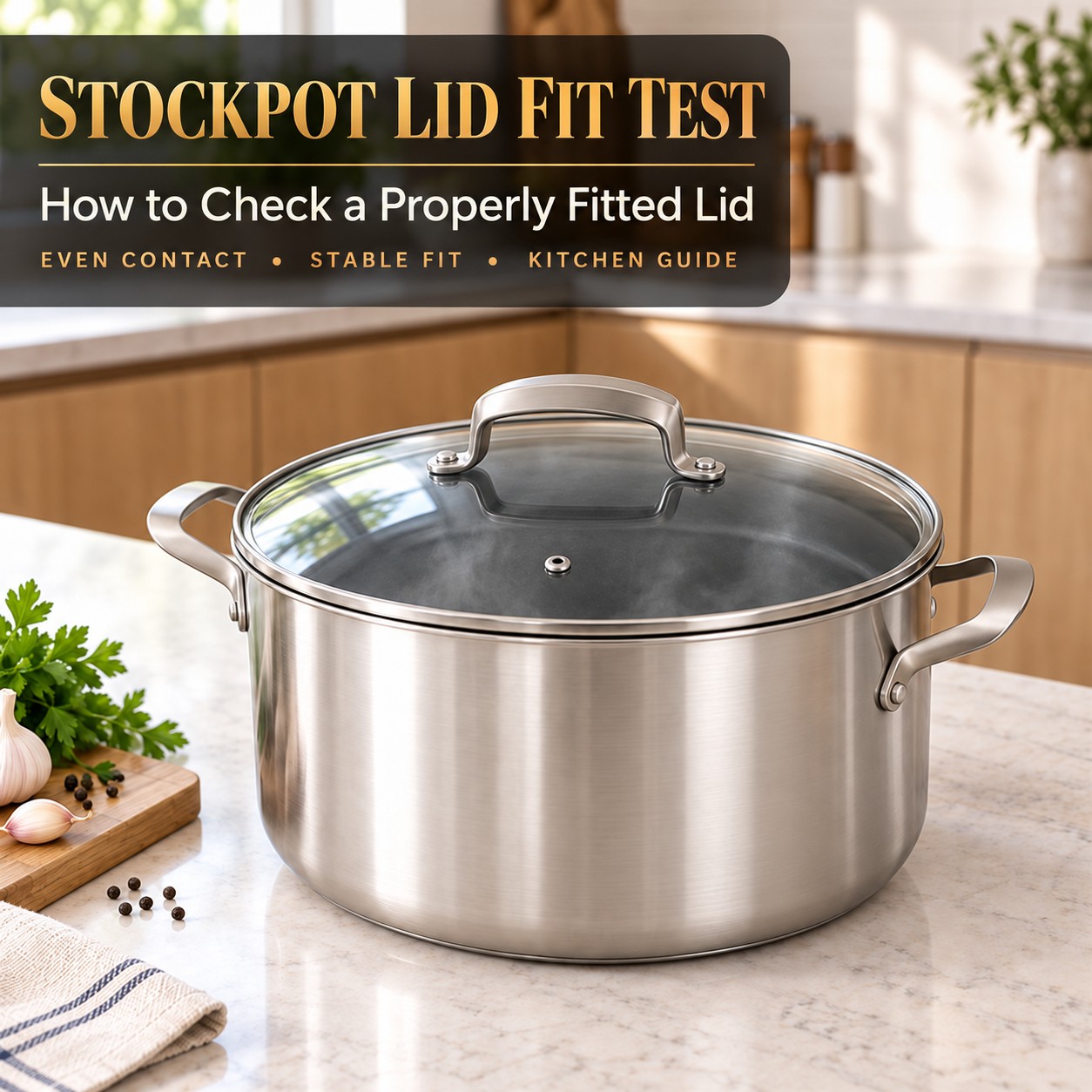
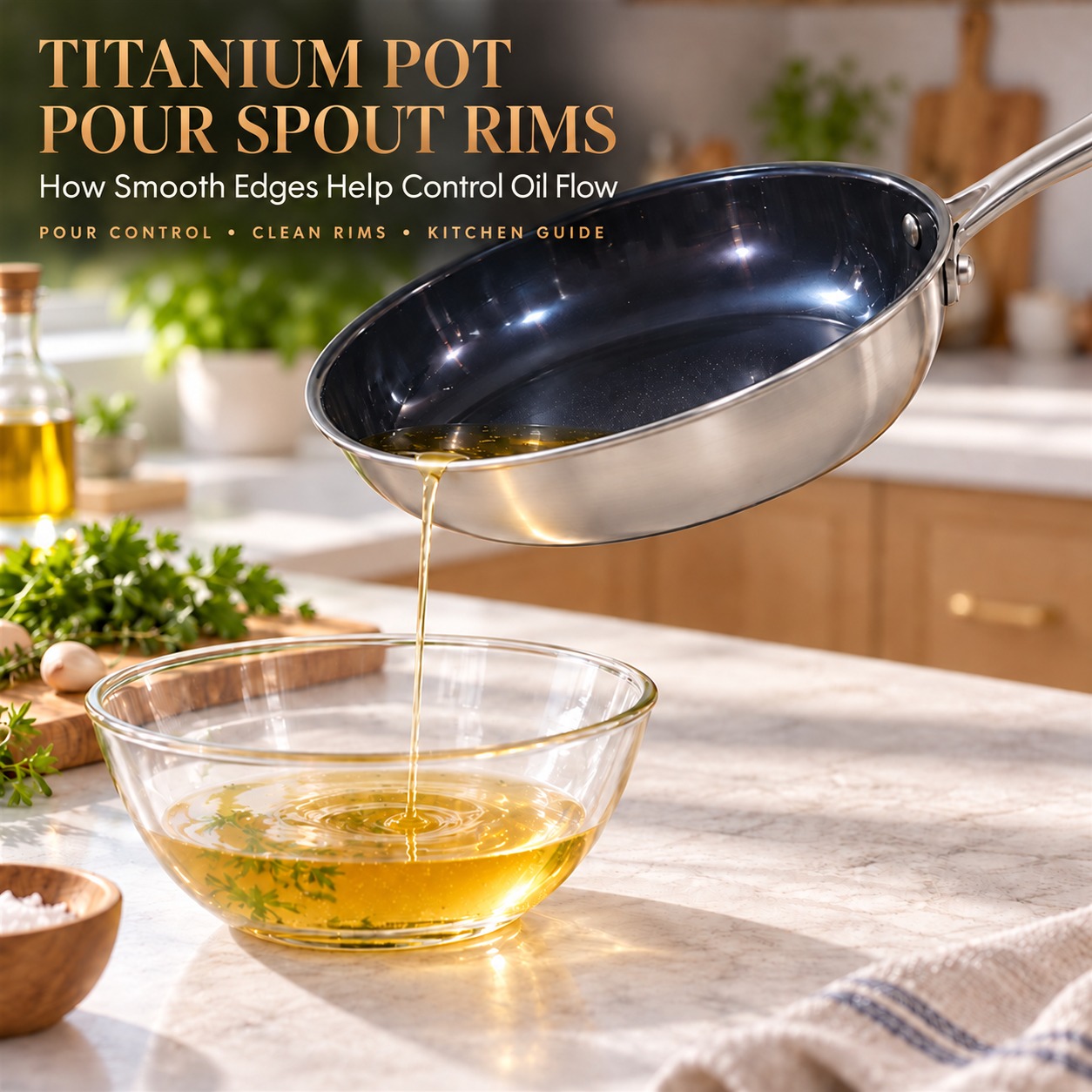
To evaluate the best non toxic pure titanium cookware, start with the exact cooking surface, not a broad marketing label. A pan can be sold as "titanium cookware" while using a titanium interior, a titanium-enhanced stainless surface, a titanium-reinforced ceramic coating, or a thin titanium camping body. These are different products with different cooking behavior and different evidence to request.
A useful safety decision is not based on a single word such as non-toxic, PFAS-free, or coating-free. It is based on what actually touches food, whether an applied nonstick layer is present, how the pan is built, and whether the manufacturer can provide model-specific food-contact documentation. Pure titanium cookware can be a strong choice for buyers who prefer a simple metal food-contact surface, but it still needs an honest review of construction, heat performance, and intended use.
1. Start With the Exact Product Structure
First ask for a plain-language layer description. A genuine pure titanium food-contact surface is different from a product that merely contains titanium somewhere in its structure. The distinction matters because titanium is often used to describe an appearance, a reinforcement, or a manufacturing technology rather than the entire pan body.
For daily cooking, the practical question is: what is the food-facing surface, and is anything applied over it? A pure titanium contact surface may be selected for corrosion resistance, low reactivity, and a coating-free cooking experience. A bonded construction may add aluminum for heat spreading or magnetic stainless steel for induction. Those additional layers are not automatically a problem, but they should be disclosed instead of hidden behind a general titanium claim.
| Product description | What it can mean | What to request |
| Pure titanium cookware | Titanium is the food-contact metal, sometimes with other structural layers. | Titanium grade, percentage or layer position, and coating statement. |
| Titanium-enhanced stainless | Stainless steel remains the main body or food surface, with titanium-based treatment or layers. | Base metal, titanium process, and whether a nonstick system is used. |
| Titanium-reinforced nonstick | Titanium may reinforce a ceramic or polymer nonstick coating. | Coating chemistry, care limits, and replacement guidance. |
Read our guide to what titanium cookware means in practice before treating any titanium claim as proof of a solid pure titanium pan. Clear construction disclosure is the first filter for both household buyers and product sourcing teams.
Material disclosure should be specific enough for a buyer to repeat it in a purchase order. "Titanium pan" is not a specification. A useful specification identifies the food-contact layer, the material beneath it, thickness where relevant, the method used to join layers, and any treatment applied to the food-contact side. It should also identify components that may contact food during normal use, including a lid underside, exposed rivets, a rim, and a pour spout. This level of detail makes it easier to compare samples fairly and to keep a later production run consistent with the approved sample.
2. Separate Coating-Free From PFAS-Free
These terms are related, but they are not interchangeable. Coating-free means the food-contact surface does not use an applied nonstick layer. PFAS-free describes a chemical claim and does not, by itself, tell you whether a ceramic or another nonstick coating is present. A ceramic nonstick pan can be marketed as PFAS-free and still be a coated product. Conversely, a metal cooking surface may be uncoated yet still have a complex multi-layer body below the food-contact side.
This distinction helps prevent two common mistakes. The first is assuming that every product called titanium is coating-free. The second is assuming that every coating should be described with the same safety conclusion. Food-contact safety is evaluated by the relevant material, intended use, and migration evidence. The U.S. Food and Drug Administration explains that food-contact substances are assessed for their intended uses and potential migration; its discussion of PFAS cookware applications also shows why blanket safety language is less useful than precise material disclosure.
For buyers who specifically want to avoid an applied synthetic nonstick layer, the request should be direct: ask whether the food-contact surface uses PTFE/PFAS-based nonstick chemistry, ceramic nonstick chemistry, or any other applied release coating. Then ask for a written answer for the exact model, not a claim copied from a collection page.
Surface treatment also deserves a separate question. Some metal surfaces are polished, etched, textured, oxidized, hardened, or bonded at a molecular level. Those processes are not automatically the same as a soft applied nonstick coating, but the buyer should still understand what was done and why. The useful wording is descriptive rather than emotional: name the treatment, state whether it forms a separate release layer, and explain whether it changes care instructions. This gives a reader a real basis for comparing products without incorrectly treating every surface technology as identical.
3. Use Brand Examples as Disclosure Lessons, Not Safety Rankings
Public brand descriptions are useful for learning how widely the word titanium can vary. They are not independent laboratory tests, and a brand example should never replace documentation for the specific pan being purchased. The cases below show why the material story needs to be read line by line.
These examples summarize public brand product disclosures reviewed on September 9, 2026. They are not independent testing, safety rankings, or claims about every model in a brand's range.
| Brand and product family | Public material disclosure | How to classify it |
| Our Place Titanium Pro | Titanium interior, aluminum core, and stainless steel exterior; the brand says its release pattern is pressed into titanium rather than applied as a coating. | Coating-free titanium interior claim; not a whole-body pure titanium pan. |
| Hestan NanoBond | Titanium nano-layers are bonded to stainless steel as part of its molecular titanium technology. | Titanium-enhanced stainless construction, not a pure titanium food-contact claim. |
| GreenPan ceramic nonstick lines | The brand describes an applied ceramic nonstick coating, including diamond-reinforced versions. | A coated pan, even where the product is marketed as PFAS-free. |
| Snow Peak titanium product range | Its collection lists titanium cookware alongside separately identified anodized titanium items. | Check each SKU; a brand-level titanium label is not enough to classify every surface. |
The point is not that one brand is universally safer than another. The point is that identical-sounding language can describe very different surfaces. A reliable evaluation records the stated food-contact material, the construction below it, the presence or absence of an applied coating, and the evidence supporting each claim.
4. Ask for Evidence That Matches the Exact Model
A convincing product page should support its material statement with documents that match the model, not only the product family. For pure titanium cookware, useful evidence can include a material specification, titanium grade statement, bill of materials or layer diagram, and food-contact test report for the intended market. The applicable standard depends on the destination market and the exact construction, so there is no single report that proves every model is suitable everywhere.
Independent laboratories, including SGS, can test cookware against the relevant food-contact requirements. However, an SGS test report, an inspection, and an SGS product certification mark are not the same thing. Before using a certification claim, verify the report number, product model, tested materials, standard, test conditions, issue date, and whether the claim applies to the final sold configuration. A handle, lid, rivet, decorative finish, or layered base can matter to the scope.
This is especially important for importers and private-label buyers. Ask to see the final report after material, supplier, or process changes, and keep the sample retained for the specification record. Our food-grade titanium cookware standard guide explains why grade statements and market-specific compliance evidence should be read together.
A practical document request contains four parts: the SKU or drawing number, the destination market, the food-contact standard to be assessed, and the exact components included in the test sample. For example, a report on a bare pan body may not answer questions about a coated lid knob or an assembled handle. If a buyer needs a claim for retail packaging, the wording on the packaging should be checked against the test scope before printing. That simple control reduces the risk of overstating what an individual report actually proves.
5. Evaluate Cooking Performance Alongside Material Safety
A pan can have a straightforward food-contact material and still be the wrong pan for the cooking task. Thin single-wall titanium is exceptionally light and corrosion resistant, which can be useful for outdoor boiling and travel. Its heat distribution can be less forgiving for eggs, fish, and other delicate foods. A layered construction can improve heat spreading and make induction possible, but it adds weight and changes what "pure titanium cookware" means for the whole body.
Do not expect a bare or engineered metal surface to behave exactly like a new soft nonstick coating. Preheating, suitable oil, moderate heat, and allowing protein to release naturally can improve results. The right cookware should be selected for the user's cooking style: high-heat searing, acidic soups, everyday sauteing, outdoor meals, or low-oil delicate cooking all place different demands on the surface.
Also check wall thickness, flatness, handle attachment, lid fit, oven limit, cooktop compatibility, cleaning guidance, and the warranty terms. A useful comparison should include both the safety evidence and the product's practical limitations. Our titanium cookware selection guide covers the day-to-day checks that are easy to miss when a buyer focuses only on the word pure.
Heat management is part of the safety and durability decision as well. Avoid extended empty heating unless the manufacturer permits it, and let a hot pan cool before exposing it to very cold water. A stable cooking surface does not remove the need for ordinary cookware care. The best result comes from pairing the material with a realistic use pattern: a light pan for portability, a layered pan for more even heating, or a larger deep-sided pan for sauces and volume cooking. The choice should follow the recipe and burner, not only a material preference.
6. How TITAUDOU States Its Coating-Free Position
For applicable TITAUDOU titanium cookware, the food-contact surface uses hardened GR1 pure titanium rather than an applied PTFE/PFAS-based or ceramic nonstick coating. The hardening process is a material treatment of the GR1 titanium surface, not a separate nonstick coating. This distinction matters: the aim is to address the softness associated with untreated pure titanium while keeping the cooking surface free from an applied synthetic release layer.
Some cookware designs may use layered metal construction to provide more even heating or cooktop compatibility. Buyers should therefore ask for the layer order on the selected SKU instead of assuming that "pure titanium" means every part of the body is one metal. The relevant question is whether the food-contact side remains the stated GR1 titanium surface and whether any applied nonstick coating is present.
TITAUDOU can provide the material and construction information needed for a technical review of the selected product. When a buyer requires independent validation, the final model can be submitted to SGS or another qualified laboratory against the relevant target-market food-contact requirements. A published certification statement should only be used when the exact model has the matching report or certification record. Explore the TITAUDOU titanium pots and pans range to compare the product format with the cooking need before requesting documentation.
This approach avoids two misleading shortcuts. It does not treat hardening as a hidden coating, and it does not turn the absence of a synthetic nonstick layer into a blanket health promise. Instead, it gives the buyer a verifiable chain: identify the GR1 food-contact material, confirm the construction for the selected SKU, document the absence of an applied nonstick system, and commission or review the appropriate food-contact test when the market requires it. That is a more useful basis for a purchase decision than a generic claim that a product is simply "the safest."
7. A Practical Checklist Before You Buy
Use this short sequence when comparing products. First, identify the food-contact layer and ask whether it is solid titanium, titanium-enhanced stainless steel, or an applied coating. Second, request a written explanation of any nonstick claim. Third, match performance to the job: light outdoor cooking, high-heat searing, induction use, or delicate low-oil food. Fourth, request model-specific food-contact evidence for the destination market. Finally, compare care instructions with the utensils and cleaning habits the household will actually use.
The best non toxic pure titanium cookware is therefore not a universal winner. It is a pan with a clearly disclosed food-contact surface, a construction that suits the cooktop and recipes, and documentation that matches the model. This approach is more reliable than choosing a product only because a listing uses titanium, non-toxic, or PFAS-free as a headline.
For a sourcing team, add commercial checks after the material review: confirm the sample approval process, control of raw-material lots, inspection points for surface finish and flatness, replacement policy for damaged goods, packaging protection, and the lead time for a repeat order. For a household buyer, the equivalent checks are simpler: choose the right diameter and depth, make sure the pan works on the home cooktop, and select a design whose weight and care routine are realistic. These practical details determine whether a well-specified pan remains a good choice after the first week of cooking.
Conclusion: Choose Transparency Over Titanium Marketing
Pure titanium cookware can be a sensible option for buyers who value a coating-free metal food-contact surface, corrosion resistance, and long service life. The deciding factor is transparent evidence, not the most dramatic safety promise. Verify the exact surface, separate coating-free from PFAS-free, understand any layered construction, and ask for the documentation that applies to the final model. With those checks in place, titanium cookware becomes much easier to evaluate honestly.
Frequently Asked Questions (FAQ)
Q1: Does "titanium cookware" always mean a pure titanium cooking surface?
No. The term can refer to a pure titanium surface, titanium-enhanced stainless steel, a titanium-reinforced coating, or a titanium-colored finish. Check the product's food-contact material and layer structure before deciding.
Q2: Is PFAS-free cookware automatically coating-free?
No. PFAS-free describes a chemical claim. A product can still use a ceramic or another applied nonstick coating. Buyers seeking a bare metal or hardened titanium surface should ask specifically whether an applied food-contact coating is present.
Q3: What SGS document should I request for titanium cookware?
Request the report or certification record for the exact model and target market. Check the report number, tested materials and components, applicable standard, test conditions, date, and whether it covers the final production configuration rather than an earlier sample.