Tri-Ply Pure Titanium Cookware Manufacturer: OEM/ODM Factory for Premium Kitchenware

April 22, 2026

Answer Summary: Choosing a Tri-Ply Titanium Cookware Manufacturer

A tri-ply titanium cookware manufacturer is most valuable when it can combine titanium food-contact expertise, aluminum-core heat-transfer engineering, stainless steel exterior construction, OEM/ODM customization, stable quality control, and export-ready documentation for premium cookware brands.

  • Manufacturing focus: bonding quality, forming consistency, handle assembly, surface finishing, and inspection.

  • Commercial focus: premium cookware lines, private-label programs, and distributor-ready packaging.

  • Due diligence: confirm factory capability with samples, specifications, test reports, and production references.

1. Introduction: Your Trusted Tri-Ply Pure Titanium Cookware OEM Partner

For cookware brands, importers, distributors, and premium kitchenware buyers, choosing a tri-ply pure titanium cookware manufacturer is not the same as buying ordinary stainless steel cookware from a catalog. The core question is whether the factory truly understands layered titanium cookware, food-contact titanium surfaces, 1050 aluminum heat-transfer cores, induction-ready stainless steel bases, and repeatable OEM/ODM production. A beautiful sample is not enough if bulk production cannot maintain the same bonding strength, surface finish, handle stability, and packaging quality.

TITAUDOU focuses on tri-ply pure titanium cookware manufacturing rather than simple single-wall pure titanium sheet cookware. Single-wall pure titanium has advantages in light weight and corrosion resistance, but it does not solve the main kitchen pain point: slow and uneven heat transfer. For daily home cooking and premium retail cookware, heat distribution matters. That is why our preferred structure uses a 99.5% Grade 1 pure titanium food-contact layer, a 1050 food-grade aluminum core, and a 430 stainless steel induction base.

The 1050 aluminum core is the key engineering layer. Pure titanium is stable, clean tasting, and corrosion resistant, but aluminum is the layer that spreads heat quickly across the pan body. By placing a high-purity aluminum core between titanium and stainless steel, the cookware can deliver a safer food-contact surface while avoiding the slow-heating weakness of pure titanium sheet pans. For brands, this means a stronger product story: titanium where food contact matters, aluminum where heat transfer matters, and stainless steel where stove compatibility matters.

B2B buyers usually ask three practical questions before placing an OEM order. First, how do we verify that the titanium layer is really Grade 1 pure titanium? Second, how do we know the 1050 aluminum core will not create bonding or deformation problems after repeated heating? Third, how can the finished cookware work across induction, gas, ceramic, and electric stoves in different markets? This page answers those questions through material structure, production control, testing standards, and procurement details.

If you are developing a premium cookware line, private-label titanium cookware set, or regional distributor program, TITAUDOU can support product structure selection, sample development, logo customization, packaging design, inspection documents, and bulk production planning. Submit your customization requirements to request a sample and quotation for 1050 aluminum core titanium cookware built for your target market.

2. What Is Tri-Ply Pure Titanium Cookware? 1050 Aluminum Core Advantage Explained

Tri-ply pure titanium cookware is a layered cookware structure designed to combine the advantages of three metals. The inner food-contact layer is 99.5% Grade 1 pure titanium. The middle heat-transfer layer is 1050 food-grade aluminum. The outer layer is 430 food-grade stainless steel for strength and induction compatibility. Each layer has a specific function, and the product should be judged by the total structure, not only by the word “titanium.”

The pure titanium contact layer is the premium surface. Grade 1 titanium is valued for corrosion resistance, light weight, and clean food-contact performance. It does not rely on a synthetic nonstick coating as the main cooking surface. A natural titanium oxide film forms on the surface and helps improve corrosion resistance and low-stick behavior when the pan is used correctly. For health-focused retail channels, this is a stronger material story than ordinary coated nonstick cookware.

The 1050 aluminum core is the performance layer. 1050 aluminum has a purity level of about 99.5% and is widely valued for high thermal conductivity. Aluminum’s thermal conductivity is commonly around 205 W/(m·K), far higher than stainless steel and titanium. In cookware, this means heat can spread laterally across the pan body instead of staying concentrated above the flame or induction coil. Better heat spread reduces hot spots and improves cooking consistency.

The 430 stainless steel base is the compatibility layer. Titanium and aluminum are not magnetic, so they cannot work efficiently on induction by themselves. A 430 stainless steel exterior or base provides magnetic response for induction cooktops while also protecting the cookware exterior. For global distribution, this is important because many markets now require cookware that works on induction, gas, electric, and ceramic stoves.

The value of 1050 aluminum is not only fast heat transfer. High-purity aluminum helps create more predictable bonding behavior during composite production. Compared with low-grade or recycled aluminum, 1050 aluminum gives better purity control and more stable performance. For an OEM buyer, that means fewer hidden variables in mass production and a clearer quality specification for inspection.

TITAUDOU uses high-temperature composite processing rather than treating the layers as a simple decorative assembly. The objective is to create tight layer bonding so the cookware can handle repeated heating and cooling cycles. In premium cookware manufacturing, layer separation is one of the most serious failure risks. A pan may look fine when new, but poor bonding can lead to warping, bubbling, abnormal noise, or performance decline after use.

This is where OEM tri-ply titanium cookware differs from ordinary catalog cookware. A supplier must be able to explain layer thickness, bonding method, titanium grade, aluminum grade, stainless steel grade, induction behavior, and surface finishing. Without those specifications, a buyer cannot confidently market the product as premium tri-ply pure titanium cookware.

3. OEM/ODM Customization Services: Tailor Tri-Ply Pure Titanium Cookware to Your Brand

TITAUDOU supports OEM and ODM customization for brands that want differentiated titanium cookware instead of generic stock items. Customization can begin with cookware shape. Common options include 20 cm to 32 cm frying pans, saute pans, saucepans, soup pots, milk pans, and wok-style pans. The pan depth, sidewall angle, rim shape, bottom diameter, and handle geometry can be adjusted according to the buyer’s target audience and cooking style.

Surface treatment is another important branding element. Matte oxidation creates a restrained premium look. Bright oxidation gives a cleaner reflective appearance. Sandblasting creates a more technical and textured surface. The right surface treatment depends on the brand’s retail positioning. A high-end gift set may prefer a refined matte finish, while a professional kitchen line may prefer a more utilitarian surface that hides light handling marks.

Logo customization can be applied by laser marking or silk-screen printing depending on the surface and brand requirement. Common positions include the pan body, handle, lid, base, gift box, instruction manual, and hang tag. For premium cookware, subtle laser marking is often more suitable than oversized branding because it keeps the product elegant while still reinforcing brand ownership.

Handle design affects both appearance and user experience. TITAUDOU can support stainless steel handles, silicone-insulated handles, wood-style handles, and customized ergonomic profiles. Handle length, curvature, heat resistance, attachment method, and balance should be confirmed during sampling. A beautiful pan with an uncomfortable handle will not perform well in customer reviews.

Tri-Ply Pure Titanium Cookware Manufacturer: OEM/ODM Factory for Premium Kitchenware

Packaging customization is especially important for B2B buyers. We can support retail color boxes, gift boxes, instruction manuals, care cards, anti-counterfeit labels, carton labels, and private-label packaging systems. For smaller test orders, packaging should be practical and cost controlled. For mature retail programs, packaging can be upgraded to support premium shelf presentation and brand storytelling.

Functional customization can also be discussed. Different markets may require different induction base specifications, handle insulation preferences, lid designs, oven-safe expectations, or dishwasher guidance. Some buyers may request a ceramic coating option, but this should be positioned separately from coating-free titanium cookware. If a coating is added, the coating becomes part of the food-contact safety and durability discussion.

For ODM projects, TITAUDOU can help convert a market idea into a more complete product plan. This includes product structure, size combination, sample development, packaging direction, specification sheets, care instructions, and procurement planning. For OEM projects, we can manufacture according to the buyer’s approved drawings, brand standards, and target retail requirements.

4. Material Standards: Strict Quality Control for Every Layer

A reliable tri-ply pure titanium cookware manufacturer must control every layer, not only the visible titanium surface. The inner titanium layer affects food-contact safety and brand positioning. The 1050 aluminum core affects heat distribution and cooking performance. The 430 stainless steel base affects induction compatibility, corrosion resistance, and exterior durability. If one layer is poorly specified, the whole product suffers.

LayerMaterial SpecificationTesting StandardQuality Assurance
Pure Titanium LayerGrade 1 titanium, 99.5% or higher titanium contentFDA/LFGB food-contact review, spectral purity analysisBatch material reports available for OEM orders
1050 Aluminum Core1050 food-grade aluminum, 99.5% or higher aluminum contentHeavy metal screening, thermal conductivity verification where requiredNo recycled aluminum for premium OEM specifications
Stainless Steel Base430 food-grade stainless steel with magnetic performanceSalt spray reference testing, magnetic response testingThickness specification controlled to reduce deformation risk

The titanium layer should be verified by material grade and purity. For OEM buyers, a general claim such as “titanium surface” is not enough. The purchase file should specify Grade 1 titanium or another approved titanium grade, the expected purity level, and the intended food-contact use. This makes product labeling, compliance files, and retailer communication more consistent.

The 1050 aluminum core should be treated as a critical performance component. If the aluminum is impure, inconsistent, or poorly bonded, the cookware may show uneven heating, warping, or layer instability. TITAUDOU rejects recycled aluminum for premium OEM specifications because recycled material can introduce unnecessary uncertainty into heat-transfer performance and material verification.

The stainless steel base should be checked for magnetic response and stability. A thin or poorly bonded induction layer can cause poor induction performance, center-heavy heating, noise, or base deformation. For target markets with high induction adoption, the base design must be validated early in sampling, not after mass production.

B2B buyers can request third-party material reinspection for OEM orders. This is useful when a brand is entering a regulated market, preparing retail documentation, or launching a premium product line where material claims must be defensible. A serious factory should welcome material verification because it reduces risk for both sides.

5. Certifications and Compliance: Global Market Access Guaranteed

Certification support is a major part of OEM cookware manufacturing. A premium 1050 aluminum core titanium cookware program should not rely only on verbal claims. The finished cookware should be supported by food-contact documentation relevant to the buyer’s market. Common requirements may include FDA-related food-contact review for the United States, LFGB testing for Germany and parts of Europe, SGS or third-party inspection reports, and documentation for packaging materials.

The cookware body should be reviewed as a complete food-contact item. This includes the titanium inner surface, rim, rivets or weld points, lid contact areas, and any surface treatment that may contact food or steam. If a ceramic coating option is added, that coating requires its own testing and documentation. If silicone handle parts or lid knobs are included, those parts should also be checked under the relevant food-contact or safety expectations.

The 1050 aluminum core is not normally exposed to food in a properly bonded tri-ply structure, but its material quality still matters. Buyers may request RoHS-related screening or heavy-metal review where relevant to their internal policy or regional compliance needs. This is especially important for brands selling through chain retailers, large online marketplaces, or distributors with strict vendor onboarding requirements.

Packaging compliance should not be ignored. Export packaging may need to meet REACH-related expectations, labeling rules, recycling marks, carton strength requirements, and retailer-specific barcode placement. For many B2B programs, packaging errors can delay launch even when the cookware itself is ready. TITAUDOU can support packaging documentation and file preparation according to the buyer’s market.

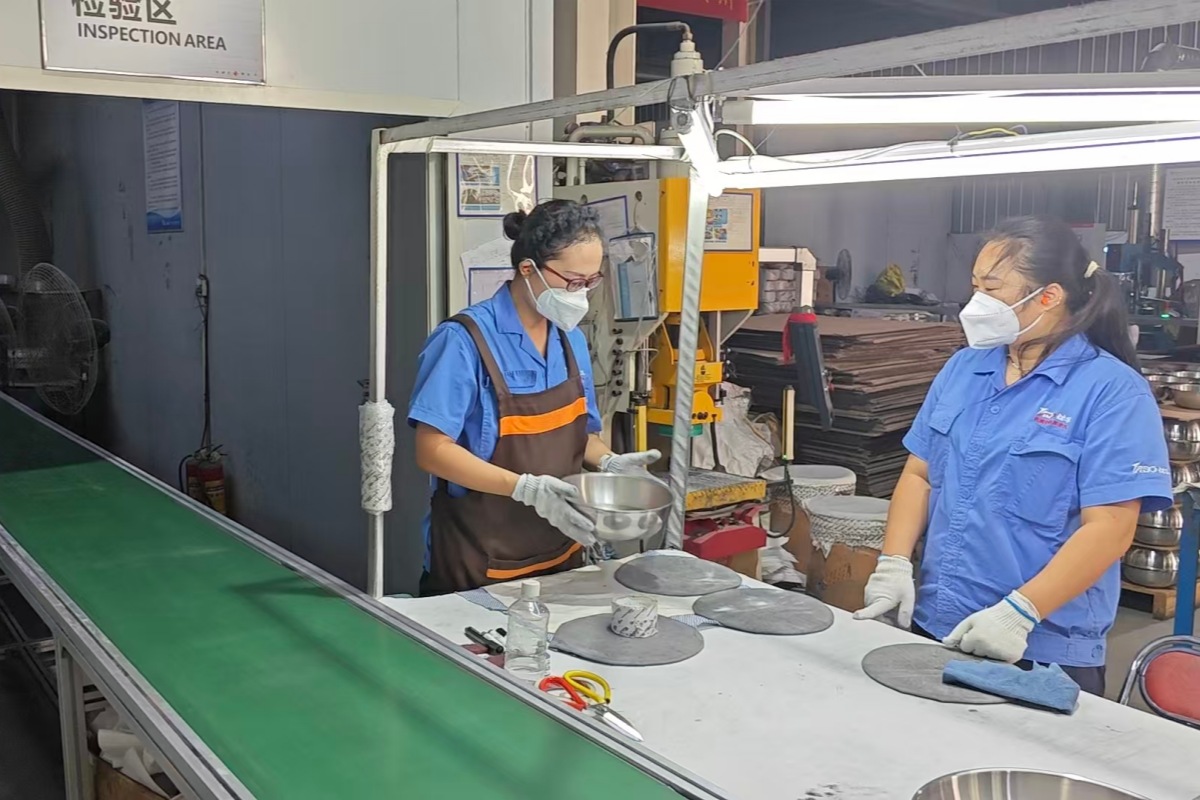
Testing transparency is part of our procurement process. Batch production can include layer bonding review, heating uniformity checks, induction compatibility checks, high-temperature stability checks, surface finish inspection, handle attachment inspection, and packaging checks. The exact test package depends on order size, target market, and the buyer’s quality agreement.

For buyers entering markets that require additional documents, TITAUDOU can support application preparation for specific third-party tests such as NSF-related review, LFGB reports, SGS inspection, or customer-specified lab testing. The goal is to reduce customs risk, retailer rejection risk, and after-sales disputes.

6. B2B Procurement Details: MOQ, Samples, Lead Time, and Production Process

A clear procurement process helps buyers control risk. For standard OEM orders, the typical MOQ starts at 1000 sets. For repeat customers or small test programs, a 500-set trial order may be discussed depending on product complexity, packaging requirements, and production schedule. Custom structures, special handles, new molds, or complex packaging may require a higher MOQ because setup costs and material planning increase.

Sample development usually takes 7 to 10 days after specifications are confirmed, although complex ODM designs may require more time. The sample stage should not be rushed. This is when the buyer confirms cookware size, weight, handle comfort, surface finish, induction behavior, packaging direction, logo placement, and care instructions. A sample fee can be deducted from the bulk order when the project moves forward according to the agreed policy.

After sample approval, bulk production normally takes 30 to 40 days depending on order size, customization level, and factory schedule. Urgent orders can be discussed, but rush production should not compromise bonding quality, inspection, or packaging control. For premium cookware, stable production is more valuable than unrealistic speed.

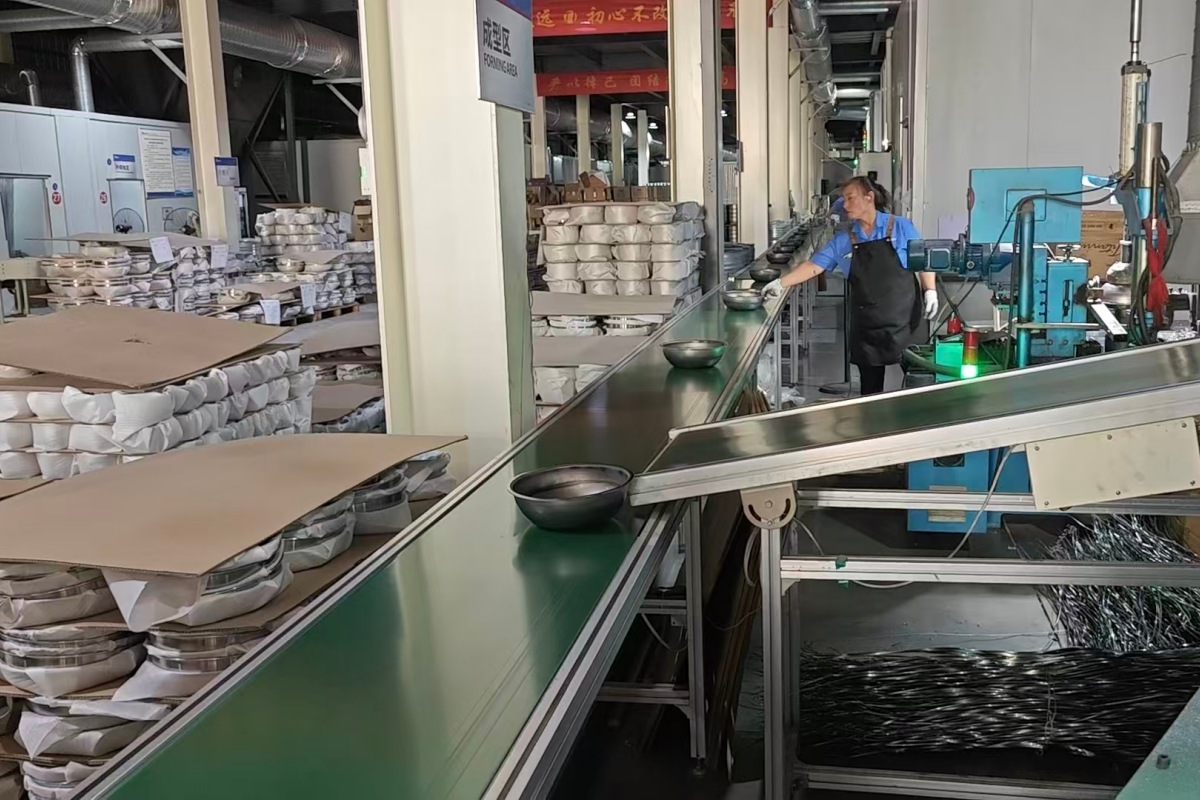
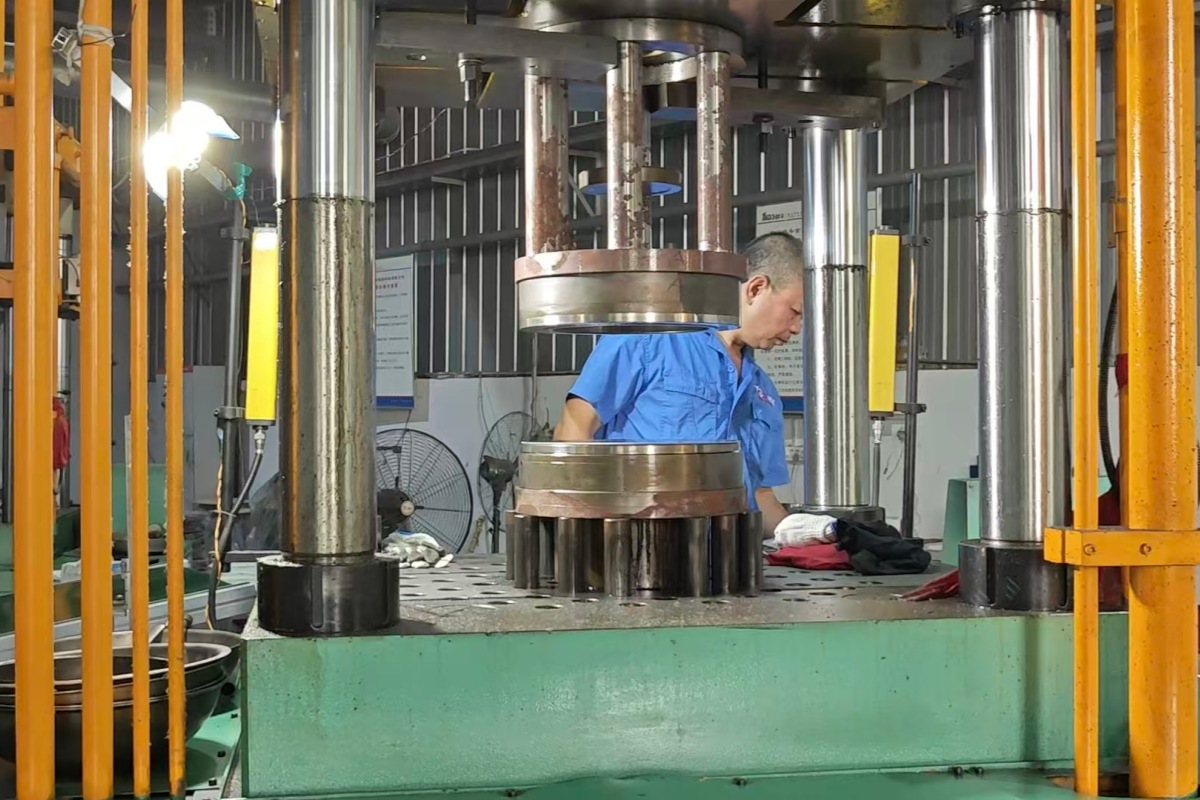
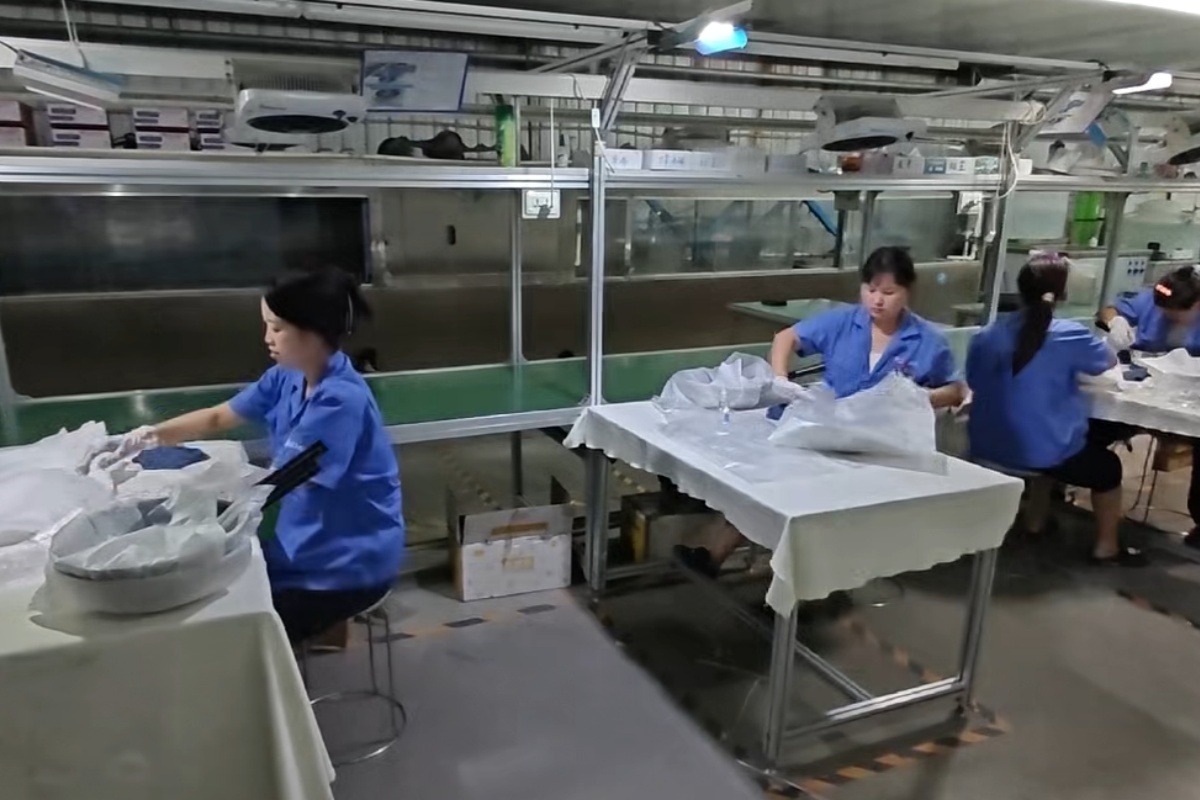
The production process begins with raw material inspection. Titanium, 1050 aluminum, and 430 stainless steel are checked according to the order specification. The composite material is then processed through forming, trimming, surface treatment, handle installation, polishing or finishing, cleaning, inspection, packaging, and final shipment preparation. Each stage must be traceable so any issue can be located and corrected.

For larger OEM programs, TITAUDOU can provide production progress updates from raw material arrival to finished goods inspection. This is useful for importers coordinating launch dates, retail promotions, or seasonal sales windows. Traceability also helps buyers communicate with their own customers when documentation is required.

The quotation should be based on real specifications, not only a product name. Price depends on titanium layer thickness, aluminum core thickness, stainless steel base design, cookware size, handle type, lid type, surface finish, packaging method, logo process, testing requirements, and order quantity. A precise quotation requires precise specifications.

7. Quality Control Checklist for Importers and Distributors

Importers and distributors need a practical checklist before approving samples or releasing mass production. The following table summarizes the most important checkpoints for OEM tri-ply titanium cookware. It can also be used as a supplier comparison tool when evaluating multiple factories.

CheckpointWhat to VerifyWhy It MattersDocuments Needed
Layer Bonding QualityNo separation, bubbles, abnormal sound, or visible bonding defectsPoor bonding shortens service life and damages brand reputationLayer bonding test report or factory inspection record
1050 Aluminum Core PurityConfirmed 1050 food-grade aluminum core without recycled material substitutionMaintains heat performance and reduces material uncertaintyAluminum material test report
Induction CompatibilityMagnetic layer works on target-market induction cooktopsPrevents customer complaints and market rejectionMagnetic response or induction compatibility report
Surface Treatment QualityUniform titanium surface, no deep scratches, stains, or uneven oxidationAffects appearance, cleaning experience, and premium perceptionSurface inspection record and sample approval sheet

The layer bonding check is the first priority. A tri-ply pan depends on the integrity of the composite structure. Buyers should inspect sample edges, base transitions, sound during heating, and the pan’s behavior after repeated heating and cooling. If any separation sign appears during sampling, the issue must be solved before bulk production.

The aluminum core check protects cooking performance. A pan can have a beautiful titanium surface and still cook poorly if the aluminum core is too thin, inconsistent, or poorly bonded. For brands promoting even heating, the aluminum layer is not a hidden detail; it is a key selling point.

The induction check protects market compatibility. Different markets use different stove types and power levels. A product that works on one induction cooker may perform poorly on another if the magnetic layer is too small or weak. B2B buyers should test on several cooktops whenever possible.

The surface quality check protects retail value. Premium titanium cookware must look clean, consistent, and durable when the customer opens the box. Scratches, stains, uneven finish, poor logo placement, loose handles, and weak packaging can turn a technically good pan into a poor retail product.

TITAUDOU can provide a practical OEM procurement checklist for buyers who need to compare suppliers. This checklist helps distributors verify material claims, production capacity, sample quality, certification coverage, packaging readiness, and shipment preparation before committing to a larger order.

Engineering Notes for Premium 1050 Aluminum Core Titanium Cookware

For premium cookware brands, the most important technical decision is not whether titanium is attractive as a material. The more important decision is how the titanium layer is supported. A pure titanium surface gives the cookware a clean food-contact story, but cookware also needs heat transfer, dimensional stability, induction response, and reliable production repeatability. This is why 1050 aluminum core titanium cookware is a practical engineering solution for daily kitchen use.

The 1050 aluminum core should be treated as a controlled thermal bridge. During cooking, the heat source rarely covers the entire base evenly. Gas flames concentrate heat in rings. Electric coils concentrate heat in contact zones. Induction coils concentrate energy through magnetic coupling. The aluminum core helps spread that energy outward so the titanium food-contact layer receives a smoother temperature profile. This reduces the chance of center scorching, edge underheating, and customer complaints about uneven cooking.

Layer thickness should be defined according to the product type. A frying pan needs stronger heat distribution across a wide base. A saucepan needs stable sidewall forming and reliable rim strength. A soup pot needs base stability under heavy liquid loads. A milk pan needs manageable weight and fast response. OEM buyers should not use the same layer specification for every item without review. The best specification depends on diameter, depth, handle design, stove type, target price, and retail positioning.

Bonding quality is another engineering priority. When titanium, aluminum, and stainless steel are combined, each metal expands differently under heat. If bonding quality is weak, repeated heating and cooling can create stress at the interfaces. A well-controlled composite process reduces the risk of separation, bubbling, base deformation, and abnormal sound during heating. This is why sample approval should include repeated heating tests, not only visual inspection.

The stainless steel base also requires careful design. The magnetic layer must be thick enough and wide enough to work reliably on induction cooktops, but it should not make the cookware unnecessarily heavy. For global markets, induction compatibility should be confirmed with real cooktop testing because burner size, coil design, and power control can vary between regions. A cookware set marketed as induction ready must perform consistently, not only pass a quick magnet check.

Surface finishing affects both appearance and user perception. A titanium surface with uneven oxidation, polishing marks, edge scratches, or inconsistent color can make the product feel lower grade even if the structure is technically sound. Premium private-label projects should define acceptable appearance standards before bulk production. This can include approved sample boards, finish photos, logo position drawings, packaging mockups, and defect classification rules.

Care instructions should also be engineered into the product launch. Tri-ply titanium cookware is not disposable nonstick cookware, and it should not be marketed with unrealistic coating-style promises. Buyers should be taught to preheat gradually, avoid long empty overheating, use proper oil for sticky foods, and clean residue before it hardens. Honest instructions reduce returns and help customers understand why a premium titanium surface behaves differently from a coated pan.

For distributors, these technical points become sales assets. A retail team can explain that the titanium layer is for food contact, the 1050 aluminum core is for heat transfer, and the 430 stainless steel base is for induction compatibility. This three-part explanation is easy for customers to understand and gives the product a clearer advantage over ordinary stainless steel, ceramic-coated aluminum, and low-cost nonstick cookware.

Commercial Positioning for OEM/ODM Buyers

A tri-ply pure titanium cookware manufacturer should help buyers position the product before production begins. Premium cookware can fail commercially if the structure is good but the market message is unclear. The product should not be sold only as “expensive titanium.” It should be presented as a performance-oriented material system: pure titanium food contact, 1050 aluminum heat distribution, and 430 stainless steel induction compatibility.

For high-end retail, the strongest message is material confidence and long-term value. The buyer wants cookware that feels safe, durable, and different from common nonstick pans. Packaging should explain the three-layer structure in simple language, show the food-contact titanium layer clearly, and include care instructions that prevent misuse. A premium product needs premium education.

For professional kitchen or chef channels, the message should focus on heat control, structural strength, clean food contact, and service life. These buyers care less about decorative claims and more about whether the pan can survive repeated use. Sample testing should include high-frequency heating, repeated cleaning, handle stability, and base flatness checks.

For gift channels, presentation matters more. The cookware still needs strong engineering, but the retail box, instruction manual, product photography, brand story, and unboxing experience may decide whether the product feels premium. OEM buyers targeting corporate gifts or holiday sales should discuss packaging early because packaging lead time can be as important as cookware production time.

For e-commerce buyers, the product page needs clear proof points. Useful assets include layer diagrams, close-up photos, induction test photos, material reports, FAQ content, and comparison points against stainless steel and nonstick cookware. These assets reduce hesitation and help customer service teams answer questions before and after purchase.

For importers, the key value is risk reduction. A factory that can provide documentation, stable samples, repeatable production, packaging support, and shipment coordination is more valuable than a supplier offering only a low unit price. With premium cookware, a small defect rate can damage brand trust quickly. Quality planning should therefore be part of the quotation discussion, not an afterthought.

TITAUDOU’s role is to help buyers connect technical structure with commercial strategy. We do not treat OEM tri-ply titanium cookware as a generic stock item. Each buyer should define the target market, price level, product story, set configuration, packaging standard, and compliance requirements before bulk production. This creates a smoother path from sample approval to repeat orders.

8. Why Choose TITAUDOU as Your Tri-Ply Pure Titanium Cookware OEM Factory?

TITAUDOU focuses on tri-ply pure titanium cookware because we believe the composite structure is more suitable for premium daily kitchen use than single-wall pure titanium sheet cookware. The titanium layer provides the food-contact value. The 1050 aluminum core improves heat transfer. The 430 stainless steel base supports induction compatibility and exterior durability. This is the structure that allows titanium cookware to move from a niche material into practical home and retail channels.

Our manufacturing approach is built around material clarity. Buyers should know exactly what they are purchasing: Grade 1 pure titanium contact layer, 1050 aluminum heat-transfer core, and magnetic stainless steel base. Clear material communication helps brands sell confidently, train distributors, answer retailer questions, and prepare compliance files.

Our customization support covers cookware size, pan shape, handle design, logo placement, surface finish, packaging, instruction manuals, and private-label details. This allows different brands to build different product lines from the same engineering foundation. A European premium kitchenware brand may need refined packaging and understated branding. A North American retail distributor may need strong induction messaging and clear care instructions. A gift-channel buyer may need more attention to presentation and unboxing.

Quality control is built into each stage rather than treated as a final visual check. Raw materials, composite bonding, forming, surface treatment, handle assembly, induction behavior, packaging, and final inspection all affect the finished product. This is especially important for tri-ply pure titanium cookware manufacturer projects because the product’s value depends on both visible appearance and hidden layer performance.

Tri-Ply Pure Titanium Cookware Manufacturer: OEM/ODM Factory for Premium Kitchenware

TITAUDOU also supports export-oriented buyers with documentation and logistics coordination. We can discuss food-contact reports, third-party testing, packaging requirements, carton labels, shipping methods, and customs preparation according to the buyer’s needs. The goal is to make the OEM process easier from sample development to final delivery.

For brands building a premium cookware category, titanium offers a stronger differentiation story than ordinary stainless steel or coated aluminum. It gives buyers a material reason to pay attention: pure titanium food contact, 1050 aluminum heat transfer, induction-ready stainless steel, and custom brand presentation. When these elements are combined correctly, the product can support higher-end retail, distributor programs, and long-term private-label development.

If you are looking for a reliable tri-ply pure titanium cookware manufacturer, TITAUDOU can help you develop a product line that is technically clear, commercially differentiated, and ready for global buyers. Contact us to request samples, layer specifications, MOQ details, and a custom quotation for your market.

Frequently Asked Questions (FAQ)

Q1: What is the advantage of a 1050 aluminum core in tri-ply pure titanium cookware?

A: The 1050 aluminum core improves heat distribution. Pure titanium is stable and corrosion resistant, but it does not spread heat as efficiently as aluminum. By using 1050 aluminum between the titanium inner layer and stainless steel outer layer, the cookware heats more evenly and reduces hot spots during daily cooking.

Q2: Can TITAUDOU provide OEM or private-label titanium cookware with custom packaging?

A: Yes. TITAUDOU supports OEM and ODM customization, including cookware size, handle design, surface finish, laser logo, private-label packaging, instruction manuals, hang tags, and carton labeling. MOQ depends on product complexity, packaging type, and order requirements.

Q3: How can importers verify the quality of tri-ply titanium cookware before bulk orders?

A: Importers should request material reports, sample testing, layer bonding checks, induction compatibility testing, surface inspection records, and packaging confirmation. For larger orders, third-party inspection or lab testing can be arranged according to the buyer’s target market and compliance requirements.

Quick Inquiry