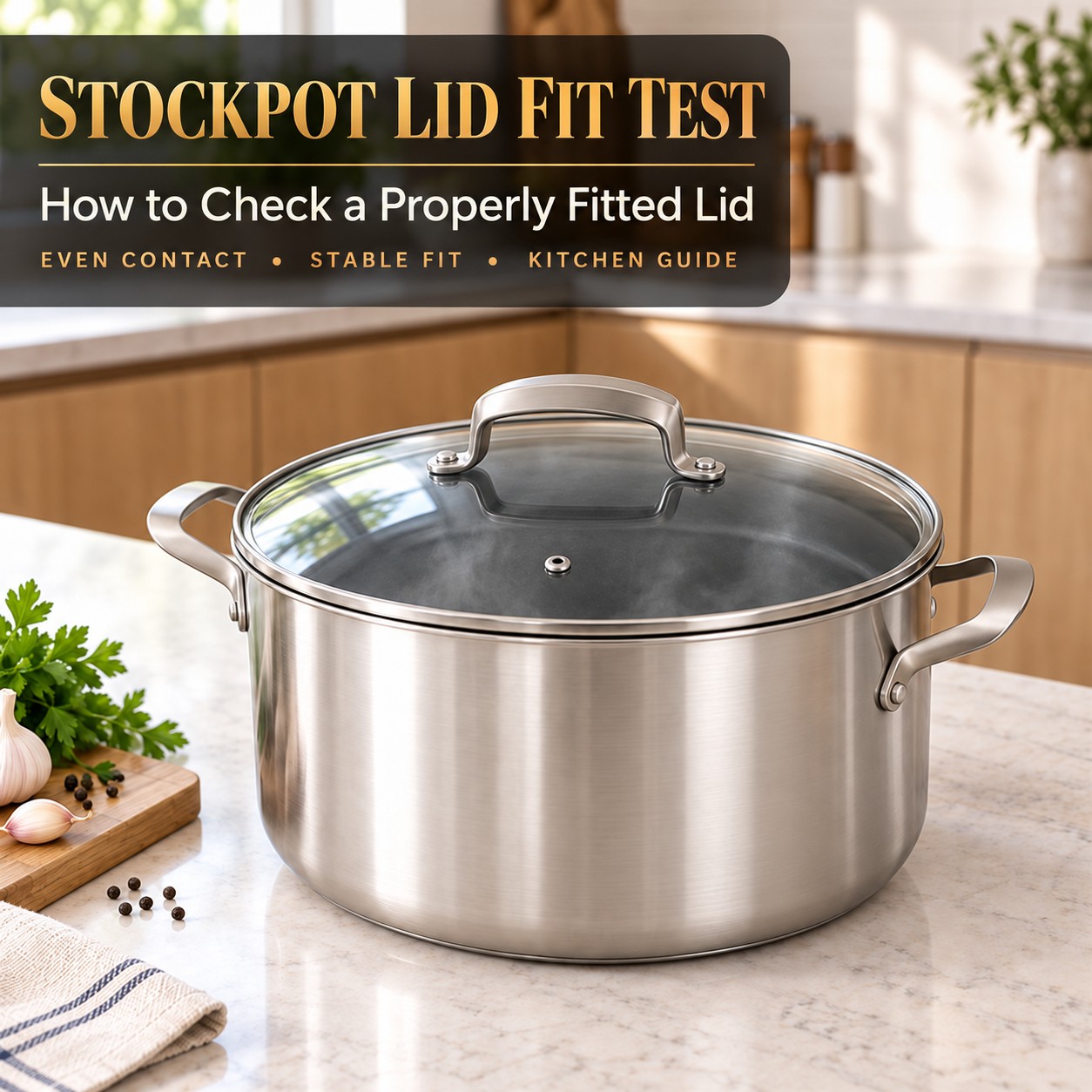
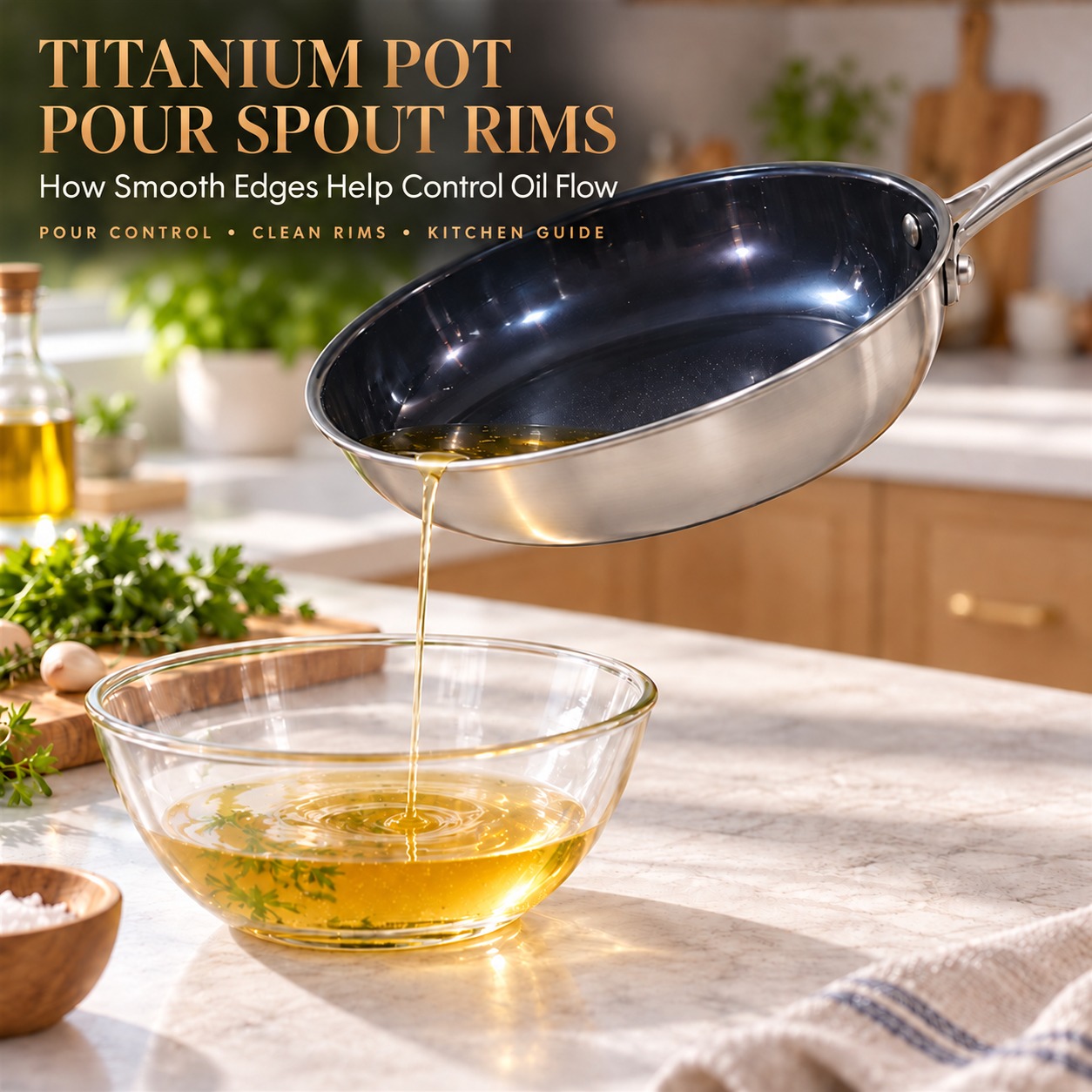
The main hard anodized aluminum vs titanium cookware differences are surface structure, food-contact material, heat behavior, coating risk, corrosion resistance, and long-term buyer positioning. Hard anodized aluminum starts with aluminum and hardens the surface through an electrochemical anodizing process. Titanium cookware, when it is real pure titanium or tri-ply titanium, uses titanium as the food-contact surface rather than relying on an aluminum surface.
That distinction matters because the two materials solve different problems. Hard anodized aluminum wins on fast heat response, lower cost, lower weight compared with many heavy pans, and easy everyday cooking when the surface is intact. Titanium wins on low-reactive food contact, corrosion resistance, nickel-free positioning, acidic-food confidence, and a stronger premium story when the product uses a real GR1 titanium inner layer.
The comparison becomes confusing because both categories are often mixed with coatings. Some hard anodized aluminum cookware has only the anodized surface. Other hard anodized pans add PTFE, ceramic, or another nonstick coating on top. Some titanium cookware is real pure titanium. Other products are aluminum pans with titanium-reinforced nonstick coatings. A useful comparison must ask what actually touches food.
For TITAUDOU, the strongest answer is not thin pure titanium alone. It is tri-ply titanium: a GR1 pure titanium food-contact layer, a 1050 aluminum core for heat spreading, and a 430 stainless steel exterior for strength and induction compatibility. This structure uses aluminum where aluminum performs best, but keeps the food-contact surface titanium.
1. Quick Difference Table: Hard Anodized Aluminum vs Titanium Cookware
If you only need the short version, compare the cooking surface first. Hard anodized aluminum is improved aluminum. Tri-ply titanium is a layered structure where titanium touches food and aluminum works inside the body as the heat spreader. These are different engineering ideas.
| Comparison Point | Hard Anodized Aluminum Cookware | Real Titanium / Tri-Ply Titanium Cookware | Buyer Meaning |
|---|---|---|---|
| Food-contact surface | Hard anodized aluminum, or a separate nonstick coating if added | GR1 pure titanium when correctly specified | Always identify what touches food before comparing safety or lifespan |
| Heat behavior | Fast heating and responsive because aluminum conducts heat well | Pure titanium conducts heat poorly, but tri-ply titanium uses a 1050 aluminum core | Hard anodized aluminum is simple and efficient; tri-ply titanium is engineered for balance |
| Coating question | May be bare anodized or coated with PTFE, ceramic, or another release layer | Real titanium is a metal surface; titanium-coated nonstick is a different category | Do not confuse anodizing or titanium with ordinary coating language |
| Acidic foods | Better than ordinary bare aluminum when intact, but surface condition matters | Strong low-reactive choice for tomato, vinegar, citrus, wine, and salty foods | Titanium has the clearer long-term acidic-food story |
| Durability | Durable when maintained, but scratched anodized surfaces or added coatings change the risk | GR1 titanium resists corrosion; TITAUDOU blue titanium can reach HV700-900 hardness | Titanium wins when the buyer wants a premium metal food-contact surface |
| Price position | Usually more affordable and widely available | Usually higher cost because titanium and tri-ply bonding are more demanding | Aluminum is value-focused; tri-ply titanium is premium-positioned |
This is why the phrase hard anodized aluminum vs titanium cookware differences should not be reduced to "which is safer?" Both can be reasonable when properly made and used. The real question is which surface, structure, and care rules match the buyer's cooking habits.
2. What Hard Anodized Aluminum Really Means
Hard anodized aluminum is not the same as soft, untreated aluminum. It is aluminum that has gone through an anodizing process to create a harder, more durable oxide surface. The result is more scratch resistant, more corrosion resistant, and more stable than ordinary bare aluminum. That is why hard anodized cookware is popular for daily pans, saute pans, and nonstick-style cookware bodies.
However, buyers must separate hard anodizing from extra nonstick coatings. The anodized layer is part of the aluminum surface. A PTFE, ceramic, or titanium-reinforced nonstick layer is an added food-contact surface. If a hard anodized pan has an added coating, the coating determines many care rules: maximum heat, metal utensil use, dishwasher tolerance, and replacement timing.
Hard anodized aluminum's biggest practical advantage is heat. Aluminum spreads heat quickly and responds quickly when the burner changes. For quick meals, eggs, vegetables, pancakes, and everyday sauteing, that responsiveness can feel convenient. It is also generally cheaper than titanium or complex tri-ply titanium cookware.
The limitation is surface dependence. If the anodized surface is deeply scratched or worn, it should not be treated like new. If a nonstick coating is added and begins peeling, flaking, or losing integrity, the product's useful food-contact life changes. A low price does not remove the need for inspection.
3. What Titanium Cookware Really Means
Titanium cookware also needs careful definition. A pure titanium pot, a tri-ply titanium pan, and a titanium-coated nonstick pan are not the same product. A thin pure titanium camping pot is excellent for light weight and boiling water, but it can develop hot spots during household frying. A titanium-coated nonstick pan may still be a coating-based aluminum pan. A tri-ply titanium pan is a layered home-kitchen design.
TITAUDOU's preferred premium structure uses GR1 pure titanium for the food-contact layer. GR1 is commercially pure titanium and is valued for corrosion resistance, clean taste, low reactivity, and nickel-free food contact. In selected blue titanium products, the blue surface is created by heating pure titanium to about 600 C. It is not paint, ceramic, enamel, PTFE, or sprayed nonstick coating.
The 1050 aluminum core is equally important. Pure titanium alone does not spread heat like aluminum. TITAUDOU uses aluminum inside the structure because aluminum is good at heat spreading. The food does not touch the aluminum core; it touches titanium. The 430 stainless steel exterior adds structure and supports induction compatibility.
That is the key TITAUDOU argument: titanium is not asked to do every job. Titanium handles food contact. Aluminum handles heat distribution. Stainless steel handles exterior strength and magnetic stove compatibility. This layered approach is more useful for daily kitchens than comparing raw metal names in isolation.
For users confused by titanium wording, read titanium coated vs real titanium cookware.
4. Safety and Food-Contact Differences
Safety depends on the real food-contact surface, not only the headline material. Intact hard anodized aluminum can be a reasonable cookware choice. It should not be described as the same as worn bare aluminum. The anodized layer is harder and more stable than untreated aluminum, and many households use it without issue.
The caution is surface condition and coating clarity. If the pan is bare hard anodized aluminum, inspect the anodized cooking surface. If it is coated hard anodized aluminum, inspect the coating. Do not keep using a pan when the cooking surface is peeling, flaking, deeply scratched, or visibly worn through. At that point, the food-contact surface no longer matches the original product claim.
Real titanium food contact has a different safety story. It is a stable metal surface rather than a hardened aluminum surface or a disposable release coating. It is also nickel-free when the food-contact layer is true pure titanium. For buyers who cook acidic foods frequently or want a low-reactive premium surface, titanium is easier to explain and easier to position.
This does not mean hard anodized aluminum is automatically unsafe. It means titanium has a clearer long-term food-contact story when the buyer's priorities are acidic foods, corrosion resistance, coating-free use, and material stability. The right conclusion is specific, not dramatic: hard anodized aluminum is a strong value choice when intact; tri-ply titanium is the stronger premium choice when food-contact confidence is the main goal.
For broader safety context, read is titanium cookware safe?.
5. Heat Performance: Aluminum's Strength and Titanium's Fix
Hard anodized aluminum has a natural heat advantage because aluminum is an excellent heat spreader. It heats quickly, responds quickly, and helps reduce severe hot spots when the pan body is well made. That is why many cooks like hard anodized aluminum for simple daily meals.
Pure titanium is not as conductive. A thin pure titanium pan can concentrate heat at the burner contact area, especially on gas or electric coil stoves. This can lead to scorching, uneven browning, or burnt rings if the user cooks as if the pan were aluminum. This is the honest weakness of pure titanium.
Tri-ply titanium solves the problem by keeping titanium where it matters and placing aluminum where it performs best. The 1050 aluminum core in TITAUDOU cookware spreads heat across the pan, while the GR1 titanium inner layer keeps food away from direct aluminum contact. The 430 stainless exterior helps the structure stay stable and induction-ready.
So the real comparison is not "aluminum heats well and titanium heats badly." The better comparison is this: hard anodized aluminum uses aluminum as both the base material and, sometimes, the food-contact surface; tri-ply titanium uses aluminum as a hidden heat core and titanium as the food-contact surface. This is a more precise way to explain hard anodized aluminum vs titanium cookware differences to buyers.
6. Scratches, Coatings, and Long-Term Durability
Scratches mean different things on different surfaces. On a coated hard anodized pan, scratches may damage the actual food-contact coating. On a bare hard anodized pan, deep scratches may compromise the anodized surface. On a titanium pan, cosmetic marks may not mean the surface is unsafe, but the buyer should still inspect for deep physical damage or residues.
TITAUDOU's blue titanium surface gives titanium a stronger durability story. The surface is treated at about 600 C and can reach HV700-900 hardness. This supports stronger resistance to steel wool, metal utensil contact, and repeated cleaning than ordinary soft titanium. The important point is that the blue surface is still titanium, not a coating hiding underneath.
Hard anodized aluminum can be durable, but its care rules are usually more conservative. Many manufacturers recommend hand washing, avoiding harsh abrasives, and using non-metal utensils, especially when there is an added nonstick coating. Those rules are not a flaw; they are part of owning that surface.
For buyers comparing lifespan, the question should be: What fails first? On many hard anodized nonstick pans, the coating may be the limiting factor. On bare hard anodized pans, surface wear is the concern. On tri-ply titanium, the buyer should verify titanium surface hardness, layer bonding, heat cycling, and whether the pan base remains flat under repeated heating.
For more on surface hardness, see titanium cookware hardness.
7. Which One Fits Which Buyer?
Hard anodized aluminum is a good fit for buyers who want fast heating, everyday convenience, lower cost, and a familiar nonstick or semi-nonstick cooking experience. It is especially attractive for households that mainly cook eggs, vegetables, light proteins, and quick meals on moderate heat.
Tri-ply titanium is a better fit for buyers who want a premium long-term material story. It is useful for acidic foods, seafood, soups, baby food, rice, wine sauces, citrus sauces, and salty cooking. It is also stronger for buyers who want nickel-free food contact and reduced dependence on added nonstick coatings.
If the buyer's top priority is maximum low-cost heat response, hard anodized aluminum is hard to beat. If the buyer's top priority is low-reactive food contact and premium durability, tri-ply titanium is stronger. If the buyer wants the easiest egg release with no technique, a coated hard anodized pan may feel easier when new. If the buyer wants a coating-free metal surface that can last longer with proper use, titanium makes more sense.
For product options, visit TITAUDOU titanium pots and pans.
8. B2B Sourcing Checklist
For importers, distributors, and private-label cookware brands, the comparison should become a checklist. Do not approve a product only because the supplier says "hard anodized" or "titanium." Ask for written specifications and testable claims.
| Buyer Check | Hard Anodized Aluminum | Tri-Ply Titanium | Why It Matters |
|---|---|---|---|
| Food-contact surface | Confirm bare anodized surface or added coating | Confirm GR1 pure titanium inner layer | Defines safety story and care rules |
| Coating declaration | Ask whether PTFE, PFAS, ceramic, or other coating is present | Confirm blue titanium is heat-treated surface, not sprayed coating | Prevents misleading claims |
| Heat structure | Check pan thickness, base flatness, and induction base if any | Check 1050 aluminum core and 430 stainless exterior | Explains real cooking performance |
| Durability testing | Review abrasion, dishwasher, heat, and coating-wear data | Review hardness, bonding, heat cycling, and base stability data | Supports long-term product claims |
| Packaging language | Avoid claiming bare anodized, nonstick, PFAS-free, or metal-utensil safe unless documented | Use precise claims such as GR1 titanium, no sprayed coating, HV700-900 where verified | Reduces compliance and return risk |
This is where TITAUDOU's structure is useful for B2B positioning. It does not simply say titanium is better than aluminum. It uses both: titanium for food contact, aluminum for heat distribution, and stainless steel for exterior structure. That is easier to defend than a one-material slogan.
For technical structure details, read tri-ply titanium cookware.
Conclusion
The most important hard anodized aluminum vs titanium cookware differences are not marketing words. They are surface, structure, heat behavior, coating status, maintenance, and buyer goal. Hard anodized aluminum is improved aluminum with strong heat response and good value. It is a reasonable choice when intact and used correctly. If it has an added coating, that coating must be evaluated separately.
Tri-ply titanium is a premium structure built around a different promise. The food-contact layer is GR1 pure titanium, the 1050 aluminum core spreads heat, and the 430 stainless exterior supports strength and induction. TITAUDOU's blue titanium surface is formed by high-temperature treatment, not by applying a coating, and its HV700-900 hardness supports a stronger durability story.
Choose hard anodized aluminum for fast heat, lower cost, and simple daily convenience. Choose tri-ply titanium for low-reactive food contact, acidic foods, nickel-free positioning, coating-free surface confidence, and premium long-term value. The best choice depends on what touches food and how the pan will actually be used.
Frequently Asked Questions (FAQ)
Q1: What are the main hard anodized aluminum vs titanium cookware differences?
Hard anodized aluminum is aluminum with a hardened anodized surface, often chosen for fast heating and value. Titanium cookware, when it is real pure or tri-ply titanium, uses titanium as the food-contact surface. The key differences are food-contact material, coating status, heat behavior, corrosion resistance, and long-term durability.
Q2: Is hard anodized aluminum cookware always coated?
No. Some cookware uses the hard anodized surface as the cooking surface. Other hard anodized pans add PTFE, ceramic, or another nonstick coating on top. Buyers should check the exact product specification because the care rules and replacement signs depend on what touches food.
Q3: Is tri-ply titanium better than hard anodized aluminum?
Tri-ply titanium is better for buyers who prioritize low-reactive food contact, acidic foods, nickel-free positioning, and premium coating-free durability. Hard anodized aluminum is often better for lower cost, fast heat response, and simple everyday convenience. Neither is universally better for every buyer.