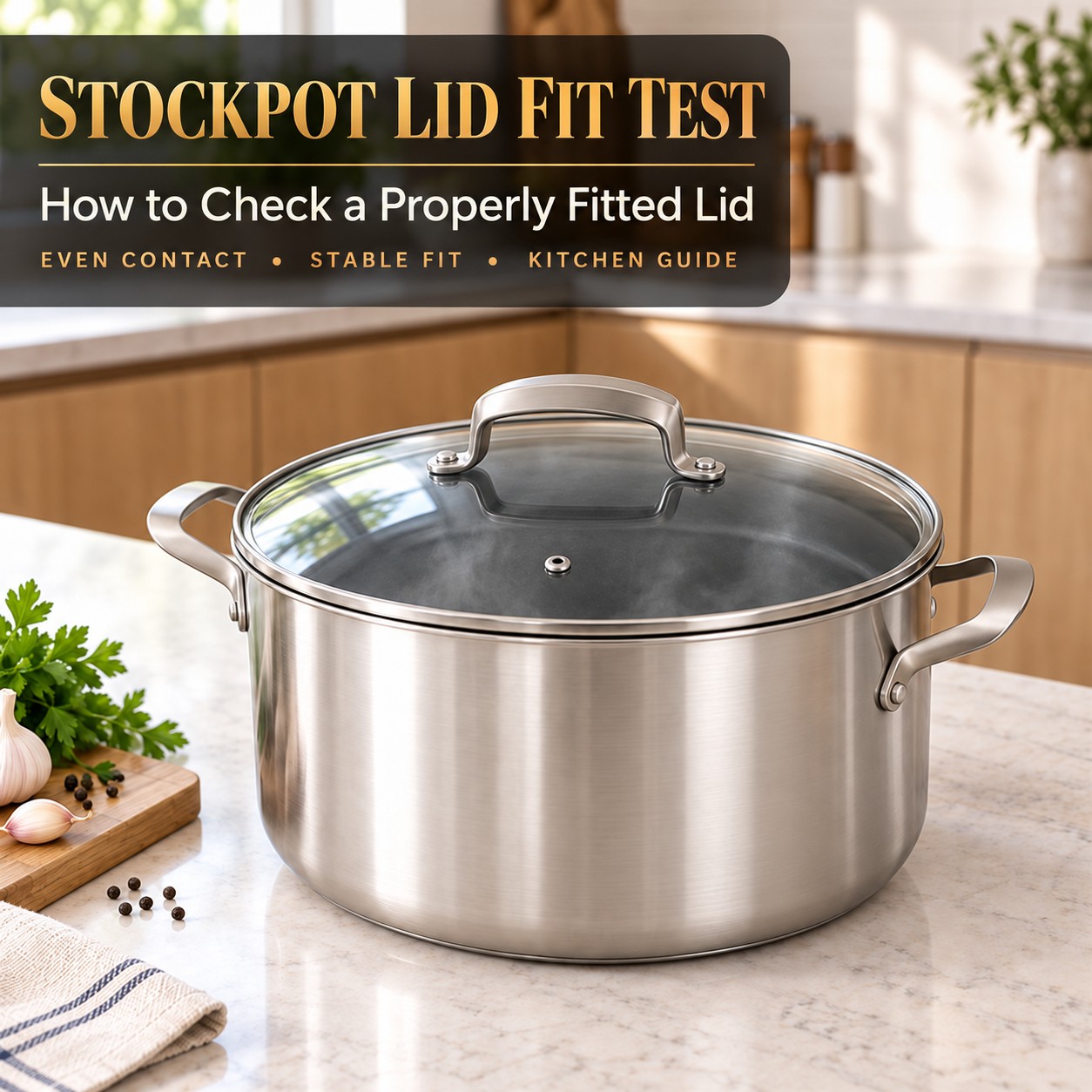
Tomato sauce, lemon butter, vinegar reductions, wine-based braises, pickled vegetables, and citrus marinades raise a common cookware question: will the acid react with the pan? With aluminum, unseasoned cast iron, copper, and damaged coatings, the answer can matter for taste, appearance, and metal migration. With titanium, the answer is usually more favorable, but it still depends on the exact cookware structure. Titanium cookware acidic foods safety is not the same for pure titanium, titanium-coated cookware, and tri-ply titanium cookware.
This article focuses only on acidic food scenarios. It is not another broad “is titanium cookware safe?” article. The practical questions are narrower: can you cook tomatoes in titanium pan without metallic taste? Does lemon juice attack titanium? Does vinegar cause titanium cookware metal leaching? Can a coated titanium-branded pan handle acidic sauces if the coating is scratched? Is long-term storage the same as cooking? These are the questions buyers actually ask before cooking tomato sauce, lemon chicken, or vinegar-based dishes.
The short version is that uncoated pure titanium and tri-ply titanium cookware with a pure titanium food-contact layer are strong choices for acidic foods. Titanium-coated cookware needs more caution because the coating and base metal control the risk. If the coating is damaged and the base is aluminum, acidic foods can become a problem even if the product name includes the word titanium.
For a broader material overview, read our guide to Titanium Cookware Safety: Pure Titanium, Coated, and Tri-Ply Cookware Compared. For structure details, see Tri-Ply Titanium Cookware: What It Is, How It Works, and Why Buyers Choose It. This page builds on those topics but stays focused on acidic foods.
1. Introduction: Why Acidic Foods Are a Cookware Safety Hotspot
Acidic foods create cookware anxiety because acid can interact with some metals. Tomatoes, lemon juice, vinegar, wine, fruit reductions, sour marinades, and fermented foods often have a low pH. When these foods contact reactive cookware, they may affect taste, color, seasoning layers, protective coatings, or metal release. That is why people are warned not to simmer tomato sauce for a long time in poorly seasoned cast iron or store lemon dressing in raw aluminum containers.
Titanium changes the discussion because it is known for corrosion resistance and a stable passive surface. But cookware buyers still need to ask what kind of titanium cookware they are using. Pure titanium cookware exposes food to titanium metal. Tri-ply titanium cookware can expose food to a pure titanium inner layer while using aluminum and stainless steel for heat and structure. Titanium-coated cookware may expose food to a coating rather than solid titanium.
This distinction is the main SERP gap. Many pages say “titanium is non-reactive,” but they do not explain what happens when the product is a coating, an alloy claim, or a clad structure. For acidic foods, the surface that touches food is the key. A pure titanium inner surface behaves differently from a scratched titanium-reinforced coating over aluminum.
The user also needs to separate cooking from storage. Cooking tomato sauce for dinner is different from leaving the sauce in the pan overnight. Short cooking exposure, long simmering, cooling, storage, dishwasher cleaning, and repeated scraping all create different risk levels. Good cookware advice should explain these differences instead of giving one generic yes or no.
This guide compares pure titanium, tri-ply titanium, titanium-coated cookware, stainless steel, aluminum, cast iron, copper, and nonstick cookware for acidic foods. It also gives B2B buyers a verification checklist before using claims such as “safe for acidic foods” or “non-reactive cooking surface” on packaging.
2. The Short Answer: Pure and Tri-Ply Titanium Are Strong Choices, Coated Pans Need Caution
The short answer is this: pure titanium cookware and tri-ply titanium cookware with a real pure titanium inner layer are strong choices for acidic foods. The titanium surface is corrosion resistant, low-reactive, and unlikely to give tomato, lemon, or vinegar-based dishes a metallic taste when the product is properly made and cleaned. This is why titanium is attractive for health-focused cookware lines.
Tri-ply titanium cookware can be especially practical because it combines titanium food contact with better heat distribution. A pure titanium surface protects the food-contact side, while an aluminum core spreads heat and a stainless exterior supports structure and cooktop compatibility. In acidic food cooking, that matters because sauces and reductions are often sensitive to scorching and hot spots.
Titanium-coated cookware needs caution. A coating may include titanium particles or titanium branding, but the coating is not the same as a pure titanium metal layer. If the coating is intact and the manufacturer allows acidic foods, short cooking may be acceptable. If the coating is worn, scratched, peeling, or thin at the edges, acid may reach the substrate. If that substrate is aluminum, the risk changes immediately.
The strongest rule is simple: check the food-contact layer. If the food touches uncoated titanium, the product is in a favorable category for acidic foods. If food touches a coating, the coating condition and manufacturer instructions matter. If food can reach aluminum, do not treat the product as acid-safe titanium cookware.
Avoid unsupported statistics such as saying a fixed percentage of disputes come from one product type unless the brand has real after-sales data. A more accurate industry observation is that many acidic-food complaints are caused by confusion between solid titanium surfaces and titanium-coated cookware. The word titanium on a listing does not prove that titanium is what touches the food.
| Cookware Type | Food-Contact Surface | Acidic Food Suitability | Main Risk | Best Use |
|---|---|---|---|---|
| Pure Titanium Cookware | Uncoated titanium metal | Strong choice for tomatoes, lemon, vinegar, and wine sauces | Heat distribution may be less even in thin single-wall pans | Health-focused cooking, sauces, light storage, low-reactivity use |
| Tri-Ply Titanium Cookware | Pure titanium inner layer over aluminum core and stainless exterior | Strong choice with better heat performance than single-wall titanium | Must verify real titanium inner layer and bonded structure | Daily home cooking, acidic sauces, premium cookware programs |
| Titanium-Coated Cookware | Nonstick or ceramic-style coating with titanium-related reinforcement | Depends on coating condition and brand instructions | Acid can reach substrate if coating is damaged | Short cooking only when coating is intact and approved |
| Titanium-Coated Aluminum Pan | Coating over aluminum body | Caution; avoid if coating is damaged | Exposed aluminum can react with acid | Low-acid cooking, gentle use, handwashing |
| 316Ti Stainless Cookware | Titanium-stabilized stainless steel, not pure titanium surface | Generally useful but not the same as pure titanium | Possible stainless-related migration depends on grade and condition | Stainless cookware buyers who understand alloy claims |
3. Why Acidic Foods React With Some Cookware and Why Titanium Is Different
Acidic foods can attack weak protective layers, dissolve small amounts of reactive metal, change food color, or create metallic taste. The reaction depends on pH, salt, cooking time, temperature, food composition, surface condition, and the cookware material. Tomato sauce with salt and long simmering is a different exposure than a quick squeeze of lemon juice at the end of cooking.
Aluminum is a common example. Raw aluminum can react with acidic foods and may discolor food or create metallic taste. Cast iron can react when seasoning is thin or damaged, adding iron flavor and potentially stripping seasoning. Copper is highly reactive unless lined. Stainless steel is generally much better, but grade, surface condition, and long acid exposure still matter. Nonstick performance depends on coating integrity.
Titanium is different because its surface forms a stable passive oxide layer, commonly described as titanium dioxide or TiO2. This layer is very thin, but it helps protect the underlying metal from corrosion. The exact thickness and behavior depend on processing and environment, so published nanometer values should be treated as technical references rather than universal cookware specifications. The practical point is that titanium is widely valued for passivation and corrosion resistance.
That passive surface is why titanium is often described as non-reactive in food-contact discussions. It is not that acid can never affect any titanium surface under any condition. It is that properly made pure titanium cookware is far less likely to create metallic taste or meaningful food-contact reaction under normal acidic cooking conditions than more reactive materials such as raw aluminum or unseasoned cast iron.
Migration data should be handled carefully. A supplier may have SGS, LFGB, FDA-related, or internal migration reports for a specific cookware sample and acidic simulant. Those reports can support claims such as “passed migration testing under defined conditions.” Without the report number, sample description, test liquid, temperature, and duration, a writer should not publish exact ion-release values as universal facts.
For brands, the correct claim is not “titanium never releases anything under all conditions.” The defensible claim is that a verified pure titanium food-contact layer is highly corrosion resistant and suitable for acidic foods when the finished product passes relevant food-contact and migration testing.
4. Pure Titanium Cookware: The Gold Standard for Acidic Foods
Pure titanium cookware acidic foods performance is strong because the cooking surface is uncoated titanium metal. When properly manufactured for food contact, this surface does not depend on a coating film to separate the food from the pan. That makes it attractive for tomato sauce, lemon butter, vinegar reductions, wine braises, fruit compotes, and other acid-forward recipes.
Pure titanium also avoids the common metallic taste issue associated with some reactive cookware. Tomato sauce cooked in reactive metal can taste flat, bitter, or metallic. A pure titanium surface is much less likely to alter the flavor of acidic ingredients. This matters for delicate sauces, citrus dishes, seafood with lemon, and reductions where off-flavors become concentrated.
The main limitation of pure titanium is usually not acid safety. It is heat behavior. Thin single-wall titanium cookware may develop hot spots because titanium is not a high heat-spreading metal compared with aluminum or copper. That means a pure titanium pan may be safe for tomato sauce but still require careful heat control to prevent scorching. Use lower heat, stir often, and avoid reducing thick sauces unattended.
Pure titanium can also discolor after heat exposure. A gold, blue, purple, or rainbow tone is often surface oxidation or heat tint, not proof of acid damage. If the surface remains smooth, clean, and intact, discoloration is usually cosmetic. Buyers should not confuse normal titanium color change with corrosion.
Do not scrub pure titanium aggressively with steel wool unless the manufacturer allows it. Titanium is tough, but visible scratches can affect appearance and cleaning feel. The passive layer can reform, but repeated rough abrasion is still poor care. Use soft sponges for daily cleaning and baking soda or mild cleaners for residue.
Short-term storage of acidic foods in pure titanium is usually less concerning than in raw aluminum or cast iron, but cookware is still not the best long-term food storage container. For best flavor, hygiene, and surface care, transfer cooled tomato sauce or vinegar-heavy dishes to glass, ceramic, or food-grade storage containers after cooking.
5. Tri-Ply Titanium Cookware: Safe Food Contact With Better Heat Distribution
Tri-ply titanium cookware is designed to solve the performance weakness of single-wall titanium while keeping titanium at the food-contact surface. A typical structure uses a pure titanium inner layer, aluminum heat-spreading core, and stainless steel exterior. For acidic foods, the important point is that the food touches titanium, not aluminum.
This makes tri-ply titanium cookware acidic foods performance especially practical. Tomato sauce, lemon reductions, vinegar glazes, and wine-based dishes benefit from an inert food-contact surface, but they also need controlled heating. The aluminum core helps spread heat across the pan, reducing the chance of one small area scorching while another area remains cooler.
The stainless exterior supports structure, durability, and, when magnetic stainless is used, induction compatibility. It does not need to be the food-contact layer. The titanium inner layer provides the acid-facing surface. The aluminum core improves thermal behavior. The stainless exterior protects and supports the body. Each layer has a job.
Compared with pure titanium cookware, tri-ply titanium is usually better suited for daily home cooking when sauces, sauteing, and reductions are common. Pure titanium can be excellent for lightweight or specialty use, but tri-ply construction gives buyers a more familiar cooking response. This matters for acidic foods because many of them are cooked slowly, reduced, stirred, and reheated.
Safety claims should still be verified. A supplier should provide material documents, layer structure, food-contact reports, and migration testing where applicable. If the brand wants to state “safe for acidic foods,” the report should match the finished pan, not only a raw titanium sheet. Handles, rims, polishing, cleaning residues, and edge treatment are part of the finished product.
For a deeper explanation of the material stack, read Tri-Ply Titanium Cookware: What It Is, How It Works, and Why Buyers Choose It. For product options, see TITAUDOU titanium pots and pans.
6. Titanium-Coated Cookware: Acidic Food Risks You Need to Know
Titanium-coated cookware is the category most likely to confuse buyers. In many products, titanium is used as a coating reinforcement, a marketing phrase, or a surface technology. The food-contact surface may be a nonstick or ceramic-style coating, not a solid titanium metal layer. Acidic food safety therefore depends on coating integrity and substrate exposure.
If the coating is intact and the brand allows acidic foods, short cooking may be fine. But if the coating is scratched, peeling, blistered, or worn, acidic foods can reach the material underneath. If the substrate is aluminum, acid exposure may create discoloration, metallic taste, or increased metal migration concerns. If the substrate is stainless steel, the risk profile is different but still not the same as pure titanium.
The coating thickness and chemistry are not obvious to the customer. A product page may say titanium coating, titanium reinforced, granite titanium, titanium ceramic, or titanium nonstick. These phrases do not prove acid resistance. Buyers should look for the actual care instructions: Can the coating be used with tomato sauce? Is vinegar allowed? Can food be stored in the pan? What should users do if the coating is scratched?
Avoid publishing unsupported claims such as “all titanium coatings are below a specific thickness” unless you have the product specification. Coatings vary. The important practical point is that a coating is a wear layer. Acidic foods are safer when the coating is intact, but the answer changes when the surface is damaged.
For titanium-coated cookware, do not store acidic foods in the pan. Even if short cooking is allowed, storage increases contact time and gives acid more opportunity to work at scratches, edges, or weak areas. Transfer tomato sauce, citrus marinades, and vinegar-based dishes to glass or ceramic containers after cooking.
For brands, the packaging should not say “safe for acidic foods” unless the claim applies to the finished coated product under defined conditions. Better wording may be: “Suitable for normal cooking use; avoid long-term storage of acidic foods; discontinue use if coating is damaged.” Clear wording reduces complaints and improves trust.
7. Titanium vs. Other Cookware for Acidic Foods: A Comparison Table
A comparison table helps buyers see why titanium is attractive for acidic foods. The key categories are food-contact reactivity, metal leaching risk, flavor impact, and heat distribution. No cookware material is perfect. Pure titanium has excellent acid resistance but weaker heat spreading. Aluminum spreads heat well but reacts when raw. Cast iron can be safe in many uses but needs seasoning care. Stainless steel is widely used but depends on grade and exposure conditions.
| Cookware Type | Acidic Food Suitability | Metal Leaching / Reaction Risk | Food Taste Impact | Heat Distribution |
|---|---|---|---|---|
| Pure Titanium | Strong for tomatoes, lemon, vinegar, and wine sauces | Low when properly made and uncoated | Very low metallic taste risk | Can be uneven in thin single-wall pans |
| Tri-Ply Titanium | Strong, with titanium food-contact layer and better cooking control | Low when titanium inner layer is verified | Very low metallic taste risk | Better due to aluminum core |
| Stainless Steel | Generally good, especially higher-quality food-contact grades | Low to moderate depending on grade, surface, salt, acid, and time | Usually neutral | Good when clad or thick enough |
| Raw Aluminum | Poor for acidic foods unless coated or lined | Higher reaction risk with acid | Can create metallic taste or discoloration | Good heat distribution |
| Cast Iron | Acceptable for short cooking if well seasoned; not ideal for long acidic simmering | Iron release can increase with acid and damaged seasoning | Can add metallic taste | Good heat retention but can have hot spots |
| Copper | Not suitable unless lined | Copper reaction risk if unlined | Can affect taste | Excellent heat response |
| Nonstick / Coated | Depends on coating condition and manufacturer instructions | Risk rises when coating is damaged | Usually neutral when intact | Often good due to aluminum base |
This comparison does not mean titanium is the best answer for every recipe or every buyer. It means titanium has a strong acid-contact story when the food-contact surface is real titanium. If the product is titanium-coated, the coating system must be evaluated separately.
8. Cooking vs. Long-Term Storage: Key Differences for Titanium Cookware
Cooking and storage are not the same. During cooking, food is heated, stirred, served, and usually removed from the pan. During storage, acidic food may sit against the surface for hours or days. Contact time increases, moisture remains trapped, and salt and acid continue working. This is why many cookware materials tolerate cooking better than storage.
Pure titanium and tri-ply titanium with a pure titanium inner surface are strong choices for cooking acidic foods. They can handle tomato sauce, lemon, vinegar, wine, and fruit-based recipes under normal cooking conditions. Long simmering still requires heat control, especially with thick sauces, because scorching is a cooking-performance issue rather than an acid-safety issue.
Short-term cooling in the pan is usually not the same as long-term storage. Letting a tomato sauce rest briefly before serving is different from refrigerating it in the cookware overnight. For best practice, transfer acidic leftovers to glass, ceramic, or appropriate food-storage containers once the food has cooled enough to handle.
For titanium-coated cookware, avoid acidic storage altogether. Coated surfaces can have scratches, pinholes, worn edges, or damaged spots that are not obvious at first glance. Acidic storage increases the chance of attacking those weak points. If the pan is coated and the dish is acidic, cook gently, serve, and clean the pan soon afterward.
For B2B brands, packaging should distinguish cooking and storage. A claim such as “safe for acidic foods” should say whether it refers to cooking, short contact, or storage. If the product is not intended for food storage, say so. Clear instructions protect the user and reduce return disputes.
The practical rule is simple: titanium is an excellent cooking surface for acidic foods when it is the real food-contact layer, but cookware is still cookware, not a storage container. Good kitchen practice is to cook in the pan and store in a storage vessel.
9. B2B Guide: Verifying Acidic Food Safety for Brands and Importers
Brands and importers should treat acidic-food safety as a test-backed claim, not only a marketing phrase. The first step is material verification. Confirm whether the food-contact surface is GR1 pure titanium, another titanium grade, stainless steel, coating, or titanium-reinforced nonstick. The claim must match the actual surface.
The second step is migration testing. Ask for finished-product food-contact testing using relevant acidic simulants or acidic food conditions for the target market. For European sales, buyers may request LFGB-related or EU food-contact migration reports. For the United States, buyers should review applicable FDA food-contact requirements and supplier declarations. The exact test plan depends on product structure and market.
The third step is acidic soak or cooking simulation. A useful internal test may expose the finished pan to tomato-based liquid, vinegar solution, or another defined acidic medium for a set duration and temperature. The result should be evaluated for surface change, taste impact, metal migration where applicable, coating change, and cleaning behavior. Do not copy a generic “24-hour tomato test” into marketing unless the actual product passed that test under documented conditions.
The fourth step is coating durability review. If the product is titanium-coated, evaluate adhesion, abrasion, scratch resistance, and post-scratch acid exposure. A coating that passes a new-surface test may not perform the same after wear. Claims should reflect realistic use, not only perfect laboratory samples.
The fifth step is packaging language. Use “safe for acidic foods” only when the finished product supports it. If the claim applies only to pure titanium or tri-ply titanium, say so. If coated cookware should not be used for acidic storage, say so. Avoid letting a broad titanium claim cover every product in a catalog.
The sixth step is customer education. Add care instructions for tomato sauce, vinegar, lemon, wine reductions, cleaning, storage, and coating damage. Customers appreciate clear rules more than vague premium claims. A brand that explains the difference between cooking and storage will usually face fewer complaints.
TITAUDOU can support brands with tri-ply titanium cookware structure, sample review, OEM/ODM customization, and documentation planning. Contact us through the titanium cookware supplier page to discuss acidic-food safety positioning, material reports, and sample testing for your target market.
Practical cooking examples for acidic foods.
For tomato sauce, the main cooking issue is usually scorching rather than titanium reaction. Use medium or medium-low heat, stir frequently, and avoid reducing a thick sauce unattended. Pure titanium gives a clean food-contact surface, while tri-ply titanium gives better heat spread for long simmering. If the pan is titanium-coated, avoid using it once the coating is scratched or dull because acid can reach weak spots more easily.
For lemon and citrus dishes, titanium is useful because it does not usually add metallic flavor to delicate sauces. Add lemon juice near the end of cooking when the recipe calls for freshness, or simmer it gently when making a citrus glaze. The same care rule still applies: use the right heat level and avoid scraping the pan with sharp metal tools. A good titanium surface solves the reactivity concern, but it does not replace normal cooking technique.
For vinegar reductions and pickling liquids, contact time matters. A quick pan sauce made with vinegar is a normal acidic cooking task for pure titanium or verified tri-ply titanium cookware. Long-term storage is different. Once the dish is finished, transfer vinegar-heavy leftovers or pickling liquid to glass, ceramic, or a dedicated food-storage container. This protects the cookware finish and makes the storage claim easier to defend.
For wine-based sauces, pay attention to both acid and sugar. Wine reductions can become sticky as water evaporates and sugars concentrate. If the heat is too high, the sauce may burn before the cookware material becomes the issue. Tri-ply titanium is useful here because the aluminum core can help moderate hot spots while the titanium inner layer keeps food contact clean and low-reactive.
How to read acidic-food claims on product pages.
A strong product page should say more than “acid safe.” It should identify the food-contact layer, explain whether the product is uncoated or coated, and state whether acidic-food use means cooking only or also short storage. If the cookware is tri-ply titanium, the page should say that the titanium inner layer contacts food and that the aluminum core is sealed inside the structure. If the cookware is coated, the page should explain what happens when the coating is damaged.
Buyers should be cautious with claims that use medical, aerospace, or corrosion language without connecting those claims to the finished cookware. Titanium as a material has strong corrosion resistance, but the customer is buying a pan, not a raw titanium sample. The finished pan includes forming, polishing, edge treatment, handles, welding or riveting, cleaning residues, packaging, and instructions. Acidic-food safety should therefore be supported by finished-product evidence.
A useful buyer question is: “Can you provide the food-contact report for this exact SKU?” Another is: “Was the sample tested after normal cleaning and handling, or only as a fresh material coupon?” These questions help separate real acid-safety verification from vague marketing. They also help brands avoid publishing numbers copied from another product, another alloy, or a raw material certificate.
Maintenance after cooking acidic foods.
After cooking tomato, lemon, vinegar, or wine-based recipes, let the pan cool enough to handle, then wash it with warm water, mild detergent, and a soft sponge. If residue sticks, soak it rather than scraping aggressively. If white marks appear after washing, they are often mineral deposits from water rather than acid damage. Diluted vinegar followed by rinsing and towel drying can help remove those marks.
If the surface shows rainbow color after cooking, evaluate texture and cleanliness before assuming damage. Titanium and stainless surfaces can show heat tint. A smooth, clean, stable surface is usually a cosmetic issue, while peeling coating, rough exposed substrate, deep pits, or flaking material should be treated as a warning sign. For coated cookware, stop using the pan according to the manufacturer guidance if the coating is visibly compromised.
Final buyer checklist before cooking acidic recipes.
Before using a titanium pan for tomato sauce, lemon dishes, or vinegar reductions, check four points. First, confirm the cooking surface is uncoated titanium or a verified pure titanium inner layer. Second, inspect the surface for peeling coating, exposed substrate, deep scratches, or rough damaged areas. Third, choose moderate heat and stir thick acidic sauces frequently, because burning food is a heat-management issue, not a titanium safety issue. Fourth, remove leftovers after cooking and clean the pan promptly. These simple checks cover most real kitchen situations better than a broad material claim.
For brand buyers, turn the same checklist into product documentation. The user manual should say which acidic foods are suitable, whether storage is allowed, how to clean after tomato or vinegar use, and what to do if a coating is damaged. This prevents customers from treating a titanium-coated aluminum pan like a solid titanium pan and helps sales teams explain the difference between pure titanium, tri-ply titanium, and titanium-branded coatings.
Conclusion: Your Final Guide to Titanium Cookware and Acidic Foods
Titanium cookware acidic foods performance depends on the food-contact surface. Pure titanium cookware is a strong choice for tomatoes, lemon, vinegar, and wine-based cooking. Tri-ply titanium cookware adds better heat distribution while keeping titanium against the food. Titanium-coated cookware needs caution because acid safety depends on coating condition and substrate exposure.
For home cooks, the rule is practical: cook acidic foods in pure titanium or verified tri-ply titanium when you want a low-reactivity surface. Use lower heat for thick sauces, stir often, and transfer leftovers to glass or ceramic storage containers. Avoid long-term acidic storage in coated pans.
For brands and importers, the rule is documentation: verify the food-contact layer, run finished-product migration or acidic exposure tests, and make packaging claims that match the structure. The best acid-safe cookware claim is one that can be proven.
Frequently Asked Questions (FAQ)
Q1: Can you cook lemon in titanium cookware?
A: Yes, uncoated pure titanium and tri-ply titanium cookware with a pure titanium inner layer are strong choices for lemon-based dishes. The titanium surface is low-reactive under normal cooking conditions. Titanium-coated cookware depends on coating condition and brand instructions.
Q2: Does titanium cookware react with vinegar?
A: Properly made pure titanium cookware is highly corrosion resistant and normally does not react with vinegar in everyday cooking. For coated pans, the answer depends on whether the coating is intact. Avoid storing vinegar-heavy foods in coated cookware.
Q3: Is titanium better than stainless steel for tomato sauce?
A: Titanium has a stronger non-reactive food-contact story when the surface is real titanium. Stainless steel is also widely used for tomato sauce, especially in quality clad cookware, but grade, surface condition, salt, acid, and cooking time can affect migration and taste. Tri-ply titanium offers titanium food contact plus better heat distribution than single-wall titanium.