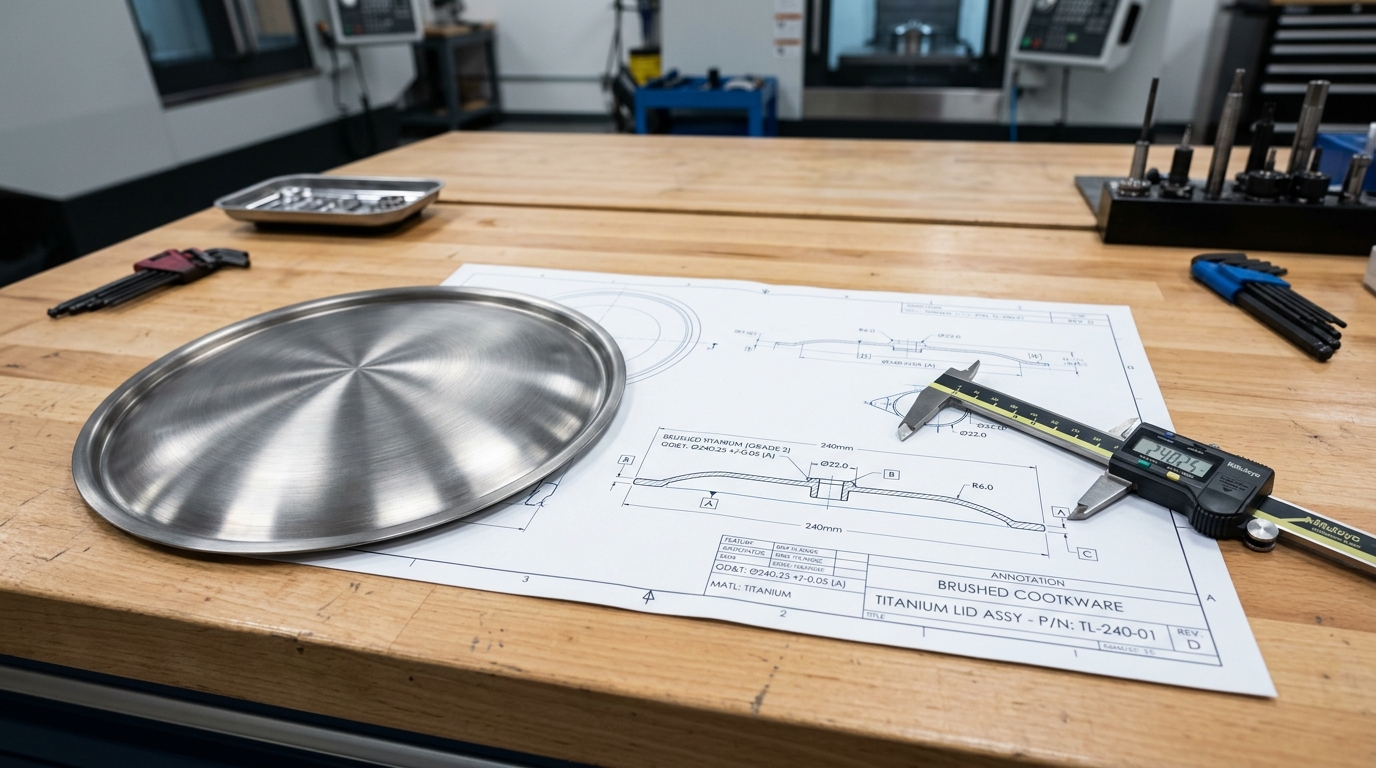
In the high-end cookware industry, titanium has transitioned from an exotic aerospace metal into the gold standard for pure, non-toxic culinary performance. However, as consumers and cookware brands explore the market, an essential question emerges: why is Grade 1 titanium cookware universally recognized as the definitive material for direct food contact? While industrial titanium alloys are engineered for high-stress aerospace structures, cookware demands an entirely different set of properties: zero toxic chemical migration, minimal interstitial impurities, and flawless forming ductility. Understanding why Commercially Pure Grade 1 titanium achieves this gold standard requires examining its crystalline structure, forming mechanics, and surface metallurgy.
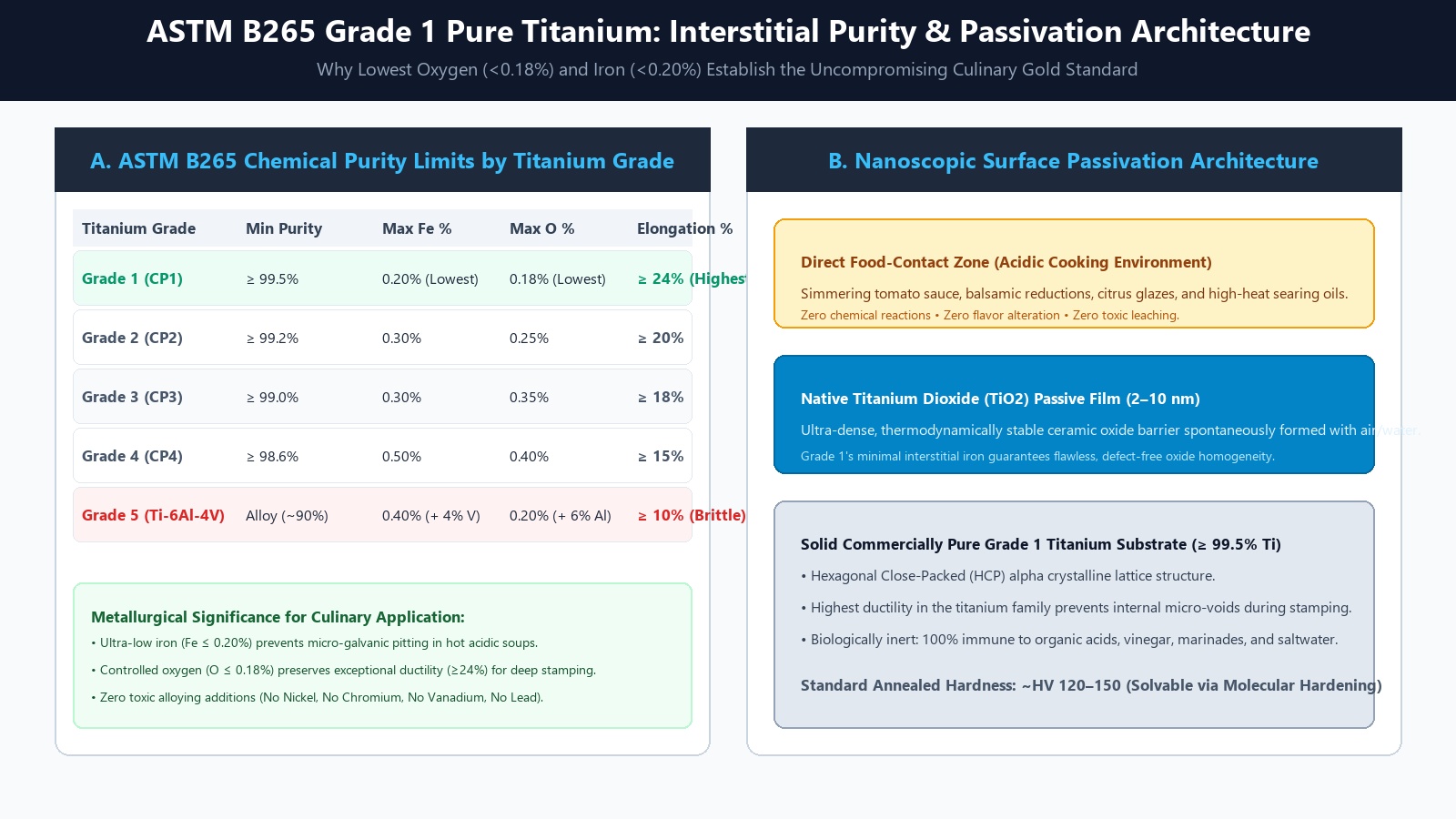
Figure 1: ASTM B265 chemical purity thresholds comparing interstitial element limits across titanium grades and the nanoscopic architecture of the native TiO2 protective passivation layer.
1. What Defines Grade 1 Titanium: Chemical Purity and Interstitial Limits
To understand why Grade 1 titanium is designated as the gold standard for culinary use, one must examine international metallurgical specifications. Under ASTM B265 for sheet metal and ASTM F67 for surgical implants, commercially pure (CP) titanium is classified into Grades 1 through 4. Grade 1 represents the highest purity level, with a baseline titanium content of at least 99.5% by weight.
In metallurgy, true purity is governed by interstitial elements—oxygen (O), iron (Fe), carbon (C), nitrogen (N), and hydrogen (H)—which reside within the titanium crystal lattice. For ASTM Grade 1 titanium, these elements are restricted to the lowest allowable thresholds across the entire metals sector: oxygen is capped at a strict maximum of 0.18%, iron is limited to 0.20%, carbon is held below 0.08%, nitrogen below 0.03%, and hydrogen to a negligible 0.015%. In particular, minimizing interstitial nitrogen and hydrogen is critical: excess hydrogen can cause hydride precipitation and severe low-temperature embrittlement, while elevated nitrogen hardens the metal excessively, destroying cold formability. By enforcing these minimal thresholds, Grade 1 maintains an uncompromised alpha-phase crystalline purity that resists micro-fractures.
This ultra-low interstitial concentration provides vital advantages for cookware. Higher levels of iron and carbon can create microscopic galvanic cells across grain boundaries, triggering localized micro-pitting when exposed to hot acidic foods like simmered tomato sauce or balsamic reductions. In Grade 1 titanium, the low iron content (Fe ≤ 0.20%) eliminates micro-galvanic corrosion. Furthermore, when exposed to oxygen, Grade 1 titanium spontaneously forms an ultra-dense, nanoscopic titanium dioxide (TiO2) passivation film. With clean grain boundaries, this protective oxide layer develops superior crystalline uniformity, ensuring the cooking surface remains chemically inert and completely taste-neutral.
2. The Commercially Pure Spectrum: Grade 1 vs. Grades 2, 3, and 4
Many kitchenware brands market products simply as "pure titanium cookware" without clarifying the specific material grade. In reality, the physical distinctions across commercially pure titanium grades (Grade 1 through Grade 4) are substantial. As interstitial oxygen and iron deliberately increase from Grade 1 to Grade 4, tensile strength rises, but forming ductility and chemical simplicity decrease.
Grade 2 titanium is the common industrial standard for chemical piping and marine heat exchangers. It permits up to 0.25% oxygen and 0.30% iron, delivering a higher yield strength (275 MPa vs. 170 MPa for Grade 1). Because Grade 2 is produced in higher industrial volumes, it is often less expensive. However, for food contact, this extra mechanical yield provides no culinary benefit and reduces forming ductility. Grades 3 and 4 permit even higher oxygen levels (0.35% and 0.40%), making them progressively stiffer and less ductile. Meanwhile, aerospace titanium alloys like Grade 5 (Ti-6Al-4V) add 6% aluminum and 4% vanadium for high-stress airframes—elements entirely unsuitable for prolonged food contact. Buyers can review our detailed comparison in Grade 1 vs Grade 5 Titanium Cookware: Why Commercially Pure GR1 Is Preferred.
| ASTM Titanium Grade | Titanium Purity (Min %) | Max Iron (Fe %) | Max Oxygen (O %) | Minimum Elongation (%) | Primary Industry & Suitability |
|---|---|---|---|---|---|
| ASTM Grade 1 (CP1) | ≥ 99.5% | 0.20% (Lowest) | 0.18% (Lowest) | ≥ 24% (Superior) | Culinary Gold Standard; Surgical Implants; Precision Forming |
| ASTM Grade 2 (CP2) | ≥ 99.2% | 0.30% | 0.25% | ≥ 20% | Chemical Processing; Industrial Pipes; Marine Desalination |
| ASTM Grade 3 (CP3) | ≥ 99.0% | 0.30% | 0.35% | ≥ 18% | Pressure Vessels; Moderate-Strength Industrial Hardware |
| ASTM Grade 4 (CP4) | ≥ 98.6% | 0.50% | 0.40% | ≥ 15% | High-Strength Airframes; Cryogenic Fittings |
| Grade 5 (Ti-6Al-4V) | Alloy (~90% Ti) | 0.40% (+ 4% V) | 0.20% (+ 6% Al) | ≥ 10% (Brittle) | Aerospace Turbines; Missiles; Not Recommended for Food Contact |
As shown above, Grade 1 titanium combines the lowest interstitial impurities with the highest unalloyed purity. This chemical baseline delivers predictable biocompatibility that higher-yield industrial grades cannot match.
3. Mechanical Forming Integrity: Deep Drawing, Ductility, and Micro-Crack Prevention
The metallurgical justification for Grade 1 titanium extends directly into cookware manufacturing. Deep sauté pans, stockpots, and woks require severe plastic deformation during fabrication. Metal circular discs are forced through hydraulic dies under hundreds of metric tons of pressure during the deep-drawing stamping process.
Titanium possesses a hexagonal close-packed (HCP) crystalline lattice at ambient temperatures, offering fewer slip systems than face-centered cubic (FCC) metals like stainless steel or aluminum. Consequently, forming deep pan contours requires superior elongation. Grade 1 titanium delivers an exceptional elongation rate of at least 24% (often reaching 28% to 30% in high-grade vacuum-annealed coil stock), whereas Grade 2 requires only 20% and Grade 4 drops to 15%. Furthermore, Grade 1 possesses a favorable strain-hardening exponent (n-value of approximately 0.12 to 0.15) and uniform plastic strain ratio. In high-tonnage hydraulic presses equipped with precision draw beads and specialized synthetic lubricants, this high ductility enables metal flow without necking or localized sidewall thinning, ensuring the finished pan maintains consistent gauge from center floor to outer rim.
When lower-ductility titanium is forced through deep-drawing tooling, the severe hoop stress frequently generates microscopic crystalline fissures (micro-cracks) along the transitional radii between the cookware floor and sidewalls, as well as along the rim. Although invisible to the unaided eye, these micro-cracks pose serious hygiene risks: cooking oils and acidic food juices penetrate the voids through capillary action. Under repeated heating cycles, trapped lipids polymerize and degrade, causing persistent odors and accelerating stress-corrosion fatigue. By specifying ASTM Grade 1 titanium, manufacturers eliminate micro-fissuring, ensuring a smooth, continuous crystalline surface that remains hygienic across decades of use. Standard testing protocols are detailed in Food Grade Titanium Purity Standards for Home Cookware.
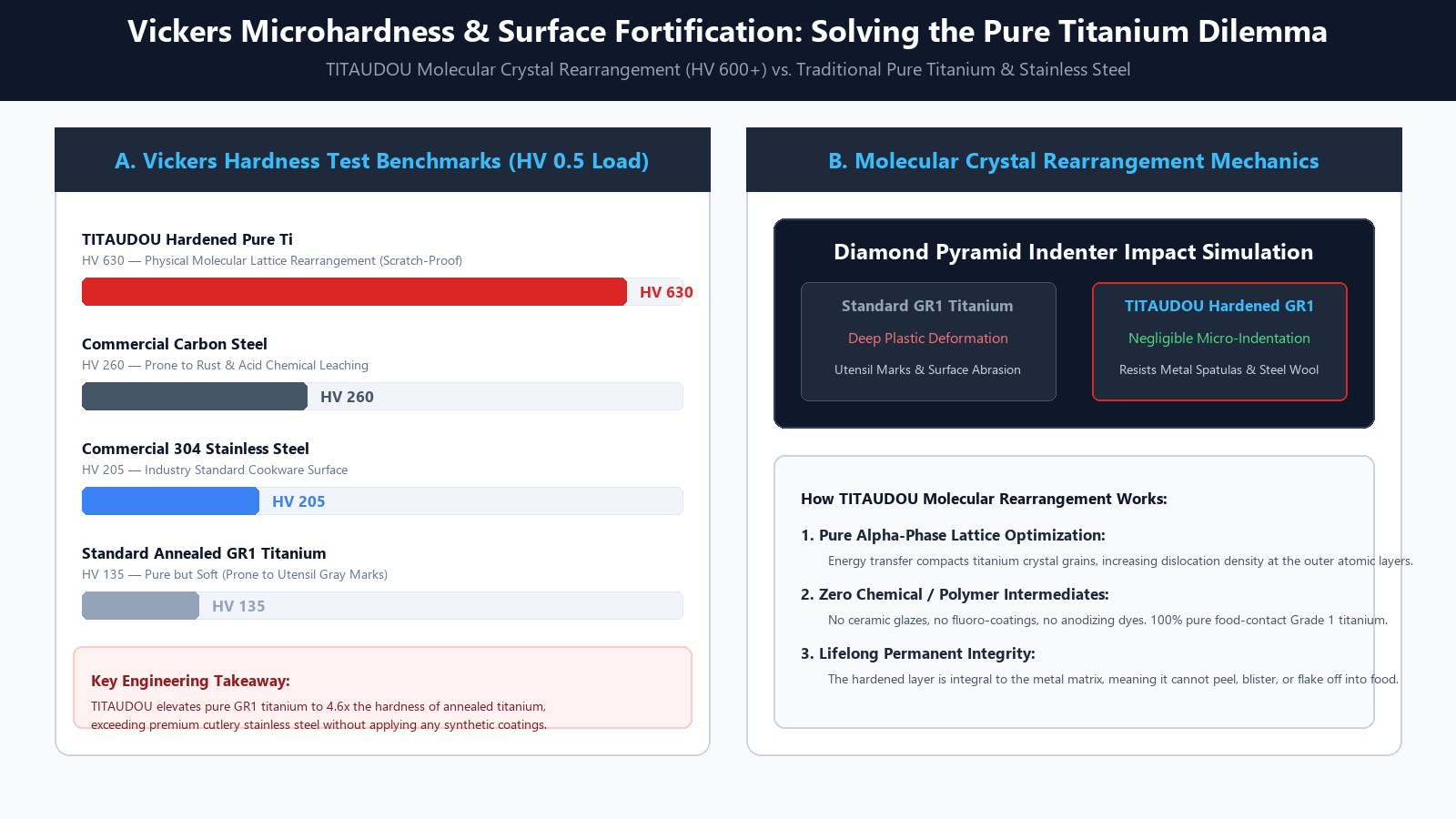
Figure 2: Surface microhardness comparison across standard cookware metals and the nanoscale atomic lattice fortification achieved through TITAUDOU molecular crystal rearrangement.
4. Overcoming the Hardness Dilemma: TITAUDOU Molecular Rearrangement Hardening (HV 600+)
Despite its unmatched chemical purity and forming ductility, conventional Grade 1 titanium presents a known physical challenge in the kitchen: surface hardness. In its standard annealed state, unalloyed Grade 1 titanium registers a Vickers microhardness of approximately HV 120 to HV 150. In comparison, standard 304 culinary stainless steel registers around HV 200, while commercial cutlery steel reaches HV 500 to HV 600. Because annealed titanium is softer than kitchen cutlery, consumers using metal spatulas or stainless steel scrubbers can leave visible cosmetic gray friction scuffs across the pan.
To mask this softness, some cookware makers apply PTFE nonstick coatings or ceramic sol-gel sprays over titanium. However, this negates the primary benefit of titanium. Over time, high cooking temperatures degrade synthetic coatings, causing blistering and shedding microplastics into meals. Once a coated pan is scratched, the coating cannot repair itself. For a full scratch safety evaluation, see Is Scratched Titanium Cookware Still Safe to Use? Bare Metal vs. Coated Pans.
To overcome this limitation without compromising food-contact purity, TITAUDOU developed a specialized metallurgical process: molecular crystal rearrangement surface hardening. Rather than adding chemical coatings, sol-gel sprays, or electroplated barriers, this thermodynamic process operates directly on the atomic crystal lattice of the Grade 1 titanium metal itself. By reorganizing titanium atoms at the immediate surface and near-surface grain boundaries, dislocation density increases significantly while compressive residual stresses are induced across the outer metal matrix. This compacts the hexagonal close-packed grain structure into an ultra-dense, fortified barrier without altering the pure elemental formulation. Consequently, the natural spontaneous TiO2 repassivation rate remains instant, functioning unhindered across thousands of thermal shock cycles.
Through this molecular rearrangement, TITAUDOU elevates the surface microhardness of bare Grade 1 titanium from HV 130 to an extraordinary HV 600 to HV 650+. This makes the cooking surface more than four times harder than standard pure titanium and substantially harder than 304 culinary stainless steel. Home cooks and professional chefs can safely use stainless steel spatulas, metal spoons, and wire scouring pads without gouging the metal. Crucially, because no synthetic polymers or chemical coatings are applied, the cooking surface remains 100% genuine Grade 1 titanium. It preserves permanent non-toxicity, complete biocompatibility, and natural TiO2 self-healing passivation, achieving scratch resistance alongside uncompromising metallurgical safety.
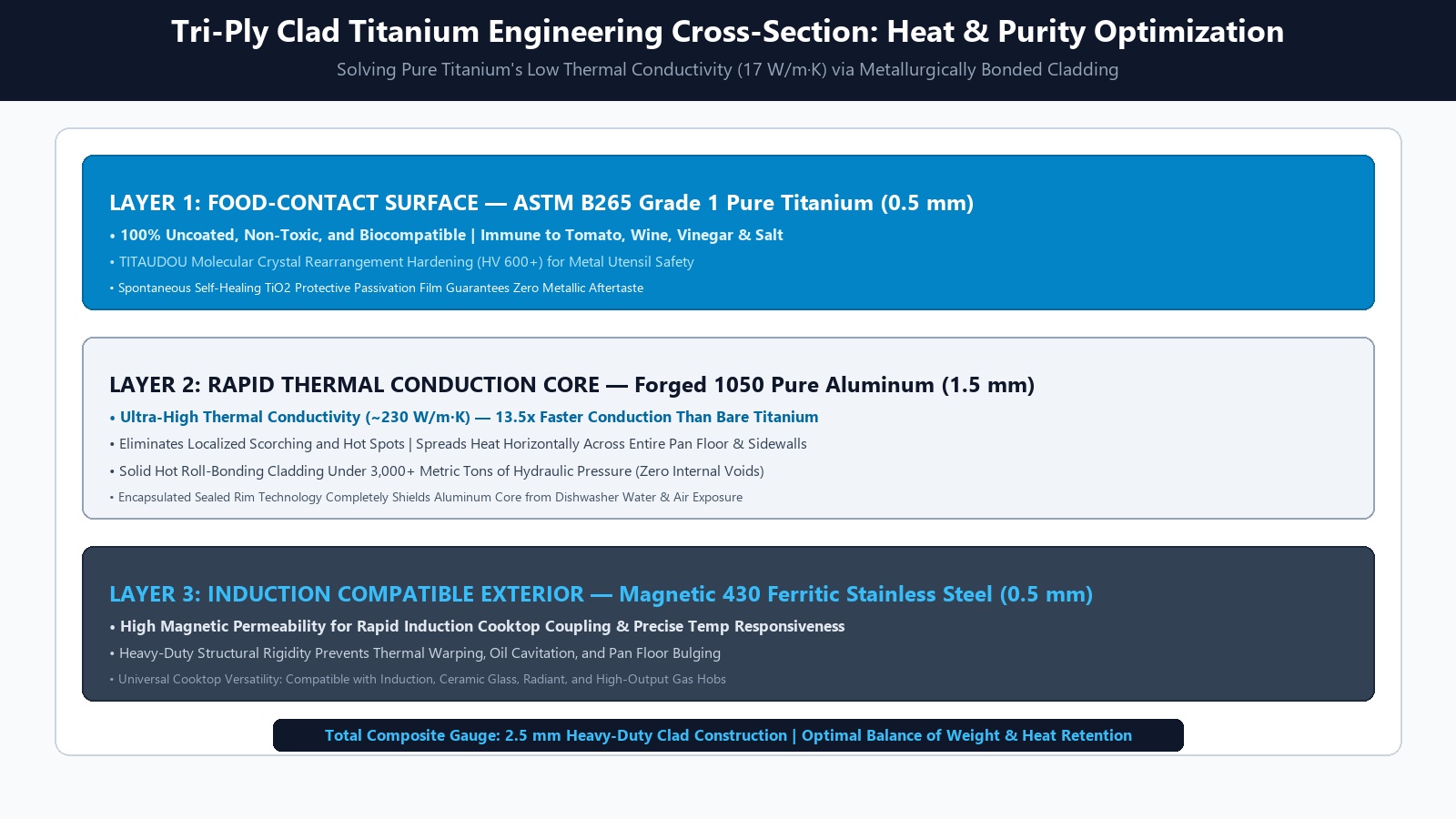
Figure 3: Metallurgical cross-section of advanced tri-ply composite titanium cookware, demonstrating how Grade 1 titanium food-contact purity unites with a rapid aluminum heat-conduction core.
5. Culinary Thermal Performance: Tri-Ply Cladding with a GR1 Food-Contact Layer
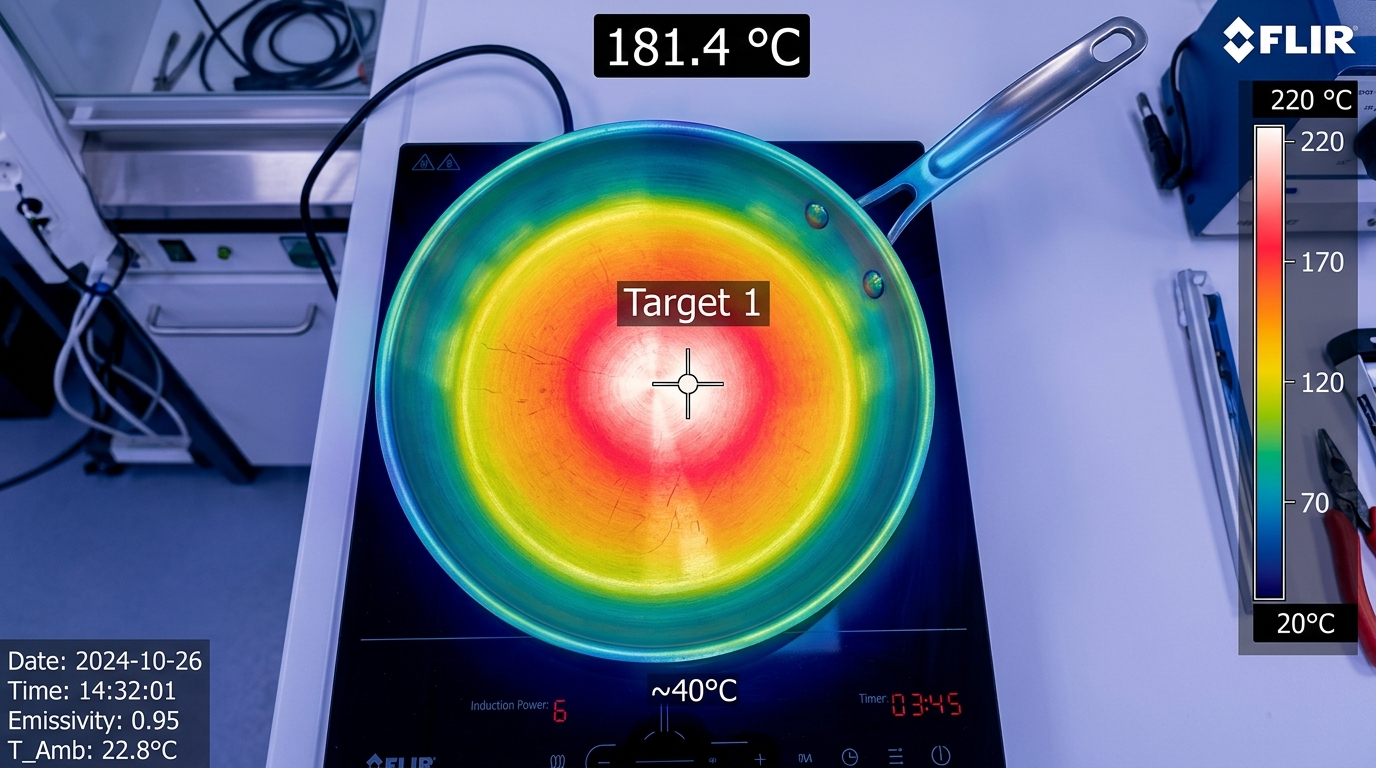
While Grade 1 titanium excels in chemical safety, it is a relatively poor conductor of heat. Unalloyed Grade 1 titanium has a thermal conductivity rating of roughly 16 to 17 W/m·K. In contrast, cookware aluminum conducts heat at 200 to 230 W/m·K—nearly thirteen times faster. When a pan is constructed from a single sheet of bare titanium, heat concentrates directly above the burner, creating hot spots that scorch ingredients in the center while leaving outer edges undercooked.
To preserve the safety of Grade 1 titanium while delivering professional cooking performance, engineers utilize Tri-Ply Clad Titanium construction. In this multi-layer structure, three metals are bonded together under high-tonnage hydraulic roll-bonding:
Layer 1 (Cooking Surface): A 0.5 mm layer of ASTM B265 Grade 1 pure titanium. This is the only metal touching food. Fortified with molecular rearrangement hardening, it ensures complete chemical neutrality, zero heavy-metal leaching, and full compatibility with metal spatulas.
Layer 2 (Thermal Core): A 1.5 mm core of forged 1050 pure aluminum. This layer acts as a rapid heat distributor, quickly absorbing burner energy and spreading it evenly across the cooking floor and sidewalls, completely eliminating localized scorching.
Layer 3 (Induction Exterior): A 0.5 mm casing of magnetic 430 stainless steel. This base provides instant induction compatibility and structural rigidity, preventing warping under rapid thermal changes. Comprehensive thermal tests are discussed in Solid Pure Titanium Cookware vs. Tri-Ply Clad Titanium: Which Heats More Evenly?. Furthermore, advanced manufacturers roll the outer rim to seal the aluminum core permanently against dishwasher detergent exposure.
6. B2B Verification and Quality Control: How Brands and Buyers Verify Genuine GR1
For cookware brands, private label importers, and commercial hospitality buyers, ensuring inventory utilizes genuine Grade 1 titanium is essential. Because marketing terms like "aerospace-grade" or "titanium-infused" are often loosely applied, B2B buyers must implement strict verification procedures before approving bulk orders.
The primary requirement is obtaining a certified Mill Test Report (MTR) under EN 10204 Type 3.1 for every master coil heat lot. A compliant MTR records exact laboratory spectrometer measurements of interstitial elements: oxygen must confirm ≤ 0.18%, iron ≤ 0.20%, and base purity ≥ 99.5%. In addition, mechanical test logs must confirm elongation ≥ 24%. Reputable manufacturers provide lot-specific MTRs alongside finished goods.
The second verification step involves incoming material testing via handheld X-ray Fluorescence (XRF) and Optical Emission Spectrometry (OES). XRF quickly confirms the surface is pure titanium free from toxic heavy metals like lead, cadmium, arsenic, and nickel, while OES precisely quantifies interstitial gases. Finally, finished pans must pass toxicological acid migration testing (4% acetic acid at 100°C for 2 hours) in accordance with US FDA 21 CFR 175.300 and European Resolution CM/Res(2013)9 standards. Commercial buyers exploring customized OEM/ODM production can consult our facility via Tri-Ply Pure Titanium Cookware Manufacturer: OEM/ODM Factory for Premium Kitchenware.
Conclusion
ASTM Grade 1 commercially pure titanium is the validated gold standard for direct food-contact cookware. By restricting interstitial oxygen and iron to strict industrial minimums, Grade 1 titanium guarantees an ultra-pure crystal surface that spontaneously generates a durable, self-healing TiO2 ceramic passivation shield. This provides absolute taste neutrality, zero heavy-metal leaching, and complete immunity to hot food acids. When combined with deep-drawing ductility, TITAUDOU molecular crystal rearrangement hardening (HV 600+), and tri-ply clad heat distribution, Grade 1 titanium delivers the ultimate culinary standard: non-toxic purity, even cooking, and scratch-resistant durability for a lifetime of cooking.
Frequently Asked Questions (FAQ)
Q1: Why is Grade 1 titanium preferred over Grade 2 for home kitchen cookware?
Although both Grade 1 and Grade 2 are commercially pure titanium, Grade 1 contains significantly lower allowable limits of interstitial oxygen (≤ 0.18% vs ≤ 0.25%) and iron (≤ 0.20% vs ≤ 0.30%). This superior purity provides cleaner grain boundaries, forming a denser and more uniform natural TiO2 protective oxide film. Furthermore, Grade 1 offers higher mechanical elongation (≥ 24% vs ≥ 20%), allowing precision deep-drawing without forming micro-cracks that trap oils and food residues.
Q2: Does bare Grade 1 titanium leach any harmful metals into acidic foods like tomato sauce or vinegar?
No. Bare, unalloyed Grade 1 titanium is completely biocompatible and inert. In contact with air or moisture, titanium spontaneously forms an impermeable ceramic layer of titanium dioxide (TiO2) that resists culinary acids, including citric, acetic, and malic acids. Standard migration testing confirms zero detectable leaching of heavy metals such as nickel, chromium, lead, or vanadium, preserving the natural taste and color of food. For biological details, explore Why Titanium Is Biocompatible for Food Contact: TiO2 Passivation, Scratches, and GR1 Safety.
Q3: How does TITAUDOU harden Grade 1 titanium cookware without adding synthetic nonstick coatings?
TITAUDOU uses a thermodynamic molecular crystal rearrangement process that acts directly on the atomic crystal lattice of Grade 1 titanium. By reorganizing titanium atoms at the surface and increasing dislocation density, surface microhardness increases from the standard annealed HV 130 to an extraordinary HV 600 to HV 650+. This physical fortification exceeds the hardness of cutlery stainless steel, allowing safe use of metal spatulas and scrubbers. Because no synthetic coatings or chemical glazes are used, the pan remains 100% pure Grade 1 titanium, completely non-toxic and biocompatible.