Professional chefs do not choose cookware only because it looks premium on a counter. They choose it because it survives repeated heat, fast service, acidic ingredients, heavy cleaning, and the small mistakes that happen in a real kitchen. For a chef or purchasing manager asking what to do when food completely fused to pure titanium pan surfaces during service, the answer starts with one distinction: a real uncoated hardened titanium surface can be cleaned far more aggressively than a coated nonstick pan.
TITAUDOU’s hardened titanium cookware is built around this practical requirement. On applicable uncoated hardened titanium cooking surfaces, a steel brush or steel wool can be used to remove carbonized food, burnt oil film, and stubborn residue without the same peeling risk found on chemical nonstick coatings. This does not mean every handle, lid, painted exterior, or titanium-colored coating can be scrubbed the same way. It means the food-contact hardened titanium surface is designed for stronger cleaning after professional use.
1. Why Professional Kitchens Need a Different Titanium Cookware Standard
A home cook may use one pan for eggs in the morning and vegetables at night. A professional kitchen may run the same pan through dozens of heating, washing, and storage cycles in one day. Proteins stick when the pan is too cold or too hot. Sugar sauces carbonize when a cook is interrupted. Oil can polymerize into a brown film after repeated searing. During service, a cook may not have time to soak a pan for an hour before the next order arrives.
This is why cookware for chefs should be judged differently from display cookware. The important question is not only whether the pan releases food on a perfect test video. The better question is whether the pan can recover after real use. When food looks welded to the surface, the cookware must allow a realistic cleaning method that does not destroy the food-contact layer.
TITAUDOU’s tailored titanium cookware solutions should be explained from this angle. A professional buyer needs a safe cooking surface, but also a durable cleaning surface. Real GR1 titanium, hardened surface treatment, tri-ply heat spreading, and suitable handle design all matter. The result is a product that can support restaurant-style use while giving buyers clear care instructions for staff training.
For buyers comparing product families, the titanium pots and pans category is the logical place to review available titanium cookware structures before choosing a model for professional use.
2. The Real Meaning of Food “Fused” to a Pure Titanium Pan
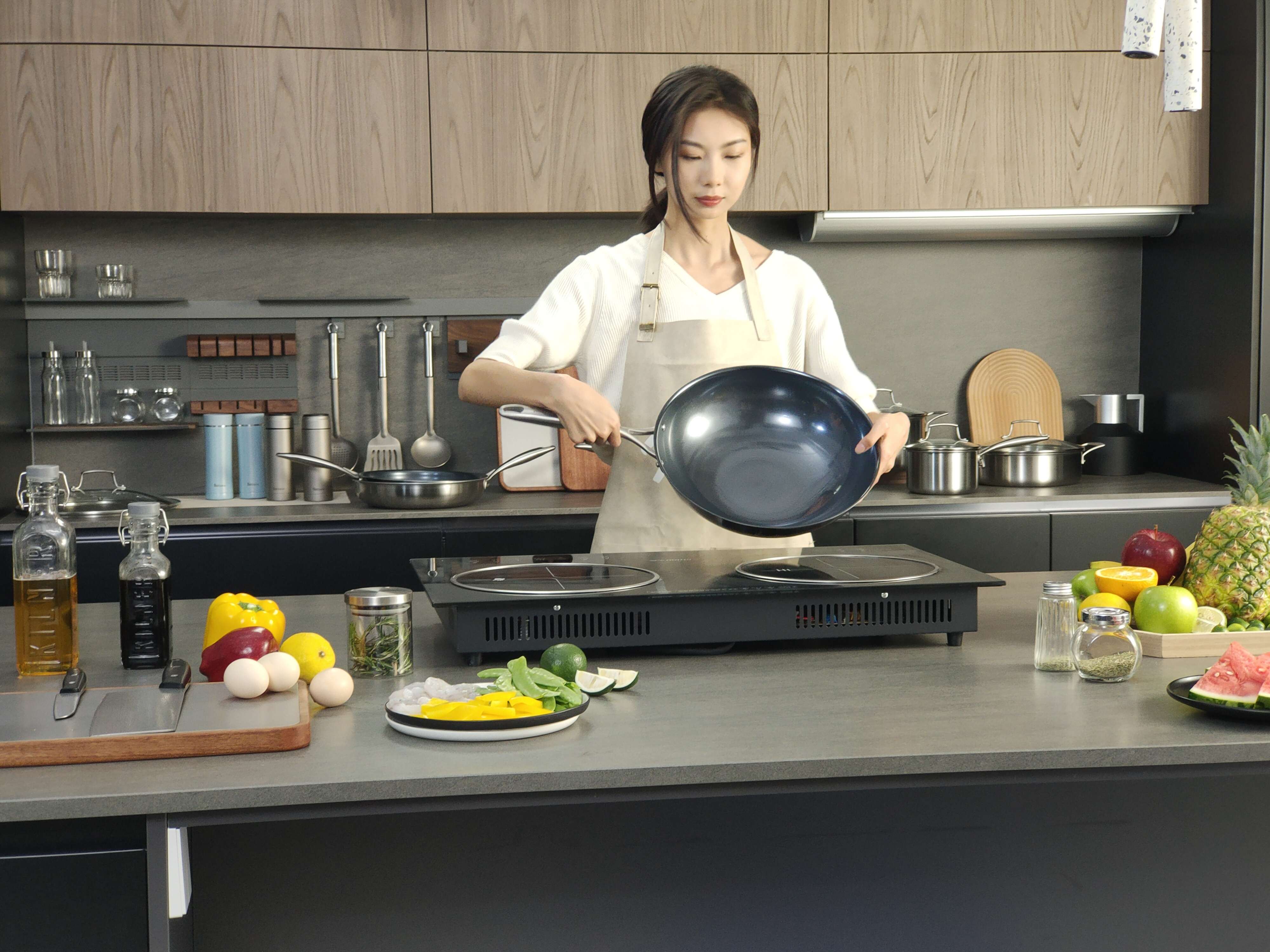
When cooks say food has fused to a pure titanium pan, they usually do not mean the food has chemically welded itself to titanium metal. In most kitchen cases, the problem is carbonized residue. Protein, starch, sugar, and cooking oil can dry, brown, and burn onto the surface until they feel like a hard layer. The bond can feel extreme because the residue has lost moisture and formed a compact carbon film.
The correct response is staged cleaning. First, let the pan cool naturally. Do not shock a hot pan with cold water. Second, remove loose food with a wooden or plastic scraper. Third, add warm water and mild detergent, then soak or gently heat the water in the pan to soften the burned layer. Fourth, use baking soda paste or a suitable cookware cleaner on the remaining spots. Fifth, if the surface is confirmed to be TITAUDOU hardened uncoated titanium, a steel brush or steel wool can be used for final mechanical removal.
That last step is where pure titanium differs from coated nonstick cookware. A PTFE or ceramic coating should not be attacked with steel wool because the functional layer can be scratched, thinned, or lifted. A real hardened titanium surface is not a sprayed plastic film. It is a metal surface that can tolerate stronger mechanical cleaning when the model and finish are confirmed.
| Kitchen problem | Likely cause | First cleaning step | Escalation for hardened titanium |
|---|---|---|---|
| Egg or fish stuck hard | Protein seized before release | Warm water soak and plastic scraper | Steel wool on confirmed uncoated hardened titanium |
| Black burned sauce | Sugar or starch carbonized | Simmer water, cool, then baking soda paste | Steel brush used locally, not on decoration or labels |
| Brown sticky film | Polymerized oil residue | Detergent wash, then mild abrasive paste | Fine steel wool with even pressure |
3. TITAUDOU Hardened Titanium: Why Steel Brush Cleaning Is Acceptable
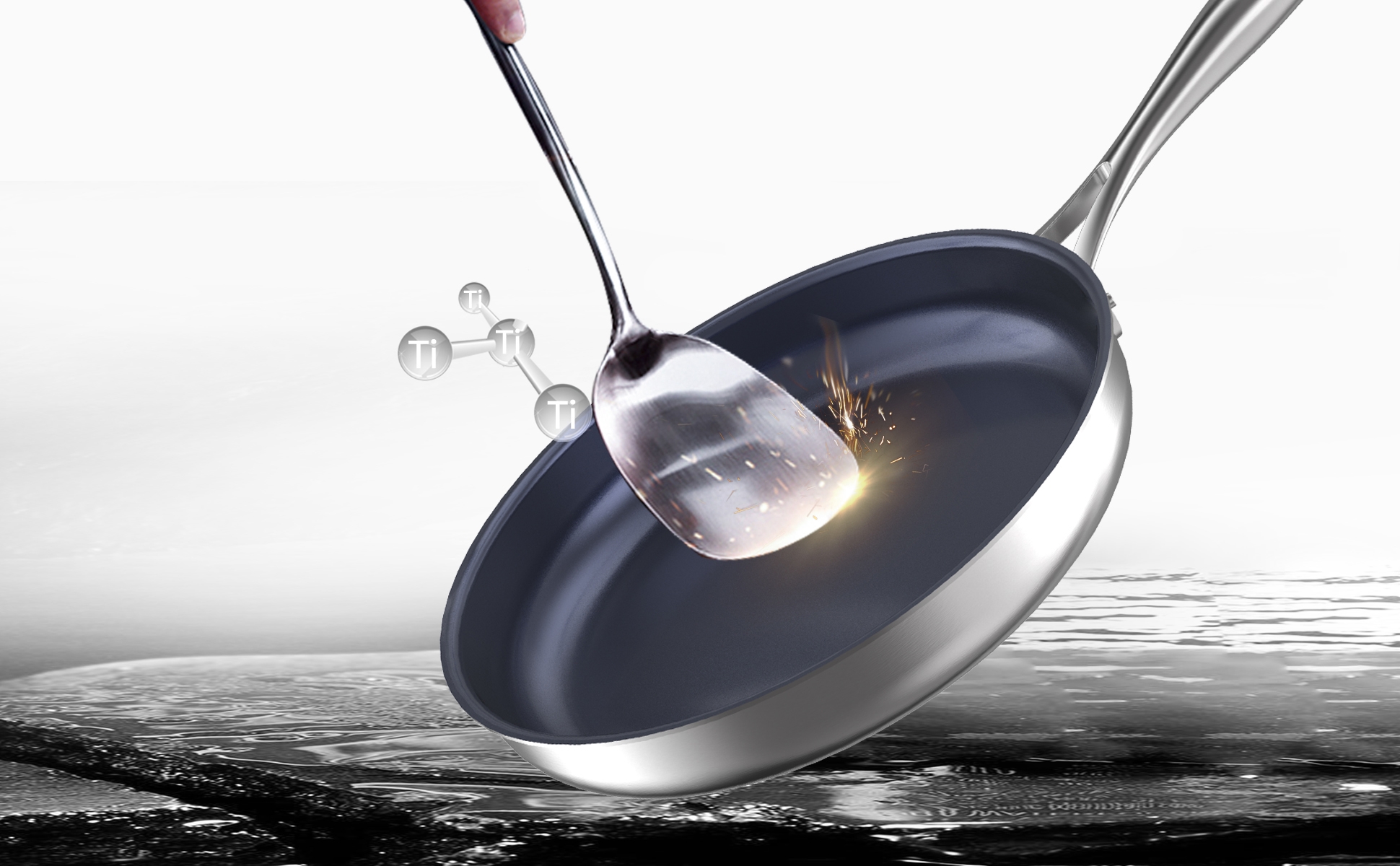
TITAUDOU’s hardening technology is designed to improve the working surface, not simply add a decorative shine. On selected cookware surfaces, titanium molecules are rearranged under high temperature, raising ordinary titanium surface hardness from about HV150-200 to about HV600-800. For professional kitchens, that difference is practical. It means the surface is better prepared for spatulas, repeated washing, and more forceful cleaning when burned food has to be removed quickly.
This is the right place to make the steel brush point clearly. TITAUDOU hardened titanium cookware is not afraid of steel brush and steel wool cleaning on the confirmed uncoated hardened titanium cooking surface. A chef can scrub carbonized residue without worrying that a chemical nonstick coating is peeling into the next dish. The food-contact surface remains metal, not a disposable sprayed film.
The claim still needs boundaries. Steel wool should be used after soaking and softening the residue, not as the first reaction to every light stain. It should not be used on a glass lid, wood handle, silicone part, printed logo, painted exterior, or any cookware marketed as titanium coating rather than real titanium surface. If the buyer is unsure which product they have, the safer starting point is the care guide on how to clean titanium cookware before escalating to stronger abrasion.
For a fuller explanation of the hardening side, procurement teams can review what makes titanium cookware scratch resistant. The important commercial point is simple: harder, coating-free titanium reduces the fear of permanent coating failure during cleaning.
4. Tailored Cookware for Chefs Means Matching the Pan to the Workstation
Not every chef uses the same pan in the same way. A breakfast station handles eggs and pancakes. A sauce station works with sugar, tomato, wine reductions, and oil films. A seafood station deals with delicate protein. A banquet kitchen may prioritize capacity and repeated washing. Tailored titanium cookware should be matched to these use cases instead of sold as one universal answer.
For high-frequency searing and sauté work, a tri-ply construction can help spread heat better than thin single-wall titanium. A pure titanium food-contact layer supports low reactivity with food. An aluminum middle layer improves heat distribution. A stainless exterior can support stove compatibility and structural strength. That construction helps chefs control heat, which is still the first prevention against food sticking and burning.
The cleaning advantage does not replace cooking technique. Even on hardened titanium, food may stick if the pan is misused. The pan should be preheated correctly, oil should be added at the right time, and delicate foods should be allowed to release before forcing them. If a kitchen repeatedly sees food completely fused to pure titanium pan surfaces, the buyer should review both cookware surface condition and staff heat control.
This is why a professional cookware supplier should provide not only a product, but also operating instructions. TITAUDOU can support chefs and brand buyers with model-specific guidance for cooking, cleaning, stacking, dishwasher policy, and replacement expectations.
5. Cleaning Protocol After Heavy Service
A practical end-of-service cleaning protocol should be simple enough for staff to follow. First, remove loose food while the pan is warm but safe to handle. Second, add warm water and a small amount of detergent. Third, let the residue soften. Fourth, use a scraper that will not gouge handles or edges. Fifth, use baking soda paste or a suitable mild abrasive cleaner on stubborn areas. Sixth, escalate to steel wool or a steel brush only after confirming that the surface is TITAUDOU hardened uncoated titanium.
This staged method is faster in the long run because it avoids two common failures. One failure is under-cleaning, where a thin oil film stays on the pan and becomes stickier during the next service. The other failure is over-aggressive cleaning on the wrong product, where staff damage coated cookware because they assume every “titanium” pan is solid titanium. A clear training card can prevent both mistakes.
For food safety and consistency, the pan should be fully rinsed and dried after strong cleaning. Loose steel wool fragments should never remain in the sink or on the pan. If the cookware has a riveted handle, staff should check around the rivet area for trapped food. If a pan is used for allergen-sensitive service, the cleaning process must match the kitchen’s own hygiene rules.
| Surface or part | Steel brush / steel wool? | Reason |
|---|---|---|
| TITAUDOU hardened uncoated titanium cooking surface | Yes, when needed | The working surface is hardened metal, not a peelable nonstick film |
| Titanium-colored coating or PTFE/ceramic nonstick coating | No | Abrasive cleaning can damage or remove the coating layer |
| Wood handle, silicone grip, glass lid, printed exterior | No | These parts have separate material limits and cosmetic risks |
6. OEM and Private-Label Care Manual Requirements
For importers, restaurant suppliers, and private-label brands, the cleaning message must be precise. If the product uses TITAUDOU hardened uncoated titanium as the food-contact surface, the care manual can state that steel wool or a steel brush may be used for stubborn burned residue on that surface. The same manual should also say that this instruction does not apply to coated cookware, decorative exterior finishes, glass lids, wood handles, or silicone components.
The manual should include a surface identification step. Staff should know whether the pan in front of them is hardened pure titanium, ordinary titanium, stainless steel, ceramic-coated, or PTFE-coated. This avoids the most expensive mistake in mixed commercial kitchens: using a safe method for one product on a different product that cannot tolerate it.
A strong OEM package can include use-and-care cards, carton labeling, a QR code for cleaning instructions, and sample testing notes. It can also include a short explanation of why cookware may stick when overheated, under-oiled, or used before the surface is properly preheated. For wider procurement context, buyers can review TITAUDOU’s titanium cookware manufacturer page and then request model-specific care documentation through contact us.
For sample approval, buyers should test cleaning as seriously as they test cooking. Burn a controlled amount of sauce, egg, or starch residue on the sample pan, let it cool, then clean it with the stated procedure. Record whether the food-contact surface keeps its usable finish after steel wool cleaning, whether any handle joint traps residue, and whether the instructions are clear enough for kitchen staff who did not attend the product demonstration.
7. Final Buying Decision for Professional Chefs
The best titanium cookware for professional chefs should combine cooking performance with recovery performance. It should heat predictably, resist corrosion, avoid chemical coating risks, and survive reasonable cleaning after heavy service. TITAUDOU’s hardened titanium cookware is positioned for that requirement because the confirmed uncoated hardened titanium surface can handle steel brush and steel wool cleaning when stubborn residue must be removed.
That advantage should be described honestly. It is not a promise that food will never stick. It is not permission to scrape every accessory with metal. It is a practical durability benefit for the metal cooking surface. A chef still needs correct preheating, proper oil control, enough liquid for deglazing, and a cleaning routine that removes residue before the next service.
For buyers building a professional cookware line, this distinction can become a real selling point. A pan that recovers from burned residue is easier to keep in service, easier to train staff around, and easier to explain in after-sales support. That is the value of tailoring titanium cookware for chefs instead of treating all titanium-labeled cookware as the same product.
Conclusion
Professional cookware must be judged after the difficult shift, not only before the first use. When food completely fused to pure titanium pan surfaces, the real issue is usually burned residue that needs controlled softening and, when appropriate, stronger mechanical cleaning. TITAUDOU hardened titanium cookware gives chefs a wider cleaning margin because the confirmed uncoated hardened titanium cooking surface can tolerate steel brush and steel wool cleaning.
For professional chefs, distributors, and OEM buyers, the safest message is specific: steel brush cleaning is acceptable on TITAUDOU hardened uncoated titanium cooking surfaces, not on every titanium-labeled coating or accessory. With that boundary, the product claim is both stronger and more credible.
Frequently Asked Questions
Q1: What should a chef do when food completely fused to pure titanium pan surfaces?
Let the pan cool naturally, soak or simmer water to soften the residue, use baking soda paste or a mild cleaner, then scrub. If the cookware is confirmed TITAUDOU hardened uncoated titanium, steel wool or a steel brush may be used on the cooking surface for the remaining carbonized food.
Q2: Can steel wool damage TITAUDOU hardened titanium cookware?
Steel wool is acceptable on the confirmed hardened uncoated titanium cooking surface when used for stubborn residue. Do not apply that rule to titanium coatings, PTFE coatings, ceramic coatings, glass lids, wood handles, silicone parts, painted surfaces, or printed decoration.
Q3: Does hardened titanium mean food will never stick?
No. Hardened titanium improves durability and cleaning tolerance, but cooking technique still matters. Professional kitchens should control preheating, use enough oil or liquid, avoid unattended burning, and clean residue fully before the next service.