Switching to titanium cookware is one of the most rewarding investments for non-toxic cooking, yet it frustrates many first-time buyers who expect it to perform like chemical Teflon or seasoned cast iron right out of the box. Titanium is an uncoated elemental metal protected by a natural titanium dioxide passivation barrier; it contains zero synthetic PTFE, PFOA, or ceramic glazes. Achieving effortless food release requires understanding thermal preheating, the Leidenfrost vapor boundary, and multi-ply clad physics rather than relying on synthetic non-stick coatings.
Whether adopting an advanced titanium frying pan or skillet or sourcing for an OEM cookware line, mastering this transition requires unlearning old kitchen habits. When home cooks treat pure titanium cookware like traditional non-stick pans, they encounter scorched proteins, thermal warping, or cosmetic discoloration. By avoiding the six common switching mistakes below, you will cook with confidence, protect your cookware, and unlock lifetime non-toxic culinary performance.
1. Mistake 1: Treating Pure Titanium Like a PTFE Non-Stick Pan on Day One
The most frequent error first-time buyers make is assuming uncoated pure titanium behaves identically to a PTFE-coated non-stick skillet. Many cooks place a cold egg into a cold, dry titanium pan over low heat, only to watch the albumen cement into the metallic grain. Believing the cookware is defective, they walk away disappointed.
This misunderstanding stems from confusing chemical slickness with thermodynamic release. Polytetrafluoroethylene (PTFE) and ceramic coatings feature exceptionally low surface energy (18 to 20 mN/m), allowing food to slide on cold surfaces. However, chemical non-stick coatings degrade rapidly above 260°C (500°F), scratch under everyday utensils, and leach perfluorinated compounds once damaged.
In contrast, Grade 1 (GR1) pure titanium is an unreactive elemental metal protected by a dense, self-healing titanium dioxide (TiO2) ceramic film. It guarantees zero leaching of nickel, heavy metals, or microplastics into acidic foods. However, cold meat and egg proteins naturally bind to unheated metal lattices. Preventing this mechanical bonding requires thermal energy and an ultra-thin lipid barrier rather than synthetic chemicals.
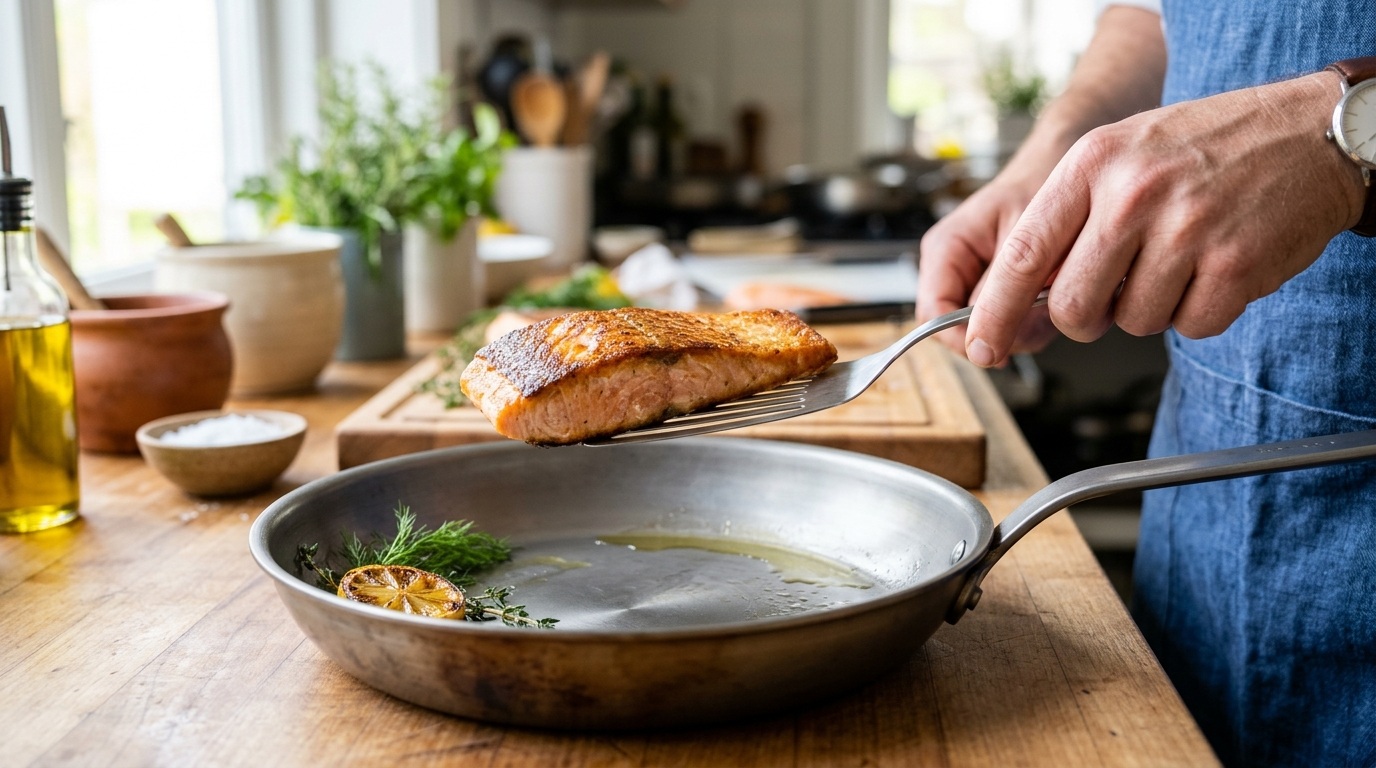
Figure 1: Clean protein release on an uncoated pure titanium skillet achieved via preheating and a minimal lipid film.
The solution is simple: never cook in a cold titanium pan. Always preheat the dry pan over medium-low heat for 90 to 120 seconds. Once brought up to temperature, add a half-teaspoon of cooking oil or butter, swirl to coat the surface, and let it shimmer before introducing ingredients. This produces crisp caramelization and clean food release without chemical coatings.
2. Mistake 2: Blasting High Heat and Overlooking Thermal Expansion Mechanics
The second major pitfall is cranking burner flames or induction power to maximum. Accustomed to heavy cast iron or poorly conductive cookware that takes minutes to absorb heat, first-time titanium users turn dials to high. Within 60 seconds, cooking oil smokes acridly, food chars on the outside while raw inside, and the pan develops dark heat rings.
This issue is governed by titanium's thermal conductivity. Pure titanium conducts heat at approximately 17 W/m·K, compared to aluminum at 205 W/m·K and copper at 385 W/m·K. Because single-ply titanium does not disperse heat radially across the base as quickly as aluminum, intense central heat produces concentrated hot spots exceeding 300°C (572°F), while the sidewalls remain cooler.
Furthermore, extreme temperature differentials create physical stress. Although titanium features a low thermal expansion coefficient (8.6 × 10^-6/K), blasting an empty single-ply pan with 2,200 watts of induction power forces the center to expand rapidly while cold outer edges resist, causing the base to bow or crown upward.
Figure 2: FLIR infrared thermal imaging showing localized hot spots on single-ply titanium versus uniform radial heat dispersion on tri-ply clad cookware.
To eliminate hot spots in domestic kitchens, modern cookware incorporates tri-ply cladding: sandwiching a high-conductivity aluminum core between a food-contact pure titanium surface and an induction-compatible 430 stainless steel exterior. The core disperses heat evenly across the entire surface (ΔT < 5°C). Remember the fundamental titanium rule: medium heat is your high, and low heat is your medium.
3. Mistake 3: Skipping or Misreading the Leidenfrost Water Droplet Test
Cooking successfully on bare metal cookware requires verifying thermal readiness before adding cooking fat or ingredients. Novices often guess temperature by waving a hand above the pan or waiting for oil to smoke. On titanium, hovering your hand provides unreliable sensory feedback, while smoking oil means the cooking fat has broken down into acrid polymers that cause immediate sticking.
The scientific standard for pan readiness is the Leidenfrost Water Droplet Test. Flicking droplets of water onto preheating titanium yields four distinct physical reactions across temperature zones:
Under 160°C (320°F): Droplets flatten, bubble, and evaporate sluggishly. Adding food now causes immediate sticking.
160°C to 185°C (320°F to 365°F): Droplets hiss furiously and fracture into tiny beads. The vapor layer is unstable; food will tear.
185°C to 215°C (365°F to 420°F) — Optimal Window: The droplet beads into a smooth, spherical marble that glides effortlessly across the pan on its own insulating steam cushion without evaporating.
Above 240°C (464°F): Water droplets explode into violent micro-mist. Remove the pan from heat for 40 seconds before proceeding.
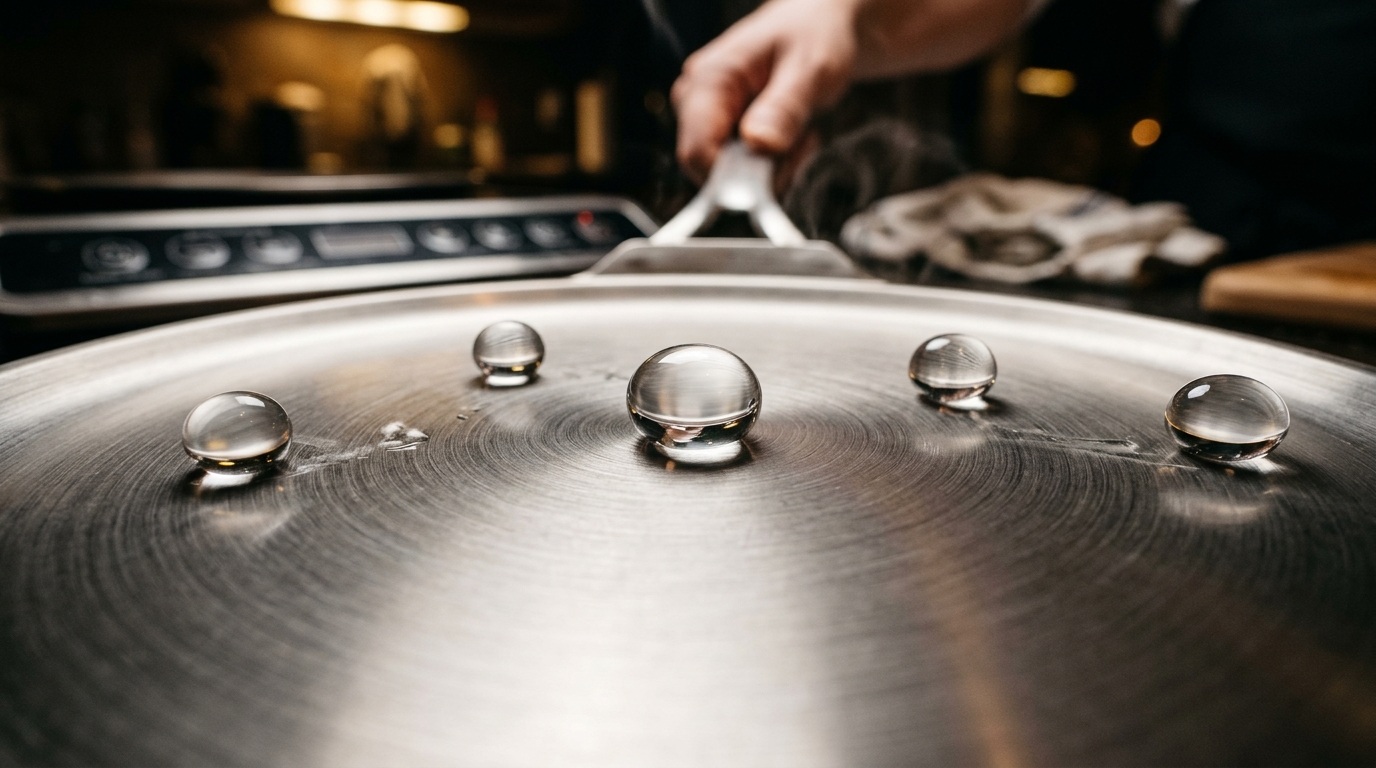
Figure 3: The Leidenfrost test: a gliding, spherical water bead confirms the 185°C to 215°C ideal culinary window.
When you see the gliding spherical marble, wipe the water away, lower heat slightly, add cooking oil, and let it shimmer for 15 seconds. Because thermal expansion has flattened microscopic surface irregularities, food slides smoothly with zero stickings.
4. Mistake 4: Attempting to "Season" Titanium Like Cast Iron or Carbon Steel
Conditioned by decades of maintaining cast iron and carbon steel skillets, many home cooks rub vegetable oil over their brand-new titanium pan and bake it at 250°C (480°F) to create a "seasoned non-stick patina." The result is always disastrous: a sticky, gummy amber varnish that ruins subsequent cooking and turns sticky when heated.
This error stems from fundamental differences in metallurgy. Cast iron and carbon steel are porous ferrous alloys containing microscopic voids and free iron ions. When polyunsaturated fats are heated past their smoke point on iron, free-radical polymerization cross-links liquid oil into a resilient poly-lipid matrix that locks into the metal's pores.
Elemental titanium has zero open porosity. Its atomic structure is fully non-porous and immediately forms an inert titanium dioxide (TiO2) ceramic film upon contact with oxygen. Lacking catalytic iron ions and mechanical porosity, unsaturated fats cannot cross-link into a resilient seasoning layer. Instead, baked oil simply caramelizes into sticky grease residue that flakes into food and accelerates protein sticking.
Pure titanium cookware requires zero seasoning. You can wash it thoroughly with dish soap, scrub it clean after every meal, and simmer acidic tomato sauces or lemon reductions without damaging any coating. If you have mistakenly seasoned your titanium pan, consult our guide on how to clean burnt residue and reset titanium surfaces using an alkaline baking soda paste to dissolve baked grease films.
5. Mistake 5: Buying Single-Ply Camping Titanium for Domestic Induction Ranges
Another common misstep occurs during purchasing: buying ultralight outdoor titanium gear for domestic kitchens. Attracted by health claims and low prices, shoppers buy lightweight camping titanium pans with walls measuring just 0.5 mm to 0.8 mm thick. When used on residential gas burners or induction hobs, cooking turns into a battle against scorched food and warped metal.
Ultralight camping titanium is engineered exclusively for backpacking weight reduction, boiling water, and heating stews over low-output camp stoves. With minimal thermal mass, domestic gas burners channel intense heat directly through thin titanium in seconds, scorching ingredients in the center while outer areas remain undercooked.
More critically, pure titanium is paramagnetic with very low magnetic permeability (μr ≈ 1.00005). Household induction hobs require ferromagnetic materials to produce resistance and eddy currents. A single-ply titanium pan cannot generate the necessary electromagnetic response, causing induction hobs to beep and flash error codes.
| Construction | Core Layers | Optimal Application | Induction Compatible | Heat Uniformity |
|---|---|---|---|---|
| Single-Ply Ultralight | 0.6mm Pure Ti | Backpacking, trail boiling | No (Error Code) | Poor (Hot Spots) |
| Tri-Ply Clad Composite | Ti + Al Core + 430 Base | Home searing, frying, simmering | Yes (100% Ready) | Excellent (ΔT < 5°C) |
| Titanium-Coated PTFE | Al + PTFE with Ti powder | Low-heat delicate cooking | Model Dependent | Good (While coating lasts) |
Table 1: Technical comparison of single-ply camping titanium, tri-ply clad composite, and coated aluminum cookware.
For home cooking, multi-ply clad engineering is essential. As outlined in our titanium cookware selection guide, tri-ply construction places pure biocompatible titanium on the food surface, encapsulates an aluminum core for rapid heat dispersion, and bonds a magnetic 430 stainless steel exterior for full induction hob compatibility.
6. Mistake 6: Panicking Over Rainbow Heat Tints and Abrasive Cleaning Scratches
The final common pitfall is post-cooking panic. After washing their new cookware, buyers often discover vivid rainbow hues, peacock blue rings, or golden halos across the base. Assuming the pan has chemically deteriorated, lost a protective coating, or started releasing toxins, some buyers return the cookware. Others attack the metal with steel wool and harsh chemicals, scratching the surface unnecessarily.
Both reactions are unfounded. Iridescent rainbow coloring on heated titanium is a harmless physical phenomenon known as heat tint (thin-film optical interference). Pure titanium reacts naturally with oxygen to create a transparent titanium dioxide (TiO2) ceramic film measuring 1 to 5 nanometers thick at room temperature. Under culinary heat (200°C to 300°C), this oxide layer thickens naturally to between 10 and 200 nanometers.
Because this titanium dioxide film is transparent, light reflecting from the oxide surface interferes with light reflecting from the base metal beneath. Certain light wavelengths cancel out while others amplify, creating brilliant gold, purple, and blue hues. Heat tint involves zero synthetic chemicals and zero toxic leaching; it is empirical proof that your pan is pure, reactive titanium building its self-healing barrier.
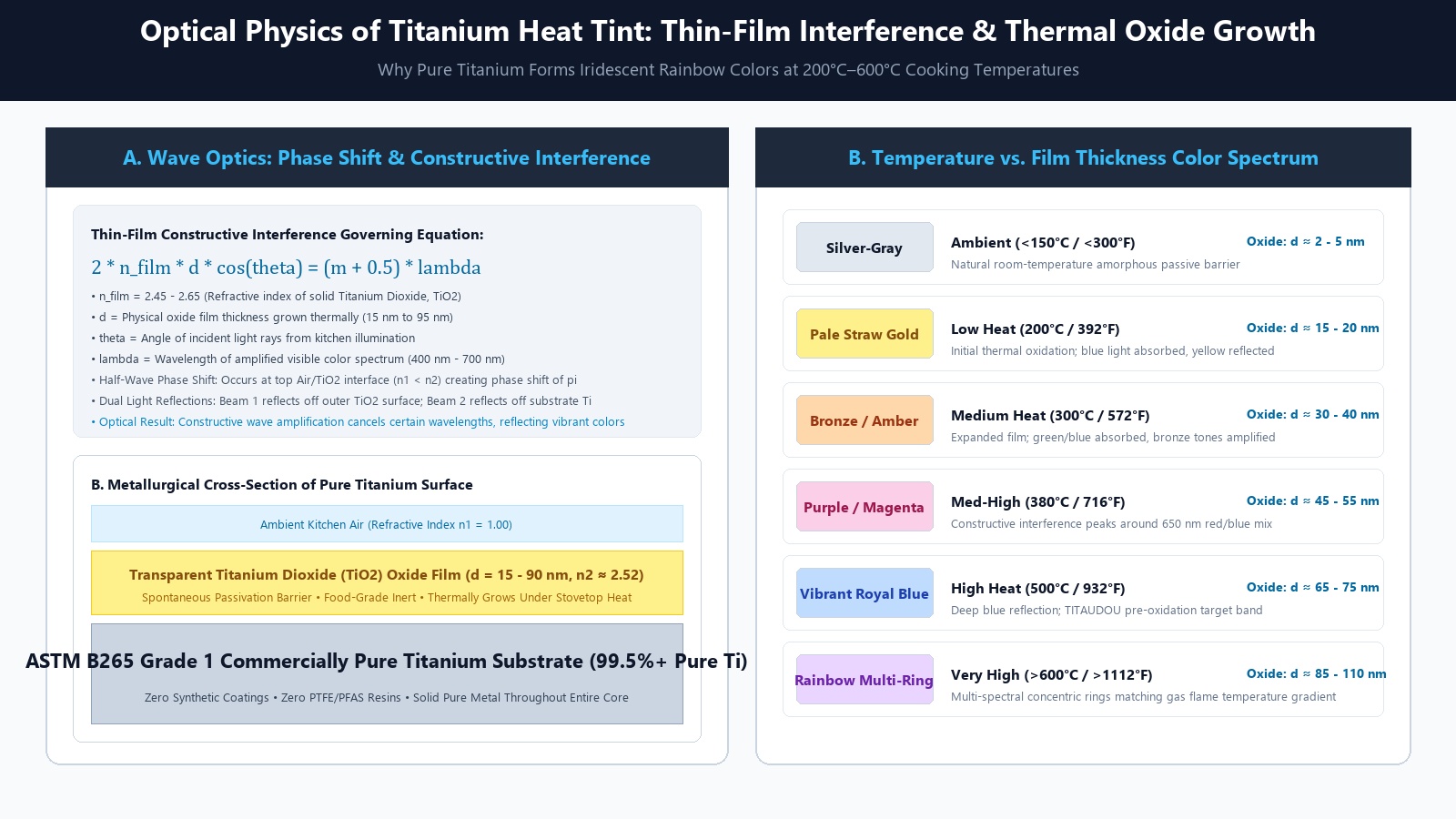
Figure 4: The physics of rainbow heat tint: optical thin-film interference from natural titanium dioxide (TiO2) oxide layer growth.
Regarding surface scratches, standard annealed Grade 1 titanium has a hardness of roughly 110 to 150 HV; aggressive metal scraping can produce superficial hairline marks. While completely harmless because bare metal cannot peel or flake, it can affect surface aesthetics.
To eliminate scratching entirely, advanced facilities like the TITAUDOU manufacturing and metallurgical production base use patented combustion surface hardening. This process infuses carbon and nitrogen into the titanium matrix, boosting surface micro-indentation hardness to over HV 600+ (laboratory certified at 689.30 HV). This makes the cooking surface three times harder than 304 stainless steel, permitting unrestricted use of metal utensils without damage.
Mastering the Transition: The 6 Mistakes Troubleshooting Matrix
Use this quick reference troubleshooting matrix to diagnose and resolve any titanium cooking challenge instantly:
| First-Time Mistake | Physics & Metallurgy | Culinary Symptom | The Engineering Fix |
|---|---|---|---|
| 1. Cold Food Contact | Proteins bind to unheated metal lattices. | Severe protein tearing; food adheres firmly. | Preheat dry on medium-low for 2 min; add oil before food. |
| 2. Blasting High Heat | Conductivity is 17 W/m·K, concentrating central heat. | Scorched centers and warped pan floors. | Use medium/low heat; select tri-ply clad composite pans. |
| 3. Skipping Leidenfrost | Below 185°C, lack of steam barrier causes sticking. | Food sticks; pale, unbrowned crusts. | Wait for gliding water marble before wiping dry and oiling. |
| 4. Baking to "Season" | Non-porous titanium prevents lipid polymerization. | Sticky amber varnish that flakes into meals. | Never season. Wash with soap; remove grease with baking soda. |
| 5. Camping Gear Indoors | 0.6mm single-ply titanium lacks mass and induction response. | Induction hob error; severe heat concentration. | Reserve single-ply for trails; use tri-ply clad indoors. |
| 6. Heat Tint Panic | TiO2 layer thickens to 10-200nm under heat, refracting light. | Rainbow discoloration; mistaken fear of toxicity. | Harmless proof of pure titanium; wipe with vinegar if desired. |
Table 2: Diagnostic summary of the 6 major titanium cookware mistakes, underlying metallurgy, and corrective actions.
Conclusion: Long-Term Culinary Freedom with Pure Titanium
Switching to titanium cookware is not simply buying a new pan; it is a permanent transition to non-toxic, heirloom-grade cooking. By replacing short-lived chemical non-stick pans with pure titanium, you eliminate concerns over toxic fumes, PTFE peeling, and heavy metal contamination. Titanium is completely biocompatible, resistant to all food acids, and built to last a lifetime.
By respecting titanium's physical principles—preheating thoroughly, checking thermal readiness with the Leidenfrost water drop test, opting for tri-ply clad construction on domestic ranges, and skipping unnecessary seasoning—you will master the metal in days. Whether searing delicate fish fillets, browning steaks, or simmering acidic sauces, titanium cookware delivers flawless performance without compromise.
Frequently Asked Questions (FAQ)
Can you cook eggs in a pure titanium pan without sticking?
Yes, you can cook eggs flawlessly in a pure titanium pan by using proper preheating and a light fat barrier. Preheat the pan over medium-low heat for 90 seconds until a flick of water forms a rolling Leidenfrost bead. Add a half-teaspoon of butter or oil, swirl to coat, lower heat to low, and add your egg. Allow the egg to cook undisturbed for 60 to 90 seconds; as the proteins set and denature, they release naturally from the titanium surface, allowing clean flipping.
Is pure titanium cookware dishwasher safe, or will detergents ruin it?
Pure titanium cookware is 100% dishwasher safe because elemental titanium is completely impervious to alkaline dishwashing detergents and hot water cycles. Unlike raw cast iron or aluminum, titanium's protective titanium dioxide passivation film remains completely intact. For multi-ply clad cookware with an exposed aluminum core rim, occasional hand washing preserves edge aesthetics over decades of heavy kitchen use.
Can metal spatulas and steel wool scratch a titanium pan?
Standard annealed Grade 1 pure titanium has a hardness of 110 to 150 HV, meaning sharp metal forks or coarse steel wool can cause cosmetic hairline abrasions, though without peeling or toxic release. However, advanced cookware featuring TITAUDOU's patented combustion surface hardening reaches over HV 600+ (lab certified at 689.30 HV), making it three times harder than 304 stainless steel and fully impervious to metal spatulas and steel scouring pads.