You’re standing in the kitchen aisle, holding a gleaming, heavy-bottomed pan. It looks professional. It feels durable. But then, a headline you scrolled past on social media pops into your head: "Does your cookware leach heavy metals?"
It’s a valid fear. We care deeply about the ingredients we put into our pots, so it’s only natural to worry about the pot itself. The primary concern revolves around two elements: nickel and chromium.When upgrading kitchen essentials, the most common question health-conscious consumers ask is: is stainless steel non toxic? Users frequently search online, wondering, is stainless steel cookware safe for daily use, or are we slowly ingesting heavy metals like nickel and chromium with every meal?, or are we slowly ingesting toxins with every tomato sauce we simmer?
The short answer is yes, it is safe—but the "how" and "why" depend entirely on the quality of the steel and how you treat it. In this deep dive, we are going to strip away the fear-mongering and look at the metallurgy. We will analyze the difference between 304 and 316 grades, the physics of the three-layer composite structure, and the real science behind metal migration.
1. 304 vs. 316: Is Stainless Steel Non Toxic and Safe for Cooking?
Not all stainless steel is created equal. When you see terms like "18/8" or "18/10" stamped on the bottom of a pot, these aren't just random numbers—they are the recipe for the alloy. Understanding this recipe is the first step in finding non toxic stainless steel cookware.
The Standard: 304 Stainless Steel (18/8)
This is the workhorse of the kitchen. The "18/8" designation means the steel contains 18% chromium and 8% nickel. Chromium is what makes the steel "stainless" by forming a passive oxide layer that prevents rust. Nickel is added to make the steel shiny, durable, and resistant to corrosion.
Is it safe? Absolutely. Under normal cooking conditions, the leaching of nickel and chromium from 304 steel is negligible. Studies show that migration levels are typically less than 0.02mg/kg. To put that in perspective, that is only about 0.3% of the daily safe intake limit established by health organizations. For the vast majority of home cooking—boiling pasta, searing meat, steaming vegetables—304 stainless steel is a safe, cost-effective champion.
The Upgrade: 316 Stainless Steel (18/10)
If you want the gold standard, you must look for 18 10 stainless steel cookware, often referred to as marine-grade or surgical-grade stainless steel. The composition here shifts slightly: 18% chromium and 10% nickel.
Why is 18 10 stainless steel cookware superior? The real magic ingredient is the addition of 2% molybdenum. This element improves corrosion resistance by approximately 2.6 times compared to standard 304 steel, making it the safest choice among steel options.
Why does molybdenum matter? It drastically changes the chemical resistance of the pot. The addition of this element improves corrosion resistance by approximately 2.6 times compared to standard 304 steel.
The Acid Test: In laboratory tests simulating harsh conditions (pH=2 strong acid environment), 316 stainless steel showed a 43% reduction in heavy metal leaching compared to 304 steel.
Which Should You Choose?
Everyday Family Cooking: If you are frying eggs, sautéing vegetables, or boiling soups, 304 (18/8) is perfectly safe and saves you money.
Acid-Heavy Cooking: If you frequently slow-cook tomato sauces, make wine reductions, or brew coffee, the 316 (18/10) alloy is the superior choice. It resists the pitting corrosion that acids can cause over years of use, extending the lifespan of the cookware by up to three times.
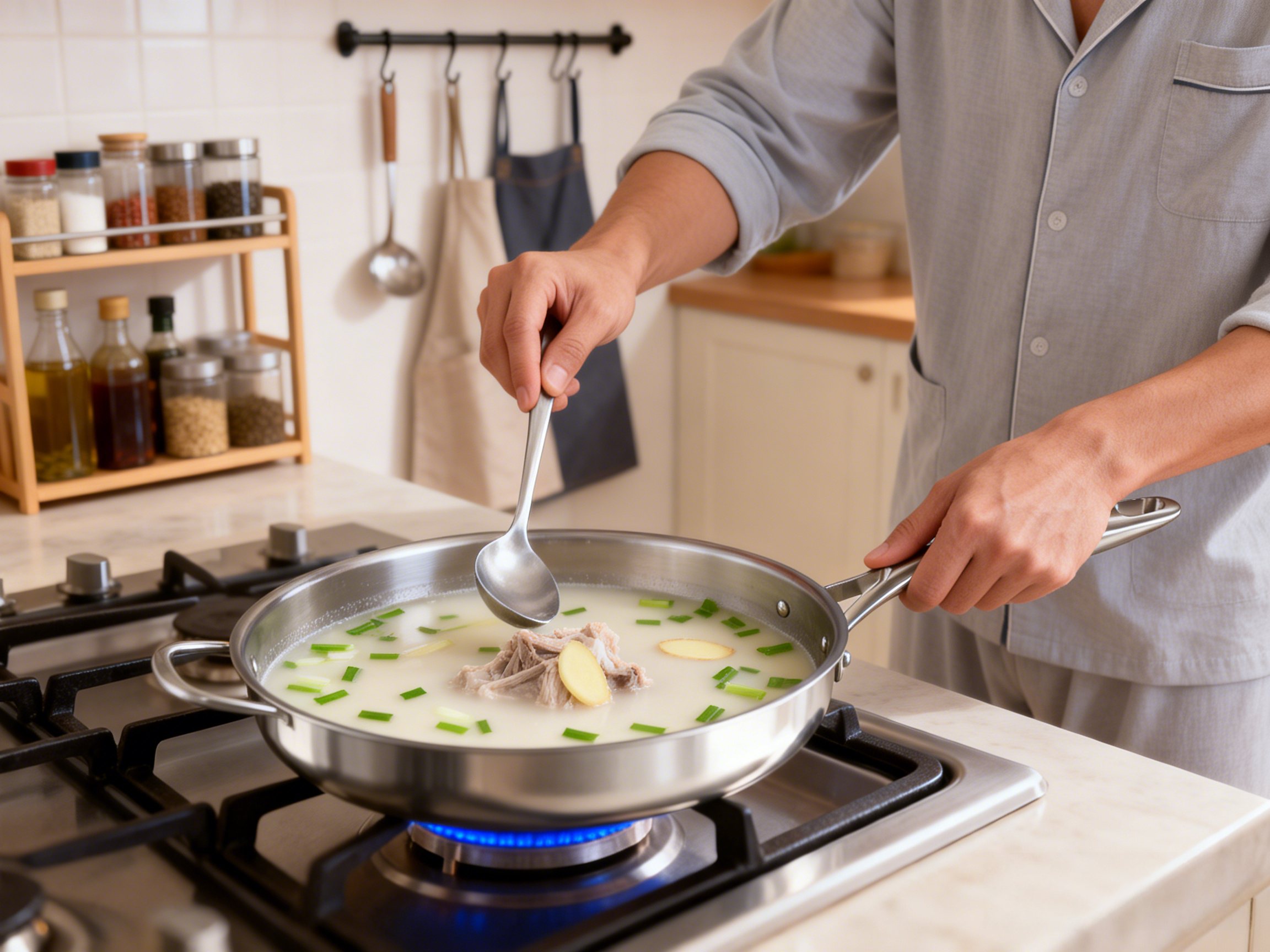
2. The Three-Layer Structure: How Design Impacts Safety and Heat Distribution
Many consumers mistakenly believe that safety is only about the surface material. However, the internal construction of the pot plays a massive role in preventing the very conditions that cause metal leaching.
Cheap, single-layer stainless steel is a poor conductor of heat. It creates "hot spots"—areas where food burns and sticks. When food burns, carbonizes, and sticks, you have to scrub it. Aggressive scrubbing damages the passive protective layer of the steel, which leads to leaching. This is why the three-layer composite structure (Clad) is a safety feature, not just a performance feature.
Deconstructing the Layers
The Inner Layer (Food Contact): This is the 304 or 316 stainless steel we discussed above. High-quality manufacturers use electrolytic polishing on this layer to achieve a surface roughness (Ra) of less than 0. TITAUDOU manufacturer1μm. A smoother surface means fewer microscopic pores for food to stick to, and fewer places for corrosion to start.
The Core Layer (The Engine): Sandwiched in the middle is usually 99.9% pure aluminum. Aluminum is not there to touch your food; it is there because it conducts heat 300% more efficiently than steel. This core ensures that heat spreads instantly and evenly across the bottom and up the sidewalls.
The Outer Layer (The Shield): The exterior is typically 430-grade magnetic stainless steel. This makes the pan durable, scratch-resistant, and compatible with induction cooktops.
The Safety Advantage: Because the aluminum core distributes heat so effectively, the temperature difference between the center of the pan and the sidewalls is kept to less than 15°C. By eliminating scorching hot spots, you preserve the integrity of the stainless steel surface (the passivation film), keeping the metal stable and the food pure.
3. Does Stainless Steel Leach Heavy Metals? Understanding the Risks
Let’s address the elephant in the room. Does metal leach? Yes, all metal cookware leaches trace amounts of material. Cast iron leaches iron; copper pans leach copper. The question is whether the amount is toxic.
The Trigger Triangle
Nickel and chromium don't just jump out of the pan. Specific conditions are required to break down the passivation film and trigger migration:
High Heat (>260°C): Overheating an empty pan.
High Acidity (pH < 3): Vinegar, lemon juice, tomato paste.
Chloride Ions: Salt.
When these three combine—for example, adding salt to cold water and then boiling it, or simmering a very acidic sauce for hours in a scratched pan—the risk of migration increases.
Scientific Reality vs. Fear
It is vital to look at the data. Simulation experiments where 304 stainless steel was subjected to boiling citric acid solutions (a very harsh test) for 300 consecutive cycles showed that heavy metal migration remained 60% below the national standard limits.
Medical experts and the World Health Organization (WHO) have established Safe Upper Limits for nickel and chromium intake. When using FDA-approved, food-grade stainless steel cookware, the amount leached during normal cooking is biologically insignificant. Independent heavy metal testing in cookware consistently shows that high-quality 18/10 stainless steel is one of the safest non toxic cookware options for families.
A Note on Alternatives: While stainless steel is safe for the vast majority, those with severe nickel allergies often seek total peace of mind. In these rare medical cases, materials like pure titanium cookware offer a solution. 3-layer titanium cookware Titanium is biologically inert, contains no nickel, and is often used in medical implants. While stainless steel is generally safe, why settle for 'acceptable' heavy metal limits when you can have zero? For families seeking 100% peace of mind, pure titanium cookware is the ultimate solution. It is biologically inert, contains zero nickel or chromium, and never leaches. [Upgrade to Zero-Leaching Pure Titanium Cookware Today]
4. Long-Term Maintenance: How to Keep Stainless Steel Cookware Safe and Shiny
Cleaning stainless steel cookware correctly isn't just about aesthetics; it's about maintaining that protective oxide layer that keeps the heavy metals locked away.
Daily Cleaning Do's and Don'ts
DON'T use steel wool: Abrasive metal pads act like sandpaper, stripping away the polished surface and creating deep scratches where corrosion can begin.
DON'T soak in salt water: Never leave salty pasta water or brines sitting in the pot overnight. Chloride is the enemy of stainless steel and causes pitting.
DO use soft tools: Sponges, microfiber cloths, and soft nylon brushes are your friends.
DO dry immediately: Water spots are mineral deposits that can eventually etch the surface.
Solving Common Problems
Scenario A: The Rainbow Discoloration or Yellowing
This is heat tint or mineral buildup. It’s harmless but unsightly.
The Fix: Add a splash of white vinegar and water to the pan, boil for 10 minutes, let it cool, and wipe with a soft cloth. The acid dissolves the minerals and restores the shine.
Scenario B: Burnt-on Food
Many users ask if they need to buy an expensive chemical stainless steel cookware cleaner.
The Fix: You often don't need harsh chemicals. Make a paste of baking soda and water—a natural stainless steel cookware cleaner. Apply it to the burnt area and let it sit for 15 minutes.
Pro Tip for Conversion: Pro Tip for Health-Conscious Cooks: Maintaining the protective oxide layer of stainless steel requires strict cleaning habits to prevent metal leaching. If you want a truly maintenance-free, non-toxic cooking experience, consider switching to Pure Titanium Cookware. It requires no special cleaners, naturally resists sticking, and guarantees a zero-metal-taste in your food. [ Explore Our Titanium Pots and Pans]. Unlike stainless steel that requires careful polishing to prevent heavy metal leaching, titanium is naturally non-stick and requires no special cleaners.
Scenario C: Prevention
To keep the surface hydrophobic and shiny, you can occasionally rub a very thin layer of vegetable oil onto the clean, dry surface before storing. This acts as a barrier against moisture and oxidation.
5. Final Verdict: Is Stainless Steel Cookware Safe and Non-Toxic?
After analyzing the metallurgy, the structural engineering, and the medical data, the conclusion is clear: Is stainless steel cookware safe? Yes.
The fear of heavy metal toxicity from high-quality stainless steel is largely overstated for the general population. When you choose a reputable brand that adheres to standards like GB 4806.9-2016 (National Food Safety Standard), the migration of nickel and chromium is negligible and well within safe limits.
Why it remains the top choice:
Durability: With proper care, a tri-ply stainless steel pan can provide a long service life.
Hygiene: The non-porous surface resists bacterial growth.
Neutrality: Unlike cast iron or aluminum, it does not impart metallic flavors to delicate foods.
The Ultimate Buying Guide
To ensure you are getting non toxic stainless steel cookware, follow this checklist:
Check the Stamp: Look for "SUS304", "18/8", "18/10", or "316" stamped on the base. Avoid pans with no markings.
Verify the Structure: Knock on the side of the pan. A dull thud indicates a thick, multi-layer construction. A high-pitched ping indicates thin, single-layer steel (avoid this).
Look for Certification: Ensure the packaging mentions compliance with FDA or GB food safety standards.
Stainless steel remains the king of the kitchen for a reason. It balances performance, safety, and longevity better than almost any other material on the market.
The Ultimate Safety Upgrade: Beyond Stainless Steel
While 18 10 stainless steel cookware is safe for most, it still contains nickel. For those suffering from nickel allergy symptoms or families who want a 100% non-toxic cookware solution, stainless steel might not be enough.
This is where our Premium Pure Titanium Cookware shines as the ultimate investment in your family's health:
Zero Heavy Metal Leaching: Absolutely no nickel, chromium, or iron migration..
Medical-Grade Biocompatibility: Made from the same premium titanium used in medical implants—the pinnacle of non-toxic materials.
Lifetime Durability & Taste Neutral: Preserves the authentic flavor of your ingredients without any metallic aftertaste.
Don't compromise on the safety of your daily meals. Make the switch to the safest cookware on the market.
? [Click Here to Shop Our Pure Titanium Pots and Pans Collection and Get a Free Quote!]
> Explore Our Pure Titanium Pots and Pans Collection Here <
For everyday cleaning marks and mineral residue, see how to remove water spots on stainless steel cookware.
For clad cookware construction, see tri-ply stainless steel cookware safety.
Frequently Asked Questions (FAQ)
Q: Is scratched stainless steel cookware safe to use?
A: Generally, yes. Unlike non-stick pans where a scratch means the coating is flaking off, a scratch in stainless steel is mostly cosmetic. However, deep scratches can harbor bacteria and slightly increase metal ion release. If the pan is heavily pitted or gouged, it is best to replace it or relegate it to non-acidic cooking tasks.
Q: How do I know if my pan is 18/10 stainless steel cookware?
A: Most manufacturers will stamp the grade on the bottom of the cookware. You will see "18/10" or "316". If it says "18/0", it contains no nickel; this is magnetic and often used for baking sheets or induction plates, but it is less resistant to corrosion than 18/10.
Q: Can I cook tomato sauce in stainless steel?
A: Yes, you can. While acidic foods can trigger slight leaching, doing so in high-quality 304 or 316 stainless steel for a standard dinner preparation time (1-3 hours) is perfectly safe. The warning against acidic foods applies mostly to long-term storage. Do not leave the tomato sauce in the metal pot in the fridge for days; transfer it to a glass container.
Q: What is the best way for cleaning stainless steel cookware to prevent damage?
A: The golden rule is to avoid thermal shock and abrasives. Let the pan cool down before washing. Use warm soapy water and a sponge. For stuck-on food, use the baking soda method or boiling water. Never use chlorine bleach or steel wool, as these destroy the protective surface layer.
Q: What is the best stainless steel cookware cleaner?
A: For daily use, warm soapy water is sufficient. For tough stains or heat tint, a mixture of vinegar and baking soda acts as an excellent DIY stainless steel cookware cleaner. Avoid abrasive pads that can scratch the surface and compromise the safety of the 18 10 stainless steel cookware.
Q: What is the most non toxic cookware material available?
A: While high-quality 316 stainless steel is highly safe and non-toxic for general use, pure titanium is considered the absolute safest and most non-toxic cookware material. Unlike stainless steel, titanium contains no nickel or chromium, ensuring zero heavy metal leaching even when cooking highly acidic foods.