Grade 5 Titanium—also known as Ti-6Al-4V or titanium Ti 6Al 4V—is the workhorse aerospace alloy, blending high strength with low density. Typical grade 5 titanium properties include ~4.43 g/cm³ density, 900–1000 MPa tensile strength, and service temperatures up to ~315°C, delivering a strength-to-weight ratio that outperforms most steels and aluminums. Compared with CP alloys, grade 2 vs grade 5 titanium highlights are clear: Grade 2 excels in formability and corrosion resistance at lower cost, while Grade 5 offers roughly 2× the strength with heat-treatable hardenability and good fatigue performance.
In sheet, plate, and bar, grade 5 titanium sheet enables thin, high-stiffness structures for airframes, medical devices, and motorsport. Its alpha-beta microstructure (Al stabilizes alpha, V stabilizes beta) supports excellent fracture toughness, weldability with proper inert shielding, and biocompatibility for implants. Engineers choose Ti-6Al-4V where weight cuts of 30–50% vs steel drive efficiency: turbine casings, fasteners, high-pressure housings, and heat-exposed brackets. Additives like ELI variants improve toughness for cryogenic or medical use. The result is a versatile alloy family balancing manufacturability, durability, and lifecycle value across aerospace, energy, and high-performance consumer products.
1. Comprehensive Advantages of GR5 Titanium Alloy (Ti-6Al-4V)
1.1 Low Density
Among structural metals, titanium Ti 6Al 4V stands out for its low density of about 4.43 g/cm³—roughly 56% that of steel. This directly cuts system mass, enabling lighter airframes, drivetrains, pressure vessels, and portable medical devices without sacrificing structural integrity. In weight-sensitive platforms, a 30–50% mass reduction versus stainless steel is common when stiffness and buckling are properly engineered.
1.2 High Specific Strength
A hallmark of grade 5 titanium properties is its outstanding strength-to-weight ratio. Typical tensile strength is 900–1000 MPa (yield ~830–880 MPa in mill-annealed condition), giving specific strength superior to most steels and nickel alloys at a fraction of the mass. The alpha–beta microstructure (aluminum stabilizes alpha; vanadium stabilizes beta) supports precipitation and transformation strengthening, delivering high fatigue strength and damage tolerance—critical for rotating hardware, fasteners, and pressure-boundary parts.
1.3 Excellent Thermal Stability
Ti-6Al-4V maintains mechanical performance up to approximately 315–400°C depending on product form and duty cycle. Its stable, adherent TiO2 passive film preserves corrosion resistance in hot chlorides and oxidizing environments better than many stainless steels. Thermal expansion is lower than aluminum and comparable to steels, aiding dimensional stability in mixed-material assemblies and reducing thermal mismatch stresses.
1.4 Good Weldability
With proper practice, Ti-6Al-4V welds reliably:
· Inert shielding (high-purity argon), back purging, and clean tooling prevent embrittlement.
· Gas tungsten arc welding (GTAW) and laser welding deliver fine fusion zones with limited heat-affected coarsening.
· Post-weld treatments can recover ductility and stress state. The alloy’s weldability allows modular fabrication of complex pipework, thin-sheet enclosures, lattice structures, and tailored repairs on aerospace components.
2. Cross-Industry Application Examples of GR5
2.1 Aerospace and Aviation
· Airframe and engine hardware: brackets, pylons, frames, landing-gear links, and high-temperature fairings leverage high specific strength and corrosion resistance.
· Fasteners and fittings: Ti-6Al-4V bolts, nuts, and inserts reduce vibratory loads and galvanic risk when paired correctly, contributing to fatigue life.
· Additive-manufactured parts: lattice-reinforced housings and ducting exploit near-net-shape capability with excellent buy-to-fly ratios.
2.2 Medical and Healthcare
· Implants and instruments: titanium Ti 6Al 4V ELI (extra-low interstitial) is widely used for hip stems, spinal cages, bone plates, and dental implants due to biocompatibility, high fatigue strength, and MRI compatibility.
· Surgical tools: thin-wall, sterilizable components exploit the alloy’s rigidity and corrosion resistance to disinfectants and bodily fluids.
2.3 Marine Engineering and Automotive
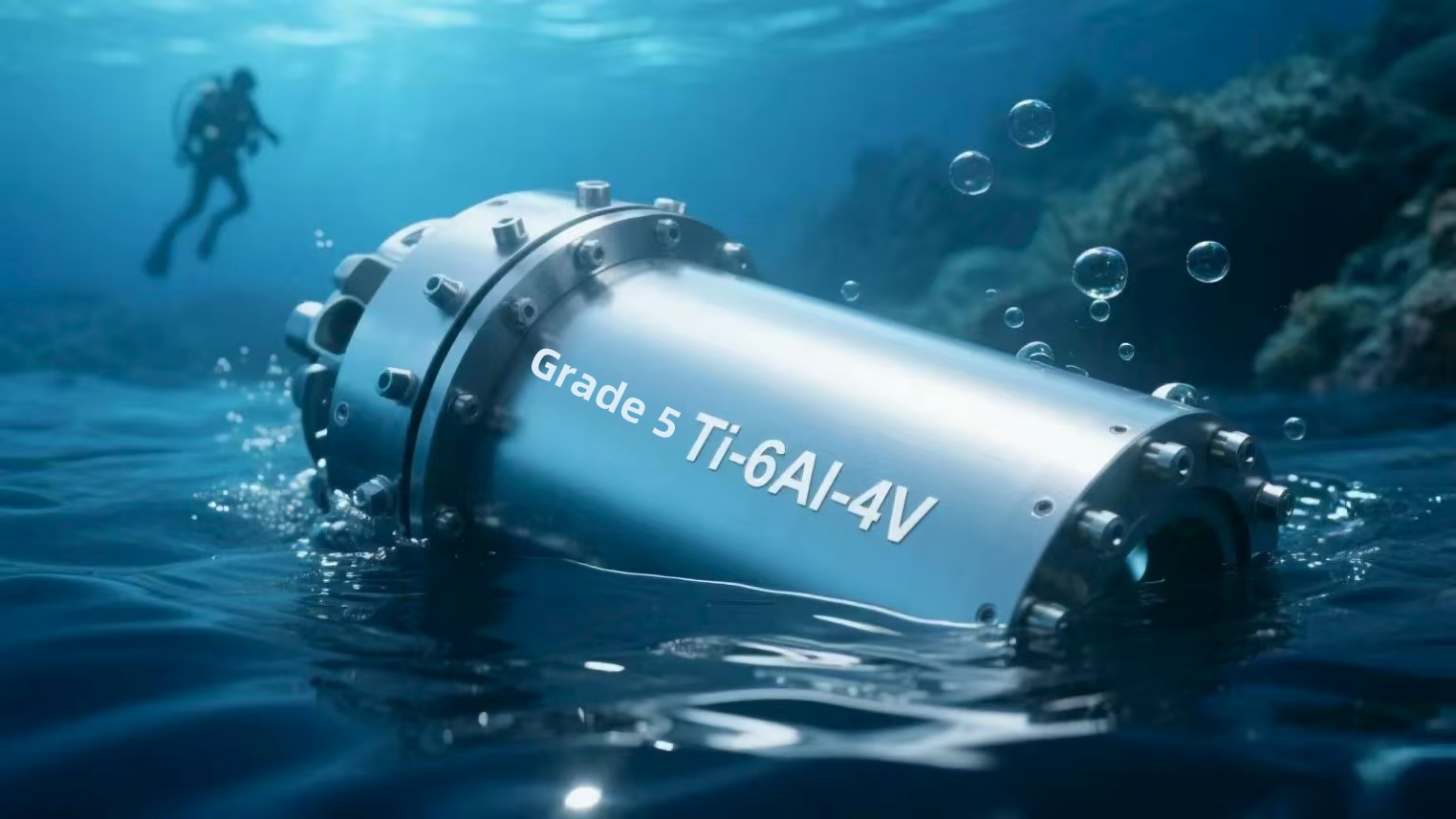
· Marine: propeller hubs, fasteners, and heat-exchanger shells resist chloride-induced pitting and crevice corrosion in seawater. Lower mass reduces vibration and improves fuel economy in vessels and submersibles.
· Automotive and motorsport: connecting rods, valves, exhaust components, suspension links, and thin-sheet heat shields combine high strength with thermal stability. The result is sharper dynamic response and reduced unsprung mass.
3. The “Practical All-Rounder”: Equiaxed Microstructure
The equiaxed microstructure is characterized by a beta-transformed matrix containing more than 30% equiaxed alpha (α) grains. It usually forms by thorough recrystallization annealing and plastic deformation at 30–100°C below the beta transus:
· Lower annealing temperatures and greater plastic deformation refine α grain size and increase the α fraction.
· Benefits: balanced strength and ductility, improved fracture toughness, and predictable fatigue behavior, making it ideal for forgings, plate, and grade 5 titanium sheet used in airframes and pressure shells.
· Processing routes that aim for fine, equiaxed α improve notch insensitivity and ease downstream forming and welding, supporting stable, repeatable production.
4. The “High-Temperature Guardian”: Basketweave (Widmanstätten) Microstructure
Basketweave, or Widmanstätten, morphology resembles an interlaced basket: lath-like α plates arranged within a beta-transformed matrix.
· Formation: heat or deform within the beta field, then terminate deformation in the α+β two-phase region. With larger deformation in the two-phase region, short α laths may spheroidize, evolving toward an equiaxed structure.
· Advantages: enhanced high-temperature creep resistance, better crack propagation resistance along lath boundaries, and stable properties under thermal cycling. This makes basketweave Ti-6Al-4V valuable for engine casings, hot-structure brackets, and components exposed to 250–400°C.
· Trade-offs: plate-like α can reduce room-temperature ductility versus fine equiaxed structures; designers select morphology based on the dominant duty (thermal vs impact/fatigue).
5. Key Advantages Versus Other Titanium Grades
5.1 Lower Hydrogen Sensitivity Than CP Grades
Compared with commercially pure grades like GR1 and GR2, GR5 exhibits relatively lower sensitivity to hydrogen uptake and embrittlement in many service scenarios. Combined with its higher strength, this makes Ti-6Al-4V a more reliable choice in applications where hydrogen ingress, cathodic protection, or sour media pose risks—provided proper surface finishes and isolation practices are used.
5.2 Wide Service Temperature Window
GR5 is suitable for parts operating from about −196°C to 450°C (application- and form-dependent). At cryogenic temperatures, toughness and strength remain robust, especially in ELI variants. At elevated temperatures, basketweave microstructures and controlled heat treatment maintain stability and creep strength. This wide window enables a single alloy family to cover multiple extremes, reducing qualification burden across platforms.
5.3 Versus GR2 (grade 2 vs grade 5 titanium)
· Strength: GR5 provides roughly twice the tensile strength of GR2 while keeping low density, enabling thinner sections or higher safety margins.
· Formability and cost: GR2 forms more easily and costs less; it’s often chosen for cold-formed, deep-drawn, or large-area corrosion linings. GR5 dominates where high stresses, fatigue, and weight reduction are priorities.
· Joining: both weld well with proper shielding; GR5 demands tighter control of heat input to avoid alpha-case formation and preserve toughness.
5.4 Product Versatility
From bar, billet, and forgings to plate and grade 5 titanium sheet, Ti-6Al-4V supports machining, forging, superplastic forming, hot isostatic pressing, and additive manufacturing. This breadth simplifies sourcing, qualification, and lifecycle management, while enabling common design allowables across diverse geometries.
Processing, Fabrication, and Quality Considerations
· Heat treatment: solution treatment and aging can tune strength–toughness trade-offs; mill anneal is common for balanced properties.
· Machining: sharp tools, flood cooling, and controlled chip load mitigate work hardening; coated carbides and optimized speeds reduce tool wear.
· Welding: GTAW/laser with high-purity shielding; meticulous cleanliness to avoid nitrogen/oxygen pickup. Post-weld stress relief may be specified.
· Surface integrity: avoid alpha-case via controlled heating; remove any oxide-rich layer by machining or chemical milling. Polished surfaces reduce initiation sites for fatigue and hydrogen ingress.
· Inspection: ultrasonic and dye penetrant for critical parts; tensile, hardness, and microstructure checks verify conformance.
Design Implications and Benefits
· Lightweighting at system level: swapping steel with Ti-6Al-4V can cut weight by 30–50%, improving payload, range, and efficiency.
· Durability: high fatigue strength and corrosion resistance extend service intervals, cutting total cost of ownership.
· Thermal performance: stability to ~315–400°C and good oxidation resistance support hot-zone use without heavy thermal shielding.
· Biocompatibility: for medical implants and tools, Ti-6Al-4V’s favorable tissue response and MRI compatibility reduce clinical risk.
· Sustainability: longer life, fewer replacements, and recyclability reduce lifecycle footprint, especially in transport and energy.
Conclusion
Grade 5 titanium (Ti-6Al-4V, titanium Ti 6Al 4V) merges low density, high specific strength, thermal stability, and weldability into a single, widely qualified alloy system. Through microstructure control—equiaxed for balanced toughness and fatigue, basketweave for hot strength—engineers tailor performance to mission needs across aerospace, medical, marine, and automotive sectors. Compared to CP grades like GR2, GR5 offers superior mechanical capability with manageable processing demands, making it the default choice for high-performance, weight-critical applications in sheet, plate, bar, and complex fabrications.
Frequently Asked Questions and Answers
Q1: What is grade 5 (Ti-6Al-4V) made of?
A1: Nominal composition is ~6% aluminum, ~4% vanadium, and balance titanium, with controlled interstitials (O, N, C, H). Aluminum stabilizes the alpha phase; vanadium stabilizes beta, yielding an alpha–beta alloy with tunable microstructures.
Q2: Which industries use grade 5 most?
A2: Aerospace (airframes, engine hardware, fasteners), medical (implants, instruments—often ELI variants), marine (seawater-exposed structures, heat exchangers), automotive/motorsport (powertrain, chassis, exhaust), and energy/industrial equipment requiring high strength-to-weight and corrosion resistance.
Q3: How does grade 5 compare to grade 2?
A3: Grade 5 is roughly twice as strong with similar corrosion resistance in many media; grade 2 is cheaper and more formable. Choose GR5 for high loads, fatigue, and weight savings; choose GR2 for easy forming, large panels, and cost-sensitive corrosion duties.
Q4: Can grade 5 titanium sheet be welded and formed?
A4: Yes. With inert shielding and clean practice, Ti-6Al-4V sheet welds well. It can be cold formed with appropriate radii or superplastically formed at elevated temperature for complex, thin-wall geometries.