From micro-gauges to heavy-duty strands, titanium wire serves precise roles across industry. Ultra-fine medical titanium wire (Ø0.1–0.3 mm) leverages good biocompatibility for sutures, orthopedic cerclage, skull fixation, and Dental crown implants, where flexibility and corrosion resistance matter. In dentistry and cardiology, titanium-nickel alloy wire (Nitinol) adds superelasticity and shape memory for stents, archwires, and guidewires, delivering controlled force and durability.
General-purpose titanium wire and Titanium alloy wire (e.g., Ti-6Al-4V) in medium diameters (Ø0.5–2.0 mm) provide high strength-to-weight for springs, fasteners, and chemical-plant ties exposed to chlorides. For fabrication, Titanium welding wire (Ø1.0–3.2 mm) ensures clean, high-strength welds in pressure vessels, heat exchangers, and aerospace structures when paired with inert shielding.
Heavier gauges (Ø2–6 mm+) excel in marine rigging, filter cages, anodes, and high-temperature fixtures, resisting galvanic attack and creep. Across thicknesses, benefits include high strength with low density (~4.5 g/cm³), exceptional corrosion resistance, and long service life that can reduce maintenance intervals by 30–50% in aggressive environments.
In short, choosing the right diameter and alloy—pure titanium, Titanium alloy wire, Titanium welding wire, medical grades, or titanium-nickel alloy wire—aligns mechanical performance with application needs, from delicate implants to robust industrial assemblies.
1. Classification of Titanium Wire
Titanium wire spans a wide family tailored to process and end-use:
· Pure titanium wire: high corrosion resistance, clean surface for chemical and medical environments.
· Titanium alloy wire: e.g., Ti-6Al-4V for high strength and fatigue resistance in aerospace and fasteners.
· Medical titanium wire: biocompatible grades for surgical sutures, cerclage, skull fixation, Dental crown implants.
· Titanium-nickel alloy wire (Nitinol): superelastic shape memory for heart stents, Orthodontic wires for teeth correction, guidewires, and self-expanding frames.
· Titanium welding wire: optimized chemistry and cleanliness for GTAW/GMAW of titanium vessels, tubes, airframes.
· Pure titanium eyewear wire: tailored stiffness and spring-back for glasses frames and hinge components.
· Straight titanium wire: cut-to-length for pins, spokes, mandrels.
· Titanium hanger wire: fixture wire for plating/anodizing lines and thermal treatment jigs.
· Coiled titanium wire (spooled): continuous supply for automated lines.
· Bright-finish titanium wire: polished, low-roughness surface for electronics, filtration, and decorative uses.
2. Specifications and Typical Ranges
· General titanium wire range: φ0.2–φ8.0 mm for multipurpose and hanger-specific needs.
· Common industrial band: φ0.8–φ6.0 mm for fasteners, welding filler, chemical plant ties.
· Eyewear-dedicated wire: φ1.0–φ6.0 mm, tuned for spring modulus and forming of glasses frames.
These ranges cover ultra-fine conductors through rugged fixture wire, enabling precise selection by load, bend radius, and forming method.
3. Primary Manufacturing Method: Wire Drawing
Titanium and titanium alloy wire are commonly produced by drawing. Under drawing force, rod or wire rod is pulled through a die, reducing cross-section to produce precise, smooth wire:
· Process advantages: accurate diameter control, clean surface finish, simple equipment and dies, broad applicability to various metals and cross-sections.
· Ultra-fine wire challenge: below ~0.05 mm diameter, threading dies is difficult and fracture risk rises. To stabilize drawing, reduce breaks, and cut threading frequency, a safety factor K greater than 2.0 is often adopted, along with optimized lubrication, die alignment, and intermediate anneals.
· Outcomes: tight tolerances, consistent mechanical properties along length, and surfaces suitable for welding, medical finishing, or subsequent coating/anodizing.
4. Advantages and Limitations of Titanium Wire
Advantages:
1. High strength: titanium alloys deliver steel-like strength at roughly 56% of steel’s density, yielding a superior strength-to-weight ratio.
2. Corrosion resistance: excellent chemical stability in chlorides, acids, and alkalis; ideal for chemical plants, marine, and pulp/paper.
3. Good biocompatibility: non-toxic and non-sensitizing for human tissue; used in medical instruments, implants, Dental crown implants, and skull fixation.
4. Functional conductivity: adequate electrical conductivity for electrodes, current-carrying ties, and specialized electronic parts; stable electrochemical behavior supports anodes and filtration frames.
Limitations:
1. Expense: higher raw material and processing costs (melting, forging, contamination control).
2. Processing difficulty: high strength and reactivity necessitate controlled atmospheres, sharp tooling, and careful lubrication; forming windows are narrower than many steels.
5.Main Applications Across Industries
· Welding and fabrication: More than 80% of titanium and titanium alloy wire consumption goes to Titanium welding wire—joining titanium equipment, welded tubes, repair of turbine disks/blades, and engine cases in aerospace.
· Chemical, pharma, pulp/paper: corrosion-resistant meshes and frames for seawater filters, ultrapure water screens, and chemical filtration networks; hanger wire for aggressive baths.
· Mechanical components: fasteners, load-bearing members, torsion and compression springs where high strength and low weight matter.
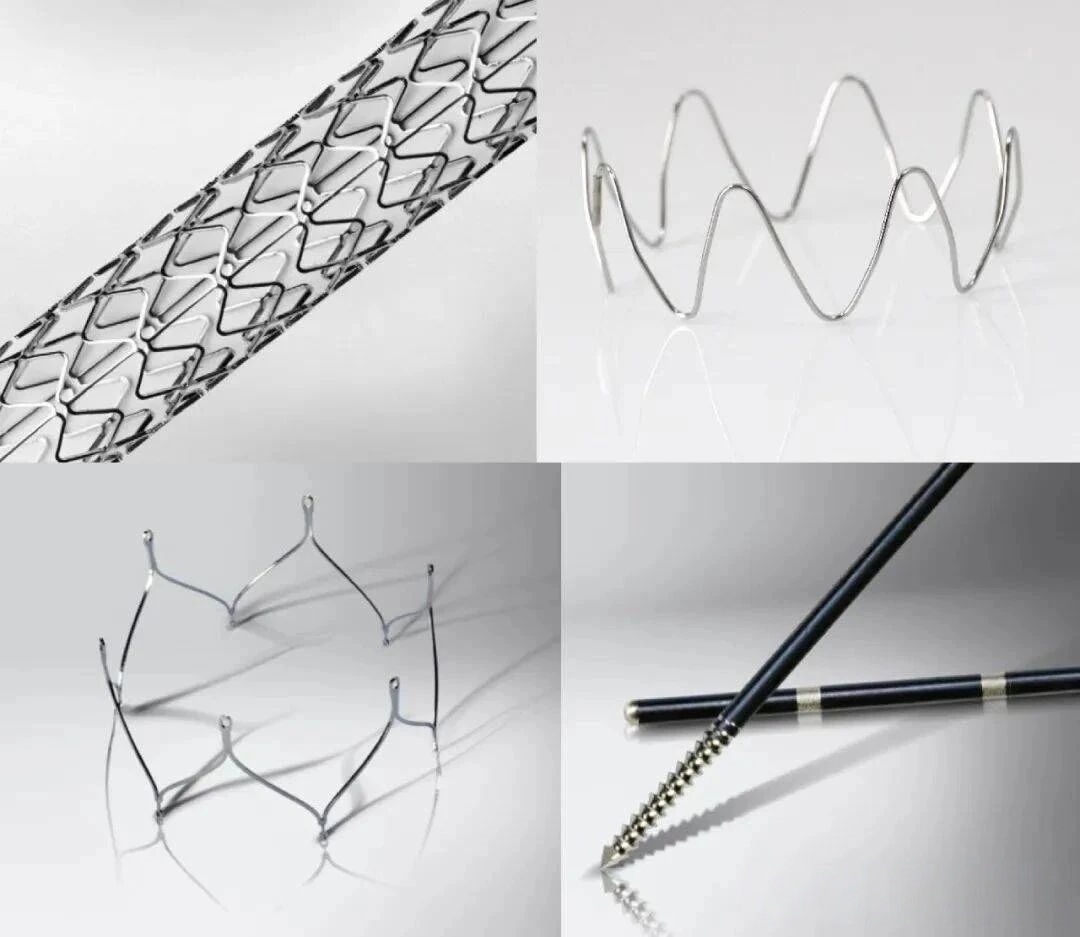
· Medical/healthcare: medical titanium wire and titanium-nickel alloy wire used for surgical sutures, bone cerclage, Dental crown implants, skull fixation plates/ties, Orthodontic wires for teeth correction, and heart stents leveraging Nitinol’s superelasticity.
· Consumer and optical: pure titanium eyewear wire for glasses frames combining light weight, fatigue resistance, and hypoallergenic comfort.
· Aerospace and marine: control cables, safety wire, and fixtures resisting saltwater and heat.
Selecting Thickness and Alloy
· ≤0.5 mm: sensing, micro-springs, orthodontic archwires, micro-mesh.
· 0.5–2.0 mm: general fasteners, welding filler, filter frames, eyewear parts.
· 2–6 mm: robust hangers, marine fittings, heavy-duty springs and structural ties.
· Alloy choice: pure Ti (Grade 1/2) for maximum corrosion resistance; Ti-6Al-4V for high strength; Nitinol for shape memory; medical grades with controlled oxygen and interstitials for implants.
Quality, Processing, and Surface
· Surface finish: bright wire reduces initiation sites for corrosion and improves fatigue life.
· Cleanliness: low inclusion content and controlled oxygen/nitrogen/hydrogen are essential for weldability and implant safety.
· Heat treatment: intermediate anneals tune ductility; final stress relief stabilizes dimensions for tight-bend applications like glasses frames.
· Packaging: spooled (titanium coiled wire) for automated feed or straightened/cut lengths for manual assembly and welding.
Titanium Wire Conclusion
Across diameters and alloys—titanium wire, Titanium alloy wire, Titanium welding wire, medical titanium wire, and titanium-nickel alloy wire—titanium wire delivers high strength, low density, superior corrosion resistance, and good biocompatibility. From heart stents and Orthodontic wires for teeth correction to chemical filters and aerospace welds, selecting the correct gauge and grade ensures performance, longevity, and safety in demanding environments.
We are a titanium wire manufacturer and support machining and customization of titanium wire, including alloy selection, precision diameters, surface finishes, packaging (spooled or straight), and medical-grade processing.
Frequently Asked Questions and Answers
Q1: How is titanium wire made?
A1: Most titanium wire is produced by hot/cold working to rod, then multi-pass wire drawing through precision dies with lubrication and intermediate anneals. For ultra-fine sizes (<0.05 mm), stabilized drawing with higher safety factors, optimized die geometry, and cleanroom handling are used to reduce breaks and ensure uniform properties.
Q2: Are medical implants made of titanium wire safe?
A2: Yes. Medical titanium wire and titanium-nickel alloy wire are produced from biocompatible grades with controlled impurities and validated processes. They exhibit good biocompatibility, corrosion resistance in body fluids, and mechanical properties appropriate for implants such as Dental crown implants, skull fixation devices, and certain heart stents and orthodontic systems. Regulatory compliance and testing protocols further ensure patient safety.