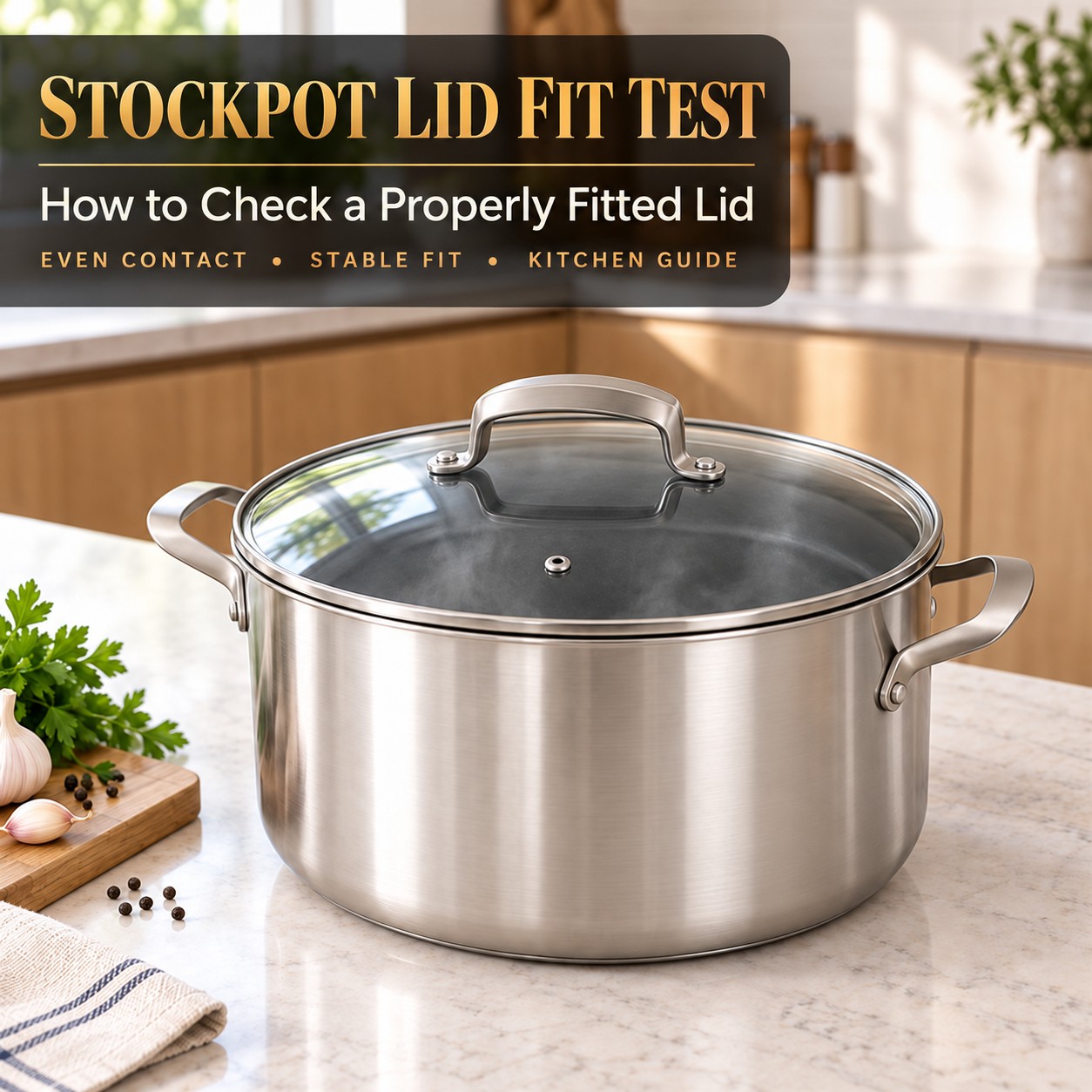
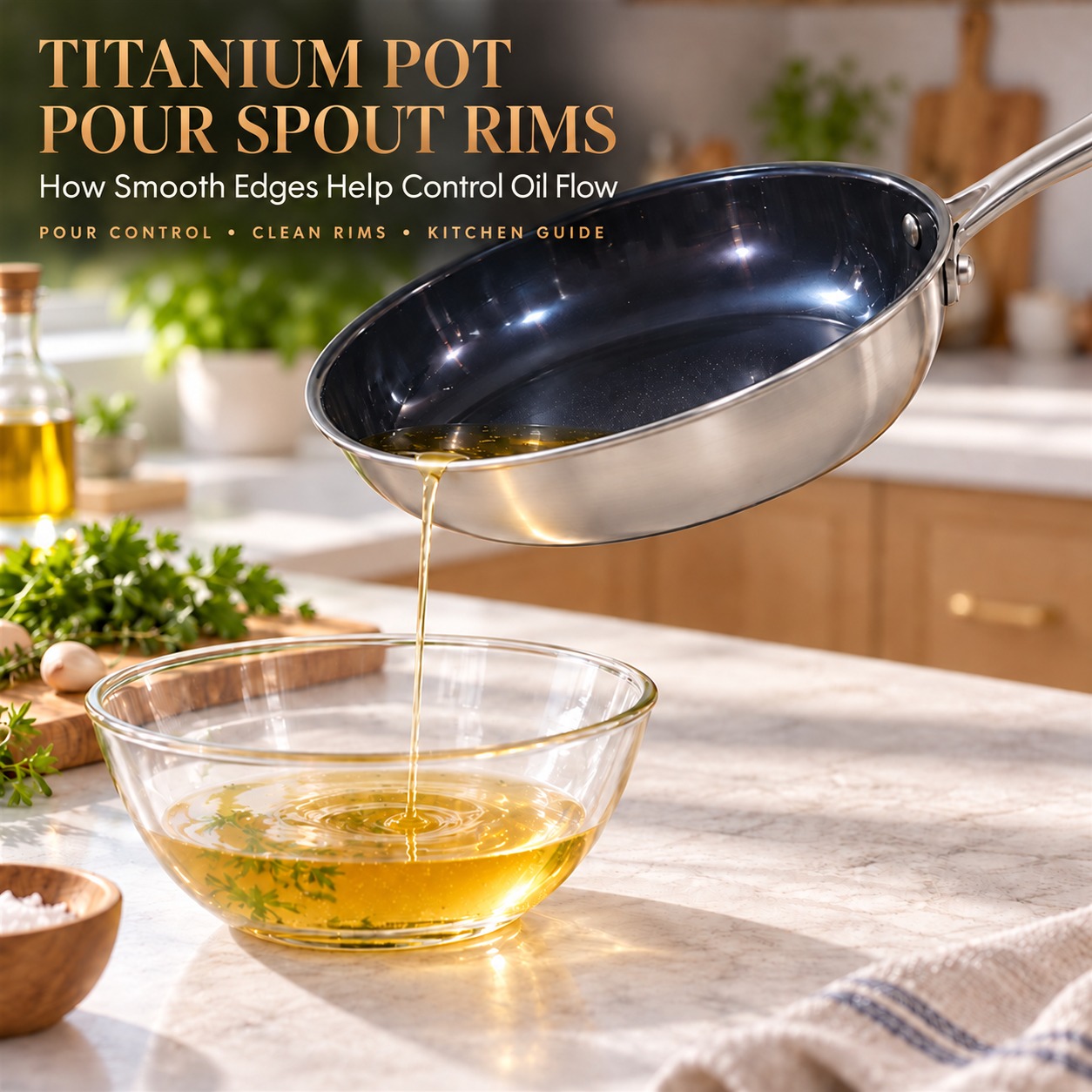
The real health risk in titanium-coated pans is usually not titanium metal itself. It is the coating system: a PTFE or ceramic-style layer, especially when the pan is overheated, dry-heated, scratched, or worn down. TITAUDOU’s cookware is different. It is made from solid sheet material, not a titanium coating system, so the food-contact surface is real titanium rather than a sprayed layer that can wear away.
That distinction matters because buyers often treat every product with the word titanium as if it behaves the same way. It does not. A coating-dependent pan can change as the coating ages. A solid titanium surface does not rely on a thin top layer to keep food separated from the base material. So when someone asks what are the actual health risks of using titanium coated pans, the first job is to identify what is actually touching the food.
1. What “titanium-coated” usually means
In the cookware market, “titanium-coated” is not a single material category. It may mean a nonstick coating that has titanium particles added for hardness, a ceramic-style coating with titanium in the formula, or a marketing term used to make a coated pan sound closer to solid metal cookware. In all of those cases, the word titanium is part of the label, but it does not automatically mean the food is touching a solid titanium sheet.
That is why the label alone is not enough. Buyers should ask what the food-contact surface is, whether the product depends on PTFE or ceramic chemistry, and whether the coating is the performance layer or just a decorative word in the ad copy. The article on How to Spot Fake Titanium Cookware is useful here because many “titanium” products are actually coated aluminum or stainless steel with a titanium-reinforced top layer.
TITAUDOU’s cookware line is positioned differently. It is built from solid sheet material and does not use titanium coating. That means the cooking surface is metal, not a coating film. It also means the question is no longer “Will the coating fail?” but “Is the metal surface genuine, stable, and correctly formed for the intended heat source?” That is a much cleaner product story for buyers who want to avoid coating uncertainty.
2. The actual health risks come from the coating, not the word titanium
The most important health risk with titanium-coated pans is overheating. If the product uses a PTFE-style coating, empty preheating or very high heat can break the coating down and create irritating fumes. That is the classic nonstick risk. If the product uses a ceramic-style coating, the main issue is usually not toxic smoke but premature wear, reduced release performance, and a surface that no longer behaves like the buyer expected.
A second risk is coating damage. Scratches, peeling, and carbonized oil do not mean every damaged pan is suddenly poisonous, but they do mean the pan is no longer the same system the buyer paid for. The coating has become thinner, less predictable, and more likely to behave badly under heat. That is why consumers who want lower-maintenance food contact often prefer a real metal surface instead of a coating-dependent pan. The comparison in Titanium Cookware vs Ceramic makes that difference clear.
A third risk is mislabeling. Some products say titanium but actually mean titanium particles in a coating, titanium-colored cookware, or “titanium reinforced” marketing language. In that case, the health discussion should focus on the coating chemistry and the base metal, not the titanium keyword. If the brand is not clear about the food-contact surface, the safest assumption is that the label is incomplete.
This is also why everyday use instructions matter so much. A coated pan that is preheated empty on high heat can move from convenient to questionable very quickly, especially if the cooktop runs hot or the pan is left unattended. Once a coating is stressed that way, the buyer is no longer using the same surface they bought in the store. A solid titanium sheet pan avoids that coating-failure scenario, but it still benefits from sensible heat management because food can still scorch, oil can smoke, and a badly overheated kitchen is never a good thing.
| Condition | Likely risk | What to check |
|---|---|---|
| PTFE-style titanium-coated pan overheated empty | Fume release, irritation risk, poor user experience | Coating type, heat limit, preheat instructions |
| Ceramic-style titanium-coated pan used at high heat | Faster coating wear, loss of release, shorter service life | Heat guidance, utensil guidance, cleaning method |
| Titanium-reinforced nonstick with unclear labeling | Unknown surface chemistry and unclear long-term behavior | Food-contact disclosure, test report, exact layer structure |
3. Why solid sheet titanium changes the risk picture
A solid titanium surface changes the conversation because there is no coating film to peel, flake, or chemically break down in the way nonstick layers can. That is the point TITAUDOU is making when it says its cookware is made from solid sheet material and absolutely does not use titanium coating. Food touches the titanium surface itself, so the safety question becomes one of material stability and cooking behavior rather than coating life.
Real titanium is low-reactive and widely used in biocompatible applications because it resists corrosion and does not behave like a typical heavy-metal cookware surface. The article Why Titanium Is Biocompatible for Food Contact goes deeper into that material behavior, while Pure Titanium Cookware vs Stainless Steel helps buyers compare the food-contact surface and long-term durability story.
This does not mean solid titanium is magically nonstick. It still needs reasonable heat control, oil where appropriate, and a realistic understanding of how metal cookware behaves. But the health risk profile is simpler: there is no coating layer whose degradation you have to monitor every time you cook. For buyers who are trying to reduce coating uncertainty, that is the main advantage.
For procurement teams, that simplicity also makes documentation easier. A coating-free surface is easier to describe in a spec sheet, easier to explain to customers, and easier to position in premium or family-safe product lines. That is one reason solid sheet titanium is useful not only as a cooking surface but also as a sourcing story: the claim is visible, testable, and much less dependent on the life of a thin top layer.
4. Heat, food, and cleaning change the risk level
The same pan can be safe in one kitchen and annoying in another depending on heat habits. Empty preheating is the biggest mistake with coating-based cookware because it can push the surface far beyond the range intended for safe everyday use. High oven settings, broiler use, and long unattended heating cycles create the same problem. With a solid titanium surface, those habits are still bad cooking practice, but the failure mode is different: you are more likely to burn oil or food than to damage a coating.
Food choice matters too. Acidic sauces, tomato dishes, lemon water, and long simmering are all harder on low-quality coated systems than on a stable metal surface. That is why families who cook soups, sauces, and baby food often prefer the cleaner material story of solid titanium. The page on titanium cookware for glass cooktops is also useful because it explains how base flatness and heat control affect real cooking behavior on modern stoves.
Cleaning is the final variable. A coated pan asks for soft tools, low friction, and more caution because the coating is the surface. A solid titanium pan can tolerate more normal use, but it still benefits from sensible cleaning and avoiding unnecessary abrasion. If the goal is to reduce health risk from cookware, the best habit is to keep heat moderate, avoid cooking with a damaged coated pan, and match the pan to the task instead of using one pan for everything.
| Cookware type | What touches food | Main health concern | Best fit |
|---|---|---|---|
| Titanium-coated nonstick | Coating layer | Overheating, coating wear, unclear chemistry | Low-oil convenience cooking |
| Solid titanium sheet cookware | Real titanium metal | Technique and heat control, not coating failure | Coating-free daily cooking |
| Ceramic nonstick | Ceramic-style coating | Shorter coating life, heat sensitivity | Short-term easy release |
5. How to read labels without getting misled
The quickest way to avoid a bad buy is to stop reading the front label first. Read the food-contact surface first. If the description says titanium-coated, titanium-reinforced, titanium ceramic, or titanium nonstick, ask whether the food touches real titanium metal or a coating. If the answer is vague, the product is probably a coated pan with a premium name. If the brand clearly says the food-contact surface is solid titanium sheet material, that is a different category and a much cleaner risk story.
This is the same reason the article Titanium Cookware vs Ceramic still matters. Many kitchen buyers are not choosing between two metals. They are choosing between a coating-dependent pan and a real food-contact material. That distinction should drive the decision, not the color of the pan or the marketing phrase on the handle tag.
For B2B buyers, the standard should be even stricter. Ask for the layer structure, material declaration, and finished-product testing. A supplier that can clearly state “solid sheet material, no titanium coating” is easier to evaluate than one that leans on slogans. If you need a product line that is explicitly coating-free, the safest commercial path is to buy on the basis of material disclosure, not promotional language.
6. What TITAUDOU means by solid sheet material
TITAUDOU’s cookware should be understood as solid sheet material at the food-contact side, not a titanium coating system. That is the key claim to keep straight when you compare it against titanium-coated pans in the market. The surface is built as metal, so the product story is about the quality of the sheet, the flatness, the forming, and the way the metal behaves under heat. It is not a story about a coating layer that can gradually disappear.
That also means TITAUDOU does not need to sell health by saying “our coating is better.” There is no titanium coating to defend. Instead, the company can point buyers toward material transparency, food-contact clarity, and a stable surface that does not depend on a sprayed finish. For readers who want the background on material stability, why titanium is biocompatible for food contact is the better companion article than any coating review.
This is also the right place to mention the commercial angle. A solid sheet product is easier to explain to buyers, retailers, and procurement teams because the material story is straightforward: no titanium coating, no hidden nonstick layer, and no ambiguity about what touches food. If a buyer wants to verify the structure before ordering, the best next step is to review the product line on Titanium Pots and Pans or contact the team through Contact Us.
7. Buyer checklist and final recommendation
If your goal is to avoid coating-related health risk, the buying checklist is simple. First, confirm the food-contact surface. Second, confirm whether the product is solid sheet material or a coating system. Third, confirm the heat limits and the intended cooking style. Fourth, ask for actual material disclosure rather than a brand slogan. Fifth, compare the pan with your real cooking habits, because a low-risk material can still behave poorly if it is used at the wrong heat level.
For families, the most practical choice is usually the one that matches the way they really cook. If you want low-oil eggs and fast release above all else, a coated pan can still be useful, but its safety depends on avoiding overheating and keeping the coating intact. If you want a more transparent material story and no titanium coating at all, a solid sheet titanium surface is the clearer answer. For buyers and brands, that clarity also reduces confusion and returns because the product does not pretend to be something it is not.
So the short answer is this: the actual health risks of titanium-coated pans come from the coating system, not from titanium metal. TITAUDOU’s cookware avoids that problem by using solid sheet material instead of a titanium coating. That makes the surface simpler to understand, easier to explain, and easier to position for customers who want coating-free cookware with a real metal food-contact surface.
Conclusion
If you are asking what are the actual health risks of using titanium coated pans, the honest answer is that the risk usually comes from the coating, the heat, and the way the pan ages. Titanium itself is not the problem. The problem is that a coating can be overheated, scratched, peeled, or misunderstood. That is why solid sheet titanium is easier to trust when your priority is coating-free food contact. TITAUDOU’s cookware is made that way on purpose: solid sheet material, no titanium coating, and a clearer material story for the buyer.
FAQ
Q1: Are titanium-coated pans the same as solid titanium cookware?
No. Titanium-coated pans usually depend on a coating system, while solid titanium cookware uses a real titanium food-contact surface. TITAUDOU’s cookware is solid sheet material, not titanium coating.
Q2: What is the biggest health risk with titanium-coated nonstick pans?
The biggest risk is overheating or dry-heating the coating, especially if it is PTFE-based. Wear and peeling also matter because they shorten the usable life of the surface and make the product less predictable.
Q3: Does TITAUDOU use titanium coating?
No. TITAUDOU’s cookware is made from solid sheet material and does not use titanium coating. The food-contact surface is real metal, not a titanium-coated layer.