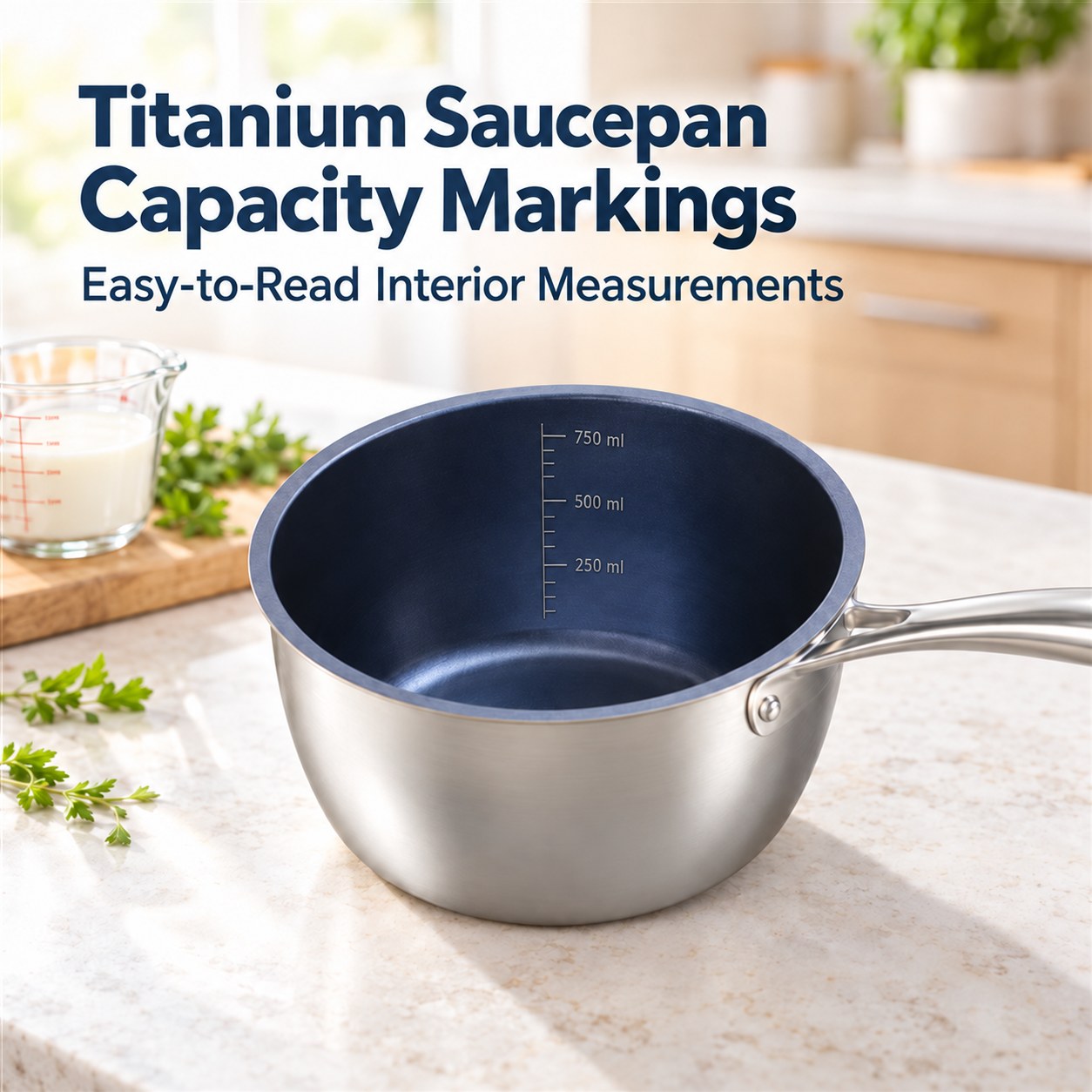
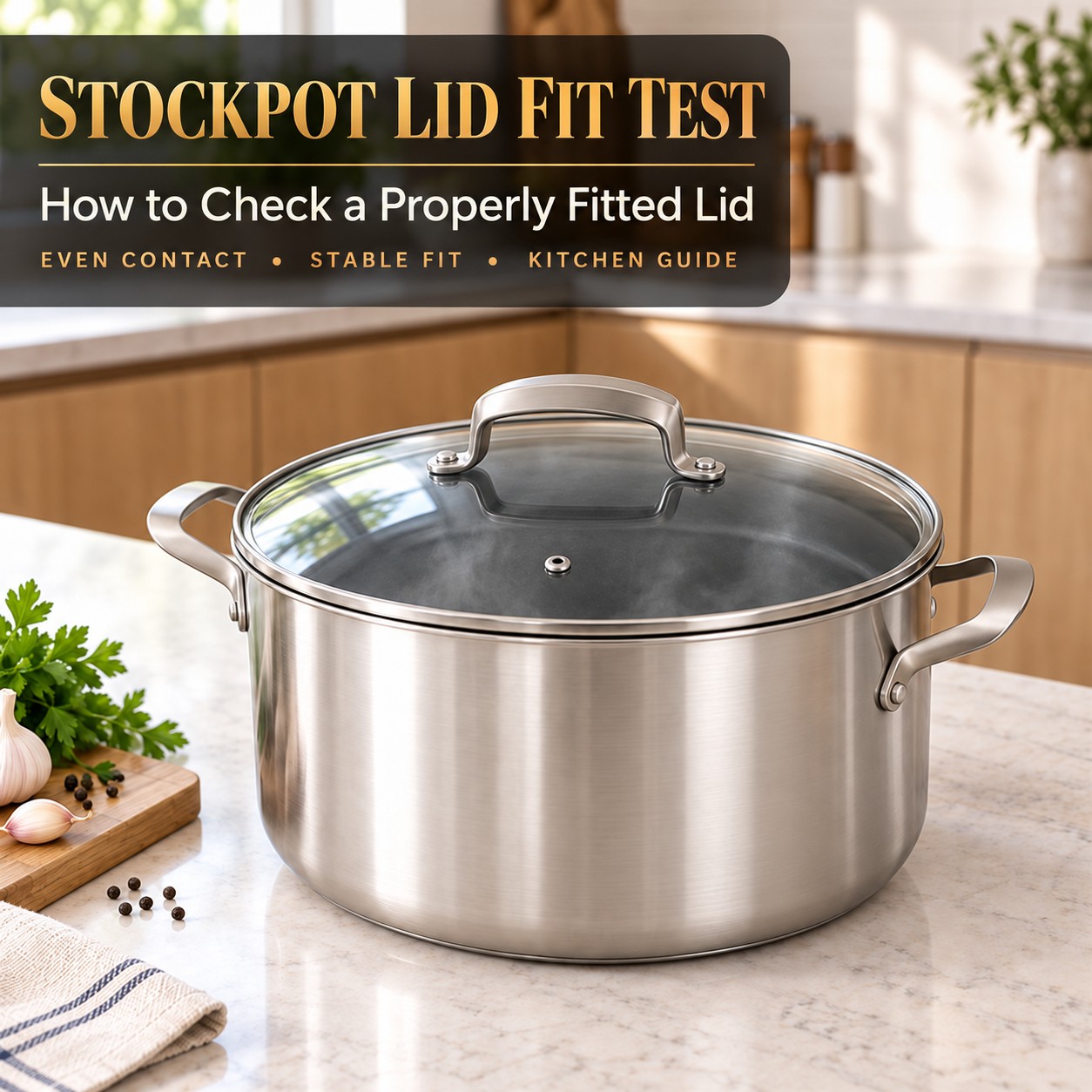
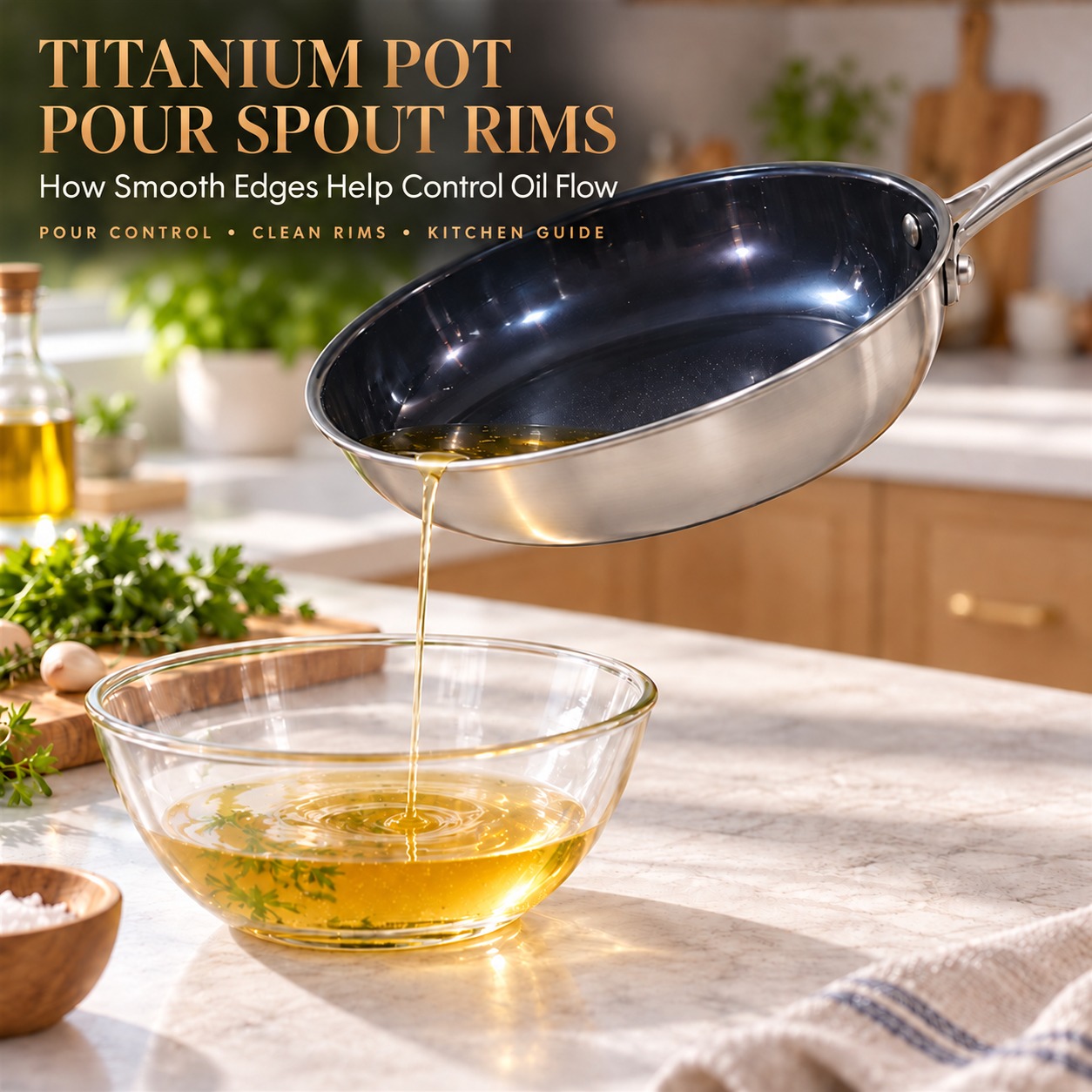
If you are comparing the pros and cons of pure titanium vs heavy cast iron cooking, the practical answer is not that one material replaces the other. Heavy cast iron is the heat-retention specialist. It is excellent for hard searing, frying stability, cornbread, oven baking, and recipes where stored heat matters. Pure titanium is the lightweight, corrosion-resistant, low-reactive material, but a thin single-ply titanium pan is not a direct cast iron replacement for frying or steak searing.
For home kitchens, the more useful comparison is heavy cast iron vs kitchen-grade tri-ply titanium. TITAUDOU's tri-ply structure uses a GR1 pure titanium food-contact layer, a 1050 aluminum heat-spreading core, and a 430 stainless steel exterior for strength and induction compatibility. That construction keeps the titanium food-contact advantage while solving the biggest weakness of thin pure titanium: uneven heat across the cooking surface.
The strongest answer is role-based. Keep heavy cast iron for recipes that need stored heat and oven-style toughness. Choose tri-ply titanium when you want a lighter daily pan for vegetables, eggs with technique, fish, acidic sauces, quick sautés, soup, rice, and repeat cleaning. This article separates single-ply pure titanium, tri-ply titanium, and heavy cast iron so the comparison is useful rather than just another material slogan.
1. The Direct Pros and Cons: What Each Material Is Really Good At
Cast iron is heavy because that weight is part of how it works. Once fully preheated, a thick cast iron skillet stores enough heat to keep the surface hot when cold steak, burgers, chicken thighs, or wet vegetables hit the pan. That stored heat supports browning and crust development. It also makes cast iron useful for oven baking, shallow frying, and dishes that move from stovetop to oven.
The drawback is the daily burden. Heavy cast iron takes time to preheat, cools slowly, needs seasoning care, can rust when neglected, and becomes awkward when full of food or washed in a small sink. It is a capable tool, but it is not always the pan people want to lift after a long workday.
Pure titanium sits in the opposite lane. It is light, strong for its weight, corrosion resistant, and low-reactive. The Royal Society of Chemistry's titanium reference describes titanium as protected by a stable oxide surface and valued for corrosion resistance and low density. Those traits explain why pure titanium is attractive for food contact and lighter cookware. But titanium is not chosen because it stores heat like cast iron. Thin single-ply titanium can create hot spots and does not hold heat well after cold food enters the pan.
| Decision Factor | Tri-Ply Titanium Advantage | Heavy Cast Iron Advantage |
| Daily handling | Easier to lift, pour, wash, and store, especially for larger pots or frequent cooking. | Feels stable, but can be tiring when full of food or used on a small sink/glass stove. |
| Heat retention | More responsive to burner changes; not built to store heat like iron. | Best for searing, frying, and recipes where thermal mass is useful. |
| Heat spreading | 1050 aluminum core helps spread heat better than single-ply titanium. | Can still heat unevenly if rushed or placed over an undersized burner. |
| Acidic foods | GR1 titanium food-contact layer is a strong fit for tomato, wine, citrus, and vinegar sauces. | Short acidic contact can be workable, but long simmering may affect seasoning and flavor. |
| Maintenance | No seasoning ritual; normal cleaning and drying are usually enough. | Seasoning can become excellent, but it requires drying, oil care, and rust prevention. |
2. Stop Comparing Thin Camping Titanium to Kitchen Cast Iron
Many online comparisons make titanium look weak because they compare thin backpacking titanium to a thick cast iron skillet. That comparison is useful for camping, but it is not the full home-kitchen story. A single-ply titanium pot is excellent for boiling water, heating broth, and minimizing pack weight. It is not ideal for eggs, steak, thick sauces, or large dry sautés because the metal sheet is thin and the heat does not spread evenly enough.
A household pan needs a different structure. TITAUDOU's tri-ply titanium cookware uses titanium as the food-contact layer, not as the only heating material. The aluminum core does the heat-spreading work. The stainless exterior supports induction and structure. This is the same logic used across serious clad cookware: one material does not need to perform every job if the layer design is honest.
That distinction matters for the pros and cons of pure titanium vs heavy cast iron cooking. Single-ply pure titanium is a poor heavy cast iron substitute when the goal is stored heat. Tri-ply titanium is a better daily-use alternative when the goal is lighter handling, lower maintenance, acid resistance, and more responsive stovetop cooking.
3. Heat Retention: Why Cast Iron Still Wins the Steak Test
Cast iron deserves its reputation for heat retention. Once a thick skillet is thoroughly preheated, the mass of the pan helps the cooking surface recover after cold food is added. This is useful for steak, burgers, pork chops, fried chicken, cornbread, and recipes where the pan itself acts as a heat reservoir. A tri-ply titanium pan can sear when preheated correctly, but it is not trying to be a thermal-mass specialist.
The common myth is that cast iron heats evenly. It usually does not heat evenly when rushed. Cast iron is a relatively poor lateral heat conductor compared with aluminum, so a small burner can create a hotter central zone while the edges stay cooler. Serious cooks often preheat cast iron gradually, rotate the pan, or use the oven to bring the whole mass up to temperature. The lesson is simple: cast iron's strength is stored heat, not instant evenness.
Tri-ply titanium behaves differently. It responds faster to burner changes because it has less thermal mass than heavy iron, and the aluminum core spreads heat more effectively than single-ply titanium. For vegetables, fish, sauces, rice dishes, eggs with oil and technique, and daily meals that need adjustment rather than brute stored heat, this responsiveness is often more useful than cast iron's slow momentum.
4. Weight, Glass Stoves, and Real Daily Handling
Weight is not a small comfort issue. It changes how often a pan is used. A heavy cast iron skillet can feel manageable when empty, then awkward when full of vegetables, oil, sauce, or meat. It can be hard to tilt for pouring. It can be unpleasant to wash in a compact sink. On glass cooktops, users may also worry about dragging, dropping, or scraping the surface.
Tri-ply titanium is designed to reduce that burden. It will not be as feather-light as a camping titanium pot because the aluminum core and stainless exterior add necessary structure. But it can be more comfortable than heavy cast iron for everyday lifting, quick washing, and repeated use. For older users, apartment kitchens, small sinks, busy family meals, and frequent cooking, that difference can decide which pan actually stays on the stovetop.
This is why a buyer should test loaded handling, not only empty catalog weight. Fill the pan with water or cooked food, move it between burner and sink, pour from it, and clean it. A pan that wins on paper can lose in the hand. For more practical context on lightweight kitchen setups, see titanium cookware for small kitchen spaces.
5. Acidic Foods, Seasoning, and Cleaning Workload
Bare cast iron protects itself through seasoning, a polymerized oil layer built and maintained over time. A good seasoning layer can become very useful. It helps with food release and rust resistance. But it is still a surface that benefits from careful cleaning, prompt drying, and occasional oil maintenance. Long acidic simmering can weaken the seasoning or create off-flavors, especially if the pan is new or the seasoning is thin.
Pure titanium does not need a seasoning layer for corrosion protection. A GR1 titanium food-contact surface is low-reactive and highly corrosion resistant in normal cooking. That makes titanium more convenient for tomato sauce, lemon chicken, wine reductions, vinegar vegetables, seafood, rice porridge, and soups. The pan still needs sensible heat control and cleaning, but the owner does not have to maintain a seasoning layer as the material's protective system.
TITAUDOU's blue titanium surface adds another practical point. On selected blue products, the color is created by heating titanium to about 600 C. It is not paint, enamel, ceramic, PTFE, or a sprayed coating. The treated surface can reach a hardness range around HV700-900 depending on process control and product series. That helps support stronger cleaning and scratch resistance than ordinary soft titanium. For food release expectations, read is titanium cookware nonstick without coating?.
6. Which Pan Should You Use for Each Cooking Task?
A useful kitchen is not built around one hero material. It is built around roles. Cast iron should not be thrown away because titanium exists. Titanium should not be dismissed because thin camping pots have hot spots. The right question is which pan should handle which meal.
| Cooking Task | Reach for Tri-Ply Titanium When... | Reach for Cast Iron When... |
| Breakfast and quick sautés | You want responsive heat, easier lifting, and simple cleanup. | Your seasoning is well developed and you want a slower, stored-heat cook. |
| Steak, burgers, and hard searing | You want one all-purpose pan and can manage preheat carefully. | You want maximum thermal mass for crust and temperature recovery. |
| Tomato, wine, lemon, or vinegar sauces | The recipe is acid-forward or needs a longer simmer. | The acidic contact is brief and your seasoning is mature. |
| Cornbread, oven baking, and frying | Your specific pan and handle design are oven-rated for the recipe. | You want a proven heat-retentive tool for baking and oil-heavy cooking. |
| Glass or induction cooking | The pan has a magnetic 430 stainless exterior and you want easier handling. | You lift rather than slide the pan and value cast iron's stored heat. |
For many households, the best setup is one tri-ply titanium skillet or chef's pan for routine cooking and one cast iron skillet for stored-heat recipes. That covers quick vegetables, fish, eggs, acidic sauces, steak, cornbread, oven dishes, and frying without forcing either material to perform outside its strongest role. For more on the structure behind the titanium side, see tri-ply titanium cookware.
7. B2B Buyer Checks for Cast Iron Alternatives
For importers, distributors, retail brands, and OEM/ODM buyers, the phrase "lightweight alternative to cast iron" needs evidence. A supplier should not only say titanium is light. The buyer should test the sample in the actual cooking tasks the product will be marketed for. A lightweight pan that burns eggs, warps on induction, or hides a coating behind the titanium name will create returns and weak reviews.
The useful checklist includes material test reports for GR1 titanium, confirmation of the 1050 aluminum core and 430 stainless exterior, layer bonding data, heat-cycle flatness checks, handle load checks, surface hardness information for blue titanium series, coating-free declarations, and food-contact migration testing where required by the sales market. Packaging claims should be precise: "tri-ply titanium with GR1 titanium food-contact surface" is stronger and safer than a vague "titanium pan replaces cast iron" claim.
TITAUDOU's structure gives B2B buyers a clear material-by-function story. Titanium handles food contact. Aluminum handles heat spreading. Stainless steel handles structure and induction compatibility. Buyers can review finished product formats on the TITAUDOU titanium pots and pans page or evaluate factory capability through the titanium cookware manufacturer page.
Conclusion
The best answer to the pros and cons of pure titanium vs heavy cast iron cooking is practical division of labor. Heavy cast iron is better for stored heat, hard searing, oven baking, and frying stability. Single-ply pure titanium is better for light weight, corrosion resistance, and simple liquid-heavy cooking, but it is not the right direct substitute for a heavy iron skillet.
Tri-ply titanium is the better home-kitchen answer when the buyer wants lighter handling, lower maintenance, acidic-food compatibility, and a real GR1 titanium food-contact layer with an aluminum core for better heat spreading. That is where TITAUDOU's cookware makes sense: not as a dramatic replacement for every cast iron job, but as a more comfortable daily pan for the meals most people cook most often.
Frequently Asked Questions (FAQ)
Q1: What are the main pros and cons of pure titanium vs heavy cast iron cooking?
Pure titanium is light, corrosion resistant, low-reactive, and easy to maintain, but thin pure titanium can have hot spots and weak heat retention. Heavy cast iron stores heat extremely well for searing, baking, and frying, but it is heavy, slow to heat, slow to cool, and requires seasoning care.
Q2: Is tri-ply titanium better than cast iron for everyday cooking?
For everyday cooking, tri-ply titanium is often more convenient because it is lighter, easier to clean, does not need seasoning, and handles acidic foods well. Cast iron is still better when the recipe depends on stored heat, such as steak searing, cornbread, and frying.
Q3: Why not use single-ply pure titanium instead of tri-ply titanium?
Single-ply pure titanium is excellent for lightweight boiling and simple liquid-heavy tasks, but it does not spread or store heat well enough for many home frying tasks. Tri-ply titanium keeps the GR1 titanium food-contact surface while adding a 1050 aluminum core for heat spreading and a 430 stainless exterior for induction and structure.