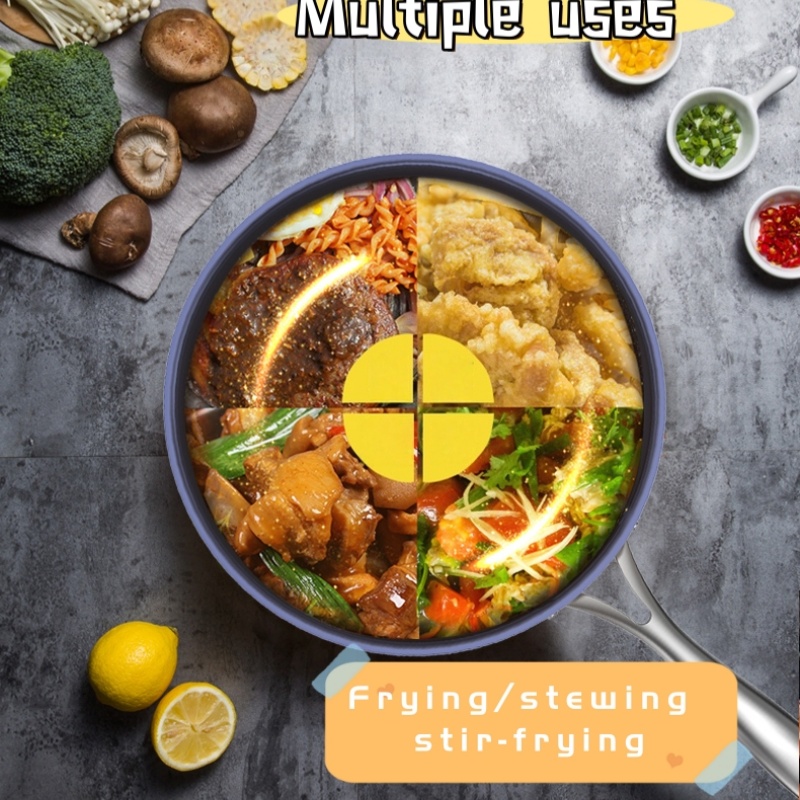
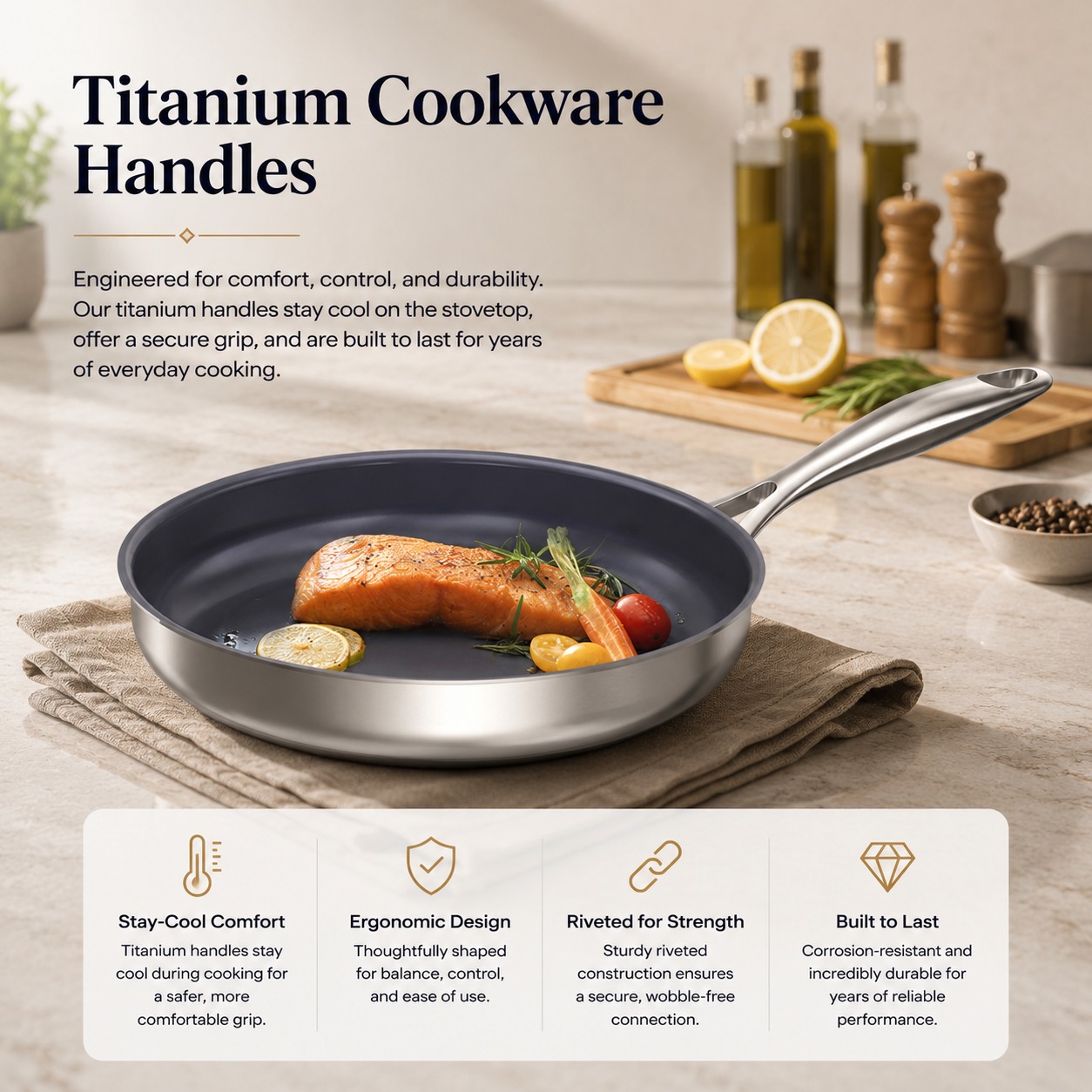
When selecting the ideal cookware for modern kitchens, the titanium non stick pan has become increasingly popular due to its unique balance of safety, durability, and performance. A common question from health-conscious cooks is: is titanium nonstick? The answer lies in the advanced manufacturing process. While pure titanium is naturally biocompatible, high-quality titanium non stick pans utilize physical surface treatments or composite structures to achieve a superior non-stick effect without harmful chemicals.
Choosing the right titanium cookware requires balancing heat conductivity, weight, and cost. As a leading manufacturer, Titaudou offers FDA-certified solutions ranging from pure titanium to three-layer composite pans. Whether you are looking for a toxin-free cooking experience or durable commercial cookware, understanding these materials is key.
[CTA Suggestion: Interested in bulk orders? Get a Free Quote for Titanium Cookware today.].
1. Material Composition of Titanium Non stick Pans
Titanium non stick pans are available in several material configurations, each offering distinct benefits and trade-offs. The three most common constructions are pure titanium pans, multi-layer composite pans, and titanium-coated pans.
1.1 Pure Titanium Pans: The Non-Toxic Choice
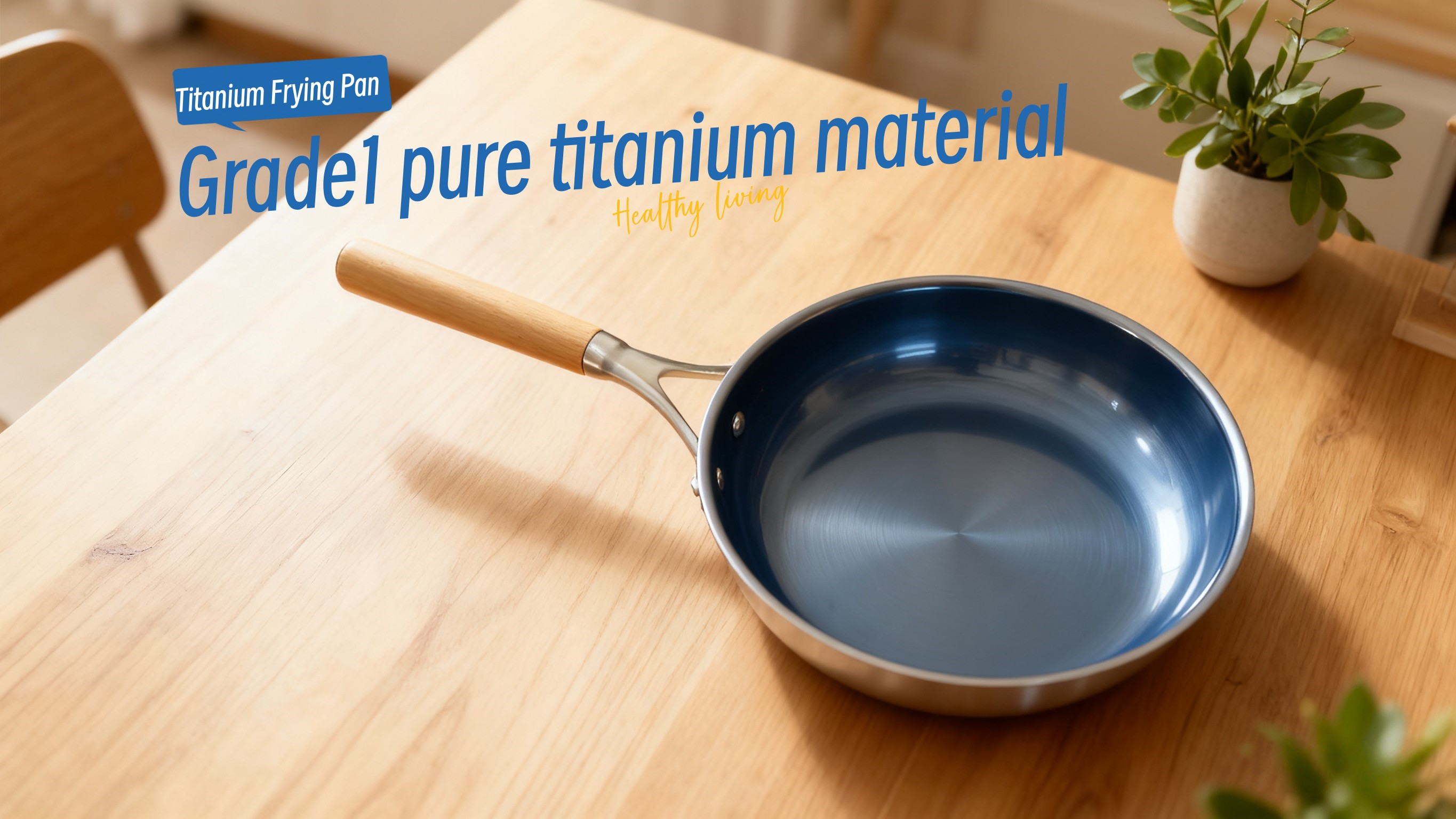
Pure titanium pans are typically made from titanium of 99.5% purity or higher (GR1 or GR2 grades). Often considered the best titanium non stick pan option for health purity, this material is lauded for its excellent biocompatibility and corrosion resistance.
Why Trust Titaudou? Our pure titanium products meet strict food-grade safety certifications (China GB 4806.9-2016 & U.S. FDA), ensuring a completely PFOA-free cooking environment.
Advantages:
· Chemical Inertness: Pure titanium does not react with food, ensuring no metallic taste, color change, or leaching of harmful substances during cooking.
· Safety: Free from toxins and heavy metals, making it suitable for health-conscious users and those with metal sensitivities.
· Corrosion Resistance: Titanium resists acids, alkalis, and salt, maintaining its integrity even with prolonged exposure to harsh ingredients.
Limitation:
· Low Thermal Conductivity: Pure titanium has a thermal conductivity of approximately 7 W/m·K, which is significantly lower than aluminum or copper. This means it heats up slowly and can develop hot spots if not managed carefully.
1.2 Multi-layer Composite Titanium Pans
To overcome the limitations of pure titanium, many titanium non-stick frying pans use a multi-layer composite structure. The most popular configuration is a three-layer design:
· Inner Layer: Pure titanium, which comes into direct contact with food.
· Core Layer: Aluminum or copper, chosen for its superior heat conductivity.
· Outer Layer: Stainless steel, which adds magnetic properties for induction compatibility and structural durability.
Some pans also employ advanced technologies such as ion nitriding on the titanium surface. This process increases surface hardness and wear resistance and can help develop a natural, oil-based non-stick film over time.
Advantages:
· Balanced Performance: Combines the safety and corrosion resistance of titanium with the rapid, even heating of aluminum or copper.
· Surface Durability: Ion nitriding and similar treatments enhance scratch resistance and develop a more durable non-stick surface without relying on chemical coatings.
· Versatility: The stainless steel exterior allows use on induction cooktops and provides structural strength.
1.3 Titanium-coated Iron or Aluminum Pans
Another approach involves spraying or melting titanium powder onto the surface of an iron or aluminum pan. This method creates a titanium-coated frying surface, merging the heat conductivity of the underlying metal with the corrosion resistance of titanium.
Advantages:
· Improved Heating: The base material (iron or aluminum) ensures fast and even heat distribution.
· Enhanced Corrosion Resistance: The titanium layer protects the underlying metal from rust and chemical reactions.
Limitations:
· Durability: Over time and with heavy use, the titanium coating may wear off or flake, especially if abrasive cleaning tools are used.
· Lower Purity: The core is not titanium; only the surface benefits from titanium’s properties.
2. Advantages of Titanium Non stick Pans
Titanium non stick pans offer a range of benefits that cater to modern culinary demands, especially for those seeking safer, more versatile, and longer-lasting cookware.
2.1 Health and Safety
Titanium is a metal with exceptionally high biocompatibility. Unlike some other metals, it does not react with acidic or alkaline foods and does not leach into food during cooking. It is PFOA-free and contains no toxic substances or heavy metals, making it a much safer alternative to traditional non-stick pans that may release harmful chemicals at high temperatures.
· No Chemical Reactions: Titanium’s inertness ensures pure taste and color in food.
· Heat Stability: Even at temperatures above 260°C (500°F), titanium does not decompose or emit toxic fumes.
· Natural Antibacterial Properties: Titanium’s surface can inhibit the growth of certain bacteria, making it a hygienic choice for family kitchens.
2.2 Lightweight and Durable
Titanium is known for its lightweight strength. A 32cm titanium pan can weigh as little as 820 grams, which is more than 50% lighter than a comparably sized cast iron pan. This makes it easy to handle, even when full, and ideal for users who prefer lighter cookware.
· High Strength-to-weight Ratio: Easy single-handed operation, even with larger pans.
· Corrosion and Wear Resistance: Titanium resists pitting, warping, and corrosion—whether from salt, acids, or daily use.
· Long Service Life: With proper care, a quality titanium pan can last over a decade.
2.3 Physical Non-stick and Thermal Properties
Is titanium nonstick naturally? Not entirely, but through advanced technology, it becomes one. Many titanium non stick pans achieve a premium non-stick effect through physical surface treatment rather than chemical coatings. Techniques like micro-arc oxidation create a dense, ceramic-like texture on the pan’s surface.
No Chemical Coatings Required: Reduces the risk of coating degradation.
Scratch-Resistant Surface: Superior wear resistance compared to traditional pans.
Consistent Performance: Titaudou’s composite designs ensure the titanium non stick pan heats evenly, preventing food from burning and sticking.
2.4 Multi-functionality and Easy Maintenance
Titanium non stick pans are highly versatile, capable of withstanding temperatures from -200°C to +600°C. They are compatible with gas, electric, induction, and even open flame stoves. Maintenance is straightforward—no complex seasoning or special oils are needed, and cleaning can be done with water and mild detergent.
· Wide Temperature Range: Suitable for searing, stir-frying, simmering, and even baking.
· Simple Cleaning: No need for special treatments; just wash, dry, and store.
· No Rusting or Warping: Even after years of use and repeated temperature cycling.
Looking for High-Quality Titanium Cookware?
Titaudou provides factory-direct titanium non stick pans with customizable options. We guarantee 100% authentic titanium material and rigorous quality control.
[View Our Titanium Pots and Pans Catalog] | [Contact Us for Wholesale Pricing]
3. Usage Suggestions for Titanium Non stick Pans
To maximize the benefits and longevity of your titanium non-stick frying pan, it’s important to follow certain usage and care guidelines.
3.1 Prefer Pure Titanium Composite Pans
When shopping for a titanium pan, prioritize those made from composite construction with an inner layer of at least 99.6% pure titanium and no chemical non-stick coatings. Confirm the product has passed food-grade safety certifications, such as China’s GB 4806.9-2016 or the U.S. FDA standards, to ensure safety and authenticity.
· Choose reputable brands and certifications.
Titaudou cookware has national standard certification and FDA food safety certification
· Avoid pans with unknown or unverified coatings.
· Inspect for “pure titanium” or “titanium composite” labeling.
3.2 Control Heat and Avoid Dry Heating
Composite titanium pans heat up quickly and evenly. Use medium or low heat for most cooking tasks to prevent local overheating, which can damage the structure or reduce non-stick performance. Avoid prolonged empty heating (“dry burning”), as this can warp the pan or degrade the surface over time.
· Preheat gently and add oil or food before the pan becomes too hot.
· When frying, monitor heat carefully
· Use the right burner size to ensure even heating of the entire pan base.
3.3 Cleaning and Maintenance
While titanium pans are highly durable, proper cleaning ensures optimal non-stick performance and appearance:
· Everyday Cleaning: Use a soft sponge or cloth and neutral detergent. For typical stains, this is sufficient.
· Tough Stains: For stubborn residues, stainless steel scrubbers or brushes may be used, as titanium’s hard surface can tolerate them (unlike many coated pans). However, frequent aggressive scrubbing should be avoided to preserve surface smoothness.
· Dry After Washing: Especially in humid environments, dry the pan thoroughly to prevent water spots and store it in a well-ventilated area.
4. Additional Practical Usage Tips
· Utensil Selection: While titanium surfaces are tough, it is best to use wooden, silicone, or plastic utensils to extend the life of any non-stick treatment or surface oxidation.
· Oven Use: Most titanium pans (especially those without plastic handles) are oven-safe; check manufacturer guidelines.
· Avoid Sudden Temperature Changes: Allow the pan to cool before washing to prevent thermal shock, which could warp the pan or degrade its surface.
· Storage: Stack with care or use pan protectors to avoid surface scratches from other cookware.
5. Environmental and Economic Considerations
While titanium non-stick frying pans are more expensive upfront than many other types, their longevity, safety, and multi-functionality can make them more economical in the long run. Their resistance to corrosion and mechanical wear means they will not need to be replaced as frequently as conventional non-stick pans, reducing waste and long-term costs.
Frequently Asked Questions and Answers
1. Is titanium nonstick and how does the material composition affect performance?
Yes, a high-quality titanium non stick pan offers excellent non-stick properties, but it depends on the construction. Is titanium nonstick without coating? Pure titanium requires proper temperature control or physical surface treatments (like ion nitriding) to become non-stick.
The core components typically include a pure titanium inner layer for safety, an aluminum core for heat, and stainless steel for durability. This composite structure ensures your titanium non stick pan is durable, PFOA-free, and safe for daily use. Unlike traditional coatings that peel, Titaudou’s physically treated titanium surfaces offer long-lasting non-stick performance.
2. What are the key precautions for heating temperature control, utensil selection, and cooking methods when using a titanium non stick pan to effectively protect its non-stick coating and extend its service life?
To protect your titanium non stick pan’s surface and extend its lifespan:
· Use medium or low heat for most cooking; titanium composite pans heat quickly and evenly, so high heat is rarely necessary.
· Avoid preheating the pan when empty for extended periods, as this can cause localized overheating and possibly warp the pan or damage the non-stick surface.
· Choose utensils made from wood, silicone, or plastic to minimize scratches, even though titanium is quite scratch-resistant.
· Don’t cut food in the pan or use metal tools aggressively, especially if the pan features a sprayed titanium coating.
· Let the pan cool before washing to prevent warping due to thermal shock.
· Avoid abrupt temperature changes and stack pans with care.
3. Is a titanium non stick pan free of harmful chemicals like PFOA? What special daily cleaning methods should be adopted to maintain its non-stick performance without compromising material safety?
Yes, a titanium non stick pan—especially those with physical non-stick treatment or made from pure titanium—contains no PFOA, PTFE, or other toxic chemicals. This makes it an especially safe choice for high-heat cooking and for users concerned about chemical exposure. For daily cleaning:
· Wash with warm water, a soft sponge, and neutral detergent after each use.
· For stubborn stains, use a stainless steel scrubber if necessary (for pure titanium or composite pans), but avoid excessive force.
· Dry the pan fully after washing to prevent water spots.
· No need for regular seasoning or oiling as with cast iron.
· Store in a dry place, and if stacking with other pans, use a pan protector or cloth to minimize surface wear.