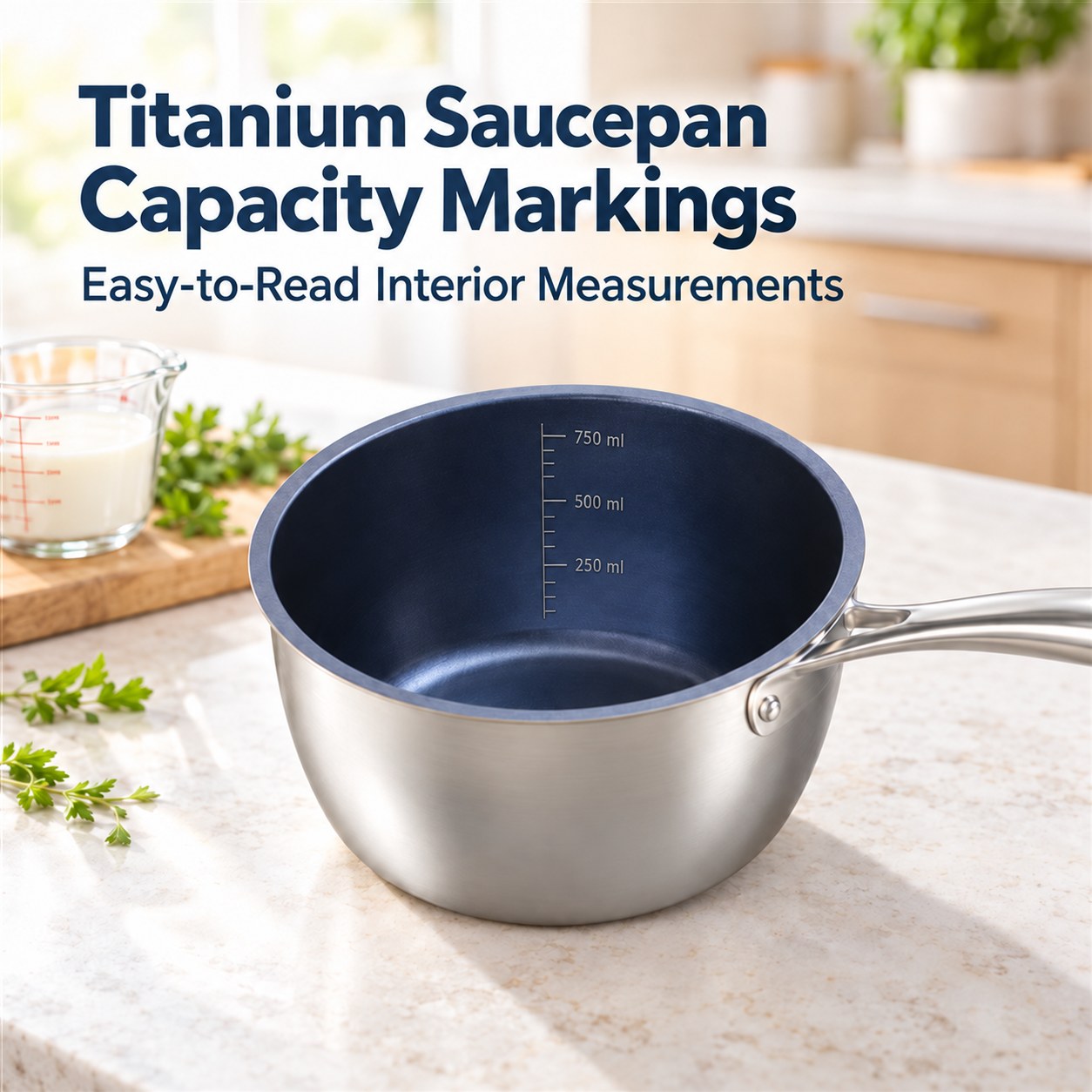
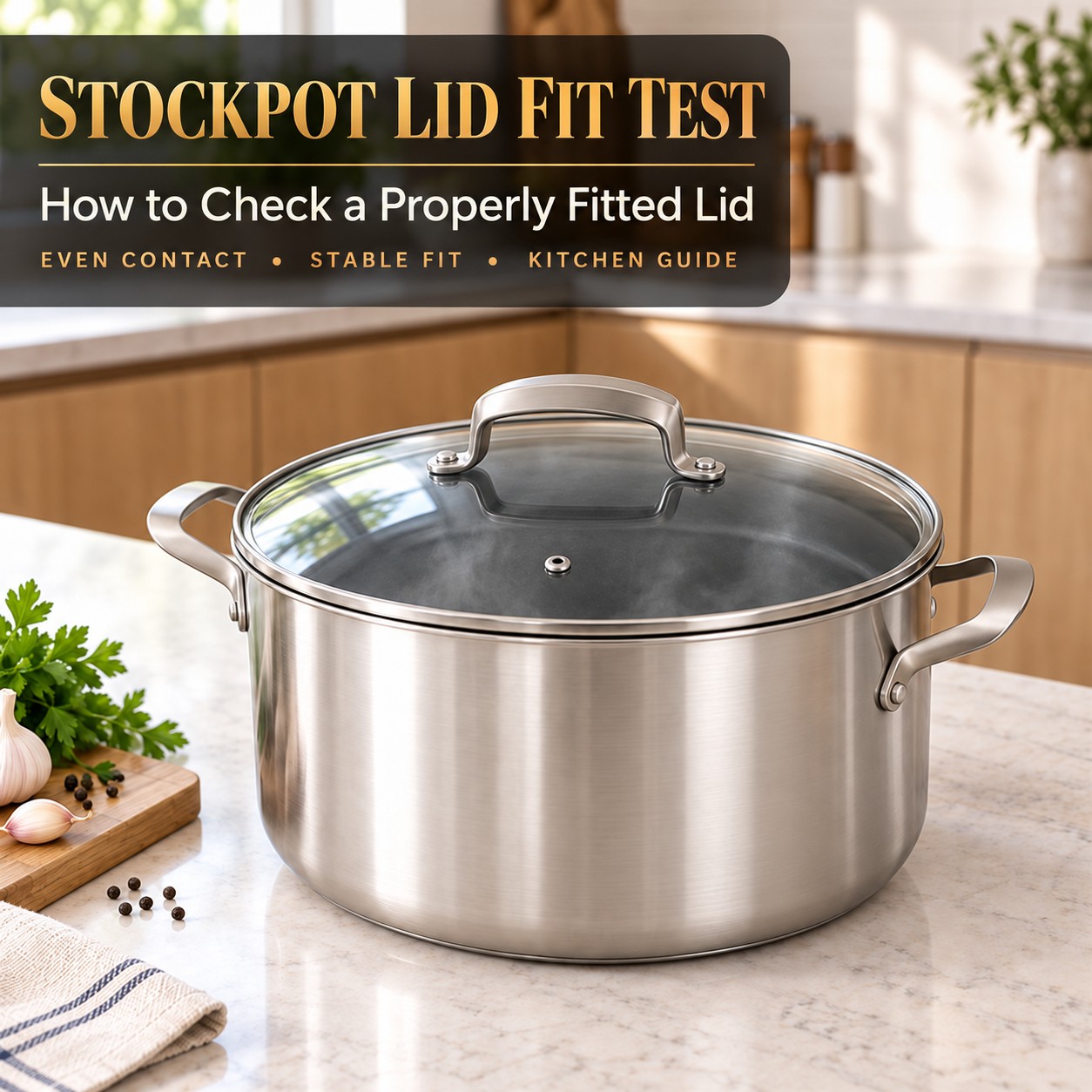
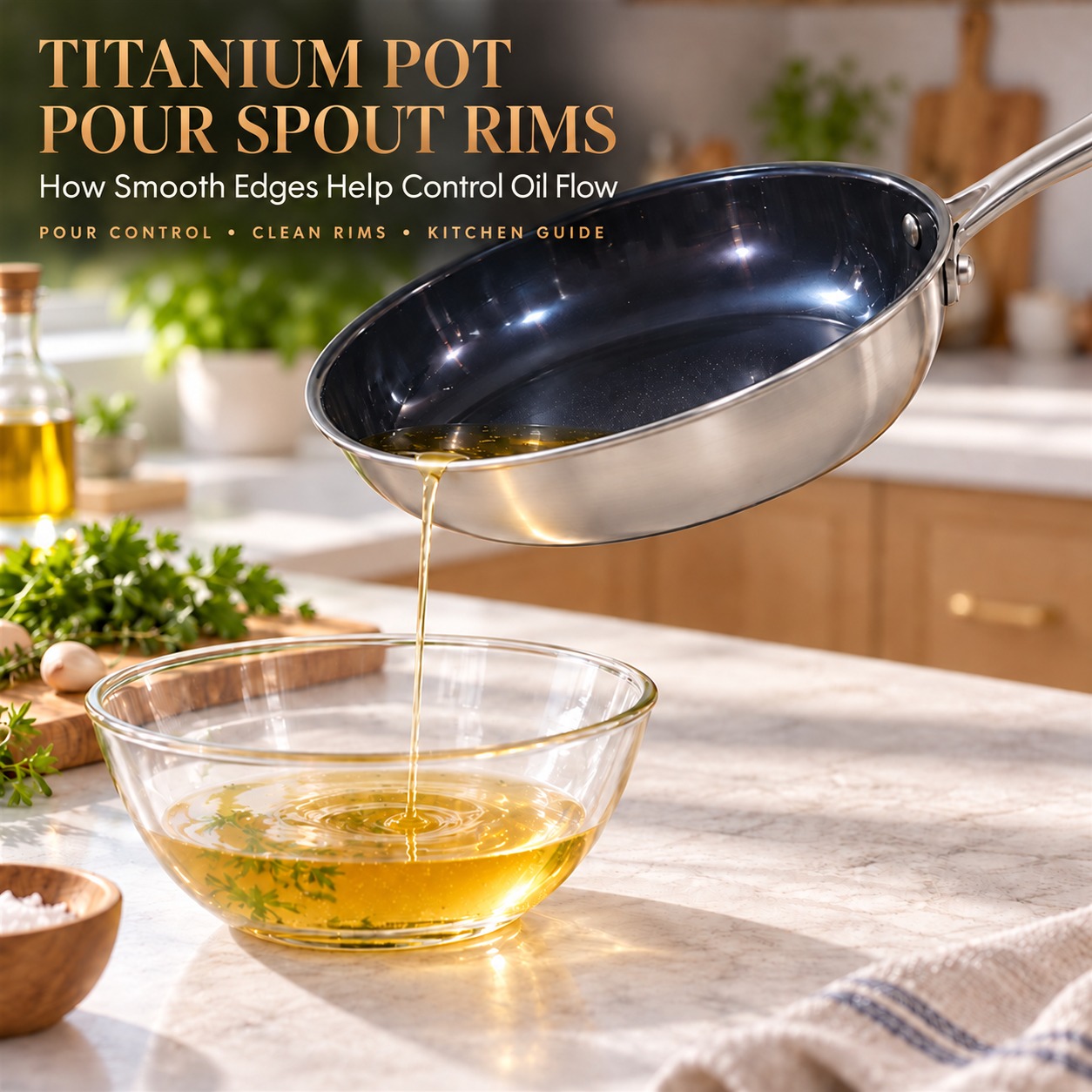
A modern kitchen needs cookware that is safe for daily food contact, practical on real stoves, easy to clean, and honest about its limitations. Titanium cookware fits that new kitchen standard when the product is built correctly: a real pure titanium food-contact surface, a heat-spreading structure where needed, and clear care instructions instead of vague marketing language.
The most common care question is simple: does pure titanium cookware ever rust if left wet in the sink? For a genuine pure titanium food-contact surface, the practical answer is no, not in the way cast iron, carbon steel, or low-grade steel rust. Titanium is not an iron-based cooking surface. It forms a stable titanium oxide film that helps protect the metal when it contacts air or water. A wet sink can still create spots, stains, or contamination, but that is not the same as the titanium itself turning into red rust.
This article upgrades the original discussion of titanium cookware advantages and disadvantages for the kitchen of the new era. It keeps the broader buyer question, but adds a clearer maintenance answer: when water is harmless, when sink contamination matters, and how consumers and B2B buyers should judge pure titanium cookware before accepting a rust-proof claim.
1. Why the New Kitchen Standard Is About Verified Materials
The kitchen of the new era is not defined by one fashionable material. It is defined by better verification. Buyers want cookware that can explain what touches food, how the body is constructed, how the surface behaves under heat, and what happens after repeated washing. That is why titanium cookware has become interesting to high-end consumers, importers, and private-label cookware brands. The material gives a strong safety and durability story, but only when the structure is real.
A titanium label can mean several things. It may describe a genuine pure titanium food-contact layer, a titanium-reinforced coating, a titanium-colored finish, or a small amount of titanium compound mixed into another surface. These products should not be judged as one category. A real pure titanium cooking surface behaves differently from a coated aluminum pan that uses titanium language in the sales copy.
TITAUDOU’s more defensible route is to explain the structure clearly. A practical premium pan can use GR1 pure titanium on the food-contact side, a heat-spreading core for cooking performance, and an exterior layer selected for strength and stove compatibility. That construction is different from a thin decorative coating. Buyers who want to understand the product family can start with the titanium pots and pans category and then compare the material details behind each model.
This verified-material approach also changes how we talk about disadvantages. Titanium is not automatically perfect. Thin single-layer titanium does not spread heat as evenly as aluminum or copper. Bare metal cookware is not PTFE-style nonstick. Surface color can change after high heat. But those limitations are easier to manage when the product is honest about the surface, the layer stack, and the care routine.
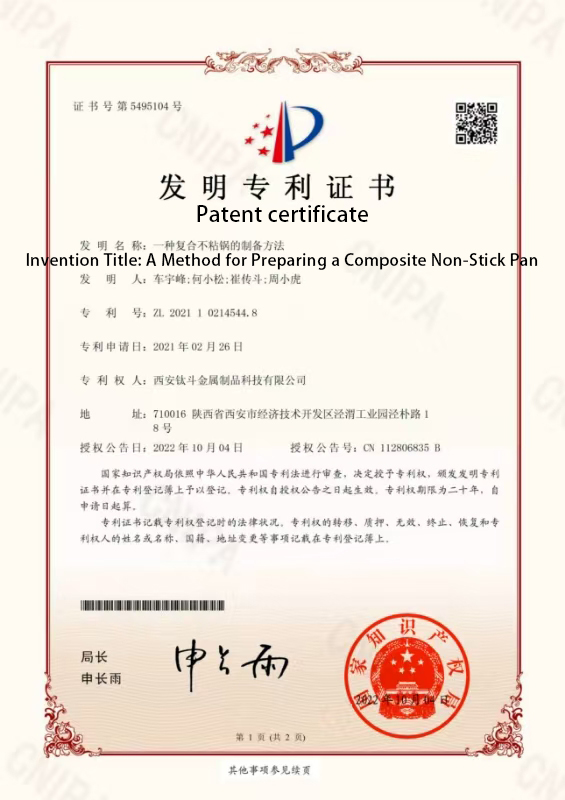
2. Does Pure Titanium Cookware Ever Rust If Left Wet in the Sink?
If the cookware surface is genuine pure titanium, plain water in a sink should not make the titanium rust like iron. Rust is usually the reddish-brown corrosion associated with iron or steel. Pure titanium does not rely on iron chemistry. Its surface naturally forms a titanium dioxide passivation layer, and that film helps the metal resist ordinary kitchen moisture.
So when someone asks, does pure titanium cookware ever rust if left wet in the sink, the accurate answer needs one condition: the food-contact surface must really be pure titanium. A titanium-coated pan, a pan with low-grade rivets, a pan with an exposed layered edge, or a pan sitting beside rusty steel tools may show marks for other reasons. The titanium layer may be stable, while another part of the product or sink environment creates stains.
This is why users sometimes think titanium cookware has rusted after soaking. The pan may pick up transferred iron particles from a rusty knife, a steel wool fragment, a low-grade rack, or a sink with old rust residue. Those orange or brown specks sit on the titanium surface, but they do not prove that the titanium metal itself is corroding. For a deeper article dedicated to this exact care issue, see whether titanium cookware rusts if left in water overnight.
The practical rule is simple. Soaking a pure titanium food-contact surface in clean water to loosen food is usually acceptable. Storing a dirty pan in a wet sink for long periods with salt, acidic food, detergent residue, rusty utensils, or mixed metal debris is poor maintenance. The first situation is a cleaning step. The second situation is uncontrolled storage.
| Wet-sink situation | What is likely happening | Best response |
|---|---|---|
| Clean water soak overnight | Pure titanium surface should remain corrosion resistant | Wash, rinse, and towel dry before storage |
| Soaked with rusty utensils | Transferred iron particles can leave orange spots | Remove the source, clean gently, and avoid mixed-metal soaking |
| Salty soup or acidic sauce left for days | Residue, odor, spots, and possible stress on non-titanium parts | Do not use cookware as long-term food storage; clean after soaking |
| Wet contact near rivets or exposed edges | Hardware or layered structure may be the weak point | Check sealed edges, handle design, and supplier care instructions |
3. Titanium Advantages: Stability, Corrosion Resistance, and Clean Food Contact
The strongest advantage of pure titanium cookware is not that it is trendy. It is that the food-contact surface can be low-reactive, corrosion resistant, and coating-free. For people who cook tomato sauce, vinegar dishes, seafood, soups, porridge, or lemon-based recipes, a stable cooking surface matters. Pure titanium does not behave like exposed aluminum, unseasoned carbon steel, or poorly protected iron.
That stability is connected to passivation. When titanium contacts oxygen or water, its surface tends to form a protective oxide film. This film is not a sprayed nonstick coating. It is the natural surface state of the metal. If a clean titanium surface is lightly marked, the exposed area can re-passivate in normal air or moisture. This is the material reason titanium can tolerate ordinary washing and soaking better than iron-based cookware.
For health-focused buyers, this is also why pure titanium is more meaningful than a titanium-flavored marketing label. The surface does not need a PTFE coating to avoid rust. It does not need seasoning oil to protect the metal. It does not need a paint layer to survive a wet sink. For a broader explanation of surface stability, see why titanium is biocompatible for food contact.
TITAUDOU builds this advantage into a product structure rather than leaving it as a slogan. The food-contact surface should be identified as real titanium. The heat-spreading layer should be enclosed and used for cooking performance, not food contact. The outer layer and handle system should match the user’s stove and cleaning habits. That is how titanium’s material advantage becomes useful cookware.
4. Titanium Disadvantages: What Buyers Should Not Ignore
Titanium cookware also has real limitations. First, pure titanium does not spread heat laterally as quickly as aluminum or copper. A thin single-layer titanium pan can develop hot spots, especially on small burners or induction coils. This is why many practical kitchen-grade titanium pans use a multi-layer structure. The titanium gives clean food contact; the core helps spread heat.
Second, bare titanium is not the same as synthetic nonstick. Food release depends on preheating, oil timing, clean surface condition, and the type of food being cooked. Eggs, fish skin, starch-heavy sauces, and sugary marinades may still stick if the pan is used like a disposable coated skillet. A coating-free titanium pan is chosen for surface stability and long service life, not because it removes cooking technique.
Third, titanium can change color under heat. Blue, gold, purple, or rainbow tones usually come from oxide film thickness and heat exposure. That color is different from red rust. Users should not confuse a heat tint, a water spot, and transferred iron contamination. If color restoration is the main concern, read the guide on removing rainbow heat stains from pure titanium pots.
Fourth, not every product detail is titanium. A tri-ply pan may include stainless exterior parts. A handle may use another alloy. A cheap pan may have poor edge sealing. These details matter when cookware is repeatedly left wet, washed in aggressive detergent, or stacked with other metal tools. The titanium surface may be excellent while the total product still needs competent design.
5. How to Care for Titanium Cookware After It Gets Wet
Good titanium care is not complicated. Let the pan cool until it is safe to handle, add warm water if food is stuck, and allow residue to soften. Wash with mild detergent and a suitable sponge or scrubber for the confirmed surface type. Rinse well, then dry the pan before storage. Drying is still recommended even though pure titanium itself resists rust, because drying prevents mineral spots and protects hardware, seams, and storage areas.
If brown or orange marks appear after the pan was left wet, do not assume the titanium has failed. First check whether the pan sat in contact with steel wool, a rusty utensil, a carbon steel knife, or an old sink rack. Then clean the surface. Light transferred marks can often be removed with detergent, a soft pad, or a mild acid wipe if the mark is mineral-related. For heavy food residue, use the steps in how to clean titanium cookware.
The main habit to avoid is careless soaking with mixed metals. A pure titanium pan sitting alone in clean water is one thing. A pan sitting in a wet sink with rusty scissors, steel wool fragments, salt residue, and acidic sauce is another. If the user then sees orange specks, the problem may be transferred rust or residue, not corrosion of the titanium surface.
Dishwasher use should also be treated as a full-product question. Titanium itself is highly water tolerant, but dishwasher detergent, high heat drying, exposed layered edges, and decorative parts can change the recommendation. See whether pure titanium cookware is dishwasher safe for that separate use case.
| Care decision | Recommended approach | Reason |
|---|---|---|
| Soak to loosen food | Use clean warm water and wash afterward | Soaking is a cleaning method, not long-term storage |
| Dry after washing | Towel dry or air dry with airflow | Prevents water spots and protects non-titanium details |
| Remove suspected rust marks | Clean first; check whether the mark came from another metal | Transferred iron can look like pan rust |
| Choose cleaning tools | Follow the verified surface specification | Coated, bare, and hardened titanium surfaces have different limits |
6. What B2B Buyers Should Verify Before Using Rust-Proof Claims
For consumers, the question is usually about one pan in one sink. For importers and cookware brands, the question is larger: can the supplier support a rust-resistant claim across repeated production batches? The answer depends on material grade, edge sealing, handle construction, surface treatment, and the documents attached to the finished product.
A useful specification should identify the food-contact layer clearly. GR1 pure titanium is easier to explain for cookware contact than vague terms such as titanium technology or titanium effect. If the pan is tri-ply, the supplier should clarify which layer touches food, which layer spreads heat, and which exterior layer supports induction or durability. If the rim is sealed, say so. If the handle is welded or riveted, define the hardware.
TITAUDOU’s positioning is strongest when the claim stays specific: real titanium food contact, coating-free construction where applicable, controlled surface treatment, and care guidance that matches the product. On selected products, surface hardening can improve cleaning tolerance, but hardness claims should be tied to the actual model and test method. They should not become a careless promise that every user can scrub every titanium-labeled pan without limits.
The best buyer checklist is practical. Soak a sample in clean water overnight. Repeat a short test after salty cooking. Inspect the food-contact surface, rim, exterior, handle area, and any fasteners. Then clean and dry the sample. A genuine titanium surface should not show ordinary red rust from water exposure. If a mark appears only near a rivet, seam, exposed edge, or foreign metal contact point, the issue is probably product structure or contamination rather than pure titanium corrosion.
7. Final Buyer Decision: Titanium Is Strongest When the Claim Is Precise
The kitchen of the new era does not need cookware that only sounds advanced. It needs cookware with a clear material reason for every claim. Titanium’s advantage is real when the food-contact surface is actually pure titanium and the rest of the pan is engineered for cooking, cleaning, and storage. Its disadvantages are manageable when buyers understand heat distribution, food release, surface color, and product construction.
So, does pure titanium cookware ever rust if left wet in the sink? A real pure titanium cooking surface should not form red iron rust from plain water. The smarter caution is not panic about titanium. It is to avoid rusty tools, dirty sink water, long salty storage, and weak non-titanium components. Clean the pan, dry it, and verify the structure before judging a stain.
For buyers comparing titanium with other cookware materials, the decision should be role-based. Choose titanium when low-reactive food contact, corrosion resistance, coating-free durability, lighter handling, and premium differentiation matter. Choose another material when low price, traditional searing behavior, or familiar seasoning culture matters more. A good purchase starts with clear expectations, not a slogan.
Frequently Asked Questions
Q1: Does pure titanium cookware ever rust if left wet in the sink overnight?
A genuine pure titanium food-contact surface should not rust like iron or carbon steel from plain water overnight. Still, wash and dry the pan afterward because sink residue, hard water, salty food, or non-titanium hardware can leave spots or stains.
Q2: Why do orange or brown spots appear if titanium does not rust?
Orange or brown spots are often transferred iron, carbonized food residue, mineral deposits, or staining around another metal part. Check whether the pan touched rusty utensils, steel wool, or a dirty sink before assuming the titanium itself corroded.
Q3: Is titanium cookware better than stainless steel or ceramic for a modern kitchen?
Titanium is better when the buyer wants corrosion resistance, low-reactive food contact, and coating-free durability. Stainless steel may suit aggressive searing and lower cost. Ceramic can offer short-term easy release, but the coating ages. The best choice depends on the job, not just the material name.