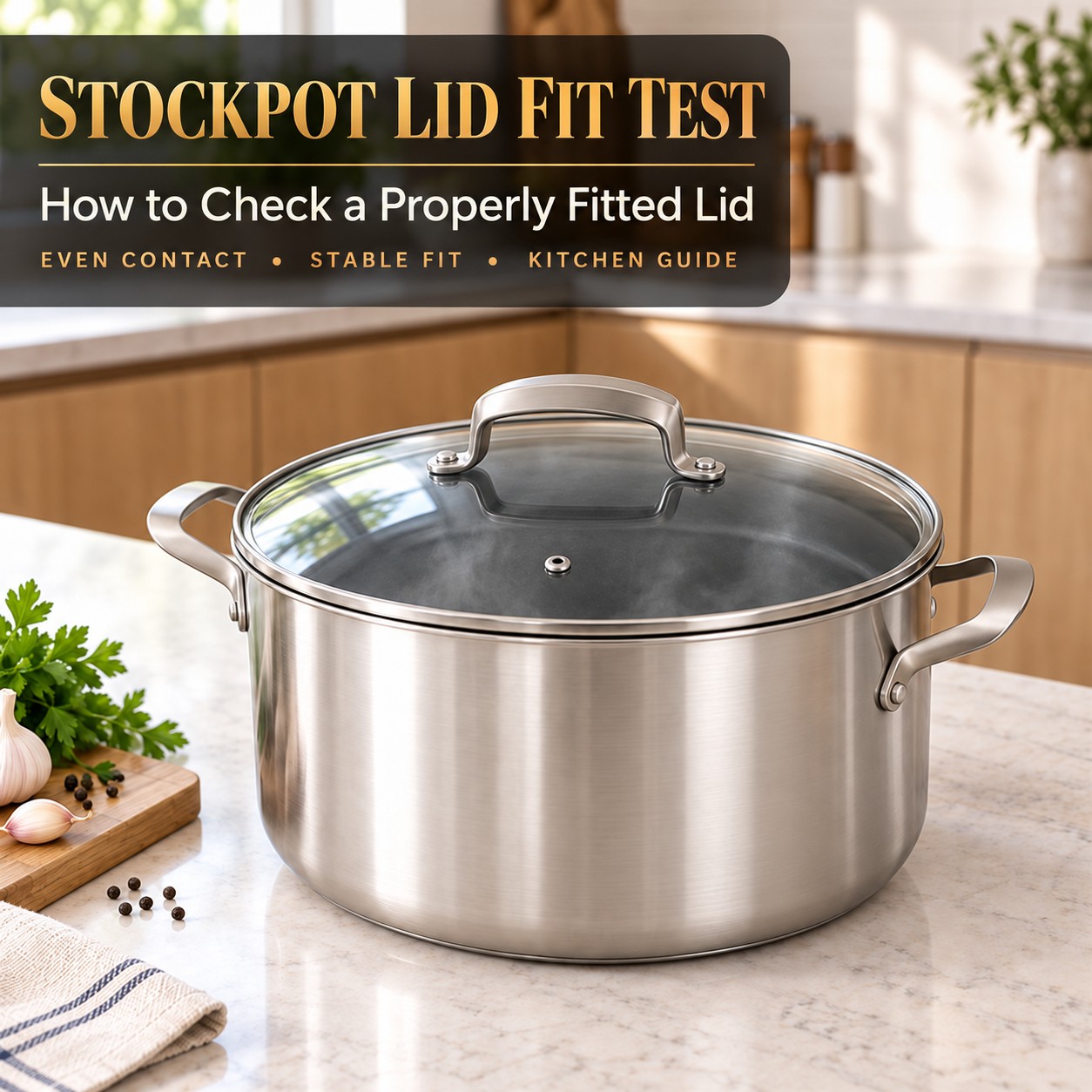
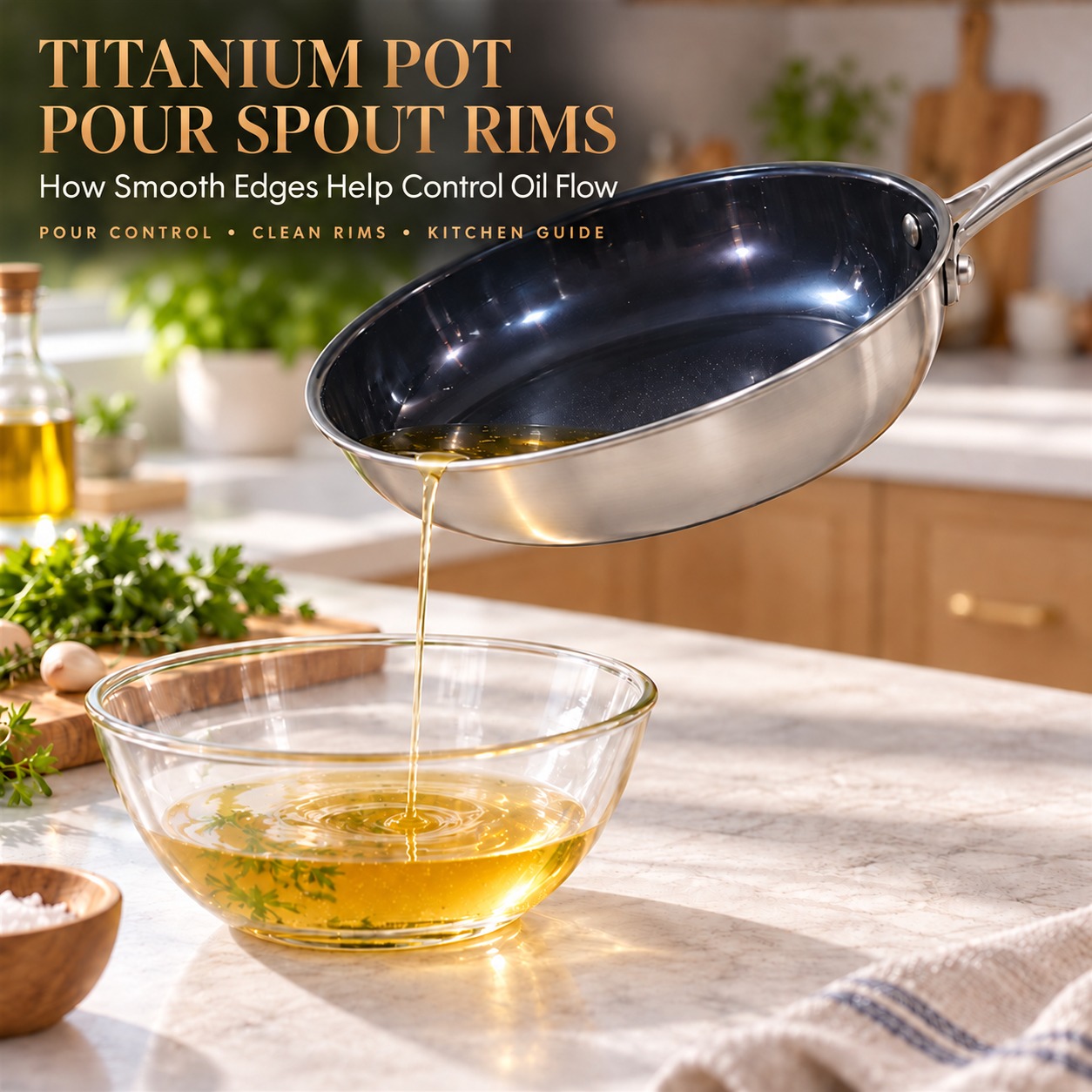
Why is authentic pure uncoated titanium cookware so incredibly expensive? The short answer is that the buyer is paying for real food-contact titanium, difficult metal processing, a more complex cookware structure, surface hardening, stricter inspection, and a product that does not rely on a cheap coating to create its value.
That price should not be judged by the word “titanium” alone. A low-cost pan with a titanium-colored coating, a titanium-reinforced nonstick layer, or vague “titanium technology” does not have the same cost base as cookware where food actually touches GR1 pure titanium. The real comparison is not titanium versus stainless steel as a word on a label. The real comparison is coating-free titanium food contact versus a cheaper surface system that may wear, peel, scratch, or lose performance over time.
TITAUDOU’s cost story is built around that difference. Its premium cookware uses a GR1 pure titanium food-contact layer, a 1050 aluminum heat-spreading core, and a 430 stainless steel exterior for structure and induction compatibility. On selected cookware, TITAUDOU also applies Titanium Molecular Reconstruction Technology to harden the titanium surface to approximately HV700-900. This extra process makes production more expensive, but it gives the uncoated titanium surface much stronger resistance to ordinary metal utensil contact, hard brushing, and abrasive cleaning than untreated soft titanium.
1. Authentic Titanium Costs More Because the Food-Contact Layer Is Real Metal
The first cost driver is material authenticity. Authentic pure uncoated titanium cookware starts with a defined titanium grade, not a vague coating claim. For cookware, GR1 commercially pure titanium is a clear and useful specification because it provides high purity, corrosion resistance, and formability for a food-contact surface. It costs more than common aluminum or stainless steel sheet before the factory starts forming the pan.
This is why two pans that both use the word “titanium” can sit in very different price categories. One may be an aluminum pan with a titanium-infused nonstick coating. Another may use GR1 titanium where food touches the surface. The second product begins with a more expensive metal and a more demanding material-control process. A serious buyer should ask for the titanium grade, layer structure, and whether the food-contact surface is bare titanium or a separate coating.
For TITAUDOU, the premium price comes from using titanium in the part of the cookware that matters most: the cooking surface. The buyer is not paying for titanium particles hidden inside a coating. The buyer is paying for a real GR1 titanium food-contact layer. If the label is unclear, the article on titanium coated vs real titanium cookware explains why this distinction changes both safety expectations and price logic.
2. Uncoated Cookware Cannot Use a Cheap Surface Shortcut
The word “uncoated” is one of the main reasons this topic matters. A conventional nonstick pan can use a lower-cost metal body and then rely on a PTFE, ceramic, or hybrid coating for food release. That coating may perform well at first, but it is still a separate layer. It can scratch, wear, stain, or eventually lose its low-stick behavior. The product price is driven by a different cost model.
Authentic pure uncoated titanium cookware has to create value without that shortcut. The cooking surface is titanium itself. That means the manufacturer must control titanium sheet quality, forming, polishing, surface finish, hardness treatment, cleaning behavior, and food-contact testing. The result is more expensive than applying a coating to a cheaper base material, but it also removes the coating failure point that many buyers are trying to avoid.
This does not mean uncoated titanium behaves like a new PTFE pan under every cooking condition. It still benefits from proper preheating, moderate heat, oil control, and a clean surface. The advantage is different: there is no synthetic nonstick film to peel away. When residue builds up, the surface can be cleaned and reset instead of being treated as a worn-out coating. For buyers comparing materials, TITAUDOU’s guide to titanium vs nonstick cookware gives more context.
| Cookware type | Main cost driver | What food touches | Price logic |
| Authentic pure uncoated titanium cookware | GR1 titanium, forming, finishing, testing, and surface durability control | Titanium metal | Higher upfront cost, stronger coating-free value |
| Tri-ply titanium cookware | Titanium layer, aluminum core, stainless exterior, bonding, and inspection | Titanium inner surface | Higher cost because it solves food contact, heating, and structure together |
| Titanium-coated cookware | Lower-cost body plus coating system | Coating, not bare titanium | Lower initial cost, coating lifespan becomes the limit |
3. Tri-Ply Titanium Costs More Because It Is an Engineered Structure
A pure titanium cooking surface is valuable, but titanium alone is not the best heat spreader. This is why premium daily-use cookware often uses a multi-layer structure instead of thin single-wall titanium. TITAUDOU’s structure places GR1 pure titanium inside, 1050 aluminum in the middle, and 430 stainless steel outside. Each layer has a job.
The titanium layer gives the food-contact advantage. The aluminum core spreads heat more efficiently across the base. The stainless steel exterior adds structural support and magnetic response for induction cooking. This structure is more expensive than a simple coated aluminum pan because the factory has to purchase three materials and bond them into one stable cookware body.
The bonding process is not cosmetic. If the layers are not bonded correctly, the cookware can deform, separate, heat unevenly, or fail during repeated heating and washing. TITAUDOU’s tri-ply titanium cookware requires controlled rolling, forming, polishing, edge finishing, and inspection. That work raises cost, but it is exactly what gives the product a practical cooking advantage over single-metal titanium cookware. The page on tri-ply titanium cookware explains this structure in more detail.
4. TITAUDOU Titanium Hardening Technology Adds Cost but Changes the Surface Value
The most important upgrade to this price discussion is surface hardening. Why is authentic pure uncoated titanium cookware so incredibly expensive when there is no coating? One reason is that the best versions do not stop at raw titanium. They improve the titanium surface itself.
TITAUDOU’s Titanium Molecular Reconstruction Technology is designed to harden the titanium cooking surface without turning it into a conventional coating. On selected TITAUDOU cookware, this process can harden the titanium surface to approximately HV700-900. That is a major difference from ordinary untreated titanium surfaces. The process requires additional equipment, process control, surface consistency checks, and production time, so it naturally makes the product more expensive.
The value is straightforward: the surface becomes far more tolerant of hard use. A coated pan has to protect a film. TITAUDOU’s hardened titanium surface is still the food-contact metal itself. It is built to tolerate normal metal utensils, stiff brushes, hard cleaning pads, and stubborn residue removal without the buyer worrying about peeling a PTFE or ceramic layer. In practical kitchen language, the titanium surface is not afraid of ordinary hard brushing and everyday scratch pressure because there is no soft nonstick coating sitting on top of it.
This should still be described responsibly. No manufacturer should promise that any metal surface is immune to deliberate grinding, industrial abrasion, or abuse with sharp tools. The defensible claim is stronger and more useful: TITAUDOU’s hardened uncoated titanium surface can resist normal kitchen scratching and hard cleaning much better than ordinary coated cookware, because the working surface is hardened titanium metal rather than a sacrificial coating. For buyers who care about surface durability, see TITAUDOU titanium cookware super hardening technology.
| Cost item | Why it raises cost | Buyer value |
| GR1 titanium food-contact layer | Higher raw material cost and tighter material control | Clearer coating-free food-contact story |
| Tri-ply bonding | Requires controlled rolling, forming, and layer stability checks | Better heat distribution and stronger cookware body |
| Titanium Molecular Reconstruction Technology | Adds surface treatment time, process control, and hardness verification | HV700-900 hardened surface with stronger resistance to normal scratching and hard cleaning |
| Finished-product testing | Requires inspection, records, and sometimes buyer-specific documentation | Lower sourcing risk for retailers, importers, and OEM buyers |
5. The Expensive Part Is Also Consistency Across Batches
A single good sample is not enough for premium cookware. The factory must repeat the same structure, thickness, surface finish, hardness level, handle assembly, base flatness, packaging condition, and appearance across production batches. That consistency is a real cost. It requires trained workers, process records, inspection steps, rejected-piece control, and stable supplier management.
This matters most for B2B buyers. Importers, private-label brands, distributors, and retailers are not only buying one pan for one kitchen. They are buying customer expectations. If the first batch feels premium but the next batch changes in surface feel, polishing, flatness, or cleaning behavior, the brand carries the damage. TITAUDOU’s higher cost includes the work needed to reduce that risk.
For sourcing projects, quote comparison should therefore include material grade, layer structure, hardness treatment, sample matching, packaging, test reports, MOQ, and delivery terms. A cheaper quote may leave out one of those items. That does not make it automatically wrong, but it means the buyer should not compare it directly with a fully specified TITAUDOU tri-ply titanium project. For factory capability context, see the titanium cookware manufacturer page.
This is also why a serious quotation should identify what is standard and what is optional. A mirror finish, hardened surface, retail color box, laser logo, sample testing, or third-party inspection can each change cost. When those items are listed clearly, the buyer can decide whether the higher price is justified instead of guessing whether the supplier is simply adding margin.
6. When the High Price Is Worth It, and When It Is Not
Why is authentic pure uncoated titanium cookware so incredibly expensive? Because the product is built for a different use case than ordinary coated cookware. The higher price makes sense when the buyer wants a real titanium food-contact surface, coating-free durability, stronger cleaning tolerance, corrosion resistance, premium retail positioning, and a longer service life. It makes less sense when the only goal is the lowest possible purchase price or a PTFE-style slippery surface for occasional cooking.
For daily users, the value becomes clearer when the pan is used often and kept for years. For brands and retailers, the value becomes clearer when the product supports a stronger premium story and fewer complaints about coating wear. For OEM buyers, the value depends on whether the supplier can repeat the specification in bulk, not just describe it in a catalog.
The right way to judge price is to ask what problem the cookware is solving. If the problem is cheap, short-term nonstick convenience, titanium is not the lowest-cost answer. If the problem is building a premium coating-free cookware line with a verified titanium food-contact layer and a hardened surface that can handle hard cleaning, TITAUDOU’s higher cost is part of the product logic. Buyers can review available titanium pots and pans to compare product forms.
7. What Buyers Should Verify Before They Accept the Price
A high quote is not automatically inflated. It becomes credible when the supplier can state the titanium grade, the layer stack, the surface hardening target, the finished thickness, the sample consistency, and the food-contact test file. That is the difference between a premium cookware offer and a vague titanium slogan. If a supplier cannot explain those points clearly, the buyer is not comparing the same product.
For B2B buyers, the most useful quote questions are simple: What is the food-contact titanium grade? Is the structure truly tri-ply? What exactly was hardened, and to what level? Which reports cover the finished cookware, not just the raw sheet? A quote that answers those questions is easier to trust, easier to compare, and easier to defend when the product reaches retailers or end users.
That is why the premium only makes sense when the buyer is paying for a verified structure, not for a louder label. A cheaper pan may still be a valid product, but it is usually cheaper because one or more of those layers, treatments, or documents is missing. The right comparison is not sticker price alone. The right comparison is specification against specification.
Conclusion: The Price Is High Because the Specification Is Real
The most direct answer to why is authentic pure uncoated titanium cookware so incredibly expensive is this: the expensive parts are the exact parts that make the product authentic. GR1 titanium costs more. Tri-ply bonding costs more. Surface hardening costs more. Testing, batch control, and documentation cost more. A cheap titanium coating can use the word titanium, but it cannot carry the same material story.
TITAUDOU’s advantage is not only that it uses titanium. The advantage is that it uses titanium where it matters, then strengthens the surface through Titanium Molecular Reconstruction Technology. That hardened titanium surface is designed for real kitchen use: metal utensils, hard brushing, residue removal, and long-term cleaning without fear of peeling a coating. The buyer pays more because the cookware is not pretending to be titanium through a surface label. It is engineered around a real titanium food-contact surface.
FAQ: Pure Uncoated Titanium Cookware Price
Q1: Why is authentic pure uncoated titanium cookware so incredibly expensive?
It is expensive because it uses real titanium as the food-contact surface, avoids low-cost nonstick coatings, requires difficult forming and bonding, and often needs surface hardening, inspection, and documentation. In TITAUDOU cookware, the cost also includes GR1 titanium, a tri-ply structure, and Titanium Molecular Reconstruction Technology.
Q2: Does TITAUDOU’s hardened titanium surface mean the cookware cannot be scratched at all?
It means the surface is designed to resist normal kitchen scratching, metal utensil contact, and hard cleaning far better than ordinary coated cookware. TITAUDOU’s hardened titanium surface can reach approximately HV700-900 on selected cookware. It should not be marketed as impossible to damage under deliberate grinding or abuse, but it is not afraid of ordinary hard brushing and everyday scraping because there is no coating to peel.
Q3: Is expensive pure uncoated titanium cookware worth buying?
It is worth buying when the buyer values a real titanium food-contact surface, coating-free durability, corrosion resistance, hard-cleaning tolerance, and long-term use. It may not be the right choice for buyers who only want the lowest upfront price or expect the same release behavior as a fresh PTFE nonstick pan.