Cookware is in direct contact with food, which is an important part of food safety and health. As consumers upgrade toward safer, cleaner materials, titanium material meets consumers' demand for healthy kitchenware and is gradually moving from high-end niche to mass market. Material is one of the most important factors consumers consider when purchasing kitchenware. For example, when purchasing pots, 52% of consumers pay attention to "pot surface/coating material", ranking second; when purchasing water utensils, "material" is the most important factor, accounting for 55% of consumers' attention. In this context, titanium pots and water sets have penetrated from the initial scene of outdoor camping to daily use, driven by preferences for light weight, purity, and durability.
User segmentation shows clear gradients. Users in first-tier cities have a stronger perception of titanium materials, and have higher health concepts and purchasing standards; users in third-tier cities recognize the advantages of titanium materials and pay more attention to the actual use experience when purchasing. Among the factors that determine the purchase of titanium water utensils, factors such as material, weight, thermal insulation effect and easy cleaning are of high concern. In terms of details, men pay more attention to durability, while women pay more attention to appearance. Together, these signals point to accelerating mainstream adoption of titanium cookware across China’s e-commerce channels in 2025.
1. How titanium cookware aligns with healthy eating
Kitchenware is in direct contact with food, which is an important part of food safety and health. Over the past few years, media coverage and social discussions around “healthy kitchenware” have surged, with high engagement indicating rising consumer awareness. Among the most discussed keywords are titanium material, 0-coating/non-coated designs, and antibacterial/antimicrobial performance—each mapping closely to the core question many shoppers ask first: is titanium cookware safe?
1.1 Properties of titanium that support safe, healthy cooking
Titanium’s chemical stability underpins its reputation as a “space metal.” In its commercially pure form and many alloys engineered for consumer goods, titanium is resistant to high and low temperatures, as well as strong acids and alkalis. It combines high strength with low density; in an unalloyed state, its strength is comparable to stainless steel while being about 45% lighter, which improves handling and reduces fatigue during daily use.
These physical and chemical traits translate directly into cookware advantages:
· Stability and purity: Titanium’s inertness minimizes reactions with foods and sauces, helping prevent off-flavors and reducing risk of unwanted metal leaching under normal cooking conditions.
· Light weight and control: The low density yields lighter pots, pans, and bottles—particularly valued by older users and those cooking with one hand or on compact burners.
· Durability: Titanium resists corrosion and discoloration, maintaining a stable cooking surface in salty, acidic, and alkaline environments.
· Temperature tolerance: Suitable for a wide range of heat inputs, from quick searing to low-and-slow simmering or refrigeration/ice-bath transitions.
As titanium migrates from aerospace, marine, and energy applications into daily life, these properties deliver practical kitchen benefits: stable surfaces (including 0-coating designs), easy handling, and fewer concerns about coatings degrading under heat.
2. What parameters do consumers actually consider when selecting cookware?
Material is one of the most important factors consumers consider when purchasing kitchenware. Survey data show that when buying pots, 52% of consumers pay attention to “pot surface/coating material,” ranking second among decision factors; when purchasing water utensils, “material” ranks first, capturing 55% of attention. Within this framework, the path-to-purchase for titanium products is driven by a few clear attributes.
2.1 Two core decision elements
· Nonstick performance and surface/coating material: Shoppers prioritize how well foods release and how stable the surface remains across repeated, high-heat cycles. For titanium, the leading question is whether a titanium surface can “replace” conventional nonstick coatings. Many brands emphasize either 0-coating designs (pure titanium contact) or physical-texture “titanium non stick cookware” technologies that achieve oil-saving cooking via micro-structured surfaces or hard ceramic-titanium matrices, rather than PFAS-type coatings.
· Health safety and ease of cleaning: Titanium’s stability is the largest reason consumers choose it—reinforced by the perception that a stable, inert surface is safer. Easy cleaning comes next: residue wipes away without abrasive chemicals, reducing the need for aggressive scrubbing that can damage surfaces over time.
2.2 Reasons behind choices across city tiers
· First-tier cities: Users have a stronger perception of titanium materials and hold higher health concepts and purchasing standards. For them, titanium’s stability and safety are the decisive reasons to upgrade to the best titanium cookware, even at a premium. They also respond positively to claims around 0-coating, antibacterial attributes, and material traceability.
· Third-tier cities: Users recognize titanium’s advantages but focus more on practical experience and value. In addition to material safety, they weigh nonstick performance, easy cleaning, and rust prevention heavily. For this segment, balanced cost-performance, durability, and multi-stove compatibility (gas, induction, electric) often tip final decisions.
In both segments, titanium pots and water sets have penetrated from the initial scene of outdoor camping—where titanium camping cookware is renowned for ultralight portability—into daily home kitchens. As a result, demand is broadening from niche enthusiasts to mainstream households.
3. Other attributes shaping everyday use
Originally favored by hikers and campers for ultralight gear and one-pot versatility, titanium cookware now spans everyday fry pans, saucepans, stockpots, kettles, and portable lunch bottles. Distinct user groups emphasize different benefits:
· Women and users aged 46+: They more frequently cite low-oil or oil-free cooking as a key advantage. Titanium’s relatively clean release and easy cleanup encourage healthier cooking routines with fewer added fats.
· Gifting and premiumization: Titanium’s high-end look and feel—sleek metallic finishes, refined welds, and minimalist lines—make it a popular choice for gifting and for upgrading kitchens with premium materials. The perception of quality and longevity enhances willingness to invest.
These lifestyle and aesthetic elements intertwine with functional benefits. As brands develop collections that integrate practical features with premium design language, titanium’s presence in mid-to-high e-commerce price bands is increasing.
4. What will Chinese families demand next? Survey-backed trends for 2025
Consumer expectations are converging around three main trends, each influencing how retailers position the best titanium cookware in China’s e-commerce ecosystem.
4.1 Trend 1: Physical nonstick technologies rise to the top
Surveyed consumers now place physical nonstick technologies at the center of purchase decisions. Drivers include:
· Safety-first mindsets: Interest in 0-coating/non-coated and non-toxic claims pushes buyers toward designs that achieve release without conventional organic coatings. Popular approaches include precision-textured titanium surfaces, ceramic-titanium composites, and hard-anodized titanium layers free of PFAS-type chemistries.
· Material purity and ratio: Mid-to-high-end users increasingly insist on 100% pure titanium in the food-contact layer to maximize health and safety advantages. Some also embrace hybrid constructions—titanium clad with iron or steel cores—to preserve the traditional searing feel and ferromagnetic response of iron while solving rust pain points. This speaks directly to performance demands on induction cooktops and the desire for “iron-like” browning with titanium’s safety and lightness.
· Durability and stove compatibility: Wear resistance, scratch resistance, and broad heat-source compatibility (gas, induction, ceramic, halogen, oven-safe where applicable) remain must-haves. Consumers expect titanium non stick cookware to endure daily metal-utensil use better than fragile coatings, while still delivering competent release.
What to highlight in listings:
· Pure titanium food-contact claims with test data
· PFAS-free, PFOA-free, PTFE-free assertions (where true)
· Demonstrated release via physical texturing or hard ceramic layers
· Multi-stove/induction compatibility, oven limits, and warp resistance
4.2 Trend 2: Experience upgrades that guide or protect users
Two cohorts lead the demand for “experience features” that make titanium cookware more intuitive, safer, and more effective.
· Ages 26–35: Less experienced home cooks benefit from assistive design. Features like ergonomic handles with balanced weight distribution, integrated measurement markings, high-pressure lids for rapid braises, and visual cues (color-change heat indicators) reduce learning curves. Clear documentation (cookbooklets, QR-linked tutorials) accelerates adoption and builds confidence.
· Ages 46+: More frequent cooks with established techniques prioritize time control and safety. Anti-scald handles with low thermal conductivity, reliable lid venting, precise-fitting lids for simmer control, and simple, audible or visual timers enhance safety and repeatability. For kettles and water bottles, leak-proof seals, one-handed pour mechanisms, and wide-mouth designs for cleaning are valued add-ons.
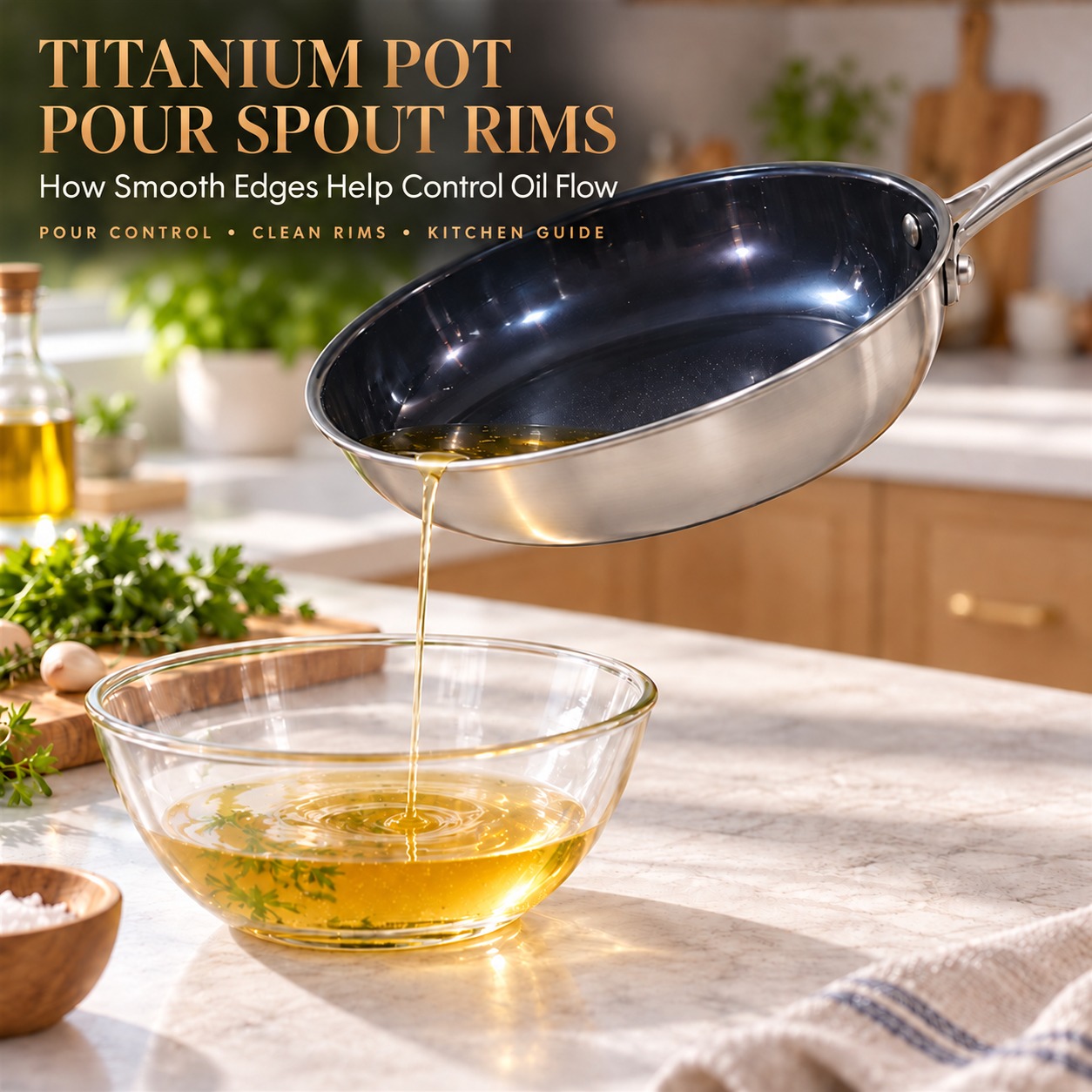
For both groups, easy cleaning remains a powerful differentiator. Smooth welds, rounded interior corners, and polished or micro-textured surfaces that release residue help titanium cookware outshine conventional alternatives in day-to-day maintenance.
4.3 Trend 3: Aesthetics that signal quality—and adapt by age
“Quality feel” tops appearance requirements for titanium pots and pans. Yet age-specific preferences diverge:
· Ages 46–65: Desire a high-end look with differentiated shapes and colorways. They appreciate classic silhouettes (sauté pans with flared walls, deep stockpots) and subtle metallic hues that suggest professional-grade construction.
· Ages 26–35: Prioritize compact, modular sets that store easily in small urban kitchens. Visual coherence with interior décor matters; matte finishes and neutral tones that blend with minimalist or Japandi styles win attention. Stackable designs, detachable handles, and nesting lids elevate perceived value without clutter.
The takeaway for brands: fuse titanium’s premium identity with practical storage and personalization. Offer curated color accents on handles and knobs, and modular sets that scale from studio apartments to family kitchens.
5. From camping to kitchen: expanding use cases
Titanium camping cookware remains a cornerstone category—lightweight mugs, nesting pots, and fry pans dominate outdoor kits. But mainstream demand now focuses on daily cooking:
· Frying and sautéing with less oil: Physical nonstick or micro-textured titanium surfaces replicate many benefits of coated pans while avoiding concerns about coating degradation.
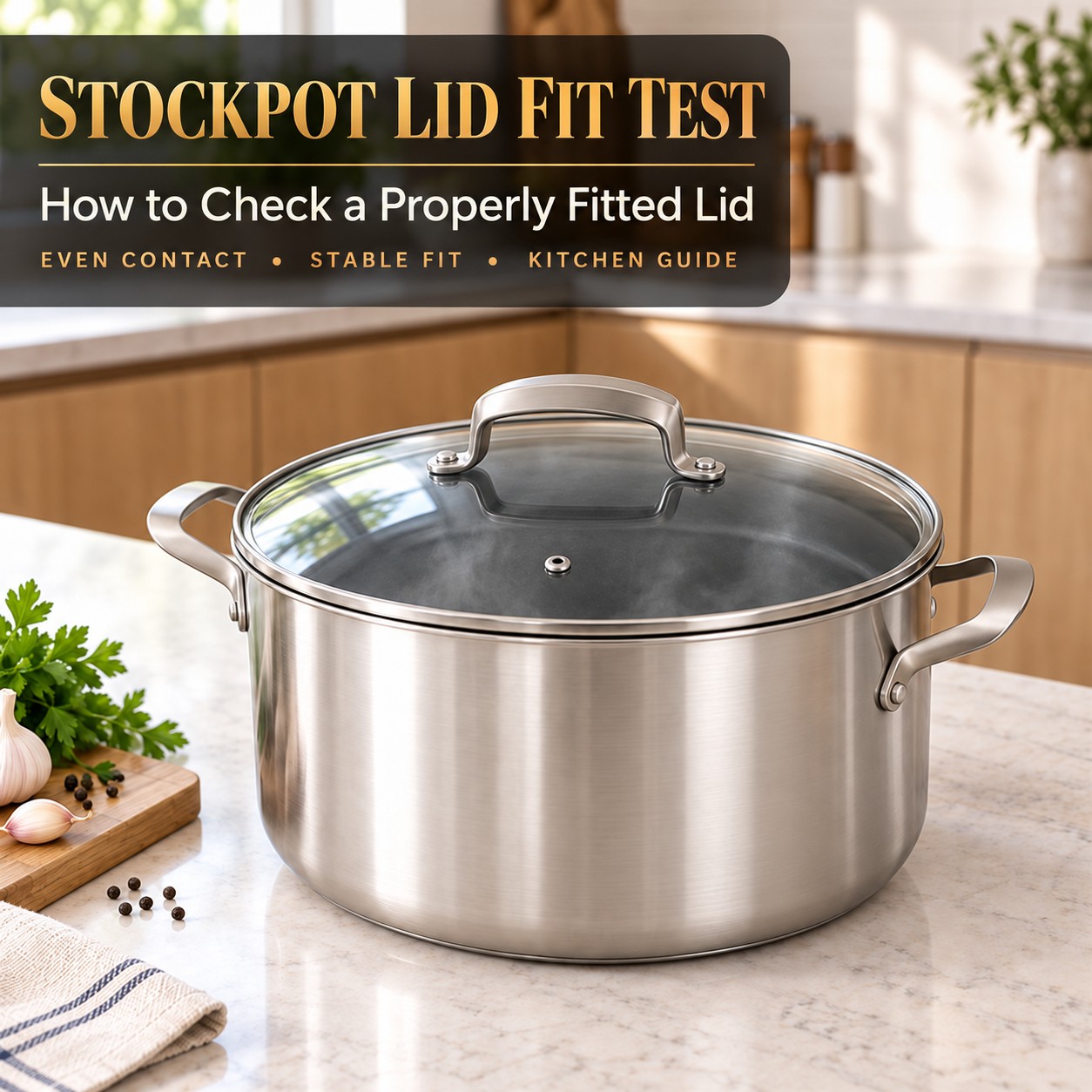
· Simmering and steaming: Tight-fitting lids and even heat diffusion via clad bottoms or multi-layer cores help titanium perform across a wider recipe set.
· Hydration and thermal bottles: For titanium water utensils, material, weight, thermal insulation, and easy cleaning rank highest. Men tend to prioritize durability (dent resistance, long service life), while women pay more attention to appearance (finish quality, color, and form factor).
In both outdoor and home contexts, titanium’s inertness supports clean taste transfer—tea, coffee, and soups retain pure flavors—while the metal’s resilience stands up to frequent use.
6. Practical guidance for buyers on China’s e-commerce platforms
To evaluate is titanium cookware safe and to choose the best titanium cookware for your needs, consider:
· Material disclosure:
o Look for explicit “100% pure titanium” claims for the food-contact surface, supported by third-party testing.
o If multilayer, verify the titanium layer thickness and core material (e.g., aluminum for heat spread, iron/steel for induction response).
· Nonstick approach:
o For 0-coating designs, examine the described physical nonstick method (micro-texture, sand-blast polish, ceramic-titanium surface).
o For coated products, confirm non-toxic, PFAS-free chemistry and validated durability cycles (e.g., abrasion tests, metal utensil compatibility).
· Weight and ergonomics:
o Titanium is light; check actual product weights and handle geometry to ensure stability on gas and induction grates.
· Heat distribution:
o Pure titanium is less thermally conductive than aluminum; clad bases or multilayer walls improve evenness and reduce hotspots for home cooking.
· Cleaning:
o Favor wide-radius corners, polished interiors, and disassemblable handles/lids for deep cleaning. Dishwasher compatibility may vary; hand-wash recommendations often preserve finish longevity.
· Warranty and certifications:
o Seek clear warranty terms, corrosion guarantees, and relevant food-contact certifications per Chinese and international standards.
Frequently Asked Questions and Answers
Q1: What do recent consumer surveys reveal about common safety concerns regarding titanium cookware, such as potential metal leaching or coating durability during high-heat cooking?
A1: Surveys indicate that consumers primarily worry about metal leaching and the breakdown of organic nonstick coatings at high temperatures. Titanium’s inertness and corrosion resistance directly address the first concern—under normal cooking conditions, high-purity titanium shows minimal interaction with food. For coatings, interest is shifting toward 0-coating or physical nonstick solutions to avoid potential degradation. When coatings are used, buyers look for PFAS-free, high-temperature-stable chemistries and verified abrasion life (e.g., metal utensil tolerance).
Q2: Are there survey data comparing the perceived safety of titanium cookware to traditional materials like stainless steel or ceramic among home cooks, and what factors influence these perceptions?
A2: Perception studies consistently place titanium alongside stainless steel and high-quality ceramics in the “safe” category, with titanium seen as lighter and more inert in taste-sensitive uses like water bottles and kettles. Factors shaping perception include clarity of material labeling, third-party test reports, visible build quality (welds/finishes), and brand credibility. Positive experiences from titanium camping cookware have also boosted confidence in household products.
Q3: What key safety features (e.g., non-toxic coatings, heat resistance, scratch resistance) do surveys indicate consumers prioritize most when choosing titanium cookware for daily use?
A3: The top-ranked features are: (1) non-toxic materials and coatings or 0-coating construction; (2) heat resistance without surface degradation; (3) scratch and wear resistance for daily metal-utensil use; and (4) easy cleaning to prevent residue buildup and bacterial growth. Secondary but important features include anti-scald handles, secure lids/vents, and multi-stove compatibility. Products that document these attributes clearly—and back them with testing—earn higher trust and conversion.