Introduction: The "Titanium" Trap – Are You Cooking on Real Metal or a Marketing Gimmick?
You’ve seen the ads. A sleek, dark grey pan promising the strength of aerospace metal and a non-stick surface that lasts forever. You pay a premium, expecting the health benefits of pure titanium. But a month later, the coating peels, or worse—it starts to rust.
As a dedicated titanium manufacturer at Shaanxi Shenglian Yijing Technology Co., Ltd., we hear this story too often. The market is flooded with "Titanium" cookware that contains less than 1% of the actual metal.
How to identify titanium in a sea of counterfeits? It is the most pressing question for health-conscious cooks today. Misleading terms like "Titanium Steel," "Diamond Titanium," and "Ceramic Titanium" are designed to confuse you. They mask cheap stainless steel or aluminum pans with a microscopic dusting of titanium powder, selling them at triple the value.
If you are worried about spending hundreds of dollars on a fake, this guide is your defense. We will walk you through the 5 red flags of low-quality products and provide scientific methods on how to identify titanium cookware using density tests, scratch analysis, and heat reactions.
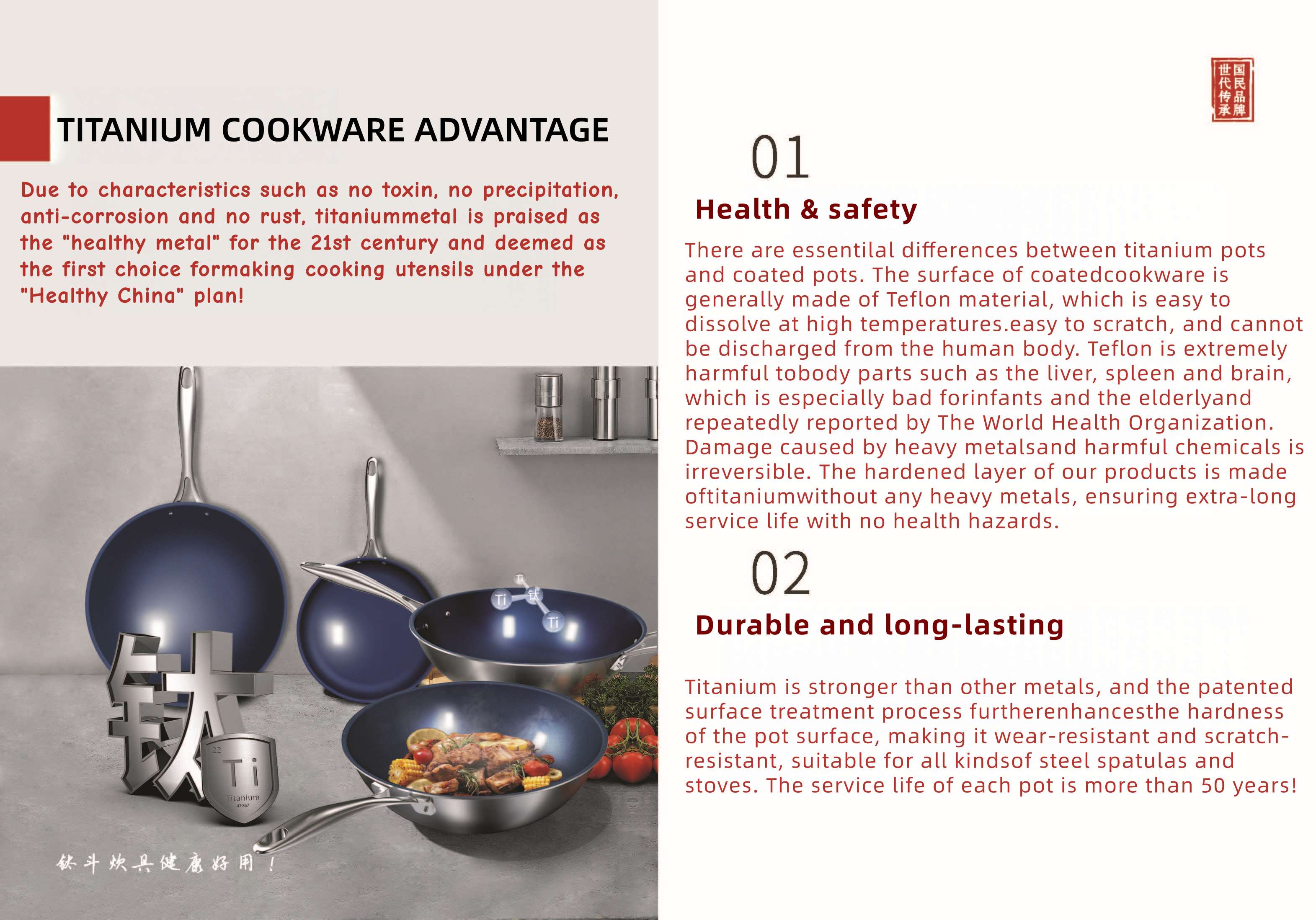
1. "Titanium Steel" vs. Real Titanium: What's the Difference?
The most common counterfeit in the industry is the "Titanium Steel" pan. To the untrained eye, it looks like metal. But chemically, it is an imposter.
The Composition Lie
"Titanium Steel" (often labeled as 316Ti in some misleading contexts) is essentially 99% stainless steel with a trace amount of titanium (often less than 0.5%) added to the alloy. Manufacturers add this tiny fraction just so they can legally use the word "Titanium" on the packaging.
Real Titanium: Made of Grade 1 or Grade 2 commercially pure titanium (CP Ti).
Fake Titanium: Stainless steel with a marketing sticker.
Performance Reality
When you ask how to identify titanium, performance is the first clue. Titanium steel conducts heat, weighs, and reacts exactly like standard stainless steel. It contains Nickel and Chromium, which can leach into food if the surface is scratched—negating the hypoallergenic benefit of real titanium.
The Price Gap
Price is a massive indicator.
Real Pure Titanium Pan: Market price typically ranges from $150 to $300 USD due to the difficulty of processing and raw material costs.
Titanium Steel Pan: Often sold for $20 to $40 USD (100-200 RMB).
Pro Tip: If a "Titanium" pan costs the same as a standard steel pan, it is not titanium. It is steel with a nickname.
2. Ceramic Titanium: Is It Really a "Healthy" Coating?
Many consumers buy "Ceramic Titanium" believing it is a solid titanium pan. It is not. It is an aluminum pan with a paint job.
Ingredient Breakdown
"Ceramic Titanium" is a composite coating. The primary ingredient is Silicon Dioxide (SiO₂)—essentially sand/glass—mixed with 5-10% Titanium Dioxide (TiO₂) particles. The titanium here is used solely as a hardener to reinforce the ceramic; it is not the cooking surface.
The Durability Problem
While marketing claims these pans are "diamond hard," the reality is different.
Hardness: 8-9H (Hard but brittle).
The Flaw: Because it is a ceramic layer, it lacks flexibility. When the metal pan expands under heat, the rigid ceramic layer does not. This leads to micro-cracking.
Result: If you use a metal spatula or accidentally dry-burn the pan, the coating chips. Once chipped, the aluminum underneath is exposed.
Performance vs. Teflon
Ceramic titanium can withstand heat up to 500°C (higher than Teflon), but its non-stick performance is naturally lower—only about 60% as effective as PTFE. It is a compromise that often fails to satisfy serious cooks.
3. The "Zero-Coating Titanium" Scam: What's the Truth?
You might see advertisements for "uncoated non-stick titanium." This sounds perfect, but it's usually a metallic coating containing about 5% titanium powder melt-blown onto another metal surface.
Hidden Risks
If this nitrided layer is scratched or damaged, its non-stick properties will be compromised. While titanium is generally biocompatible, the long-term stability of damaged industrial nitrided layers in acidic cooking environments remains controversial. Furthermore, if the underlying metal is an alloy rather than pure titanium, heavy metals may leach out once the "hardened" surface is damaged.
4. "Titanium Shield" Marketing Hype: It's Just Teflon in Disguise
This is perhaps the most deceptive tactic in the industry. You will see terms like "Titanium Shield," "Titanium Diamond Force," or "Ti-Core Non-Stick."
Terminology Deconstructed
These are fancy names for Polytetrafluoroethylene (PTFE)—generic Teflon—reinforced with titanium particles.
Titanium Content: Usually < 3%.
Function: The titanium particles act as "speed bumps" to prevent spatulas from scratching the soft Teflon.
How to Detect It
How can you identify titanium vs. a Teflon disguise? The Smell Test.
① Heat the dry pan to 300°C (do this in a well-ventilated area).
② Real Titanium: No smell, color changes to yellow/blue.
③ Fake (Teflon): You will smell a distinct, acrid chemical odor. This is the PTFE decomposing.
Health Warning
At temperatures above 260°C, these "Titanium Shield" coatings begin to release fumes that can be harmful to birds and cause flu-like symptoms in humans. Real titanium cookware from TITAUDOU contains zero PTFE or PFOA.
5. Method 1: Ceramic Scratch Test to Identify Fake Titanium
If you already own a pan and want to know how to identify titanium at home, this is the most reliable physical test.
Why It Works
Titanium is a unique metal that interacts with ceramics. When titanium is rubbed against ceramic, it leaves a deposit (Titanium Oxide) that looks like a pencil mark. Stainless steel usually glides over without leaving a dark mark.
The Step-by-Step Test
① Find a piece of white, unglazed ceramic (the bottom ring of a cheap coffee mug works perfectly) or a ceramic knife.
② Locate an inconspicuous spot on the cookware (like the bottom or the handle).
③ Press the ceramic firmly against the metal and draw a line.
Interpreting Results
Dark Grey / Black Line: This is Genuine Titanium. The metal is softer than the ceramic and leaves a distinct oxide trail.
Faint Silver Scratch or No Mark: This is Stainless Steel or a hard chrome plating. The steel is harder or simply slides, exposing the shiny layer underneath without leaving a dark deposit.
Note: Do not do this on the cooking surface of a coated pan, as it will ruin the finish.
6. Method 2: Density Measurement to Check Titanium Content
Science doesn't lie. The density of titanium is drastically different from steel. This is the "Gold Standard" for how to identify titanium cookware.
The Numbers
Pure Titanium: 4.51 g/cm³
Stainless Steel (304/316): ~7.93 g/cm³
"Titanium Steel" (Fake): ~7.8 g/cm³
The "Heft" Test (No Calculator Needed)
Titanium is roughly 45% lighter than steel.
① Pick up a standard stainless steel pan of the same size.
② Pick up the "Titanium" pan.
③ The Verdict: If the "Titanium" pan feels heavy, solid, and similar to the steel pan, it is a fake. A real pure titanium wok or pot feels surprisingly light—almost like aluminum, but with a harder, more premium metallic feel.
The Calculation (For Precision)
If you have a kitchen scale and a measuring cup:
① Weigh the item (grams).
② Measure the volume (displacement in water).
③ Divide Weight by Volume. If the result is near 7 or 8, you have been sold expensive steel.
7. Method 3: Magnet Test and High-Temperature Discoloration
Two more properties make identifying titanium cookware straightforward.
The Magnet Test
The Science: Pure titanium is paramagnetic (effectively non-magnetic).
The Test: Place a magnet on the body of the pan.
Result: If it sticks strongly, it is steel. If it falls off, it is likely titanium (or aluminum/copper).
Note: Some high-end titanium pans have a "clad" bottom layer of magnetic steel sprayed on the outside to make them induction-compatible. However, the walls and cooking surface should not be magnetic.
The "Titanium Blue" Heat Test
This is the most beautiful way to test. Titanium undergoes "anodization" via heat.
① Heat the pan body (if uncoated) to high temperatures (approx 300°C+).
② Real Titanium: The metal will shift colors: Silver → Gold → Purple → Titanium Blue. This is a permanent, non-toxic oxide layer.
③ Stainless Steel: It will turn a sickly yellow or brown (heat tint) and eventually blacken, but it will not display the vibrant iridescent spectrum of titanium.
8. Final Verdict: How to Buy Real Titanium Cookware Safely
Navigating the market is tough, but knowing how to identify titanium puts you in control. Real titanium cookware is an investment in health. It is biocompatible, rust-proof, and lightweight.
Checklist for Genuine Products
When shopping, look for these indicators to ensure you aren't buying a "Titanium Steel" fake:
① Price Reality: Expect to pay over $150 USD. Cheap means fake.
② Weight: It must be significantly lighter than steel.
③ Visuals: Look for a deep, muted grey (not chrome-shiny) finish unless highly polished.
④ Certifications: Ask for the material grade. Is it TA1/TA2 (Grade 1/2)?
⑤ The Source: Buy from specialized manufacturers.
Why Choose TITAUDOU?
At Shaanxi Shenglian Yijing Technology Co., Ltd., we don't hide behind marketing terms.
We use 99.6% Pure Titanium (Grade 1) for our cookware bodies.
We provide full transparency on our manufacturing process.
Our products pass the density, scratch, and heat tests described above.
Don't settle for "Titanium Steel." Experience the health benefits of the real thing.
Frequently Asked Questions (FAQ)
Q1: How can I identify titanium cookware quickly in a store?
A: The quickest method is the weight test. Pick up the pan; if it feels as heavy as a standard steel pan, it's likely fake. Real titanium feels surprisingly light. Also, check the color—titanium has a darker, sophisticated grey tone compared to the "white" shine of stainless steel.
Q2: Is "Titanium Steel" dangerous?
A: It isn't necessarily "dangerous," but it is a financial scam. You are paying titanium prices for stainless steel performance. Furthermore, if you have a nickel allergy, "Titanium Steel" will still trigger a reaction, whereas pure titanium is 100% hypoallergenic.
Q3: Does real titanium cookware have a non-stick coating?
A: Pure titanium is not naturally non-stick like Teflon, but it forms a natural oxide film. High-quality titanium pans often use a specialized physical texture (like honeycomb patterns) or advanced hardening to create a non-stick effect without chemical coatings (PFOA/PTFE).
Q4: Can I use the magnet test on all titanium pans?
A: Mostly, yes. However, be aware that many modern titanium pots have a magnetic steel disk attached to the bottom to allow them to work on induction stoves. Test the side walls or the inside rim of the pan—these areas should never be magnetic.