Introduction: Why Cast Iron Rusts and How to Save Your Skillet
We have all been there. You reach into the back of your cabinet to grab that heavy, bought with high hopes of searing the perfect steak.
Your beloved cast iron skillet is rusty. But don’t throw it away!
It is a sinking feeling, but it is not a death sentence for your cookware. Cast iron is incredibly resilient. Unlike modern synthetic non-stick pans that peel and become toxic, a cast iron pan can almost always be brought back from the dead. Whether you left it soaking in the sink a little too long (a cardinal sin in the cast iron world) or stored it in a humid pantry, rust is a reversible chemical reaction.
In this comprehensive guide, we are going to walk you through exactly how to remove rust from cast iron skillet surfaces using ingredients you likely already have in your kitchen. We will dive deep into the science of why this happens, the potential health risks of cooking on a rusty surface, and five proven natural methods to restore its glory.
However, we will also have an honest conversation about the effort involved. If the idea of constant seasoning, drying, and rust-battling feels like a chore, we will introduce you to a modern material that offers the durability of metal without the rust: Titanium.
1.The Science of Rust: Why Cast Iron Skillets Corrode
To understand how to remove rust from cast iron pan surfaces effectively, you first need to understand what you are fighting. Rust isn't just a stain; it is a chemical transformation.
The Electrochemical Reaction
At its core, cast iron is an alloy composed primarily of Iron (Fe) and Carbon. When iron is exposed to Oxygen ($O_2$) and moisture ($H_2O$), an oxidation-reduction reaction occurs. The iron loses electrons to the oxygen, forming hydrated iron(III) oxide ($Fe_2O_3 \cdot nH_2O$). This reddish-brown compound is what we know as rust.
Unlike the patina on copper or the oxide layer on titanium (which we will discuss later), iron oxide is porous and flaky. It does not seal the metal underneath; instead, it flakes off, exposing fresh iron to the air, allowing the rusting process to continue deeper into the pan until the metal is structurally compromised.
The Porous Nature of Cast Iron
Under a microscope, a cast iron skillet looks like a sponge. It has a jagged, uneven surface full of microscopic pores and crevices.
Moisture Traps: These pores are excellent at trapping water molecules, even when the pan looks dry to the naked eye.
Food Residue: Proteins and sugars can get stuck in these pores, holding onto moisture and acidic compounds that accelerate corrosion.
Common Triggers for Rust
You might be wondering, "I dried it, so why did it rust?" Here are the hidden culprits:
Air Drying: Letting a pan air dry is the fastest way to rust it. The water sits in the pores for too long.
Acidic Foods: Cooking tomato sauce, wine reductions, or lemon-based dishes strips away the "seasoning" (the polymerized oil layer), exposing raw iron to moisture.
Humidity: Even if you dry the pan, storing it in a humid environment (like under the sink or in a damp garage) allows moisture to condense on the metal.
Galvanic Corrosion: Storing your cast iron pan stacked directly inside a stainless steel or aluminum pot can create a weak electrical current if moisture is present, accelerating rust.
2.Is Rust on Cast Iron Dangerous? Health Risks to Consider
When you see that orange dust, your first instinct might be fear. Is it safe to cook on? Can it make you sick?
The Reality of Tetanus
Let’s bust a myth immediately: Rust does not cause tetanus. Tetanus is caused by the Clostridium tetani bacteria, which lives in dirt and soil. A rusty nail is dangerous because it’s usually dirty and creates a deep puncture wound, not because of the rust itself. A rusty skillet in your kitchen is highly unlikely to give you tetanus.
Iron Intake: The Good and The Bad
Iron is an essential mineral. In fact, cooking in cast iron is often recommended for people with anemia because it leaches small amounts of dietary iron into food.
Small Amounts: Consuming a tiny bit of rust (iron oxide) is generally harmless for a healthy adult. Your body will simply pass it through.
Iron Overload: However, for individuals with hemochromatosis (a condition where the body absorbs too much iron), cooking on a rusty or raw cast iron pan can be dangerous. The World Health Organization (WHO) sets upper limits on iron intake to protect liver health.
The Real Danger: Bacteria and Performance
The biggest risk isn't the chemical composition of the rust, but the surface texture.
Bacterial Harbor: A rusty surface is pitted and rough. According to FDA food safety principles, rough surfaces are difficult to sanitize effectively. Bacteria can hide in the pits created by corrosion, surviving standard washing.
Compromised Non-Stick: Rust destroys the seasoning. If you cook on a rusty pan, your food will stick, burn, and likely taste metallic.
Flaking: Nobody wants crunchy flakes of oxidized metal in their scrambled eggs. It ruins the texture and visual appeal of your meal.
3. Natural Rust Removal Methods That Actually Work
If you are ready to put in the work, you can save your skillet. We have tested these methods to see how to remove rust from cast iron skillet surfaces without using harsh industrial chemicals.
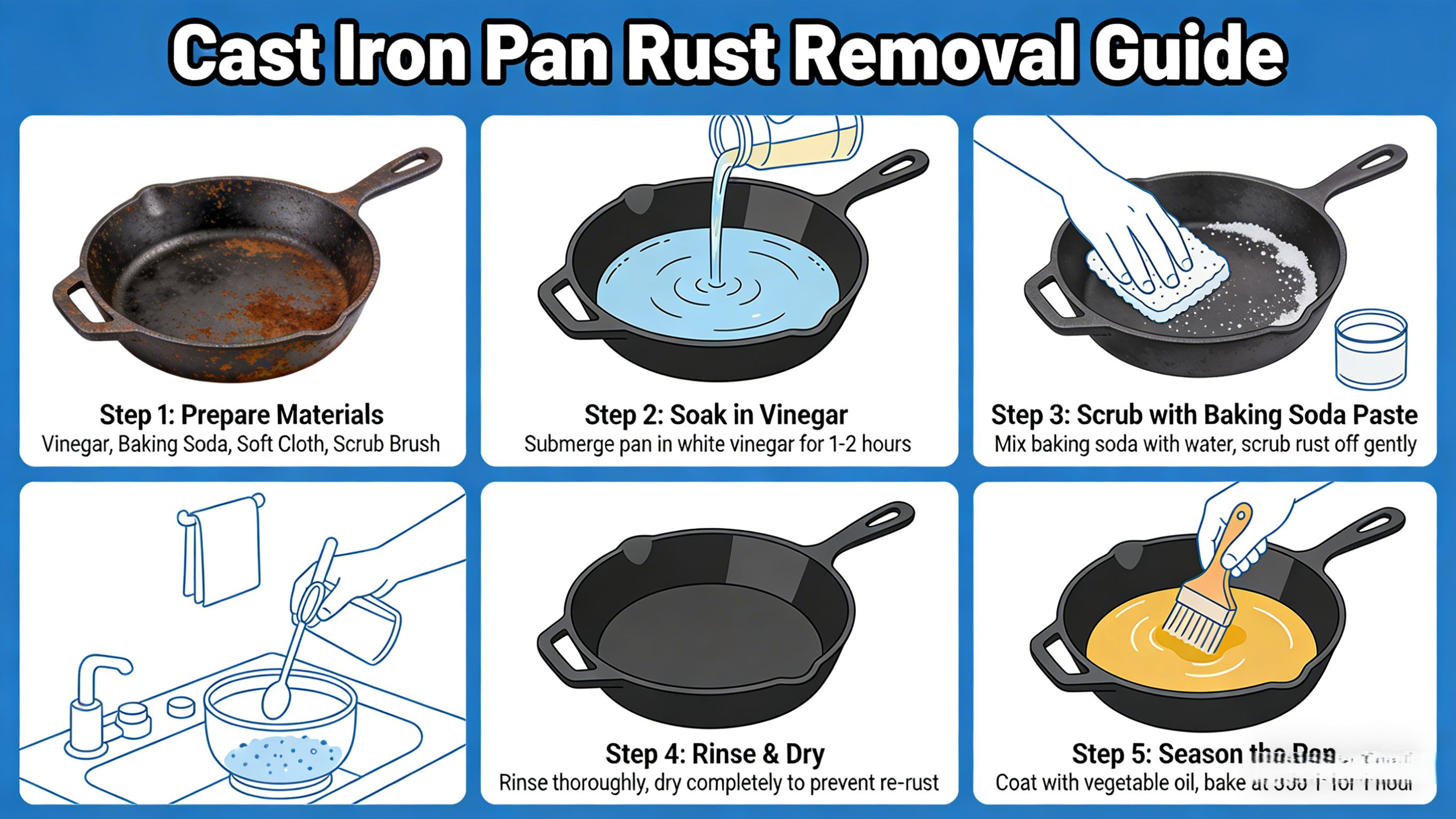
Method 1: The Potato & Baking Soda Scrub
Best for: Light to medium surface rust.
This sounds like an old wives' tale, but it is pure chemistry. Potatoes contain oxalic acid, which is a natural rust remover (it is actually a key ingredient in commercial cleaners like Bar Keepers Friend).
The Steps:
1. Cut a large raw potato in half, width-wise or length-wise.
2. Pour a generous amount of baking soda onto the cut side of the potato (or directly onto the skillet).
3. Use the potato as a scouring pad. Scrub the rusty areas firmly. As the potato wears down, slice off the used layer and continue.
4. The baking soda acts as a mild abrasive to lift the loose flakes, while the oxalic acid dissolves the rust chemically.
5. Rinse and repeat until the orange color is gone.
Method 2: The Vinegar Bath
Best for: Heavy, all-over rust.
Acetic acid (vinegar) attacks iron oxide aggressively. However, this method requires caution. If you leave it too long, the vinegar will start eating the healthy iron, causing pitting.
The Steps:
1. Mix equal parts basic white vinegar and water in a sink or a bucket large enough to submerge the pan.
2. Submerge the skillet completely.
3. Check it every 30 minutes. Do not soak for more than 4-6 hours.
4. You will see the rust bubbling away. Once the rust looks loose, pull it out.
5. Immediately scrub with a stiff brush or steel wool to remove the sludge.
6. Neutralize: Rinse with water and baking soda to stop the acidic reaction immediately.
Method 3: Salt & Lemon Exfoliation
Best for: Spot treatment and preserving existing seasoning on non-rusty parts.
This is a variation of the potato method but uses citric acid, which is slightly stronger and smells better.
The Steps:
1. Pour coarse sea salt or Kosher salt over the rusty spots. The coarse grains act as a heavy-duty exfoliant.
2. Cut a lemon in half and squeeze the juice over the salt.
3. Let the mixture sit for about 10 minutes to allow the acid to break down the oxide bonds.
4. Use the lemon rind (skin side out or inside out) to scrub the salt paste into the iron.
5. The mixture will turn a dirty grey/brown. Rinse thoroughly with hot water.
Method 4: Steel Wool & Elbow Grease
Best for: Thick, crusty rust scales.
Sometimes, chemistry isn't enough. You need mechanical force.
The Steps:
1. Purchase fine-grade steel wool (Grade 0000 is usually for polishing, so get something slightly coarser like Grade 1 or a stainless steel scrubber).
2. Add a little warm water and mild dish soap to the pan.
3. Scrub in a circular motion. You are physically grinding the rust layer off the iron.
4.Continue until you see the grey, gunmetal color of raw iron.
5. Note: This will completely strip your seasoning. You will be starting from scratch.
Method 5: The Oven High-Heat Method
Best for: The final step of restoration.
While the oven doesn't "remove" rust, it is the only way to seal the pan after you have cleaned it. Once the rust is gone, your pan is "naked" and vulnerable. It will rust again in minutes if not treated.
The Steps:
1. After using any of the methods above, wash the pan with soap and water.
2. Dry it completely. Use a towel, then put it on the stove on low heat to evaporate microscopic moisture.
3. Rub a thin layer of high-smoke-point oil (flaxseed, grapeseed, or canola) all over the pan—inside, outside, and the handle.
4. Wipe off the excess oil until it looks dry (too much oil creates a sticky mess).
5. Place the pan upside down in an oven preheated to 450°F - 500°F (230°C - 260°C).
6. Bake for 1 hour. Turn off the oven and let it cool inside. This polymerizes the oil into a hard, protective plastic-like layer.
4.Long-Term Rust Prevention: How to Keep Your Cast Iron Skillet Rust-Free
Restoring a pan is hard work. You don't want to do it twice. Here is the strict regimen required to keep cast iron healthy:
The "Stove Dry" Rule: Never rely on a towel. After washing, place the skillet on a burner on medium-low heat for 2-3 minutes. Watch the water evaporate. This ensures the deep pores are dry.
The Post-Wash Oil: While the pan is still warm (pores are open), apply a dime-sized drop of oil and buff it into the surface. This acts as a barrier against air humidity.
Proper Storage: Hang your pans if possible to allow air circulation.If stacking, place a paper towel or a specialized pan protector between them to prevent scratching and moisture trapping
Avoid the Dishwasher: The dishwasher is the enemy. The high heat, humidity, and harsh detergents will strip your seasoning and induce rust in a single cycle.
5.The Rust-Free Alternative: Why Chefs Are Switching to Titanium
If reading the sections above made you feel exhausted, you are not alone.
Cast iron offers great heat retention, but the maintenance is a lifestyle commitment. In the modern kitchen, we often need tools that are high-performance but low-maintenance. This is where Titanium Cookware is revolutionizing the industry. 3-layer titanium cookware
At Shaanxi Shenglian Yijing Technology Co., Ltd., we specialize in professional titanium wholesale and manufacturing. We have seen a massive shift in trends where home cooks and professional chefs are moving away from heavy, rust-prone metals toward pure titanium.
Why Titanium Beats Cast Iron in Maintenance
1. Titanium Never Rusts
Unlike iron, which reacts destructively with oxygen, titanium reacts constructively. When exposed to air, titanium forms a thin, incredibly stable layer of Titanium Dioxide ($TiO_2$). This layer is impervious to water, salt, and acids.
You can leave a titanium pan soaking in the sink for days. No rust.
You can cook tomato sauce, vinegar, and lemon juice. No metallic taste, no corrosion.
You can live in a humid seaside home. Your pan remains pristine.
2. No Seasoning Required
Forget the flaxseed oil and the smoking ovens. Titanium does not require a polymerized oil layer to be safe or effective. Our Titanium Flat-Bottomed Pans and Titanium Soup Pots are ready to use straight out of the box.
3. Health and Safety (Biocompatibility)
As mentioned in our testimonials, customers like Makoto from Tokyo choose our pans for preparing baby food.
"The main reason for choosing a titanium pan is that the titanium material is safer for babies."
Titanium is the same material used in medical implants (like hip replacements) because the human body does not reject it. It is non-toxic, non-allergenic, and does not leach heavy metals into your food.
4. Lightweight Durability
A cast iron skillet can weigh 6-8 pounds. A titanium pan of the same size is a fraction of the weight, making it easier to toss vegetables, flip pancakes, and wash up without straining your wrist. As Michael Brown from New York noted in his review of our products:
"This titanium frying pan looks pretty nice, is lightweight... heats up quickly and is easy to clean."
A Solution for Every Kitchen
Whether you are looking for a Titanium Seamless Tube for industrial use or a Titanium metal frying pan for your kitchen, Shaanxi Shenglian Yijing provides materials that meet international standards (ASTM, AMS).
If you are tired of scrubbing rust off your old cookware, it might be time to retire the cast iron to the storage room (just like Sarah Johnson from London did) and upgrade to the metal of the future.
Conclusion: Restore or Upgrade?
Knowing how to remove rust from cast iron skillet surfaces is a valuable skill. With a potato, some vinegar, or some steel wool, you can salvage a piece of history. The process requires patience, elbow grease, and a strict adherence to maintenance rules to prevent the rust from returning.
However, cooking shouldn't always be a battle against the elements. If you value your time and health, and want cookware that offers professional searing power without the fear of corrosion, Titanium is the superior choice. It offers the durability of metal with the convenience of modern materials.
Frequently Asked Questions
Q: Can I use Coca-Cola to remove rust from my cast iron pan?
A: Yes, Coca-Cola contains phosphoric acid, which can dissolve rust. However, it is sticky and has a lower acid content than vinegar, making it less efficient for heavy rust. It works for minor spots but requires thorough cleaning afterward to remove sugar residue.
Q: I removed the rust, but now my pan is grey/silver. Is that normal?
A: Yes! That is the color of raw cast iron. The black color comes from layers of polymerized oil (seasoning). Once you remove the rust, you must re-season the pan immediately using the Oven Method described above to turn it black and non-stick again.
Q: Why does my titanium pan change color?
A: Titanium can develop beautiful iridescent colors (blue, purple, gold) when exposed to high heat. This is a natural thickening of the oxide layer and is completely safe. It does not affect performance and actually makes the pan more unique!