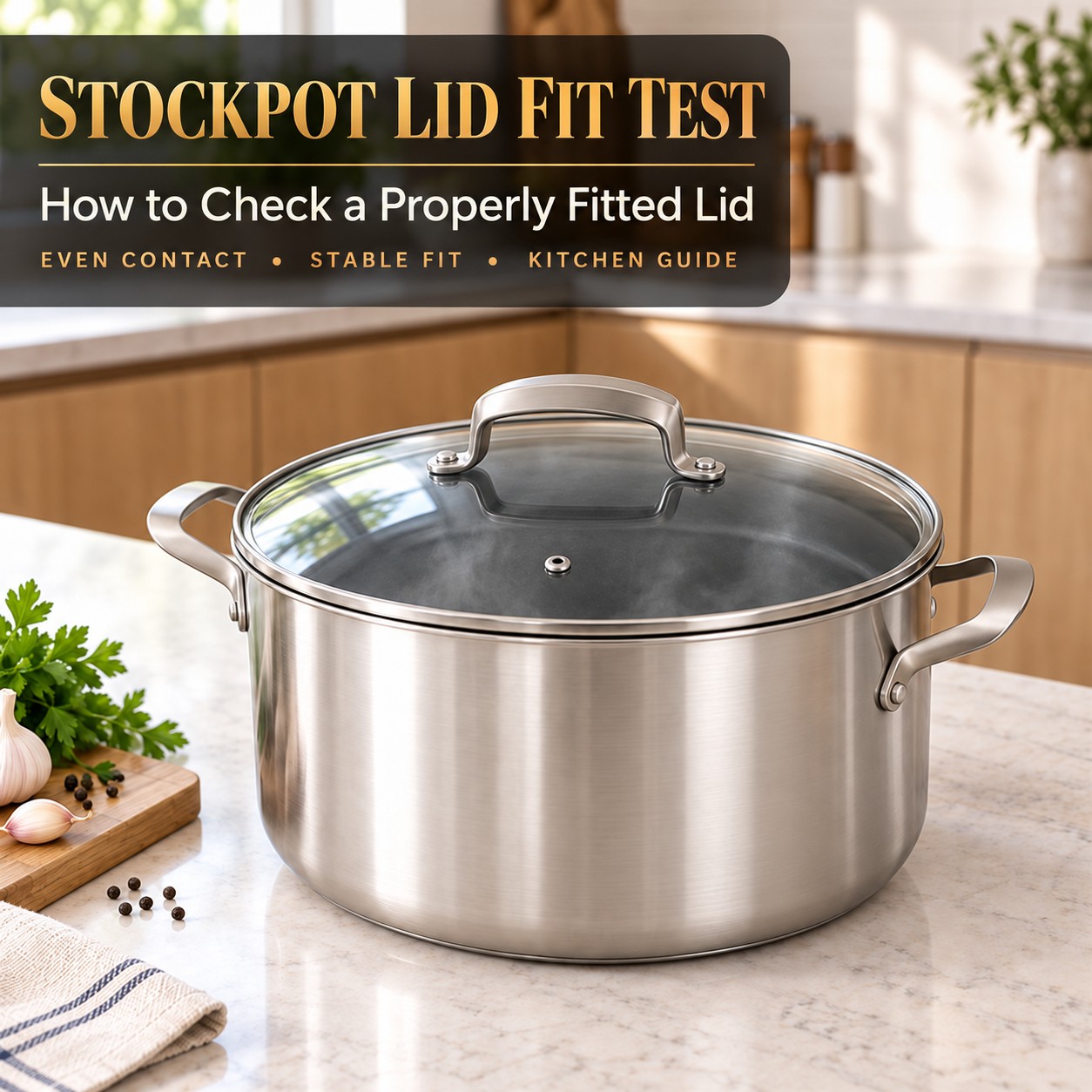
Making baby food at home can feel simple at first: steam the vegetables, simmer the porridge, blend the puree, and serve a small portion. Then the material questions begin. Will a nonstick coating wear into the food? Should parents avoid aluminum with tomato puree or apple sauce? Does stainless steel matter for families who are concerned about nickel? Which pan is easier to clean after sticky rice cereal or vegetable mash? These are practical questions, and they are why non toxic cookware for baby food deserves a more careful discussion than ordinary cookware buying advice.
The best cookware for baby food is not defined by a single label. The words “healthy,” “green,” “non-toxic,” and “baby-safe” can mean very different things from brand to brand. A better starting point is the food-contact surface. That surface touches water, milk, rice, tomato, apple, carrot, oil, salt, and cleaning residue. It should be stable, easy to inspect, easy to clean, and suitable for repeated gentle heating.
For many parents, the main concerns are PFAS or PTFE-based coatings, coating wear, aluminum exposure from damaged or reactive surfaces, nickel release from some stainless steel grades, and heavy cookware that is hard to handle safely around a baby. These concerns do not mean every pan is dangerous. They mean parents often choose a stricter standard because baby food is made frequently, in small portions, and often with soft acidic foods that contact the pan surface directly.
Titanium cookware enters this discussion because a real titanium food-contact layer is coating-free, corrosion-resistant, and low-reactive in normal cooking. Thin pure titanium is not always ideal for home baby food because it can heat unevenly. Tri-ply titanium cookware is more relevant for daily use because it combines a GR1 titanium inner layer, an aluminum heat-spreading core, and a stainless steel exterior. This article explains where titanium fits, how it compares with other materials, and how parents can verify material claims before choosing a baby food pan.
1. Why Baby Food Cookware Demands Extra Safety Scrutiny
Baby food cooking is different from general adult cooking. The portions are smaller, the texture is softer, and the food often sits in direct contact with the pan surface as it softens. A parent may simmer oats, rice, squash, carrots, apples, tomatoes, or lentils until they break down into a mash. This means the food-contact layer is not a minor detail. It is part of the daily preparation routine.
Parents also tend to repeat the same cookware tasks many times per week. A small pot may be used for porridge in the morning, vegetable puree at lunch, and soup in the evening. Repeated use makes surface condition important. A pan that looks acceptable for occasional adult cooking may not be the best dedicated tool for baby food if the coating is worn, the surface is pitted, or the material is difficult to inspect.
The FDA's Closer to Zero program focuses on reducing exposure to arsenic, lead, cadmium, and mercury in foods commonly eaten by babies and young children. That program is about contaminants in food rather than cookware, but it shows why parents and regulators apply extra attention to what babies eat. In the kitchen, the same practical mindset applies: reduce avoidable material concerns where possible, without making exaggerated claims.
The most common baby food scenarios also put cookware surfaces under real stress. Acidic purees such as tomato, apple, berry, and citrus-containing foods can be more demanding than neutral water. Porridge and rice cereal can stick if heat is uneven. Soups and stews may simmer for longer than a quick saute. Frequent washing can reveal whether a surface is durable or beginning to fail.
For that reason, the safest cookware for baby food should be judged by material clarity, not by slogans. Parents should ask what the baby food touches, whether the surface is a coating or a solid material, how the pan behaves with acidic foods, how evenly it heats, and how easily it can be cleaned without damaging the cooking surface.
This article is not medical advice and does not replace guidance from a pediatrician. It is a cookware material guide. If a baby has known allergies, digestive issues, diagnosed mineral concerns, or a specialized diet, parents should follow professional medical guidance. Cookware can reduce avoidable kitchen uncertainty, but it cannot diagnose, prevent, or treat a health condition.
2. PFAS, PTFE, and Coating Risks: What Parents Need to Know
Many parents start their cookware research with nonstick pans. Traditional nonstick cookware often uses PTFE-based coatings, and PTFE belongs to the broader PFAS family. The FDA notes that PFAS have been authorized in some food-contact applications, including nonstick coatings, and also states that some PFAS authorized for nonstick cookware uses have been phased out of the U.S. market after safety review. For parents, the simple takeaway is that coating type and coating condition matter.
A modern intact nonstick pan used within the manufacturer's temperature limits is different from an overheated, old, or damaged pan. The concern for baby food is not only one dramatic overheating event. It is daily use, repeated washing, and the possibility that a worn coating becomes difficult to evaluate. When a coating is visibly peeling, flaking, or losing its surface integrity, it should not be used for baby food.
PFAS-free claims can also be confusing. Some pans are ceramic-coated and marketed as PFAS-free. Some are PTFE-free. Some are PFOA-free but still use PTFE. Some are coating-free metal pans. These are not the same. A parent who wants to avoid conventional nonstick chemistry should look for clear language about the actual food-contact surface, not only a broad “non-toxic” label.
Coating-free materials have a different appeal. Stainless steel, cast iron, carbon steel, enamel, glass, pure ceramic, and titanium surfaces do not rely on a conventional nonstick film for their basic food-contact identity. They may need more cooking technique, but there is no nonstick coating layer to wear through. For baby food, that surface transparency can be more reassuring than a pan that is easy to use when new but harder to judge after months of wear.
That does not mean parents must throw away every coated pan. A high-quality PFAS-free coated pan can be useful for short-term, low-heat tasks if the surface is intact and the brand provides clear testing information. The stricter recommendation is to avoid making a worn nonstick pan the dedicated baby food pot. Baby food is soft, frequent, and often acidic, so a stable surface is worth prioritizing.
For more background on PFAS and cookware policy, see PFAS Cookware Ban 2026. In this guide, the practical point is narrower: parents should know whether the baby food touches a coating, a metal surface, enamel, ceramic, or titanium.
3. Cookware Material Breakdown: Safe Options for Baby Food
No single cookware material is perfect for every family. A baby food pan should be judged by the type of foods prepared, the cooktop, cleaning habits, budget, and how easily the parent can inspect the cooking surface. The following comparison focuses on the food-contact layer because that is the part that matters most for puree, soup, and porridge.
| Cookware Type | Food-Contact Surface | Main Concern | Best For | Baby Food Note |
|---|---|---|---|---|
| Tri-Ply Titanium | GR1 titanium inner layer | Higher upfront cost compared with many basic pans | Daily purees, soups, porridge, and acidic foods | Coating-free surface with stable food contact and more even heat than thin pure titanium |
| Pure Titanium | Solid titanium | Uneven heating if the pot is very thin | Boiling water, simple soups, small lightweight tasks | Low-reactive and light, but not always best for sticky porridge |
| Stainless Steel | 304, 316, or 18/0 stainless steel depending on grade | Nickel concern for sensitive users and sticking with soft foods | General cooking and short simmering | Avoid long acidic cooking if nickel sensitivity is a household concern |
| Ceramic-Coated Aluminum | Ceramic-style coating over aluminum or steel | Coating wear over time | Low-oil quick cooking when coating is intact | Replace if the coating is visibly chipped, peeling, or degraded |
| Cast Iron | Seasoned iron surface | Iron transfer, weight, and acid reaction | Occasional cooking and high-heat adult meals | Not ideal as a daily acidic puree pot |
| Enameled Cast Iron | Porcelain enamel surface | Enamel chipping and heavy handling | Slow cooking when enamel is intact | Stable surface if intact, but heavy for daily small batches |
| Bare Aluminum | Aluminum surface | More reactive with acidic foods | Not preferred for baby food focus | Avoid for frequent acidic purees |
The table shows why parents often move away from ordinary nonstick or bare aluminum when choosing a dedicated baby food pot. The decision is not only about toxicity. It is also about inspection. Can the parent see whether the surface is intact? Is the food touching a coating or a stable metal? Does the pan heat evenly enough to prevent burnt starch? Does it clean without aggressive effort?
Tri-ply titanium is not the cheapest option, but it answers several baby food concerns at once. It provides a titanium food-contact layer, avoids conventional coating wear, improves heat distribution through the aluminum core, and keeps the reactive heat-spreading metal away from direct food contact. That combination is why it deserves attention in a baby food cookware discussion.
4. Titanium Cookware for Baby Food: Beyond Non-Toxic
The word titanium is used in several ways in cookware. Some products are pure titanium. Some are titanium-coated or titanium-reinforced nonstick pans. Some use a titanium-colored finish. Some use titanium as a thin surface technology over other metals. For baby food, parents should not stop at the word titanium. They should identify the actual surface that touches food.
Pure titanium cookware has a strong safety story because titanium itself is corrosion-resistant, low-reactive, and coating-free. It is also lightweight. The limitation is heat distribution. Thin pure titanium can concentrate heat in one area, which is inconvenient when cooking rice cereal, oatmeal, lentils, or vegetable puree. Baby food often needs gentle, even heating to prevent scorching and reduce cleanup effort.
Tri-ply titanium cookware is more suitable for everyday baby food because it separates the jobs of each material. The GR1 titanium inner layer touches food. The 1050 aluminum core spreads heat. The 430 stainless steel exterior supports structure and cooktop compatibility. This design lets parents benefit from titanium as the food-contact surface without relying on titanium alone to manage heat.
The titanium inner layer also avoids coating flaking concerns because it is not a conventional nonstick film. Its natural oxide layer is part of the titanium surface, not a short-life release coating. This matters for baby food because parents often clean the same small pot repeatedly. A surface that remains easy to inspect after repeated washing is more useful than a coating that looks good at first but becomes uncertain later.
TITAUDOU's hardening technology adds another practical advantage for daily family use. The cookware is designed for stronger everyday surface durability, so parents do not need to treat the titanium food-contact layer like a fragile coating. That said, reasonable cooking habits still matter: avoid prolonged empty overheating, clean residue after cooking, and use normal heat control for sticky baby foods.
For a detailed breakdown of pure titanium, titanium-coated, and tri-ply structures, see Titanium Cookware Safety: Pure Titanium, Coated, and Tri-Ply Cookware Compared. For baby food, the key takeaway is simple: tri-ply titanium cookware is more practical than thin pure titanium when gentle, even daily heating matters.
5. Acidic Baby Foods: Why Surface Stability Is Non-Negotiable
Many common baby foods are mildly acidic. Apple puree, tomato puree, berry puree, citrus-added sauces, and vegetable blends with tomato can contact the pan surface for several minutes or longer. Acidic foods can interact more strongly with certain materials than neutral water. That is why the food-contact surface matters more for baby food than for a simple pot of plain pasta water.
Bare aluminum is not the best dedicated choice for acidic baby food. Aluminum cookware is valued for heat transfer, but direct aluminum contact with acidic foods can increase material interaction. Hard anodized aluminum is more stable than untreated aluminum, and ceramic-coated aluminum can work while intact, but parents still need to monitor surface condition. If a coating chips or wears, the food-contact story changes.
Stainless steel is generally durable, but some grades contain nickel. Most families use stainless steel without issue, yet parents with known nickel sensitivity in the household may choose to avoid long acidic simmering in nickel-containing stainless steel. This is not a claim that all stainless steel is unsafe. It is a reminder that grade and use case matter.
Cast iron and carbon steel also have limits with acidic baby foods. They can release iron into acidic foods and may affect flavor or surface seasoning. A little iron transfer is not automatically harmful for everyone, but it is not a controlled baby nutrition strategy. Parents should not use a cast iron pot as a substitute for pediatric guidance about iron intake.
Titanium's appeal is that a true titanium food-contact layer is stable with acidic foods under normal cooking. The aluminum core in tri-ply titanium cookware helps spread heat but does not touch the puree. This makes tri-ply titanium a strong option for parents who frequently prepare apple puree, tomato-based vegetable blends, or other acidic baby foods.
For more on acid and titanium surfaces, see Titanium Cookware and Acidic Foods. The short version for baby food is that a stable titanium inner layer reduces one of the common concerns parents have about fruit and tomato-based purees.
6. How to Verify Non-Toxic Cookware Claims for Baby Food
Parents should treat cookware claims like ingredient labels. A good product page should state the food-contact material clearly. If the pan is stainless steel, what grade is it? If it is ceramic-coated, what is under the coating? If it is titanium, is the inside surface pure titanium, titanium-coated, or only titanium-reinforced? If it is enamel, is the enamel surface intact and tested for relevant contaminants?
The phrase “non-toxic” is too broad by itself. It may refer to PFAS-free coating, lead and cadmium testing, nickel-free stainless steel, ceramic coating, pure ceramic, enamel, or titanium. These are different material stories. For baby food, the better question is: what touches the food, how stable is it with acidic purees, and what happens as the pan ages?
A practical checklist starts with the inner surface. Look for clear wording such as GR1 titanium inner layer, pure titanium food-contact surface, 18/0 stainless steel, PFAS-free ceramic coating, or porcelain enamel. Avoid vague descriptions that only say “healthy pan,” “green cookware,” “stone surface,” or “titanium technology” without explaining the actual food-contact layer.
Next, inspect the pan regularly. A baby food pot should be easy to judge with the eyes and hands. If a coating is visibly peeling or flaking, it should be replaced. If enamel is chipped and the underlying material is exposed, it is no longer the same food-contact surface. If stainless steel is deeply pitted, review whether it is still appropriate for acidic baby food.
Parents should also consider size. A huge pot is not ideal for small baby portions because food spreads too thin and may scorch. A smaller pot with a stable base is usually easier to control. Even heating matters more than maximum capacity. A tri-ply titanium saucepan or small pot can be more useful than a large thin pot when making small batches.
Finally, ask for documentation when possible. Third-party testing, clear material diagrams, food-contact statements, and care instructions are better than marketing language. Parents do not need to become materials engineers, but they should choose cookware from brands that explain what the product is made of.
Another useful check is whether the brand separates the inner surface from the rest of the pan. A layered pan can be safe and useful, but parents should know which layer touches food. In a tri-ply titanium pot, the aluminum core is valuable because it spreads heat, but it should not be the cooking surface. In a ceramic-coated aluminum pot, the coating is the cooking surface, so coating condition controls the decision. In stainless steel, the steel grade controls the nickel and corrosion conversation.
Parents should also avoid judging cookware by color alone. A white ceramic-looking surface, gray stone-like finish, or shiny metallic interior does not tell the full story. The product description should identify the material, not just the appearance. This is especially important for baby food because the same pot may be used for acidic fruit puree one day and sticky grain porridge the next.
Care instructions are part of material safety. If a coated pan says low to medium heat only, it should not be used for high-heat preheating. If an enamel pot says to avoid thermal shock, parents should let it cool before washing. If stainless steel scorches baby cereal, soaking is better than aggressive scraping. If a titanium surface has food residue, warm water and normal dish soap are usually enough after a soak. Following the care limits keeps the food-contact surface in the condition that made it suitable in the first place.
Parents should also decide when a pan is no longer a baby food pan. A pan can remain useful for adult cooking but be retired from infant meal preparation if the surface becomes hard to inspect. Visible coating failure, exposed base material, enamel chips, deep pitting, loose handles, or persistent burnt residue are reasons to replace or reassign the cookware. Baby food cookware should be boring in the best way: clear surface, stable heating, easy cleaning, and no mystery.
7. Common Myths About Baby Food Cookware Debunked
Myth one is that cast iron is automatically the best baby food pot because it can add iron. Cast iron can release iron into food, especially acidic food, but that does not make it a controlled nutrition tool for infants. Baby iron needs should be discussed with a pediatrician. Cast iron is also heavy and can be inconvenient for small, sticky, acidic purees.
Myth two is that every nonstick pan is unusable for baby food. A high-quality PFAS-free coated pan with an intact surface can be used for some low-heat, short-term tasks. The stricter issue is long-term confidence. If the coating is worn, peeling, or difficult to inspect, it should not be the dedicated baby food pan.
Myth three is that titanium is always the best choice in every form. Titanium is a strong material, but structure matters. Thin pure titanium can heat unevenly. Titanium-coated nonstick is not the same as a pure titanium food-contact layer. Tri-ply titanium is the better daily baby food option because it combines a titanium inner layer with an aluminum core for heat spread.
Myth four is that ceramic coating and pure ceramic are the same. Ceramic-coated aluminum cookware uses a coating over a metal body. Pure ceramic cookware is made from ceramic material throughout. Both can be marketed as non-toxic, but they behave differently, age differently, and require different care.
Myth five is that a baby food pan never needs replacement if it was once labeled non-toxic. Surface condition changes with use. A pan that was appropriate when new may no longer be appropriate if the food-contact surface is damaged. Parents should make cookware inspection part of the routine, just like checking bottle nipples, storage containers, and feeding utensils.
8. Scenario-Based Recommendations for Parents
Different families need different cookware. A parent making occasional steamed carrots may not need the same pan as a parent who prepares daily porridge, tomato vegetable puree, fruit sauces, and soup. The best choice depends on budget, recipe pattern, cooktop, cleaning habits, and how long the family wants to use the pan.
| Parent Concern | Better Material Direction | Why |
|---|---|---|
| Avoiding PFAS or PTFE | Coating-free titanium, stainless steel, enamel, cast iron, or verified PFAS-free surfaces | The goal is to avoid conventional nonstick coating concerns |
| Acidic fruit or tomato puree | Tri-ply titanium or intact enamel | Stable food-contact surfaces are better suited to frequent acidic foods |
| Gentle heating for porridge | Tri-ply titanium or stainless steel | More even heating helps reduce scorching compared with very thin pure titanium |
| Avoiding coating wear | Titanium or stainless steel | No conventional release coating is needed for the basic cooking surface |
| Easy cleaning | Titanium or intact ceramic-coated cookware | Smooth surfaces clean more easily when heat is controlled |
| Lightweight handling | Titanium-based cookware | Lighter than cast iron and easier for repeated small-batch cooking |
| Long-term baby and family use | Tri-ply titanium | Durable titanium inner layer plus aluminum-core heat distribution |
For families on a tight budget, a small stainless steel pot can be a reasonable starting point. If nickel sensitivity is a concern, consider grade and cooking habits. Avoid using the same stainless pot for long acidic baby purees if that is a known household issue. For families that mainly need quick, low-heat cooking, a verified PFAS-free coated pan can work as long as the surface is monitored carefully.
For families that make baby food daily, tri-ply titanium is a stronger long-term choice. It avoids conventional coating wear, handles acidic foods well, and heats more evenly than thin pure titanium. It is also easier to inspect than a coating because the food-contact layer is the metal surface itself. This makes it suitable for parents who want one dedicated pot for fruit puree, vegetable puree, soup, and porridge.
For families that cook mostly vegetable purees, any stable and intact surface can work if heat is controlled. Carrots, peas, pumpkin, and sweet potatoes are often forgiving foods. The bigger issue is sticking as they thicken. A pan with even heat and a smooth surface reduces the need for constant scraping and helps keep cleanup simple.
For families that cook fruit purees often, acid becomes more important. Apple, berry, and tomato-based blends should be prepared in a surface that is comfortable with acidic food contact. Tri-ply titanium and intact enamel are strong directions here. Stainless steel may still be fine for many users, but parents with nickel sensitivity concerns may prefer titanium for frequent acidic baby food.
For families that make porridge daily, heat distribution is the main issue. Thin cookware can create a hot center that burns grains before the rest of the pot thickens. Tri-ply titanium, stainless steel with a thick base, and other layered cookware can help. Pure titanium is light, but parents may need lower heat and more stirring to avoid sticky spots.
For families that need the easiest release surface, a verified PFAS-free coated pan may be convenient, especially for soft eggs or quick toddler meals. The tradeoff is inspection and replacement. Parents should use moderate heat, follow the brand's care limits, and retire the pan from baby food use when the coating no longer looks intact.
For families using induction, cookware structure matters. Pure ceramic and some aluminum-based pans may not work unless they include an induction-compatible base. Tri-ply titanium with a magnetic stainless exterior can solve that issue while keeping titanium on the food-contact side. This makes it more flexible for modern kitchens than many single-material options.
For outdoor or travel use, pure titanium can be useful because it is very light and corrosion-resistant. But for home baby food, where gentle heating matters, thin pure titanium may need more stirring and heat control. A layered pot is usually more forgiving for daily family cooking.
9. Final Checklist: Choosing Non-Toxic Cookware for Baby Food
The safest cookware decision starts with the food-contact surface. If the baby food touches a conventional nonstick coating, monitor the coating closely and replace the pan when the surface is no longer sound. If the food touches stainless steel, understand the grade and use extra judgment with long acidic cooking if nickel sensitivity matters. If the food touches enamel, confirm that the enamel is intact. If the food touches titanium, confirm that it is a real titanium food-contact layer.
The second priority is heat behavior. Baby food often burns before it looks burned, especially porridge, rice, lentils, milk-based foods, and thick vegetable puree. A pan with more even heat reduces stirring stress and cleanup. This is why tri-ply titanium is more practical than thin pure titanium for daily baby food: the aluminum core spreads heat while titanium remains the inner surface.
The third priority is inspectability. Parents should be able to see whether the cooking surface is intact. A coating that hides wear, a pan with unclear layers, or a product with vague material language is less reassuring than a clearly described structure. Transparent material information should carry more weight than broad non-toxic marketing claims.
The final priority is routine. Choose a pan that fits how the family actually cooks. A small dedicated baby food pot is often better than a large multipurpose pot. A stable base is better than a wobbly lightweight pan. A coating-free surface is better for parents who do not want to track coating life. A long-term pan is more valuable when it remains easy to clean and easy to trust after repeated use.
Parents can use a simple four-part checklist before choosing a dedicated baby food pan. First, identify the food-contact surface in plain material terms. Second, confirm that it suits acidic foods and gentle simmering. Third, check whether the pan heats evenly enough for porridge and thick puree. Fourth, decide how the surface will be inspected over time. If any of those answers are unclear, the product is not transparent enough for a dedicated baby food role.
Cooking habits matter after the purchase. Use moderate heat, stir thick foods before they settle, add a little water when reheating dense puree, and wash soon after the pot cools. These habits are not complicated, but they preserve the food-contact surface and prevent burned residue. Even high-quality cookware performs better when parents use heat that matches the small portions they are cooking.
It also helps to keep one small pot dedicated to baby food. A dedicated pot is easier to monitor because parents know its full history: what was cooked in it, whether it was overheated, how it was washed, and whether the surface has changed. That simple habit makes material safety easier to manage than rotating between several old pans with unknown coating condition.
Tri-ply titanium cookware is not the only possible choice for baby food, but it is a strong one. It gives parents a coating-free titanium inner layer, better heat distribution than pure titanium alone, and a durable structure for repeated daily cooking. For families focused on acidic purees, soup, porridge, and long-term surface stability, it is one of the most practical material directions.
Frequently Asked Questions (FAQ)
Q1: What cookware is best for making baby food?
A: The best cookware for making baby food has a stable, easy-to-inspect food-contact surface and even heat distribution. Tri-ply titanium, stainless steel, intact enamel, and carefully verified PFAS-free coated cookware can all be used depending on the recipe and surface condition. For daily acidic purees and porridge, tri-ply titanium is a strong choice because it combines a titanium inner layer with better heat spread.
Q2: Is titanium cookware safe for baby food?
A: Titanium cookware with a real titanium food-contact layer is a good option for baby food because titanium is corrosion-resistant, low-reactive, and coating-free. Thin pure titanium can heat unevenly, so tri-ply titanium cookware is usually more practical for daily baby food because the aluminum core helps distribute heat while the titanium inner layer touches food.
Q3: Should parents avoid nonstick cookware for baby food?
A: Parents do not need to avoid every nonstick pan in every situation, but they should be strict about surface condition and coating type. A visibly worn, peeling, or damaged nonstick surface should not be used for baby food. Parents who want to avoid coating wear concerns may prefer coating-free cookware such as tri-ply titanium, stainless steel, intact enamel, or cast iron for selected tasks.