Grade 2 Titanium offers high strength and exceptional corrosion resistance, making it the material of choice for chemical equipment and marine heat exchangers. However, after heat treatment, a dense oxide layer (alpha-case) forms, which must be removed.
Effective practice balances pickling time and acid concentration. Fluoride-bearing chemistries—typically HF/HNO3 in controlled ratios—are adjusted to oxide thickness, part geometry, and desired roughness; shorter, iterative immersions with thorough rinsing minimize hydrogen uptake and pitting. Maintain moderated bath temperatures and employ inhibitors to stabilize reactions and reduce staining. Pre-clean with alkaline degreasing, then pickle, neutralize, and passivate; continuously monitor free fluoride, nitrate levels, metal loss rate, and pH to keep the process within specification. Documenting time–concentration curves for specific oxide conditions enables repeatable, uniform results and a bright, activation-ready surface.
This guide details the professional titanium pickling process. We explore how to strip oxides while preserving the dimensional accuracy of your titanium sheet. As a leading manufacturer complying with ASTM B265 standards, TITAUDOU shares insights on balancing acid concentration and time for the perfect surface finish.
1. Performance advantages of Grade 2 Titanium Sheets
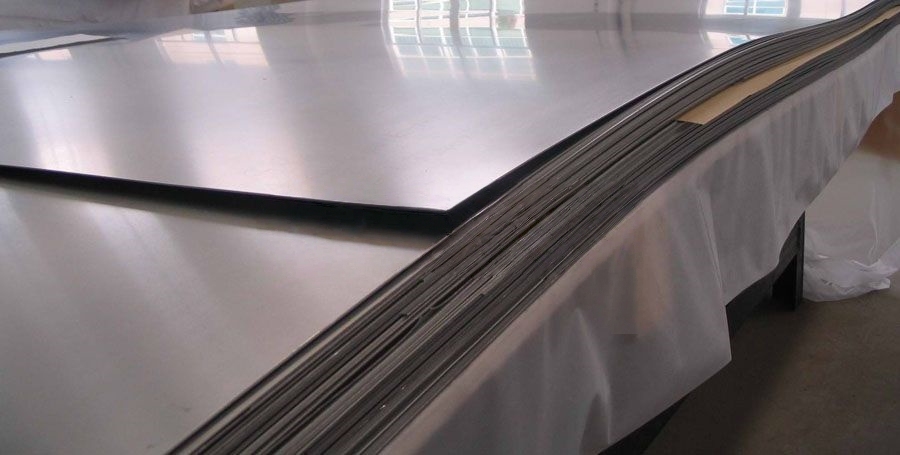
Titanium and titanium alloy plates combine low density with high specific strength. Specifically, Grade 2 Titanium (Commercially Pure) is favored for its balance of ductility and strength.
Corrosion Resistance: Maintains integrity in high-salinity seawater and chloride environments.
Industry Application: Ideal for aerospace, medical, and chemical processing.
Compared to stainless steel, our [titanium sheet] delivers a superior strength-to-weight ratio. Whether you need Grade 5 (Ti-6Al-4V) for hardness or Grade 2 for formability, proper surface treatment is key to performance.
2. Purpose of pickling for titanium plates after heat treatment
Titanium (group IVB) becomes more chemically active at high temperatures. During heat treatment or hot working, it reacts with oxygen, nitrogen, and other contact species, forming an oxide scale and an oxygen-enriched α-case. This surface layer raises hardness and brittleness, degrades toughness, and can initiate surface cracks that propagate into the substrate during subsequent forming, machining, or service. It also undermines appearance and reduces surface bonding strength with paints, sealants, adhesives, and metallic coatings. Consequently, pickling is a common and essential treatment: it removes oxide and α-case, brightens and levels the surface, and promotes the formation of a stable passive film that enhances corrosion resistance. Effective pickling restores a uniform, activation-ready surface for downstream processes such as precision forming, welding, anodizing, or coating, thereby extending service life and reducing the risk of premature equipment failure.
3. Influence of acid type and concentration on pickling results
The oxide scale on titanium and titanium alloy plates is dominated by TiO2, with minor phases such as TiO, Ti2O3, and TiO3. Because TiO2 is chemically inert, acid selection and concentration are decisive:
Sulfuric acid (H2SO4): Dilute solutions below about 5% can form a protective sulfate film on titanium at room temperature, moderating reaction rates. As concentration increases, reaction accelerates, but excessive strength or temperature promotes metal loss and hydrogen uptake.· Hydrochloric acid (HCl): At room temperature and concentrations below roughly 5%, HCl has limited reactivity with titanium. However, corrosion rate rises rapidly with temperature, and temperature often has a larger effect than concentration. HCl use therefore requires strict thermal control to prevent over-pickling or pitting.
Nitric–hydrofluoric mixed acid (HNO3 + HF): The industry-standard pickling system for Titanium sheets and titanium alloy plates. HF complexes Ti4+ and dissolves TiO2; HNO3 acts as an oxidizer and moderates surface attack, helping avoid smut and uneven etching. The HF/HNO3 ratio, total acid concentration, bath temperature, and inhibitor use must be tuned to oxide thickness, alloy grade (e.g., Grade 2 vs. Grade 5), and target roughness.This is the industry standard. HF dissolves the TiO2, while HNO3 acts as an oxidizer to prevent hydrogen absorption (hydrogen embrittlement)
Optimization for Grade 2: For Grade 2 Titanium, we recommend a controlled ratio to prevent "smut" or uneven etching.
Pro Tip: Always monitor the bath temperature. For high-quality titanium sheet production, keeping the bath between 45–55 °C ensures a bright, silver-white finish ready for anodizing or welding.
4. Effect of pickling time on results
With other variables fixed, longer immersion generally improves oxide removal because the reaction proceeds more completely. However, titanium’s hydrogen affinity means excessive time increases hydrogen uptake, raising the risk of embrittlement, surface pitting, or dimensional loss. Balancing kinetics and safety, practical single-immersion times of about 5–10 minutes in controlled HNO3 + HF solutions often yield optimal results for heat-treated plates, achieving full oxide removal and uniform brightness without over-etching. In production, short iterative dips with rinse breaks are preferred for thick or stubborn scale, as they allow better control over metal loss and surface roughness while limiting hydrogen ingress.
5. Pickling process steps and data-driven optimization
5.1 Pre-pickling preparation
· Degreasing: Remove oils and contaminants with an alkaline cleaner at 35–55 °C for about 4 minutes. Rinse thoroughly to avoid drag-in.
· Surface conditioning by shot blasting/peening: The post-blast roughness depends on alloy hardness, initial surface, and blasting parameters (media type/size, flow, impact angle, and exposure time). Proper blasting improves oxide removal uniformity, reduces undercutting at inclusions, and enhances subsequent pickling consistency.
· Loading baseline and cleanliness requirements: Before acid exposure, ensure the base material is free of oil, water, visible moisture, and alkaline residues. If not, perform manual rework to meet cleanliness standards. Good fixturing promotes consistent exposure and drainage.
5.2 Pickling in mixed acid and parameter screening
· Chemistry: Conduct static pickling in a mixed acid bath of HNO3 + HF. Then expose specimens to baths of varied composition and parameters to measure removal rate, metal loss, color/brightness, and roughness.
· Temperature and time: Maintain moderate bath temperatures (typically 45–55 °C) and controlled immersion times matched to oxide thickness. For many Grade 2 and Grade 5 conditions, keeping HF mass concentration below about 30 g/L and time under 8 minutes has proven effective for bright, uniform surfaces with low hydrogen uptake.
· Rinsing and neutralization: Between steps, use high-quality deionized water rinses to remove residual acid, followed by neutralization where specified to eliminate fluorides/nitrates and stabilize the surface prior to passivation or drying.
Titanium pickling data | |||||
Material Grade | Acid Composition (HNO3 + HF) | Temp (°C) | Effervescence Onset (s) | Descaling Complete (s) | Optimal Pickling Time (s) |
Grade 2 Titanium | 100g/L + 60g/L | 45 | 40 | 56 | 91 |
Grade 5 (Ti-6Al-4V) | 220g/L + 100g/L | 45 | 60 | 120 | 131 |
5.3 Post-pickling optimization, findings, and process improvements
Experimental evaluation revealed that, under identical acid composition and parameters, Grade 5 and Grade 2/Grade 2-H specimens exhibited meaningful differences in the optimum pickling stop time and final roughness, sometimes failing laboratory roughness targets. A controlled shot blasting pretreatment was therefore introduced:
Shot blasting addition: With tuned media and exposure, surfaces consistently met roughness requirements after pickling and presented uniform silver-white appearance.
· Process refinements implemented:
(1) Loading baseline improvements: Enforce strict pre-pickling surface criteria (no oil, no water, no obvious moisture, no alkaline residues). Nonconforming parts receive manual rework prior to line entry.
(2)Shot blasting parameters: Adjust line speeds so the pickling conveyor speed is higher than the blasting conveyor speed, ensuring adequate but not excessive mechanical roughening. Optimize wheel (electrical) flow and projection velocity to achieve repeatable Ra without peening damage.
(3)Mixed-acid control: Original chemistry HNO3 + HF retained, with HF mass concentration controlled below 30 g/L and immersion time held below 8 minutes in practice. On a horizontal spray pickling line, this single mixed-acid system progresses from pilot trials to optimized production, raising one-pass blasting–pickling first-pass yield and resolving black pepper-like specks and yellow stain defects on titanium plates.
· Test conclusions:
(1) Pre-shot blasting exerts a significant positive effect on pickling outcomes, and final surface quality grade correlates with blasting time; longer controlled exposure raises the quality grade up to a process-specific optimum.
(2) For Grade 2 and Grade 5 titanium alloy, a mixed acid with HNO3 at about 120 g/L and HF at about 5 g/L, held at 45–55 °C for up to 8 minutes, produced the best results, yielding a clean, silver-white finish. Based on the trials, the integrated blasting–spray pickling route reliably meets surface requirements and supports subsequent processing such as welding, coating, and sealing.
6. Practical guidance on time–concentration balance for Titanium sheets
· Start with conservative HF content and moderate HNO3 to stabilize oxide dissolution; increase exposure via short, repeated dips if thick, heat-treated scale persists.
· Track bath health: free fluoride, total acid, dissolved metal (Ti, Al, V), and pH/temperature. Replenish according to a mass-balance schedule to ensure uniform removal rates.
· Limit immersion to the minimum necessary for full oxide removal—commonly 5–10 minutes for standard heat tints and scale; <8 minutes is a robust target when HF ≤30 g/L.
· Use vigorous DI rinses between dips, apply inhibitors where appropriate, and maintain ventilation and fume scrubbing for HNO3/HF safety.
· Record time–concentration–temperature curves for each alloy/condition (Grade 2 vs. Grade 5) to standardize settings and improve first-pass yield.
7. Safety, environmental, and quality control considerations
· Safety: HF requires specialized PPE, calcium gluconate gel on hand, and immediate response protocols. Nitric fumes demand local exhaust and compatible ducting.
· Environmental compliance: Neutralize and treat spent acids and fluoride-bearing waste streams; monitor discharge for fluorides, nitrates, and metals.
· Quality control: Verify oxide removal and surface integrity via visual inspection, colorimetry, contact angle, Ra/Rz roughness, thickness/weight-loss checks, and hydrogen content testing where applicable. Cross-cut adhesion tests or bondline pull tests confirm surface readiness for coatings/adhesives. Avoidance of over-pickling, pitting, smut, and residual oxide is the acceptance baseline.
8.Why Choose TITAUDOU for Your Titanium Sheet Supply?
Understanding the titanium pickling process is just one part of our quality commitment. At TITAUDOU, we ensure every Grade 2 Titanium sheet leaving our factory undergoes rigorous surface inspection.
Precision Control: Automated pickling lines to ensure uniform thickness.
Certified Quality: We adhere to strict ISO and ASTM standards.
Custom Sizes: From thin foils to thick plates, we cut to your specifications.
[Request a Quote for Grade 2 Titanium] – Get a response within 24 hours.
Frequently Asked Questions and Answers
Q1: What types of surface contaminants or oxide layers form on titanium plates after heat treatment, and why is pickling critical for removing these to ensure subsequent processing or application performance?
A1: Heat treatment produces TiO2-rich scale and an oxygen-enriched α-case, with minor oxides such as TiO, Ti2O3, and TiO3, along with heat tint, shop soils, and abrasive residues. These layers increase surface hardness and brittleness, impair bonding and coating adhesion, and can seed cracks under load. Pickling removes scale and α-case, restores a clean, active surface, and promotes passivation, ensuring consistent weldability, adhesion, and corrosion resistance.
Q2: What is the best acid ratio for pickling Grade 2 Titanium?
A2: For Grade 2 Titanium, a mixture of Nitric acid (HNO3) and Hydrofluoric acid (HF) is essential. We generally recommend a lower HF concentration compared to Grade 5 to prevent rapid metal loss.
Q3: How do you prevent hydrogen embrittlement during titanium pickling?
A3: Controlling the HNO3 to HF ratio is critical. A ratio of at least 10:1 (Nitric to Hydrofluoric) helps maintain a high oxidation potential, which limits hydrogen uptake into the titanium sheet.