Introduction: Does Cast Iron Cookware Really Add Iron to Your Food? The Science Behind the Hype
For generations, the heavy black cast iron skillet has been a symbol of durability and traditional home cooking. Grandmothers swore by them, and modern chefs laud their searing capabilities. However, a persistent question lingers for health-conscious consumers using cast iron cookware: "Does it really help with iron deficiency, or is it introducing harmful metals into my diet?"
The narrative is compelling. In a world where anemia is a common nutritional deficiency, the idea that your cookware could act as a passive supplement is attractive. Yet, the reality is far more nuanced. It involves understanding the chemical interaction between metal and food, the bioavailability of leached elements, and the potential risks of impurities found in lower-quality iron.
This article moves beyond the anecdotes. We will analyze the safety and health benefits of cast iron cookware through the lens of chemistry and metallurgy. We will dissect the mechanism of iron leaching, the critical importance of impurity control (such as lead and manganese), and how modern manufacturing techniques like nitriding impact safety. Furthermore, we will compare these traditional tools with modern
Drawing on data from agricultural studies, heavy metal testing reports, and nutritional science, we aim to answer the core question: Is your skillet a health booster or a health hazard?
Furthermore, we will compare these traditional tools with modern, chemically inert alternatives—such as the Pure Titanium Cookware solutions pioneered by industry leaders like Shaanxi Shenglian Yijing—to give you a complete picture of your kitchen's safety profile. 3-layer titanium cookware
1. Iron Leaching: How Much Iron Does Cast Iron Cookware Add to Food?
The short answer is yes, cast iron cookware does leach iron. However, the quantity and the type of iron leached depend heavily on what you cook and how long you cook it.
Measured Leaching Data
According to various food science studies, the acidity and moisture content of the food are the primary drivers of metal migration. Here is what the data suggests regarding leaching rates:
Acidic Foods (Tomato sauce, Vinegar-based stews): These are the most aggressive reactors. Cooking a tomato-based sauce for 30 minutes to an hour can increase the iron content by 1 to 3 mg per 100g serving. To put this in perspective, this represents approximately 6% to 17% of the recommended daily intake (RDI) for an adult woman.
Neutral Foods (Rice, Fried Eggs, Meat): For non-acidic foods, the leaching is minimal. The iron transfer is typically less than 0.5 mg per 100g, which is statistically negligible for nutritional supplementation purposes.
Key Factors Influencing Leaching
Not all skillets behave the same way. Two major variables control how much metal ends up on your plate:
Condition of the Cookware: A well-seasoned pan (one with a thick layer of polymerized oil) creates a barrier between the raw metal and the food. Conversely, a new pan or a rusty pan can leach three times more iron than a well-maintained one.
Cooking Duration: Time is a catalyst. A quick 10-minute stir-fry results in minimal transfer, whereas a stew simmering for over an hour can see iron dissolution rates increase by up to 500%.
The Nutritional Reality Check
Before you toss your iron supplements, consider the bioavailability. The iron leached from cookware is non-heme iron (ferric iron). Unlike the heme iron found in red meat, non-heme iron is difficult for the body to absorb. The absorption rate is typically only 3% to 5%.
To make this "pot-derived" iron useful, you must consume it with absorption enhancers like Vitamin C (e.g., peppers, citrus, or tomatoes). Without this synergy, the iron largely passes through your system unabsorbed
2. Impurities and Heavy Metals: Is Cast Iron Cookware Safe from Contamination
While iron itself is a nutrient, the "cast iron" used in cookware is an alloy. It typically consists of about 98% iron and 2% carbon, but it is the trace elements that pose potential risks.
Composition and Risks
Raw iron ore contains various impurities, including sulfur, phosphorus, and manganese. In regulated manufacturing, these are kept within safe limits (e.g., complying with standards like GB 4806.9-2016). However, the market is flooded with unregulated, low-cost cast iron products, often made from scrap metal.
Manganese: While necessary for hardening the iron, excessive manganese (over 2%) in cheap cookware is dangerous. Long-term ingestion of high levels of manganese is linked to neurological issues similar to Parkinson’s disease.
Lead and Cadmium: These are rarely found in the iron itself but are significant risks in enameled cast iron if the glaze is of poor quality.
Testing and Safety Standards
High-quality brands subject their products to rigorous testing. In reputable cast iron:
Lead and Cadmium leaching should be <0.001 mg/L (essentially non-detectable).
Compared to aluminum cookware (which has high leaching risks linked to Alzheimer's) and low-grade stainless steel (which can leach nickel), high-quality cast iron is relatively safe.
However, the risk remains with "no-name" brands. If you cannot verify the source of the iron, you cannot verify the absence of heavy metals.
Safety Tip: This is where the material difference shines. Titanium is naturally free of these impurities. Companies like Shaanxi Shenglian Yijing process titanium to meet medical and aerospace standards (AMS, ASTM). As highlighted in their blog "Is Stainless Steel Cookware Safe? Understanding Nickel and Chromium Leaching Risks," titanium eliminates the risk of nickel allergies and heavy metal toxicity entirely.
Trust Signal: Unlike generic cast iron that may contain hidden lead or excessive manganese from scrap metal sources, TITAUDOU's Titanium Cookware undergoes rigorous spectral analysis to ensure 99.6% purity. Check our Titanium Quality Report here.
3.Manufacturing Processes: How Spinning and Nitriding Affect Safety and Performance
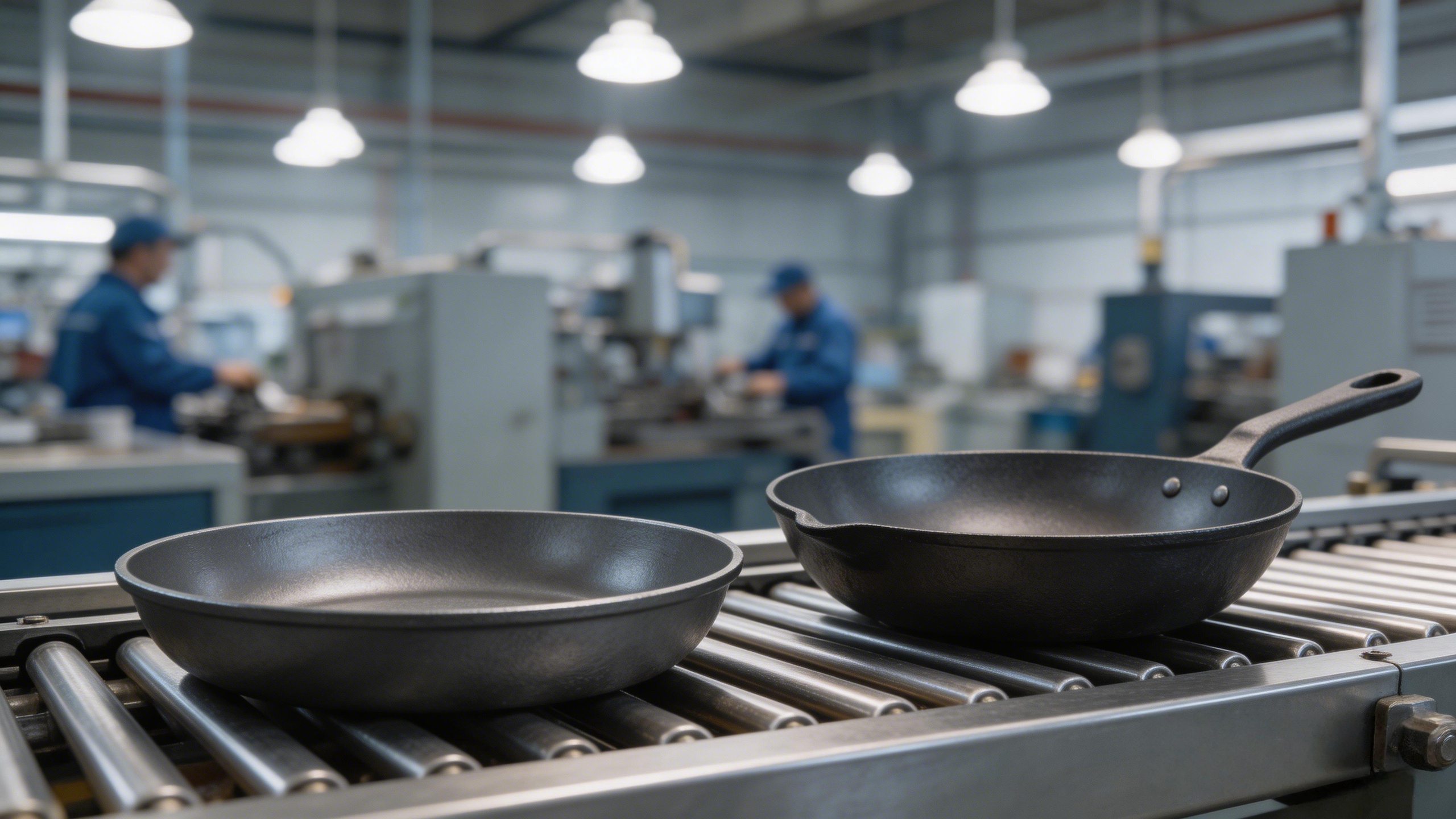
Modern cast iron is not the same as the rough-hewn pots of the 1800s. Two key technologies have revolutionized how these pans affect your food: Spinning and Nitriding.
The Spinning Process
Traditional casting involves pouring molten iron into a sand mold, resulting in thick, heavy, and often porous walls. Modern "spun" iron cookware uses high-speed spinning machines to thin the walls (down to 1.5-2mm) while keeping the base thick.
Benefit: This improves thermal efficiency by 40%. A pan that heats up faster reduces the time food sits in the "leaching zone" (warm but not cooking), thereby slightly reducing metal migration.
Nitriding: The Rust Barrier
Rust (Iron Oxide) is the enemy of safety. To combat this, manufacturers use gas nitriding. TITAUDOU manufacturer
The Process: The iron pan is placed in a nitrogen-rich vacuum furnace at 500°C. Nitrogen atoms diffuse into the surface, creating a layer of Iron Nitride (Fe₃N).
The Result: This layer is 5-10 microns thick and has a hardness of HV800 (twice that of ordinary iron).
Safety Impact: A nitrided pan is highly resistant to corrosion. Tests show it reduces iron leaching by up to 70% compared to raw iron. It effectively seals the iron off from the food until the layer wears down.
This contrasts with the traditional "bluing" (oxidation) method, which provides only temporary rust protection and is easily scratched off, exposing the raw iron to your food again.
4. Heat Conductivity and Cooking Performance: Why Cast Iron Retains Heat Better
One cannot discuss how to use cast iron cookware without understanding its physics. Cast iron is actually a poor conductor of heat compared to aluminum or copper, but it is an excellent retainer of heat.
Thermal Physics
The thermal conductivity of cast iron is roughly 50 W/(m·K). While this is higher than stainless steel, the thickness of the pan means it takes a long time to heat up. However, once hot, it holds that energy.
The "Hot Spot" Issue: Because it conducts heat slowly, cast iron heated on a gas flame will be hot directly over the fire and cooler at the edges (Temperature differentials can exceed 50°C). This can lead to uneven cooking or burning if not preheated properly.
The Searing Advantage: The high thermal mass means that when you drop a cold steak into the pan, the pan's temperature doesn't drop significantly. This guarantees a crust.
While a cast iron skillet retains heat well, it is heavy and cumbersome to handle. For chefs who need the speed of heating combined with lightweight handling, Titanium Cookware offers the perfect balance—weighing 40% less than iron while providing superior thermal control.
5. How to Refinish Cast Iron Cookware: A Step-by-Step Guide to Restoring Your Skillet
The safety of cast iron cookware is directly tied to how you maintain it. A rusty pan is not safe for cooking. If you have an old, rusty pan, don't throw it away. Here is the definitive guide on how to refinish cast iron cookware to bring it back to life.
Step 1: Scouring the Rust
Use steel wool or a stiff wire brush to scrub away all the rust. You are stripping the cast iron skillet down to the bare grey metal. This is labor-intensive but necessary to remove oxidized iron.
Step 2: The Acid Bath (For Heavy Rust)
Soak the pan in a 50/50 solution of white vinegar and water for exactly 30 minutes. Warning: Do not leave it longer, or the acid will begin to eat the healthy iron, pitting the surface of your cast iron cookware.
Step 3: Re-Seasoning (The Critical Step)
Once the rust is gone, wash and dry it thoroughly. Apply a thin layer of flaxseed oil and bake it at 450°F (230°C) for one hour. Repeat this 3-4 times to rebuild the protective layer.
? Tired of the Maintenance?
The process of refinishing a cast iron skillet takes hours of work. If you want a non-stick, rust-proof experience without the seasoning ritual, consider upgrading to Pure Titanium Pots and Pans. Titanium is naturally rust-resistant and requires zero refinishing—ever.
The Essential Ritual: Seasoning (Opening the Pot)
If you buy a raw cast iron pan, you must "season" it to create a protective layer.
Scrub: Wash the new pan vigorously with hot water and soap to remove factory oils. Dry it completely.
Heat: Place the pan on the stove over medium-high heat until it smokes slightly. This opens the metal's pores.
Oil: Apply a very thin layer of high smoke-point oil (flaxseed or grapeseed oil). Do not use olive oil.
Bake/Burn: Let the oil polymerize. Repeat this process 3-4 times. This creates a natural, plastic-like coating that prevents iron leaching and sticking.
How to Care for Cast Iron Cookware Daily
Cleaning: Never use a dishwasher. Use warm water and a soft sponge. Avoid soap if possible, as it strips the oil. If you must use soap, re-oil immediately.
Drying: Never let it air dry. Towel dry immediately and place it on a warm burner to evaporate microscopic moisture.
Storage: Store in a dry place. If stacking pans, place a paper towel between them to prevent scratching and moisture buildup.
6. Final Verdict: Is Cast Iron Cookware Worth the Investment for Your Health?
So, does cast iron cookware leach iron? Yes. Is it dangerous? Generally, no—provided it is high quality and well-maintained. Is it a magic pill for anemia? It helps, but it is not a complete medical solution.
Who Should Choose Cast Iron?
The Traditionalist: You enjoy the ritual of seasoning and caring for tools.
The Steak Lover: You need high heat retention for the perfect sear.
The Budget Conscious: Cast iron is generally affordable and lasts forever if cared for.
Who Should Avoid Cast Iron?
Hemochromatosis Patients: Individuals with genetic conditions causing iron overload should avoid cast iron completely.
Busy Families: If you cannot commit to the "wash, dry, oil" routine every single time, your pan will rust, leading to metallic tasting food.
The Superior Health Choice: Titanium
For those seeking the ultimate in health safety without the maintenance burden, the industry is moving toward Titanium. With zero heavy metal leaching, no rust, lightweight handling, and biocompatibility
Titanium offers the durability of iron without the chemical reactivity. It is the choice for those who want their food to remain pure, their cookware to last a lifetime, and their cleaning routine to take seconds, not minutes
Frequently Asked Questions
A: Titanium is biologically inert. It does not react with food acids, does not rust, and does not leach heavy metals like manganese or nickel. It preserves the natural taste of food and is safe for sensitive groups, including infants.
Q: Is a rusty cast iron skillet safe to use?
A: No. Cooking on a rusty surface can introduce excessive metallic iron and bad flavors into your food. You must learn how to refinish cast iron cookware to remove the rust before using it again. Alternatively, switch to Titanium cookware, which never rusts.
Q: Cast Iron vs. Titanium Cookware: Which is better for health?
A: Cast iron cookware can leach iron, which is good for some but dangerous for those with iron overload issues. Titanium cookware is the safer choice for everyone because it is biocompatible, non-toxic, and does not react with acidic foods like tomatoes or vinegar.