In industrial production, the increase of impurity content in titanium and titanium alloys can enhance the strength of titanium but significantly reduce its plasticity. If quality control is not properly maintained, the performance of titanium materials cannot be guaranteed, which may even prevent titanium ingots or billets from being processed into usable materials, resulting in substantial waste. Therefore, the impurity content of titanium materials must be strictly controlled throughout industrial production to ensure product integrity and performance.
In this study, we focus on the issue of brittle fracture that may occur during the wire drawing process of pure titanium. An experiment was conducted using a batch of pure titanium processed into titanium wires of different specifications, including Ø8.0, Ø7.0, Ø5.5, Ø5.0, Ø4.5, and Ø3.0. After processing, only a small amount of forged titanium ingots and titanium wire of varying sizes were produced. To investigate the causes of brittle fracture, we randomly sampled the failed wires and assigned them letters from largest to smallest diameter: a, b, c, d, e, and f. Additionally, a small amount of forged titanium ingots was labeled as sample g for further inspection and analysis.
1. Chemical Composition Analysis
Ensuring the chemical purity of Titanium material is essential for maintaining its mechanical integrity. In this study, the chemical composition of the batch was analyzed using the following instruments:
· Inductively Coupled Plasma Spectrometer (ICP): For multi-elemental analysis.
· Carbon-Sulfur Analyzer: To determine carbon and sulfur content.
· Oxygen-Nitrogen Analyzer: For oxygen and nitrogen quantification.
· LECO Hydrogen Analyzer: For hydrogen content measurement.
Results:
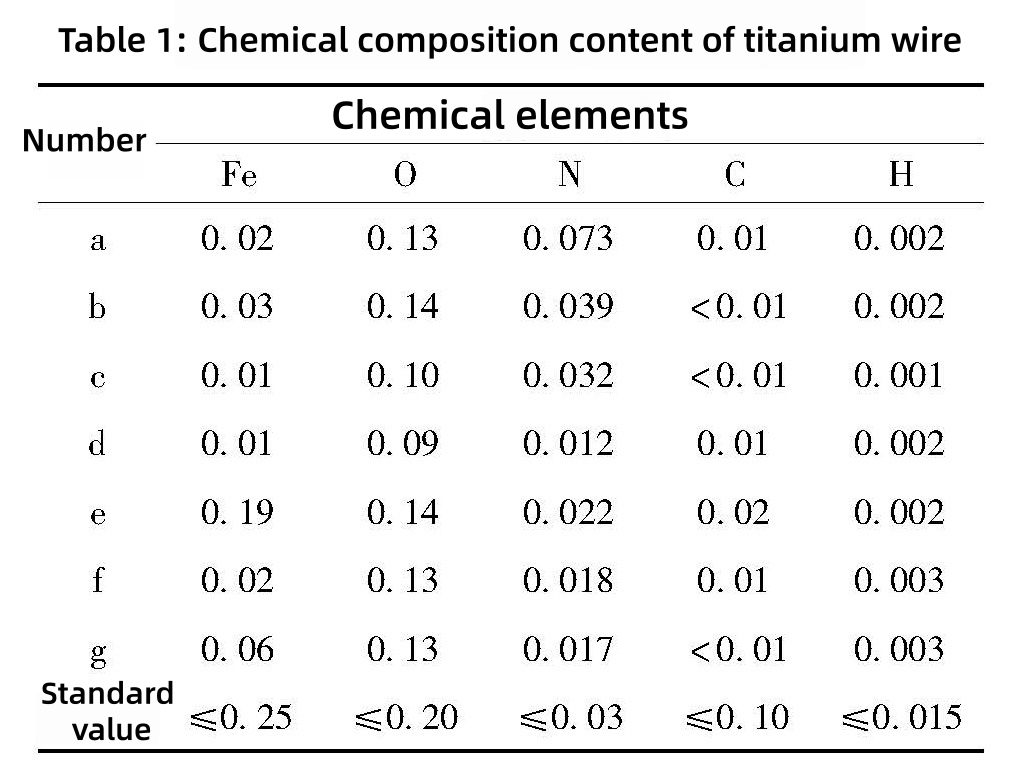
The results of the chemical analysis are shown in Table 1 (not included here for brevity). Notably, the nitrogen content in the a,b,c Titanium Wire batch was found to be significantly above the standard requirements, raising concerns about its impact on ductility and fracture behavior. Elevated levels of nitrogen and other impurity elements such as Fe, Si, O, and H are known to embrittle titanium, adversely affecting its workability and end-use performance.
2. Metallographic Analysis
To investigate the microstructural features contributing to brittle fracture, metallographic analysis was carried out using an Axiovert200MAT microscope. Six failed Titanium Wire samples (a, b, c, d, e, f) were sectioned and analyzed.
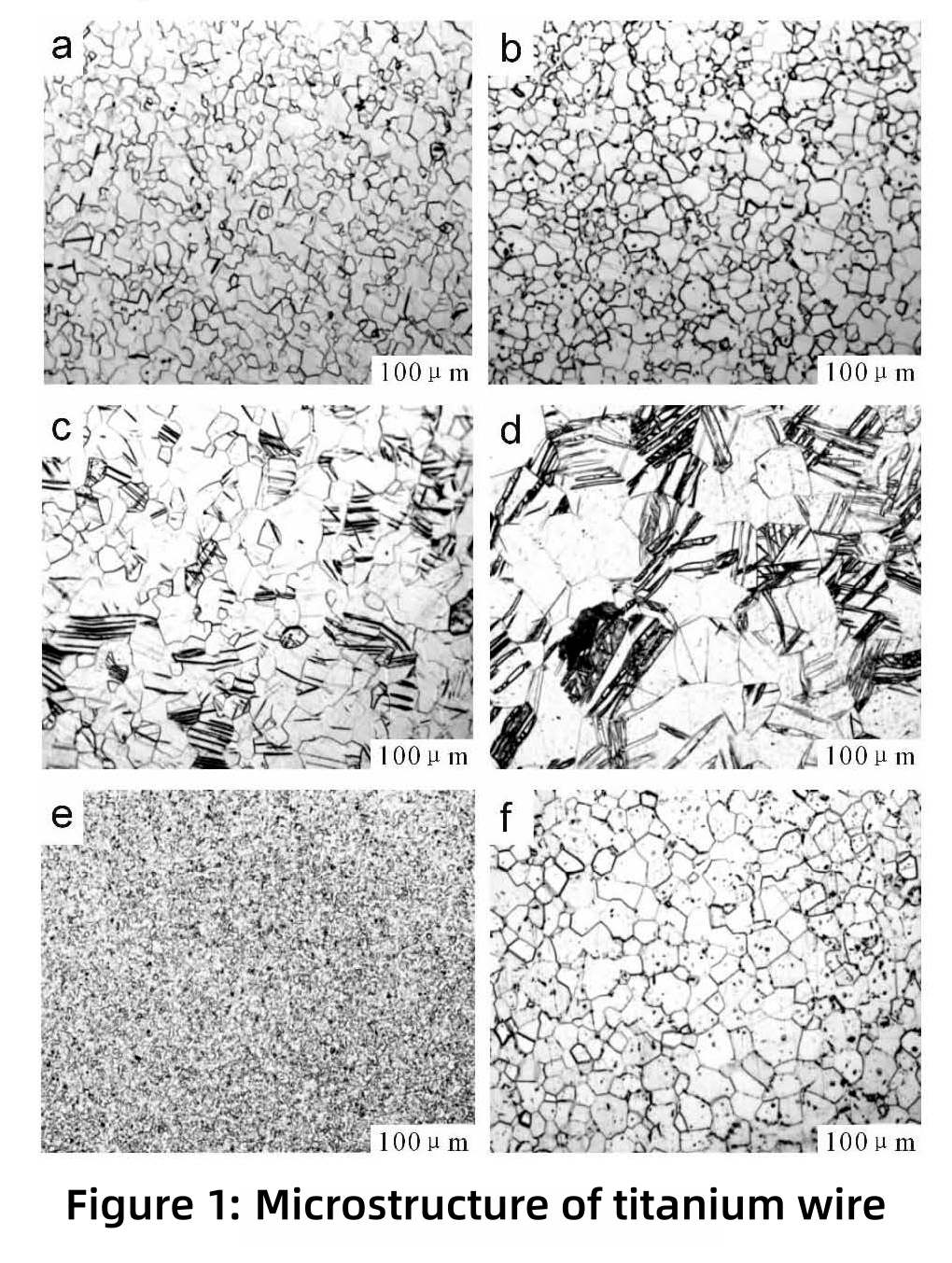
· Figure 1: Shows the microstructure across different positions of the pure titanium wires. The grain size varies significantly, with sample e exhibiting the finest grains (grade 11.0) and sample d the coarsest (grade 5.0). Crystal grain non-uniformity is pronounced, indicating uneven processing or cooling rates.
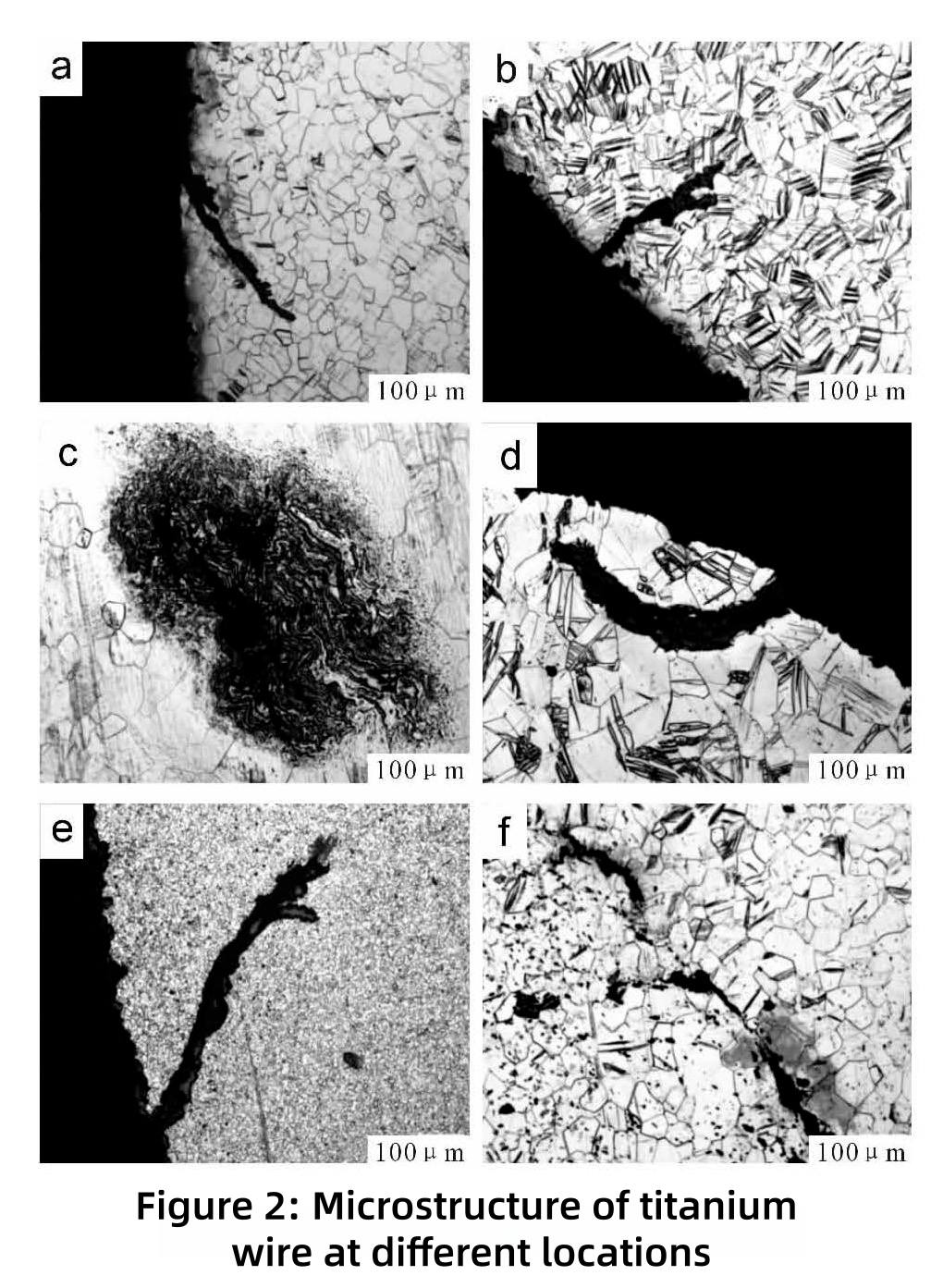
· Figure 2: Reveals micro-defects in the same sample at different positions, including microcracks and voids. The longest crack was detected in sample e.
Interpretation:
The observed microstructural heterogeneity and presence of defects such as cracks and voids are critical factors in the brittle behavior of Titanium Wire. Uneven grain size can localize strain, while microcracks and voids act as stress concentrators, promoting early fracture under tensile load.
3. Mechanical Properties Analysis
Mechanical testing was conducted using a CMT5105 microcomputer-controlled universal testing machine on samples a, b, c, d, and e. (Sample f, with a diameter of only 3.0 mm, could not meet the standard tensile specimen length after removing the surface oxide layer, and g—the leftover titanium forging—was insufficient for testing.)
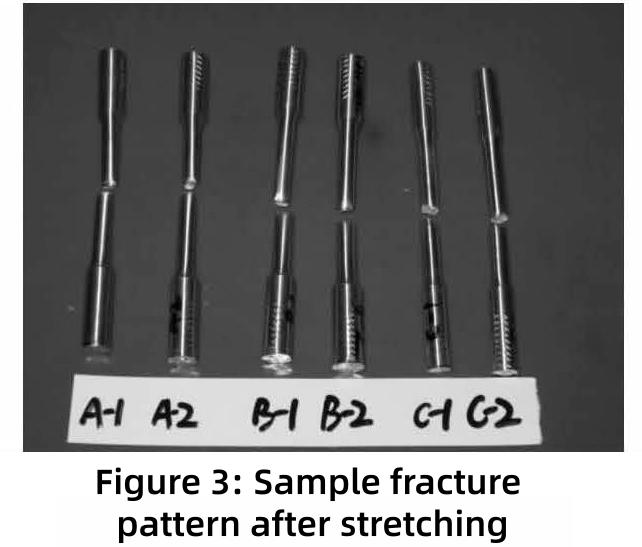
· Figure 3: Shows the macroscopic fracture morphology after tensile testing.
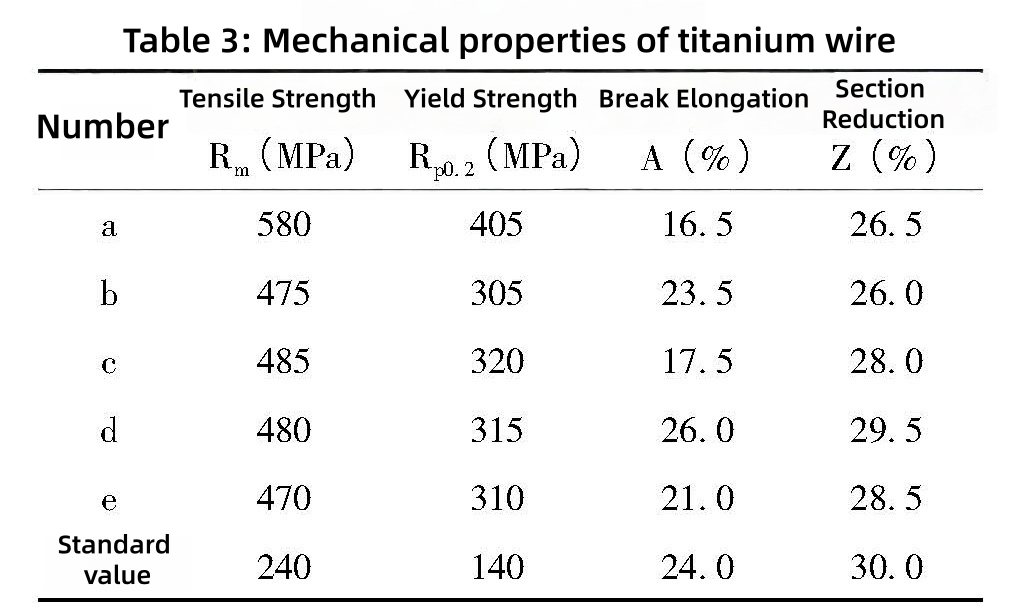
· Table 3: Presents the mechanical property data.
Findings:
· All five tested samples (a–e) exhibited brittle fracture, characterized by a lack of obvious necking before failure, with the fracture site located near the center of each specimen.
· The tensile strength of these Titanium Wire samples met the relevant standards, but both elongation after fracture and area reduction were significantly below required values.
Discussion:
While the strength of the Titanium material was satisfactory, its ductility was severely compromised, consistent with embrittlement caused by high nitrogen content and exacerbated by microstructural defects.
4. Fracture Surface (Fractography) Analysis
Detailed analysis of the fracture surfaces was performed using a JSM-6480 scanning electron microscope (SEM).
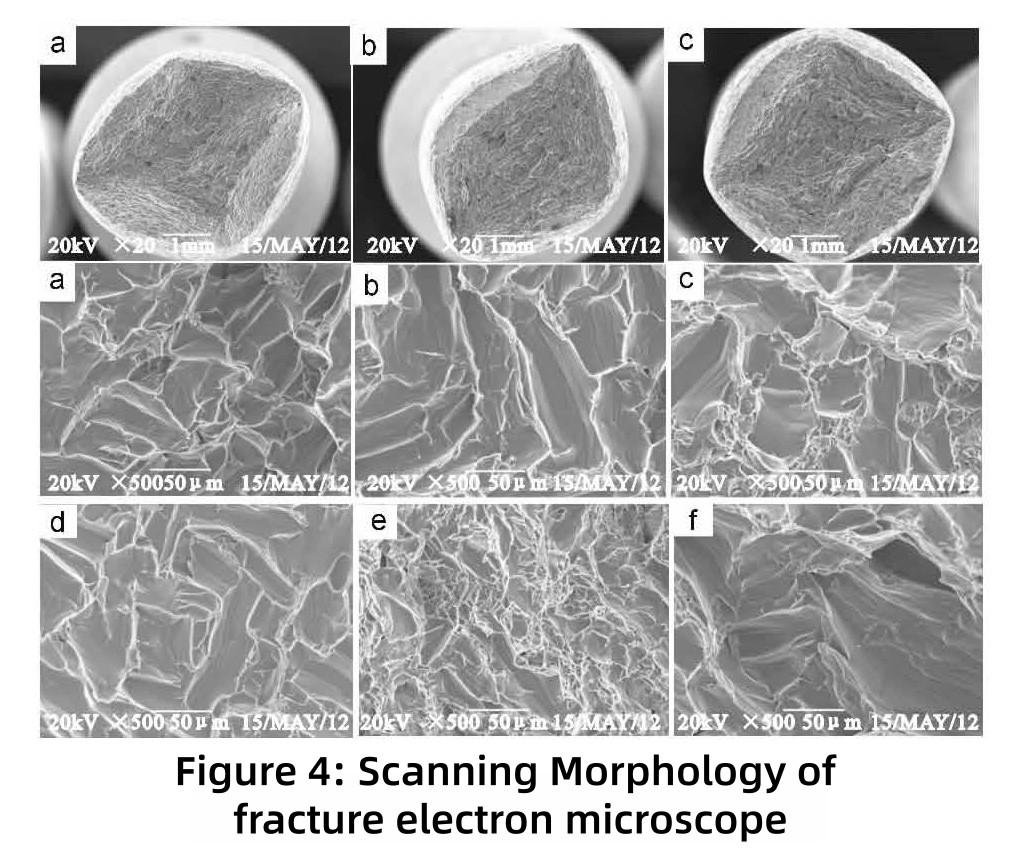
· Figure 4: Displays the fracture morphology of the tensile specimens.
Reslts:
The microstructure of the fracture surfaces confirmed a cleavage fracture mode, with little to no evidence of plastic deformation before rupture. This is a hallmark of brittle fracture, where cracks propagate rapidly along specific crystallographic planes, often at sites of microstructural weakness or impurity concentration.
5. Summary and Root Cause Analysis
The comprehensive analysis above allows us to draw several key conclusions about the causes of brittle fracture in this batch of Titanium Wire and Titanium Forging stock:
Excessive Nitrogen Content:
Chemical analysis confirmed that nitrogen content far exceeded the standard requirements. Nitrogen is a potent interstitial impurity in titanium, greatly reducing its ductility and increasing its susceptibility to brittle fracture.
Microstructural Non-uniformity:
Metallographic examination revealed pronounced grain size variation and the presence of microcracks and voids. Such heterogeneity promotes localized stress concentration and early crack initiation.
Inadequate Mechanical Ductility:
Mechanical tests showed that, while strength requirements were met, the samples failed well short of ductility standards. All exhibited brittle fracture without significant plastic deformation.
Cleavage Fracture Mechanism:
SEM fractography confirmed a cleavage fracture mode, consistent with embrittlement due to high impurity content and microstructural weaknesses.
Sources of Nitrogen Contamination
Understanding the origins of elevated nitrogen is crucial for process control in Titanium material production. Main sources include:
1. Residual Air in Reduction-Distillation Equipment:
During sponge titanium production, any air left in the system can be absorbed by titanium, which is highly reactive to nitrogen.
2. Impurities in Argon Gas:
Trace nitrogen in the protective argon atmosphere can be absorbed into titanium during processing.
3. Gas Leaks During Reduction-Distillation:
Any leaks can introduce atmospheric nitrogen, especially under negative pressure conditions, leading to the formation of easily recognizable yellow titanium nitride on the sponge titanium surface.
4. Surface Contamination:
Surface reactions with atmospheric gases during forging and wire drawing can also introduce nitrogen and oxygen.
Industrial Implications
Impurity content, especially nitrogen, must be strictly controlled during Titanium Forging and wire production. Even slight deviations can significantly affect the workability and in-service reliability of Titanium Wire by reducing its plasticity and increasing its tendency toward brittle fracture.
Conclusion:
The brittle fracture observed in this batch of Titanium Wire is primarily attributed to excessive nitrogen content, which severely impairs ductility, combined with microstructural non-uniformity and the presence of micro-defects. These findings highlight the importance of stringent process control and impurity monitoring during the production of Titanium material to ensure safe and reliable performance in engineering and industrial applications.
Frequently Asked Questions and Answers
1. What Causes Titanium Brittle Fracture? Key Factors Including Microstructural Defects, Stress Concentration, and Environmental Embrittlement Explained
Titanium brittle fracture is caused by high levels of interstitial impurities (especially nitrogen and oxygen), microstructural defects such as non-uniform grain size, microcracks, and voids. Stress concentrations at these defects and exposure to embrittling environments (e.g., high-stress or corrosive conditions) further increase the risk of cleavage fracture.
2. How to Prevent Titanium Brittle Fracture? Material Processing, Heat Treatment, and Stress Relief Strategies for Enhanced Toughness
Strictly control impurity levels during raw material production, optimize forging and heat treatment to achieve uniform, fine-grained microstructures, and employ stress-relief annealing to minimize residual stresses. Use high-purity protective atmospheres and monitor for leaks during processing.
3. What Are the Critical Characteristics of Titanium Brittle Fracture? Identification Methods and Impact on Material Integrity
Brittle fracture in titanium is characterized by a lack of plastic deformation, cleavage fracture surfaces, and abrupt failure. It is identified through mechanical testing (low elongation, no necking), metallographic analysis (grain boundary cracks, voids), and SEM fractography (cleavage facets). Brittle fracture severely compromises material integrity and can lead to catastrophic failure during service.