Titanium wire carburizing surface treatment technology forms a titanium carbide (TiC) hardened layer through the diffusion of carbon atoms, which significantly improves the wear resistance and hardness of the material. As titanium is widely used in demanding applications such as aerospace, medical devices, and chemical processing, enhancing its surface properties has become a key area of research and industrial practice.
While titanium is valued for its strength, corrosion resistance, and lightweight characteristics, its relatively low surface hardness can limit performance in environments with friction or abrasion. The carburizing surface treatment method offers an effective solution, enabling titanium wire to better withstand harsh service conditions. This article explores the principles, process steps, and benefits of titanium wire carburizing.
1. Common Carburizing Methods for Titanium Wire
Carburizing is a thermochemical surface treatment that introduces carbon into the surface of titanium wire, forming a hardened TiC layer. Several techniques are commonly applied, each with its own strengths and challenges.
1.1 Solid Carburizing
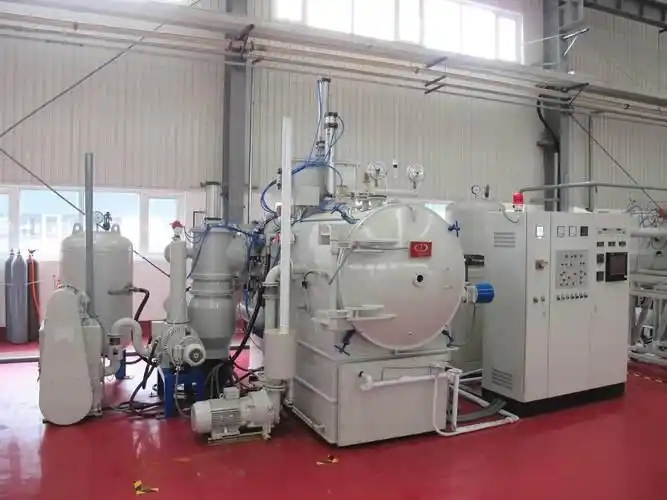
Solid carburizing involves bringing titanium wire into direct contact with carbon powder, followed by heating in a high-temperature vacuum or argon-methane atmosphere. The process is straightforward and cost-effective, making it suitable for bulk production. However, precise control of oxygen levels is critical, as any surface oxide film can hinder carbon diffusion and reduce the effectiveness of the carburizing treatment. The main advantages of this method are its simplicity and low cost, but it is best suited for simple geometries and when high purity can be maintained.
1.2 Gas Carburizing
Gas carburizing uses methane or propane as the carbon source, reacting with the titanium wire in an inert atmosphere. This process generates a dense, firmly adhered TiC layer. The choice of carbon source influences the characteristics of the hardened layer: methane typically produces a harder TiC layer with higher wear resistance, while propane may offer slightly improved toughness but lower hardness. Gas carburizing is widely used for complex shapes and when a uniform, high-quality surface is needed.
1.3 Ion Carburizing
Ion carburizing, also known as plasma carburizing, takes place in a vacuum chamber where an electric field accelerates carbon ions onto the titanium wire surface. This method promotes deep carbon diffusion, making it suitable for intricate or irregularly shaped parts. Ion carburizing requires a carbon-rich source electrode and a dual power supply system, enabling efficient surface hardening even at lower temperatures. The principal advantages are deeper carburized layers and precise control over the process, but the equipment investment is higher.
1.4 Laser Carburizing
Laser carburizing employs high-energy laser beams to locally heat the titanium wire surface while simultaneously introducing a carbon source. This method achieves rapid, selective hardening with excellent precision. It is ideal for applications demanding targeted reinforcement but involves higher equipment costs and greater operational complexity. Laser carburizing is especially valued in high-value industries where component performance and reliability are paramount.
2. Key Process Parameters
The success of titanium wire carburizing depends on careful management of several critical process parameters.
2.1 Temperature Control
The optimal carburizing temperature for titanium wire is typically in the range of 950–1020°C. Excessive temperatures can cause the TiC layer to become brittle and prone to cracking, while insufficient temperatures result in poor carbon diffusion and an ineffective hardened layer. Accurate temperature control is therefore essential to balance hardness with toughness.
2.2 Gas Management
Carburizing must be conducted in an inert (argon) or vacuum environment to prevent oxygen from reacting with the titanium surface. Oxygen can form a passive oxide film that blocks carbon atom penetration, significantly reducing the effectiveness of the treatment. Maintaining low oxygen partial pressure is necessary to ensure consistent and deep carbon infusion.
2.3 Carburizing Duration
The typical carburizing time ranges from 2 to 6 hours, with the resulting TiC layer thickness controlled between 50 and 150 μm. Overly thick layers are more likely to delaminate or crack under mechanical stress, so industrial applications usually recommend a layer thickness of 100 μm or less to balance performance and reliability.
3. Treatment Effects and Limitations
Carburizing offers substantial improvements in the surface properties of titanium wire, though it is not without challenges.
3.1 Surface Hardness
The TiC layer formed on carburized titanium wire can achieve hardness values between 2700 and 8500 MPa, representing a 3–5 fold increase in wear resistance compared to untreated titanium. This dramatic improvement extends the service life of components exposed to abrasive or sliding contact conditions.
3.2 Layer Thickness Characteristics
Carburized layers on titanium wire are generally deeper than those produced by nitriding processes, which is advantageous for applications requiring prolonged wear resistance. However, as the TiC layer becomes thicker, its brittleness increases, potentially compromising toughness and leading to premature failure if not properly managed.
3.3 Hydrogen Residue Risk
Gas carburizing can introduce hydrogen into the titanium wire, which may cause embrittlement or delayed cracking. To mitigate this, a post-carburizing vacuum annealing step is often performed to remove residual hydrogen and stabilize the microstructure.
4. Industrial Considerations and Precautions
Implementing titanium wire carburizing in industrial settings requires attention to a number of technical details.
4.1 Oxygen Content Monitoring
Maintaining oxygen partial pressure below 10⁻³ Pa is critical. Any increase can result in the formation of an oxide barrier, which severely impedes carbon diffusion and reduces the effectiveness of the carburizing process.
4.2 Layer Thickness Optimization
For most industrial applications, a carburized layer thickness of 100 μm or less is recommended. This provides a good compromise between improved hardness and reliable adhesion, minimizing the risk of delamination or cracking during use.
4.3 Post-Treatment Requirements
Carburized titanium wire should undergo controlled cooling or quenching to stabilize the TiC layer and relieve thermal stresses. Improper cooling can lead to the development of cracks or other defects that compromise performance, so attention to post-treatment protocols is essential.
5. Application Prospects of Carburized Titanium Wire
Through the use of advanced carburizing methods and careful process optimization, titanium wire can achieve a unique combination of high strength, hardness, and wear resistance. This makes carburized titanium wire highly valuable in aerospace, power generation, medical device, and heavy-duty industrial applications where long-lasting performance under extreme friction or corrosive environments is required. As surface engineering technologies continue to evolve, the use of carburized titanium wire will likely expand into more fields demanding exceptional durability and reliability.
Frequently Asked Questions and Answers
1. What are the most effective carburizing methods for titanium wire, and how do they differ in enhancing surface hardness and wear resistance of the treated titanium wire?
The most effective methods for carburizing titanium wire include solid carburizing, gas carburizing, ion (plasma) carburizing, and laser carburizing. Gas and ion carburizing are preferred for producing dense, uniform, and adherent TiC layers, with ion carburizing allowing for deeper carbon diffusion and better control, especially on complex shapes. Gas carburizing with methane produces the hardest layers, while laser carburizing offers high precision for localized treatment. All methods significantly improve surface hardness and wear resistance, but their suitability depends on required layer depth, component geometry, and production scale.
2. How do key carburizing parameters (e.g., temperature, holding time, carburizing medium type) influence the formation of the carburized layer and mechanical performance (e.g., tensile strength, fatigue resistance) of titanium wire, and what analysis techniques are used to evaluate these effects?
Carburizing temperature and holding time dictate the thickness and quality of the TiC layer—higher temperatures and longer times increase layer depth but may also increase brittleness. The choice of carburizing medium (solid, gas, ion, or laser) affects the uniformity, hardness, and wear resistance. Mechanical performance, such as tensile and fatigue strength, depends on achieving an optimal balance between hardness and toughness. Evaluation techniques include microhardness testing, scanning electron microscopy (SEM), X-ray diffraction (XRD), and surface profilometry to measure layer thickness, uniformity, and microstructural integrity.
3. What challenges arise in titanium wire carburizing due to titanium’s high chemical reactivity, and how can process optimization (e.g., pre-treatment, atmosphere control) improve carburizing uniformity and overall performance of the carburized titanium wire?
Titanium’s high chemical reactivity leads to rapid oxide formation, which blocks carbon diffusion. Pre-treatment to remove surface oxides and strict atmosphere control (ultra-low oxygen or vacuum) are critical for uniform carburizing. Optimizing process parameters—such as layer thickness, carburizing medium, and post-treatment cooling—helps achieve a balance between hardness and toughness, reduces hydrogen embrittlement risk, and ensures reliable performance in demanding applications.