Titanium alloy welding wire, a high-performance welding material, is mainly composed of titanium alloy and welding flux and is used with inert shielding (GTAW/TIG, PAW, laser) and thorough back purging to prevent oxygen, nitrogen, and hydrogen pickup.
1. How to choose the right titanium alloy welding wire
1.1 Composition matching
· Match the filler to the base material to maintain joint strength, ductility, and Corrosion resistance. For α+β titanium alloys like Ti-6Al-4V, use corresponding Ti-6Al-4V filler to avoid harmful phase imbalance and to preserve fatigue performance. For commercially pure (CP) titanium (Grades 1–4), choose CP fillers of the appropriate grade to maintain ductility and corrosion behavior.
· Consider service conditions. If the component faces elevated temperatures, select alloys with better creep resistance (e.g., near-α or stabilized variants) rather than standard α+β fillers. In cryogenic or impact-prone service, fillers known for toughness (e.g., Ti-5Al-2.5Fe) can be advantageous.
· Avoid over-alloying for corrosion service. Excessive aluminum or beta stabilizers can reduce corrosion resistance in certain media. When in doubt, follow AWS A5.16 or ISO 24034 filler classifications and the base alloy manufacturer’s guidance.
1.2 Process requirements
· Wire diameter: Select diameter to suit heat input and section thickness. Thick sections or high-deposition passes use larger diameters (e.g., 2.4–3.2 mm) for GTAW/PAW; thin-gauge sheet and root passes often favor 1.0–1.6 mm for better puddle control. For laser welding with filler wire, small diameters (0.8–1.2 mm) support precise feeding and narrow beads.
· Welding process: Match the filler and condition to the process.
o GTAW/TIG and PAW: Standard solid wire with tight diameter tolerance and very low interstitials. Use trailing shields and back purging for inside surfaces.
o GMAW: Requires spooled wire with excellent surface cleanliness and consistent cast/helix to ensure stable feed and arc.
o Laser welding with filler wire: Demands ultra-clean wire, small diameters, and exact straightness; synergize travel speed with wire feed to prevent underfill.
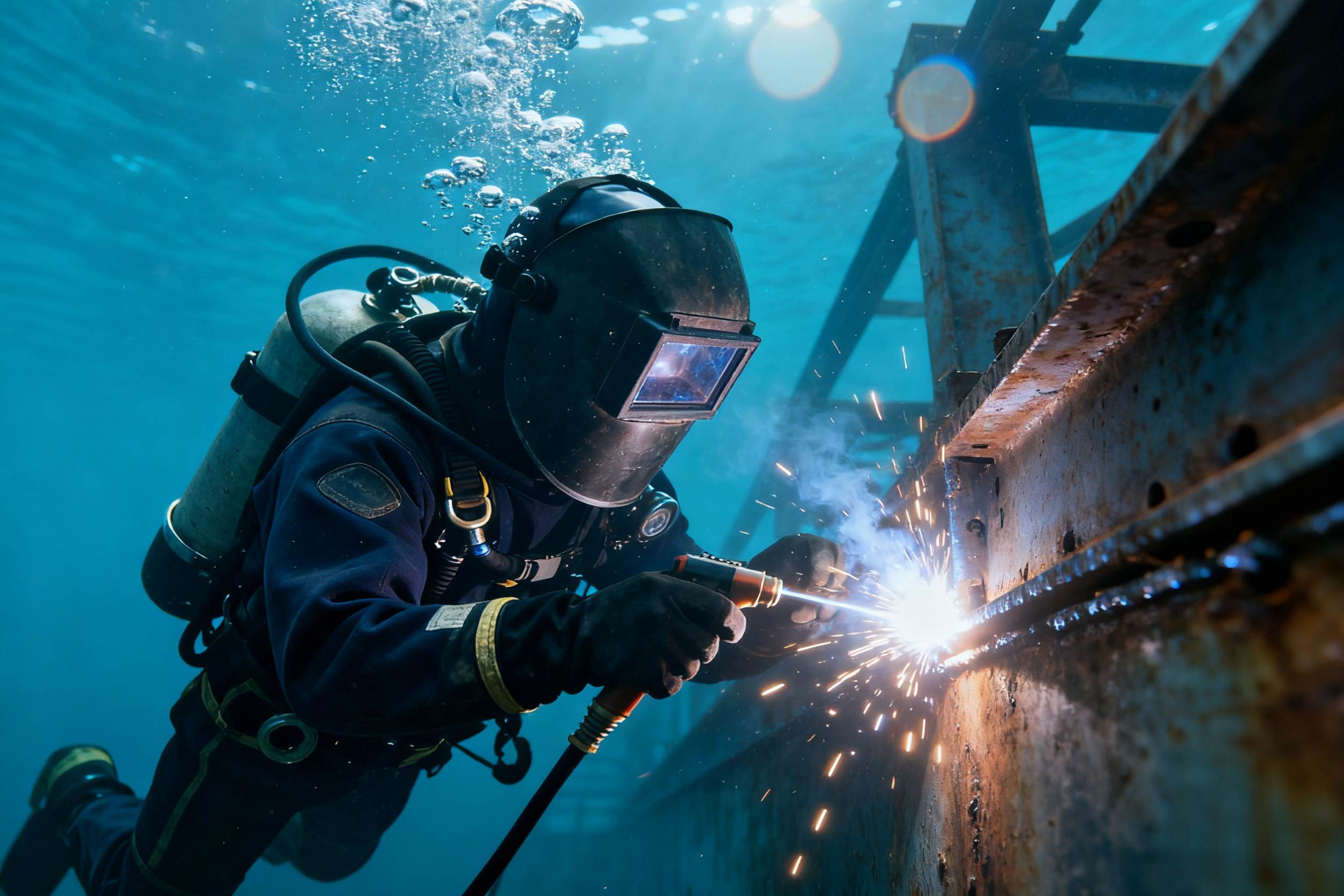
o Underwater welding: True wet underwater welding of titanium is rarely recommended due to hydrogen embrittlement risks; when necessary, employ habitat (dry) welding or hyperbaric chambers with inert atmospheres. Choose wire qualified for such environments and rigorously control shielding and drying.
· Joint design and beveling: Proper Bevel processing and cleaning of welding area are essential. Titanium forms brittle oxides; prepare a uniform bevel, remove contaminants mechanically, and degrease with non-chlorinated solvents before welding.
1.3 Quality control
· Interstitial control: Specify low O, N, H levels. Elevated interstitials embrittle weld metal and heat-affected zones, reducing impact toughness and elongation. Certified analysis per heat/lot should list O, N, H, C, Fe, and Al (for alloyed grades).
· Surface quality: The wire must be bright, free of discoloration, oxides, drawing lubricants, and particulate. Any residue promotes porosity and arc instability.
· Dimensional tolerance: Tight diameter tolerance (typically ±0.01–0.02 mm) and consistent cast/helix reduce wire wander, improve arc stability, and minimize spatter.
· Packaging and dryness: Vacuum-sealed or inert-packed coils and cut lengths prevent moisture and contamination. Desiccated storage and first-in-first-out usage maintain consistency.
· Traceability: Require mill certs, lot traceability, and conformance to AWS/ISO specifications to ensure reproducibility across projects.
1.4 Hardness selection
· Align wire hardness with application needs. Excessively hard weld metal can reduce toughness and increase crack sensitivity; too soft can limit wear resistance or joint strength.
· For structural aerospace and automotive, balanced α+β microstructures (e.g., Ti-6Al-4V) yield moderate hardness with good fatigue strength. For parts exposed to erosion or mild wear, slightly higher hardness may be acceptable, but verify fracture toughness and ductility.
· Manage hardness via heat input and cooling rate as well as filler choice; post-weld stress relief or aging is sometimes applied where permitted by design.
2. Advantages of titanium alloy welding wire
2.1 Strong corrosion resistance
· Titanium’s passive TiO2 film self-heals and maintains integrity in seawater, many chlorides, most organic acids, and oxidizing environments. Proper composition matching ensures the weld and HAZ retain Corrosion resistance comparable to the base metal. This is crucial for offshore, desalination, and chemical-processing equipment operating for decades.
2.2 High strength
· Titanium alloys deliver high specific strength. Properly executed welds can reach tensile strengths that approach the base alloy, sustaining significant static loads and resisting fatigue under cyclic service. With the right filler and shielding, joints achieve low-porosity, ductile weld metal capable of withstanding shocks and vibrations.
2.3 Low density and weight savings
· With roughly 56% the density of steel, titanium enables major mass reduction. In aerospace and motorsport, this translates to improved payload, efficiency, and dynamic response. Lighter components also reduce inertial loads, extending service life of surrounding parts.
2.4 Good processability
· High-quality titanium welding wire feeds smoothly, forms consistent beads, and supports precise control in GTAW/PAW/laser processes. Post-weld finishing such as machining, grinding, and contouring is straightforward when interstitial levels are controlled and heat input is optimized. Clean welds minimize rework and facilitate downstream operations such as NDT and surface treatments.
3. Application scenarios of titanium alloy welding wire
3.1 Aerospace industry
· Used in airframes, pylons, compressor cases, ducting, and hydraulic lines, titanium welding wire ensures structural integrity under thermal cycling, vibration, and high aerodynamic loads. Weight reduction and Corrosion resistance are decisive for aircraft and launch vehicles operating from sea level to high altitudes and reentry conditions, where joints must remain reliable across wide temperature and pressure ranges.
3.2 Automotive and motorsport
· Applied to exhaust systems, suspension links, roll structures, and heat exchangers, titanium filler helps reduce mass while resisting heat, road salts, and vibration. In high-performance applications, laser welding with filler wire enables narrow, precise joints, and controlled microstructures for superior fatigue life.
3.3 Chemical processing and desalination
· Reactors, heat exchangers, piping, and condenser bundles benefit from titanium’s immunity to chloride attack and many oxidizing media. When components require long service with minimal downtime, composition-matched fillers preserve Corrosion resistance across the entire weldment. Bevel processing and cleaning of welding area, coupled with stringent shielding and back purging, ensure clean, defect-free joints.
4. How to distinguish good from poor titanium welding wire
4.1 Sound check
· Roll the wire gently in your palm and listen. A crisp, ringing sound suggests a dry, clean wire; a dull sound can indicate moisture uptake or surface contamination. While qualitative, this quick check often aligns with feed stability and arc behavior observed at the workstation.
4.2 Short-circuit test
· Briefly short the wire in the welding circuit for a few seconds, then examine the coating or surface for granular specks or blisters. The presence of such spots suggests moisture or contamination that can generate porosity. If detected, bake out the wire per manufacturer recommendations or replace it with properly stored material.
Additional cues
· Visual inspection: Look for discoloration, streaks, or residue—any sign of oxide or lubricant suggests inadequate cleaning.
· Feed test: In GMAW or laser wire feeding systems, confirm smooth, uninterrupted feed at the intended speed; jerky feed indicates cast/helix or diameter issues.
· Documentation: Verify certificates of analysis, mechanical properties, and specification compliance for every lot.
Essential practices: Bevel processing and cleaning of welding area
· Prepare a uniform bevel appropriate to the joint configuration, maintaining root face and gap tolerances to support complete fusion without excessive heat input.
· Mechanically remove oxides and surface layers, then degrease with non-chlorinated solvents. Use dedicated stainless brushes for titanium only.
· Implement inert gas shielding with trailing shields and back purging to keep metal above 400–425°C isolated from air. For enclosed geometries, use dams or purge chambers to maintain low oxygen levels (<50 ppm, often <20 ppm for critical work).
Special processes: Underwater welding and laser welding with filler wire
· Underwater welding: Wet welding of titanium is generally avoided due to hydrogen embrittlement risk. Where subsea repair is unavoidable, prefer dry habitat/hyperbaric welding with inert atmospheres, controlled humidity, and rigorous purge management. Validate procedures by procedure qualification records (PQRs) at the intended pressure and temperature.
· Laser welding with filler wire: Combine narrow, deep penetration of laser energy with precise wire addition to control bead shape, fill gaps, and tailor microstructure. Success hinges on ultra-clean wire, accurate wire-to-beam alignment, stable feeding, and synchronized parameters (travel speed, wire feed rate, laser power) to avoid underfill, porosity, or solidification cracking.
Process parameters and post-weld considerations
· Heat input: Keep moderate to limit grain coarsening and α-case formation. Use interpass temperature controls and allow adequate cooling between passes.
· Shielding: High-purity argon or helium (or mixes) with flow rates set for coverage without turbulence. Trailing shields should protect hot metal until its color disappears.
· Post-weld treatment: Remove any α-case by light machining or chemical pickling where required. Non-destructive testing (dye penetrant, radiography, UT) validates weld quality; for critical service, consider stress relief if specified by design.
Frequently Asked Questions and Answers
Q1: In which critical industrial applications is titanium welding wire irreplaceable, and what unique properties make it the preferred choice for joining titanium components in these scenarios?
A1: It is indispensable in aerospace structures and engines, offshore and subsea hardware, and chemical-processing and desalination equipment. The combination of high specific strength, outstanding Corrosion resistance via a stable passive film, and low density enables durable, lightweight joints that survive chloride-rich seawater, oxidizing chemicals, and severe cyclic loads—conditions where alternative alloys either corrode, add excessive weight, or lack fatigue endurance.
Q2: How do the applications of commercially pure titanium welding wire differ from those of alloyed titanium welding wire (e.g., Ti-6Al-4V), particularly in terms of required joint strength, corrosion resistance, or temperature tolerance?
A2: CP titanium fillers (Grades 1–4) are chosen for maximum ductility and corrosion performance in mild-to-moderate strength applications such as condenser tubes and process piping. Alloyed fillers like Ti-6Al-4V are used where higher joint strength and fatigue resistance are required—airframes, brackets, or performance automotive parts. For elevated temperatures or creep resistance, near-α or stabilized alloys outperform CP and standard α+β grades; however, they may trade off some corrosion behavior depending on the medium.
Q3: What technical considerations are essential when applying titanium welding wire in extreme environments (e.g., deep-sea, high-temperature, or chemical-exposed settings), and how do these impact welding process parameters or pre/post-weld treatments?
A3: Key factors include stringent oxygen control using trailing and purge shielding, careful heat input management to prevent α-case and grain coarsening, and exact composition matching to maintain Corrosion resistance and toughness. In deep-sea or hyperbaric work, habitat welding with inert atmospheres is preferred; procedures must be qualified at pressure. For high-temperature service, select fillers with improved creep resistance and consider post-weld heat treatment or α-case removal. In aggressive chemicals, avoid over-alloying that could impair corrosion behavior and verify pickling/passivation routines to restore the passive film after.