1. Understanding Titanium Density
2. Formula for Calculating the Weight of Titanium Bars
2.1 Weight Formula for Titanium Bars
2.2 Explanation of the Formula
3. Formula for Calculating the Weight of Titanium Tubes
3.1 Weight Formula for Titanium Tubes
3.2 Explanation of the Formula
5. Practical Applications of Titanium Weight Calculations
Easily calculate the weight of pure titanium and titanium alloy products
When working with titanium products, such as titanium sheets, bars, tubes, wires, and strips, or their alloyed counterparts, it is essential to understand that the density of titanium is consistent across these forms. The density of pure titanium is 4.51 g/cm³, and this value remains the same for all titanium and titanium alloy products.
This article explains the formulas for calculating the weight of pure titanium tubes and other titanium products, providing a clear understanding for engineers, designers, and manufacturers.
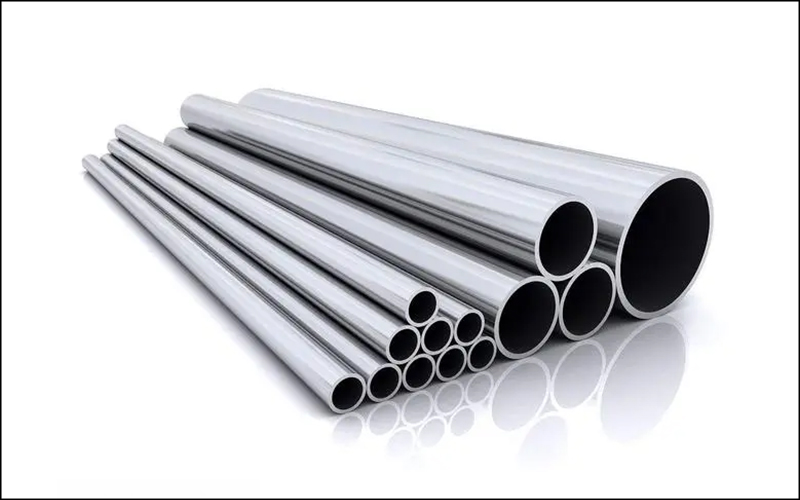
1. Understanding Titanium Density
The density of titanium plays a vital role in weight calculations.
Density of Titanium (ρ): 4.51 g/cm³, or 4510 kg/m³.
This constant applies to all titanium products, including:
Pure Titanium: Sheets, bars, tubes, wires, and strips.
Titanium Alloys: Plates, rods, pipes, and wires.
2. Formula for Calculating the Weight of Titanium Bars
The weight of a pure titanium rod or titanium alloy bar can be calculated using the formula:
2.1Weight Formula for Titanium Bars
Weight (kg) = Radius (mm) * Radius (mm) *π * Length (mm) * Density ÷ 1,000,000
2.2Explanation of the Formula:
Radius (mm): The radius of the bar in millimeters.
Length (mm): The length of the bar in millimeters.
Density: The density of titanium, which is 4.51 g/cm³.
π (Pi): A mathematical constant, approximately 3.14.
1,000,000: A conversion factor to convert cubic millimeters to kilograms.
2.3Example Calculation:
For a pure titanium bar with:
Radius (r): 10 mm
Length (L): 1000 mm
The calculation is:Weight = 10* 10* 3.14* 1000* 4.51 ÷ 1,000,000 = 1.41514 kg
Thus, the titanium bar weighs approximately 1.42 kg.
3. Formula for Calculating the Weight of Titanium Tubes
The weight of a titanium tube (pure or alloyed) requires a slightly different formula, as it includes both the outer diameter and wall thickness:
3.1 Weight Formula for Titanium Tubes
Weight (kg) = (Outer Diameter - Wall Thickness)* Wall Thickness* 0.014* Length (m)
3.2 Explanation of the Formula:
Outer Diameter (mm): The external diameter of the titanium tube.
Wall Thickness (mm): The thickness of the tube wall.
Length (m): The length of the tube in meters.
0.014: A constant derived from the density of titanium (4.51 g/cm³) and the formula for cylindrical volumes.
For a titanium tube with:
Outer Diameter (OD): 50 mm
Wall Thickness (WT): 5 mm
Length (L): 2 meters
The calculation is:
Weight = (50 - 5)* 5* 0.014* 2 = 45* 5* 0.014* 2 = 6.3 kg
Thus, the titanium tube weighs approximately 6.3 kg.
4. Key Points to Remember
The density of both pure titanium and titanium alloys is 4.51 g/cm³, regardless of the form.
Always use consistent units for length (mm or m) and ensure the correct conversion factor is applied.
4.3 Precision in Measurements:
Accurate measurements of the outer diameter, wall thickness, and length are crucial for precise weight calculations.
These formulas can be applied to various titanium products, including bars, tubes, pipes, and rods.
5. Practical Applications of Titanium Weight Calculations
Understanding the weight of titanium components is vital for industries such as:
Aerospace: Calculating the weight of titanium structural components used in aircraft and spacecraft.
Medical: Determining the weight of titanium implants and prosthetics.
Marine: Estimating the weight of titanium pipes and tubes for shipbuilding and desalination systems.
Manufacturing: Ensuring accurate material usage and cost estimation for titanium products.
Easily calculate the weight of pure titanium and titanium alloy products.
Whether working with bars or tubes, these calculations ensure precision in material estimation, cost calculation, and design.
By understanding the density of titanium and applying the appropriate formula, engineers and manufacturers can confidently work with titanium materials across various industries.
Need help with titanium products or weight calculations? Contact us today for expert guidance and high-quality titanium solutions.