1. Why Is Single-Sheet Rolling Challenging for Titanium Alloys?
1.1 Low-Temperature Plasticity and Work Hardening
1.3 Preheating the Forging Dies
2. Mold Preheating Systems for Titanium Alloy Forging
2.1 Detachable Preheating Systems
2.2 Integrated Heating Systems
3. Challenges in Producing GR5 Titanium Sheets
3.1 Material Loss and Low Yield
4. Advanced Techniques for Producing Titanium Alloy Sheets
4.1 Cladding and Rolling Process
4.3 Benefits of Cladding and Rolling
5. Success in Producing Ultra-Thin GR5 Titanium Sheets
6. Advantages of the Cladding and Rolling Process
6.1 Efficiency and Cost-Effectiveness
The cladding and rolling process has revolutionized the production of titanium alloy sheets
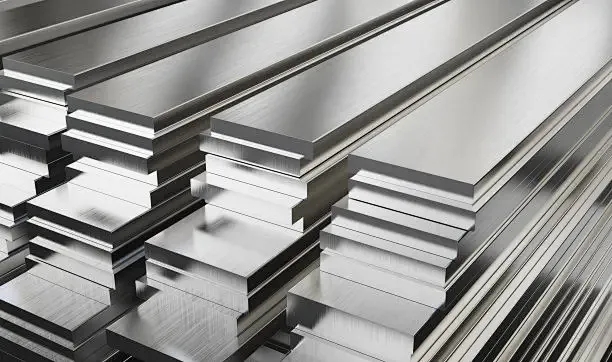
Titanium sheets, with their excellent room-temperature and high-temperature mechanical properties, superior fatigue resistance, and crack propagation resistance, have become a critical material in the aerospace, defense, and aviation industries. They are widely used in the production of components such as pressure vessels for spacecraft and missiles, rocket engine casings, and aircraft skins, ribs, and webs.
As demand for titanium alloy sheets continues to grow globally, driven by the rapid expansion of the aerospace industry and advancements in superplastic forming and diffusion bonding technologies, the need for efficient production techniques is greater than ever. This article explores why cladding and rolling processes are essential for the production of titanium sheets, especially thin titanium alloy sheets such as GR5 (Ti-6Al-4V).
1. Why Is Single-Sheet Rolling Challenging for Titanium Alloys?
1.1 Low-Temperature Plasticity and Work Hardening
Titanium alloys exhibit poor plasticity at low temperatures, making cold deformation extremely difficult. Additionally, they experience significant work hardening during processing, which limits the extent of deformation in each rolling pass.
To ensure the success of the rolling process and reduce issues like temperature drops and surface chilling during forging:
1.3 Preheating the Forging Dies:
Titanium alloys require preheated molds to ensure smooth metal flow and to avoid defects like cracks that result from uneven cooling.
Without preheating, the titanium alloy may fail to fill the mold properly, leading to structural defects.
2. Mold Preheating Systems for Titanium Alloy Forging
To address the challenges of forging titanium alloys, specialized mold preheating systems are used:
2.1 Detachable Preheating Systems
These systems typically use gas heaters to gradually heat the molds to the required temperature before they are assembled onto the forging equipment.
2.2 Integrated Heating Systems
These systems are mounted directly onto the press and use induction heating or resistance heating to maintain consistent mold temperatures during the forging process.
By ensuring that the molds are preheated to the appropriate temperature range, these systems reduce the risk of defects and improve the overall quality of the rolled titanium sheets.
3. Challenges in Producing GR5 Titanium Sheets
The production of GR5 titanium alloy sheets (a widely used titanium grade) presents significant challenges due to the material's unique properties and the inefficiencies of traditional production methods:
3.1 Material Loss and Low Yield
Processes like alkaline pickling and grinding result in material losses of up to 30%, leaving a finished product yield of only 35%.
These processes are time-consuming and contribute to longer production cycles.
The deformation rate during cold rolling is limited to 25% per pass, requiring multiple cycles of cold rolling, intermediate annealing, and pickling.
This increases production time and introduces additional risks of defects.
3.3 Common Defects
During traditional rolling processes, titanium sheets are prone to:
Cracks.
Edge fractures.
Delamination.
Indentations caused by uneven rolling.
These challenges underscore the need for advanced production techniques, such as cladding and rolling, to improve the efficiency and quality of titanium sheet production.
4. Advanced Techniques for Producing Titanium Alloy Sheets
To overcome the limitations of traditional methods, several advanced techniques have been developed for producing titanium alloy thin sheets:
4.1 Cladding and Rolling Process
The cladding and rolling process has proven to be a highly effective method for producing thin titanium alloy sheets.
4.2 How It Works:
4.2.1Multiple titanium sheets are stacked and cladded with protective materials (e.g., stainless steel) to form a composite billet.
4.2.2The composite billet undergoes cross rolling and β-phase heat treatment, which enhances deformation uniformity and reduces defects.
4.2.3After rolling, the cladding material is removed, leaving high-quality titanium sheets.
4.3 Benefits of Cladding and Rolling:
Reduced Surface Defects: The cladding protects the titanium during rolling, minimizing issues like delamination and indentations.
Higher Deformation Rates: The cladded composite allows for greater deformation in each rolling pass, reducing the need for intermediate annealing.
Improved Yield: Material losses are significantly reduced, resulting in a higher overall yield.
4.4.1Cross Rolling and β-Phase Heat Treatment:
Improves the mechanical properties of titanium sheets and reduces the risk of defects.
4.4.2Atmosphere-Controlled Rolling:
Protects the titanium from oxidation and hydrogen absorption during rolling.
4.4.3Gravity Creep Correction:
Ensures flatness and dimensional accuracy, particularly for ultra-thin sheets.
4.4.4Gas-Protected Cooling Technology:
Prevents contamination and ensures controlled cooling for optimal mechanical properties.
Conduct thorough metallurgical analysis, SEM testing, and microhardness testing to identify and assess defects.
5. Success in Producing Ultra-Thin GR5 Titanium Sheets
Recent experiments using the cladding and rolling process have demonstrated significant success in producing ultra-thin GR5 titanium sheets:
Thickness: Sheets as thin as 0.6mm have been successfully produced.
Mass Production: The cladding and rolling process is now being used for large-scale production, meeting the demands of aerospace and defense industries.
Global Adoption:
Leading companies such as AVSMA-VSMPO (Russia), RMI Titanium Company (USA), and NKK Corporation (Japan) have adopted this process for producing high-quality titanium alloy sheets.
6. Advantages of the Cladding and Rolling Process
6.1 Efficiency and Cost-Effectiveness
Reduces material losses and improves yield, making the process more cost-effective.
Produces titanium sheets with fewer defects and greater uniformity in thickness and mechanical properties.
Reduces the number of intermediate steps (e.g., annealing and pickling), shortening the production timeline.
Enables manufacturers to produce high-quality titanium sheets that meet the stringent requirements of aerospace and defense industries.
The cladding and rolling process has revolutionized the production of titanium alloy sheets
Addressing the challenges of traditional methods and enabling the efficient production of high-quality thin sheets like GR5. With its superior efficiency, reduced material losses, and improved product quality, this process is now the standard for meeting the growing global demand for titanium sheets in aerospace, defense, and other high-performance industries.
Looking for premium titanium sheets? Contact us today to learn more about our advanced production techniques and high-quality titanium alloy products.