If there's one metal with the widest dual-use (military and civilian) applications, it's the 22nd element on the periodic table. From the reinforced hulls of deep-sea submarines and the fuselage of supersonic fighter jets to the biocompatible joint replacements in modern medicine, titanium is the material of choice when failure is not an option. Often celebrated for its unparalleled strength-to-weight ratio and near-perfect resistance to corrosion, Titanium is the most potent transition metal on Earth. However, the creation of this "space-age" metal is not a simple matter of mining and melting; it is a complex, perilous feat of chemical engineering that pushes the boundaries of industrial metallurgy.
Unlike iron or aluminum, titanium does not surrender its metallic form easily. The extraction process is a battle against the element's high affinity for oxygen, requiring an environment that is hostile to human life. The manufacturing floor is a place of extreme caution; to obtain it, refiners wear highly toxic masks and heavy protective suits, shielding themselves from lethal fumes. The primary method of extraction, known as the Kroll process, relies on a high-temperature separation furnace with toxic chlorine gas at 900 degrees Celsius.
Inside this inferno, a violent chemical transformation takes place. The process involves converting the raw ore into a liquid chloride, and then reducing titanium tetrachloride with magnesium metal. This reaction separates the pure metal from its compounds, leaving behind a porous "sponge" of titanium and a byproduct of magnesium chloride. It is a profound industrial paradox that a metal prized for its inertness and safety in the human body is born from such a volatile, toxic cauldron. This article will delve into the rigorous technical details of this manufacturing cycle, exploring how engineers tame these hazardous forces to produce the metal that powers our modern world.
1. The Excavation: Unearthing the Giants
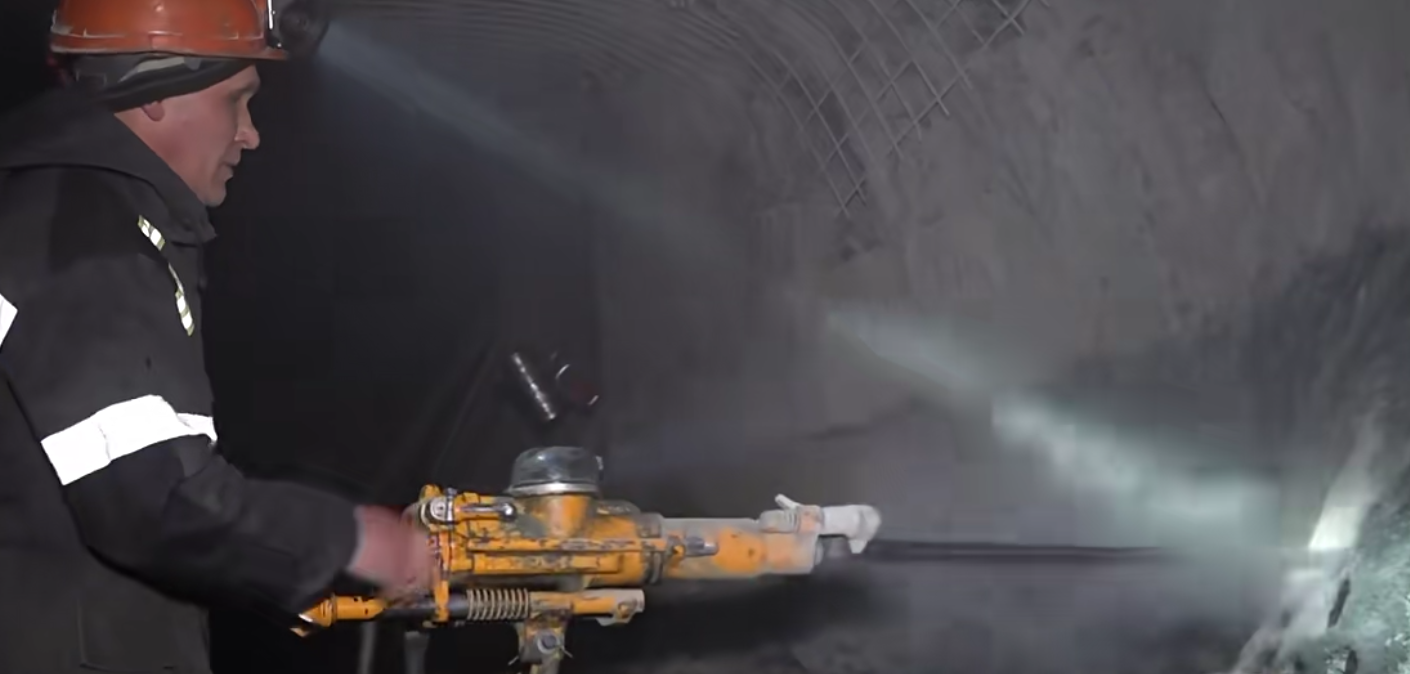
The journey of titanium manufacturing begins deep within the earth's crust. While titanium is the ninth most abundant element on the planet, it is rarely found in concentrated deposits suitable for easy extraction. The primary source is ilmenite (titanium-iron oxide), a heavy, dark mineral that often hides in ancient beach sands or hard rock deposits.
Miners descend into open pits or dredge vast mineral ponds to extract the raw ore. However, ilmenite rarely travels alone. In these geological formations, the ore is frequently accompanied by valuable "hitchhikers." As workers extract the heavy black rocks, they are also harvesting associated elements such as Niobium (often referred to in industry slang or specific mineral contexts alongside "Nida" formations) and various Rare Earth elements. These byproducts are crucial for the economics of the mine, but for the titanium refiner, they represent impurities that must eventually be stripped away. The raw ore is heavy, dirty, and chemically complex, bearing little resemblance to the shiny, silver metal it will eventually become.
2. Pulverization: The Ball Mill and Pneumatic Transport
Once the ilmenite ore arrives at the processing plant, the physical transformation begins. The raw rocks are too large and inconsistent for the delicate chemical reactions that follow. The solution is the ball mill—a massive, rotating steel drum filled with heavy steel balls.
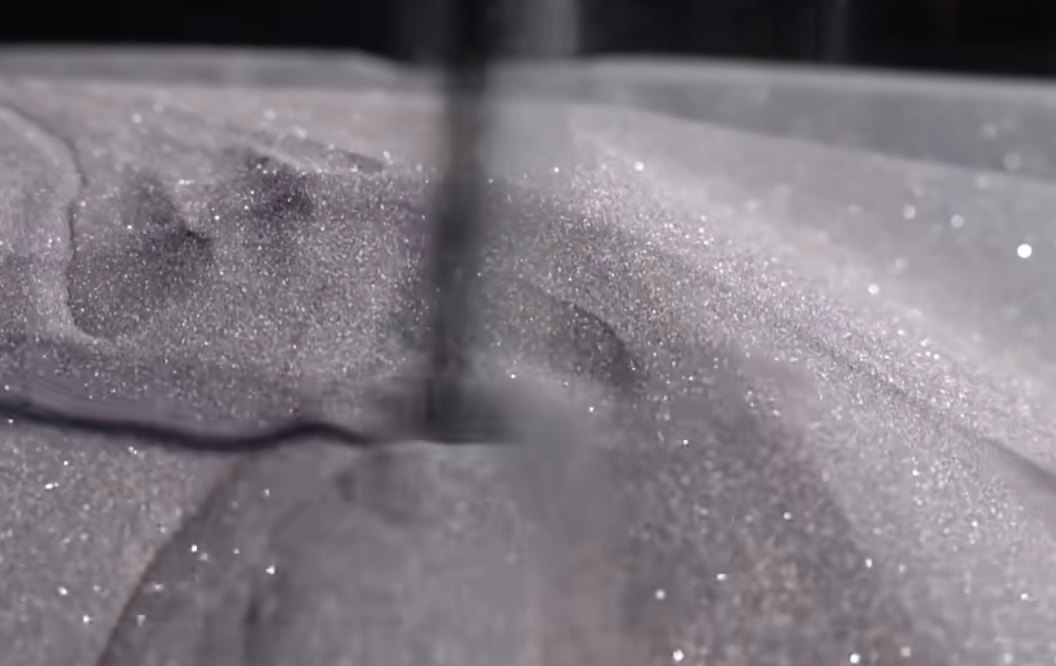
As the drum rotates, the steel balls cascade over the ore, crushing it with relentless force. The goal is precise: the workers must grind the ore down to a fine powder where individual particles are no larger than 150 microns in diameter. At this stage, the material is a fine, pitch-black dust. Despite the grinding, the actual percentage of titanium in this powder is not overwhelmingly high; it is still bonded tightly with iron and oxygen.
Because this fine black powder is difficult to handle mechanically—it clumps and creates dust hazards—engineers utilize fluid dynamics for transport. Using a pneumatic conveyor system, the 150-micron particles are blown through pipes using high-pressure air, behaving like a fluid as they are transported directly into the heart of the operation: the Chlorinator.
3. The Smelting Process: Into the Chlorine Inferno
The chlorination stage is the most dangerous phase of Titanium smelting. The black titanium ore powder is fed into a fluidized bed reactor—the chlorinator. Here, the material is suspended in a stream of gas, but not just any gas. The reactor is pumped full of highly toxic chlorine gas and heated to extreme temperatures.
This is a critical control point. To monitor the internal state of the reactor without opening it (which would release a deadly cloud), workers utilize a pragmatic, low-tech solution in a high-tech environment. When the chlorinator has been running for a sustained period, a worker will insert a 3-meter-long iron rod into the reactor core.
This rod serves as a primitive but effective dipstick. The worker withdraws the rod to observe the effects of the high-temperature chlorine on the titanium powder. They are looking for specific corrosion patterns and thermal indicators on the iron that reveal the efficiency of the chlorination. Because the environment involves toxic chlorine gas at 900 degrees Celsius, the safety protocols are non-negotiable. Workers must wear strictly rated protective gear, including respirators and chemically resistant suits.
Once the reaction reaches its peak, the workers open the upper vents of the smelting device. From these vents flows the lifeblood of the process: crude Titanium Tetrachloride ($TiCl_4$). This liquid emerges at a scorching 780 degrees Celsius. However, it is not yet pure. Because the original ore was a mix of elements, this high-boiling-point liquid cocktail contains chlorides of impurities found in the ore, including Calcium, Magnesium, Sodium, Manganese, and Lanthanum. These unwanted guests must be evicted before the titanium can be used.
4. Purification: The Art of the Kroll Process
The crude Titanium Tetrachloride is a dirty liquid that needs to be transformed into solid metal. This is achieved through the Kroll Process, the industry standard for titanium manufacturing. The magic ingredient in this phase is Magnesium.
4.1 Preliminary Separation and Reduction
The purification begins in a massive steel reaction vessel. The process relies on a reduction reaction where Magnesium metal acts as the reducing agent. The crude $TiCl_4$ is fed into the vessel containing molten magnesium.
As the reaction proceeds, a chemical exchange occurs: the magnesium grabs the chlorine atoms from the titanium, forming Magnesium Chloride ($MgCl_2$), while the titanium is liberated as a solid metal. The Magnesium Chloride, being heavier and liquid at these temperatures, settles at the bottom of the reaction tank.
Monitoring this closed-system reaction is difficult. Once again, the workers rely on the "iron rod test." A long iron rod is inserted into the reaction tank's access port. When pulled out, the workers inspect the surface of the rod. They are looking for "water droplet" shapes—small beads of condensed reaction material. If these droplets appear, it indicates that the reduction reaction is proceeding smoothly and the internal atmosphere is saturated with the correct vapors.
Throughout this cycle, the byproduct, Magnesium Chloride, builds up. Workers must manage the levels of this salt, periodically tapping it off or adding more magnesium to sustain the reduction. The result of this step is a large mass of porous, metallic titanium mixed with residual magnesium and magnesium chloride.
4.2 Deep Separation: Vacuum Distillation
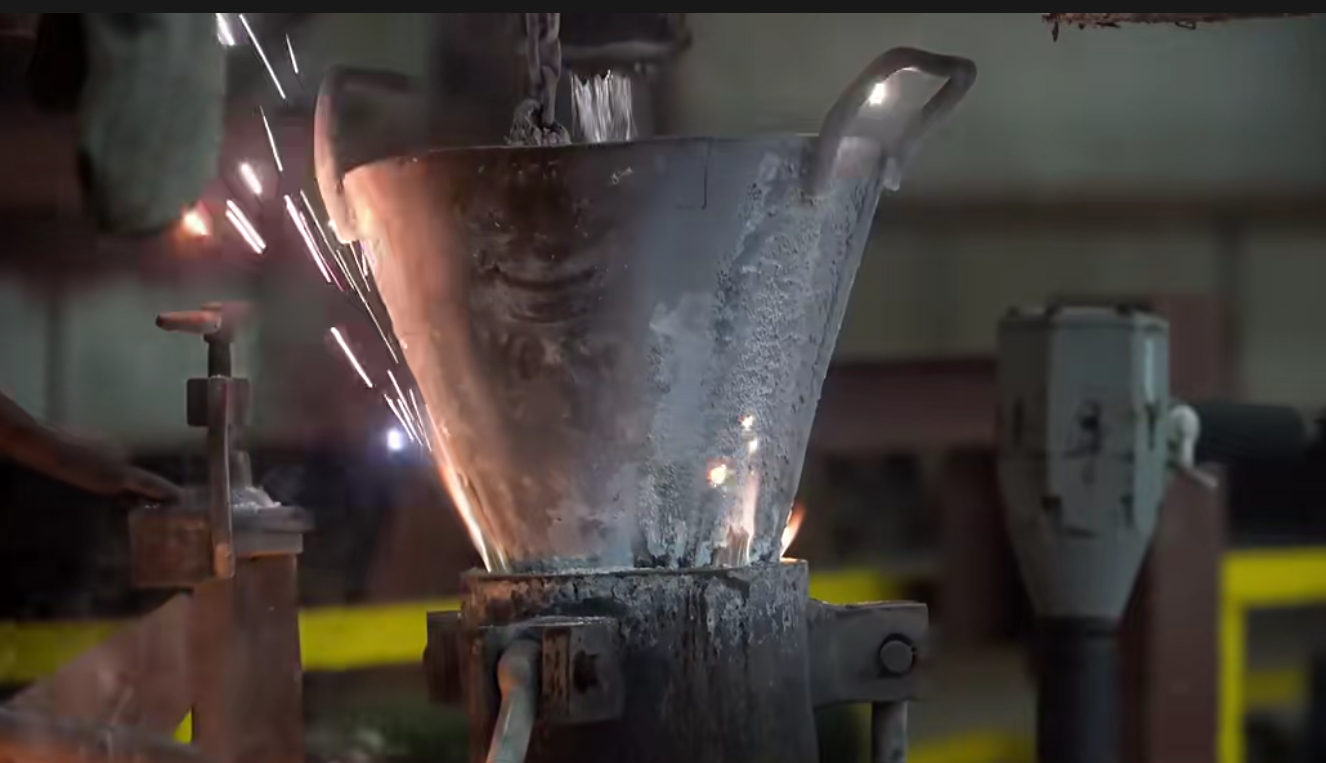
The substance inside the reactor is now a mix of titanium and trapped impurities. To isolate the pure titanium, the material undergoes vacuum distillation.
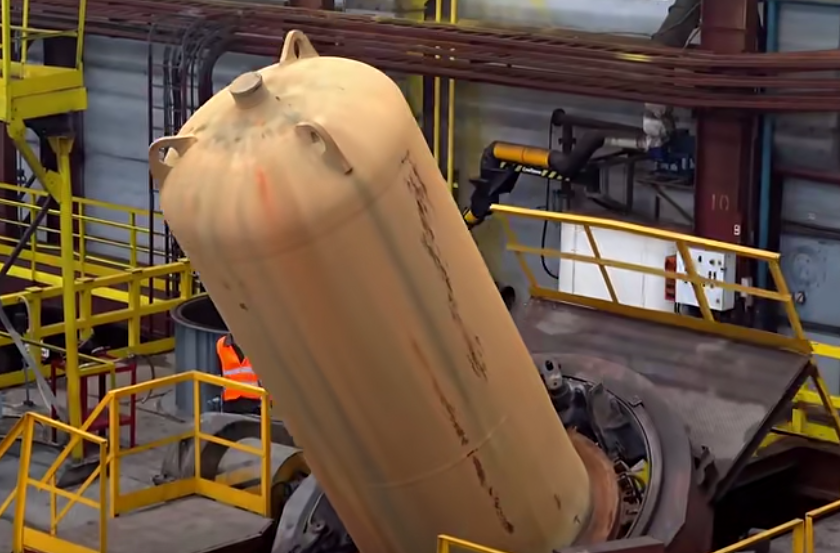
The reaction vessel, containing the titanium mass, is moved to a furnace equipped with powerful electric heating elements. The entire chamber is pumped down to a high vacuum. In this environment, physics takes over. Magnesium and Magnesium Chloride have much lower boiling points than titanium. As the temperature rises in the vacuum, the residual magnesium and chlorides vaporize (boil off), leaving the titanium behind.
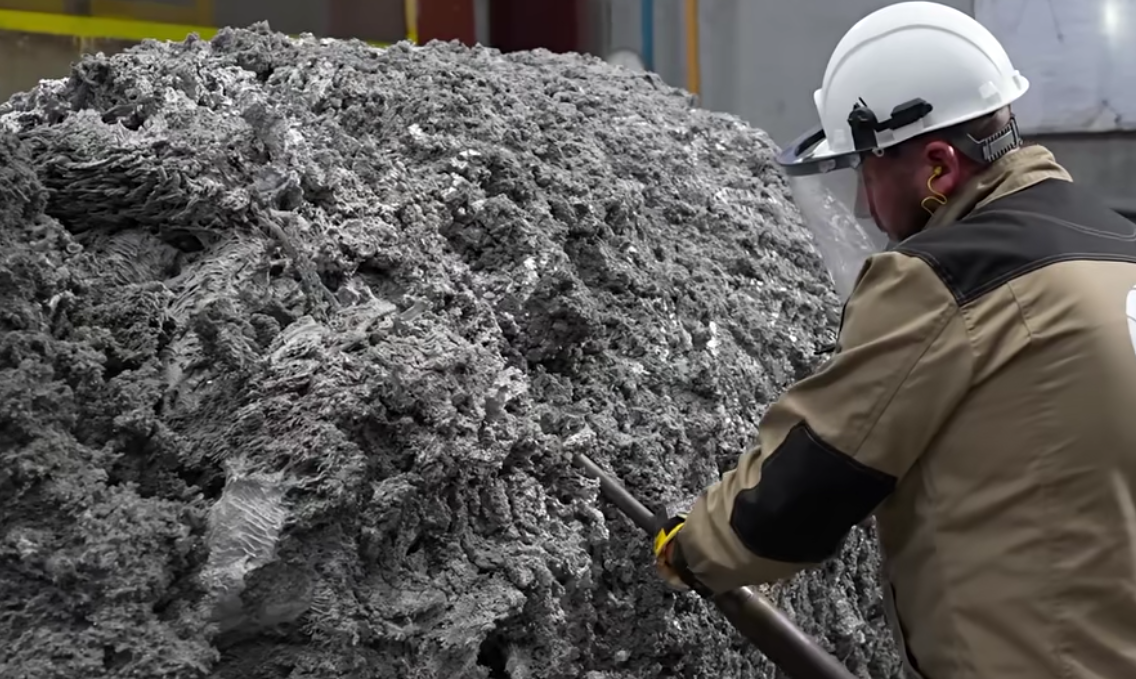
Because the titanium does not melt at these distillation temperatures, it remains solid. However, the escaping gases leave behind millions of tiny tunnels and holes, resulting in a material that looks like a metallic sponge. This is "Sponge Titanium."
5. From Sponge to Solid: The Transformation to Metal
Sponge titanium is commercially usable as a raw material, but physically, it is useless for engineering. It is brittle, filled with voids, and irregular in shape. It cannot be machined into parts. It must be consolidated.
5.1 Crushing and Sorting
The large masses of sponge titanium are removed from the reactor and subjected to mechanical violence. They are sheared and crushed into smaller fragments. This is not a random process; uniformity is key.
As the crushed sponge moves along a conveyor belt, workers (often aided by optical sorters) inspect the flow. They pick out pieces that are too large or visibly contaminated. The goal is to ensure that the titanium granules are of a consistent size distribution. This uniformity is essential for the next step: creating an electrode.
5.2 Compaction: Creating the Electrode
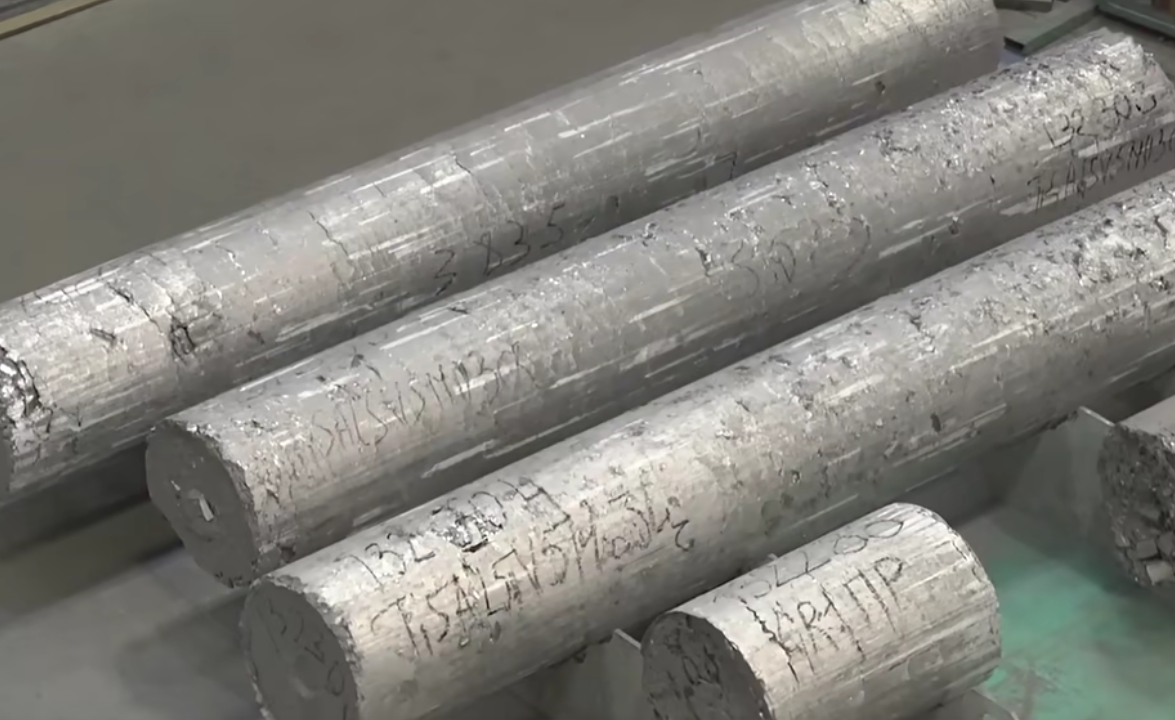
The sorted sponge granules are fed into a massive, high-tonnage hydraulic press. Under immense pressure, the loose granules are crushed together until they bond mechanically, forming a solid, green compact. These compacts are typically shaped into large cylinders.
These cylinders are welded together to form a long, heavy rod known as a "consumable electrode." This electrode is the feedstock for the final melting.
5.3 Vacuum Arc Remelting (VAR)
To achieve the density and purity required for aerospace and medical use, the electrode must be melted. This is done using Vacuum Arc Remelting (VAR).
Workers hoist the massive titanium electrode into a Vacuum Arc Furnace. The electrode is connected to the negative terminal of a high-power DC power supply. A water-cooled copper crucible at the bottom acts as the positive terminal (the crystallizer).
When the power is engaged, a massive electric arc strikes between the titanium electrode and the bottom of the crucible. The heat is intense—thousands of degrees. The tip of the titanium electrode melts, and droplets of molten pure titanium fall through the vacuum arc into the crucible below.
The vacuum removes any remaining volatile impurities (like hydrogen or nitrogen). The water-cooled crucible ensures that the molten pool solidifies rapidly and directionally from the bottom up. This rapid cooling, combined with the "million-level" heat exchange intensity, refines the grain structure of the metal. The result is an ingot of titanium that is no longer porous but solid, with a fine, smooth texture and a silvery shine.
6. The Challenge of Machining
With the ingot produced, one might assume the hard work is over. However, processing pure titanium into finished parts is notoriously difficult.
Titanium possesses physical properties that make it a nightmare for machinists. Unlike iron or steel, which yield easily to cutting tools and break into manageable chips, titanium is "sticky." It has a high tendency for galling—it adheres to the cutting tool almost like plasticine or chewing gum.
Furthermore, titanium is a poor conductor of heat. When you cut steel, the heat generated by friction is mostly carried away by the metal chip. When you cut titanium, the heat stays concentrated at the cutting edge of the tool. This thermal buildup can rapidly destroy drill bits and milling cutters. Only nations and companies with deep industrial heritage and advanced machining capabilities can successfully mass-produce complex titanium components.
7. Applications: The Metal of the Future
Despite the difficulty in extraction, smelting, and machining, the effort is justified by the material's properties. Titanium is immune to atmospheric corrosion and resistant to most acids. It maintains its strength at temperatures where aluminum would soften and steel would become brittle.
These "innate advantages" make it irreplaceable. In aerospace, it allows engines to run hotter and planes to fly lighter. In the medical field, its biological inertness allows it to fuse with human bone. And in the consumer world, its extreme corrosion resistance makes it the safest possible material for cookware and cutlery, ensuring no heavy metals leach into food.
From the dark depths of an ilmenite mine to the vacuum of an arc furnace, the journey of titanium is a testament to human ingenuity in mastering the elements.
Frequently Asked Questions and Answers
1. Sponge Titanium Production: Process Optimization and Quality Control
Q: What are the key challenges in the Kroll process (the dominant method for sponge titanium production) regarding energy consumption and product purity, and how have emerging technologies (e.g., electrolytic reduction methods) addressed these issues to enhance the yield and quality of sponge titanium for downstream manufacturing?
A: The Kroll process, while the industry standard, is inherently batch-based, energy-intensive, and slow. The primary challenges lie in the high cost of the magnesium reductant and the significant energy required for the vacuum distillation phase to remove magnesium chloride ($MgCl_2$) and excess magnesium. Furthermore, the batch nature leads to variations in product quality (the "sponge" near the reactor walls differs from the center) and limits production speed.
Emerging technologies, specifically electrolytic reduction methods like the FFC Cambridge Process, aim to solve these issues. Instead of converting oxide to chloride and then reducing it with magnesium, electrolytic methods attempt to reduce solid titanium dioxide ($TiO_2$) directly in a bath of molten calcium chloride.
Energy Efficiency: This bypasses the energy-hungry chlorination and distillation steps, potentially reducing energy consumption by up to 50%.
Continuous Production: Electrolysis allows for a semi-continuous process rather than a strict batch process, improving yield.
Purity: By controlling the voltage and electrolyte composition, impurities can be managed more precisely, potentially producing a powder that is easier to process than the traditional sponge, streamlining downstream manufacturing.
2. Sponge Titanium to Pure Titanium: Refining and Performance Enhancement
Q: What critical refining steps (e.g., vacuum arc remelting, electron beam melting) are required to convert porous sponge titanium into high-purity titanium ingots, and how do different processing parameters influence the mechanical properties (e.g., tensile strength, corrosion resistance) of pure titanium tailored for industries like aerospace and medical devices?
A: Converting sponge titanium to ingot requires eliminating porosity and chemical segregation. The two critical refining technologies are Vacuum Arc Remelting (VAR) and Electron Beam Melting (EBM).
Vacuum Arc Remelting (VAR): This is the standard for aerospace. It usually requires two or three successive melts (Double or Triple VAR) to ensure total homogeneity. The critical processing parameter is the melt rate and arc gap. A controlled melt rate allows inclusions (high-density particles) to drop to the bottom or dissolve, while the vacuum removes volatile impurities like hydrogen.
Electron Beam Melting (EBM): This uses a high-energy beam of electrons to melt the titanium in a high vacuum. EBM is superior for removing high-density inclusions and offers better control over the molten pool, but it can evaporate some alloying elements due to the intense localized heat.
Influence on Properties:
Tensile Strength: Controlled cooling rates during VAR determine the grain size. Faster cooling leads to finer grains, which significantly increases yield strength and fatigue resistance—crucial for aircraft landing gear.
Corrosion Resistance: The purity achieved during the vacuum stage is vital. Removing oxygen and nitrogen to very low levels (ELIs - Extra Low Interstitials) improves ductility and fracture toughness, which is essential for medical implants and cryogenic applications. If the melting parameters fail to remove these interstitial elements, the titanium becomes brittle and prone to cracking.