Titanium mesh, as a high-performance screening and filtration material, combines exceptional corrosion resistance, biocompatibility, and structural efficiency with a low density-to-strength ratio. Its tunable morphology—ranging from woven and expanded meshes to etched micro-perforations and additively manufactured lattices—enables precise control of pore size, open area, and surface topology. This versatility underpins reliable Filtration and separation of gases, liquids and other media in harsh environments where stainless steels or polymers may fail, including chemical processing, marine systems, and high-temperature aerospace ducts.
In healthcare, titanium’s inert oxide layer and favorable modulus support safe integration with tissue. Porous and textured meshes facilitate bone ingrowth and soft-tissue anchorage, broadening their role in Orthopedic surgery for fracture fixation, spinal cages, and reconstructive scaffolds. Likewise, in Dental surgery, custom-contoured meshes stabilize grafts, guide bone regeneration, and serve as lightweight, formable barriers with excellent radiographic clarity and sterilization compatibility.
1. Types of Titanium Mesh
1.1 Woven Titanium Mesh
Woven titanium mesh is fabricated by weaving high-purity titanium wires on specialized looms. By varying the weave pattern, wire diameter, and mesh count, manufacturers create distinct performance profiles. Common weaves include:
· Plain weave: Each wire alternately passes over and under intersecting wires. It offers uniform pore geometry, predictable flow rates, and good stability.
· Twill weave: Wires pass over two and under two (or similar patterns), creating a tighter structure that accommodates heavier wires while maintaining flexibility. It resists deformation and handles higher loads or differential pressures.
· Dutch weave : A combination of finer warp and coarser weft (or vice versa) yields a very tight filtration layer with high mechanical integrity, often used for fine filtration with higher pressure resistance.
· Special or customized dense weaves: Engineered to maximize separation of very small particulates or to deliver controlled permeability under demanding conditions.
Primary uses:
· Seawater filtration and desalination prefilters
· Chemical and pharmaceutical filtration lines
· Medical filtration where biocompatibility and corrosion resistance are mandatory
· Titanium anodes in electrolytic cells (serving as conductive carriers or reinforcement for active coatings)
Why it’s chosen:
· Uniform pore sizes yield consistent filtration cut-offs.
· Titanium’s passive oxide film confers excellent corrosion resistance in chloride-rich environments (like seawater) and many chemical media.
· Lightweight yet strong; resistant to fatigue and creep at service temperatures typical of processing lines.
1.2 Perforated Titanium Mesh (Punched Titanium Sheet)
Perforated titanium mesh is produced by punching holes into solid titanium sheet. It provides rigid, planar structures with defined aperture geometries. Typical hole shapes include circular, square, triangular, slotted, and custom “special-shape” apertures. Hole diameter, pitch, and pattern can be tightly controlled.
Primary uses:
· Filter plates and structural backing plates for multi-layer filter assemblies
· Support plates in chemical columns and tower internals
· Electrode carriers in ion-exchange membrane electrolyzers
· Current-collecting grids in batteries and electrochemical devices
Why it’s chosen:
· Outstanding mechanical strength and dimensional stability compared to fabric-like meshes
· Clean, repeatable apertures that don’t fray and maintain geometry under load
· Excellent compatibility with welding, forming, and surface treatments (e.g., catalyst coatings on electrodes)
· Easy to sanitize and maintain smooth surfaces for hygiene-critical processes
1.3 Titanium Demister Mesh (Knitted Wire Mesh)
Titanium demister mesh is made by knitting high-purity titanium wire into a crimped, springy network. The three-dimensional labyrinth of filaments captures and coalesces fine droplets in gas streams, typically efficient for removing 3–5 µm mist.
Primary uses:
· Packed tower internals for gas–liquid separation
· De-foaming and de-misting in chemical plants
· Eliminating entrained liquid aerosols to protect downstream compressors, membranes, and catalysts
Why it’s chosen:
· Highly effective coalescence of micro-droplets due to extensive surface area and tortuous flow paths
· Corrosion resistance prevents deterioration in aggressive gas–liquid systems (e.g., chloride-containing vapors)
· Stable performance at elevated temperatures typical in process towers
2.Medical Applications of Titanium Mesh
Titanium’s biocompatibility is well-documented: the protective oxide layer makes it inert in physiological environments, minimizing adverse reactions and promoting tissue integration. Combined with high specific strength, formability, and fatigue resistance, titanium mesh has become a staple across surgical disciplines.
2.1 Orthopedic Surgery
2.1.1 Fracture Fixation
Titanium mesh can be contoured to bone anatomy and secured with screws or sutures. Its lattice structure:
· Bridges fracture lines to prevent segment displacement
· Distributes and shares load across fracture ends, providing stress to stimulate osteogenesis
· Permits blood flow and soft tissue ingrowth, which supports biological healing
Unlike solid plates, mesh can be lighter and more permeable, reducing stress shielding while maintaining mechanical support.
2.1.2 Bone Defect Reconstruction
In segmental defects or contained voids, medical titanium mesh acts as a supportive scaffold:
· Maintains defect volume and anatomical contour
· Prevents graft migration and soft tissue collapse into the defect
· Can be combined with autograft, allograft, or bone substitutes to encourage new bone formation and integration
The open architecture promotes vascular ingrowth and nutrient exchange, which are critical for graft incorporation and long-term stability.
2.2 Dental Surgery
2.2.1 Alveolar Bone Augmentation
In guided bone regeneration (GBR), titanium mesh serves as a barrier and space-maintaining frame:
· Supports particulate grafts while excluding soft tissue
· Provides mechanical stability to foster osteoconduction and osteogenesis
· Allows microvascularization through the mesh openings, aiding graft vitality
Its formability enables precise shaping for ridge contour restoration, critical for functional and aesthetic outcomes.
2.2.2 Dental Implant Procedures
Titanium mesh can be employed to:
· Stabilize the implant site by preserving ridge dimensions prior to or during implant placement
· Reinforce peri-implant bone during staged reconstructions
· Act as a supportive structure that helps achieve primary stability and higher long-term success rates
Surface smoothness and pore configuration are optimized to balance tissue compatibility with ease of retrieval after healing.
2.3 Other Medical Applications
2.3.1 Chest Wall Reconstruction
For chest wall defects due to tumor resection, trauma, or infection, medical titanium mesh is a reconstructive mainstay:
· Restores structural integrity and protects thoracic organs
· Provides rigid yet adaptable support to prevent paradoxical motion, chest wall softening, and mediastinal shift
· Can be tailored to defect geometry and combined with flaps or prosthetic materials
Titanium’s corrosion resistance and radiolucency (relative to steel) facilitate postoperative imaging and long-term monitoring.
2.3.2 Maxillofacial Fracture Repair
In midface and mandibular fractures, titanium mesh functions as internal fixation and contour reconstruction:
· Re-establishes facial symmetry and occlusion
· Enables screw fixation with low-profile constructs that minimize soft tissue irritation
· Encourages soft tissue adherence and neovascularization; the mesh pattern supports stable callus formation and faster return to form and function
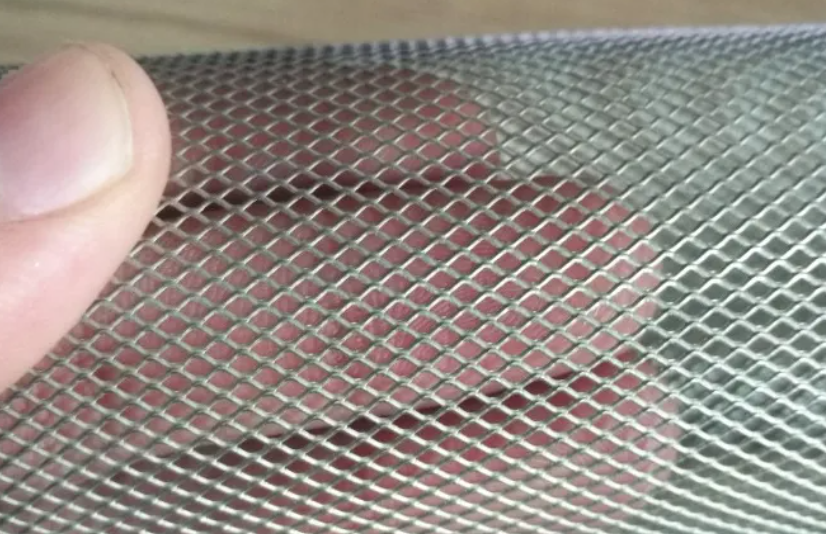
3.Selecting the Right Titanium Mesh: Practical Considerations
· Pore size and porosity: Smaller, denser pores increase filtration precision and barrier function but reduce flow and flexibility. Larger, sparser pores improve permeability, tissue access, and screw purchase, but may reduce fine filtering.
· Thickness and wire diameter (or sheet gauge): Thicker sections raise stiffness and load capacity; thinner variants improve conformability and weight.
· Pattern and geometry: Woven meshes favor filtration uniformity and flexibility; perforated sheets favor structural strength and precision openings; knitted demister meshes favor droplet coalescence and gas–liquid separation.
· Surface finish: Medical meshes often receive passivation and careful finishing to minimize tissue irritation. Industrial meshes may be pickled, polished, or coated for specific environments (e.g., catalyst deposition).
· Sterilization compatibility: Titanium tolerates autoclave, gamma, and ethylene oxide sterilization. Packaging and handling must protect mesh geometry.
· Formability and fixation: For surgical use, the ability to contour and maintain shape, as well as compatibility with standard screws and instruments, is critical.
4.Typical Industrial and Clinical Pairings
· Seawater and chemical filtration: Woven titanium mesh (plain/twill/Dutch) for graded separation; perforated titanium plates as backing supports in multi-layer cartridges.
· Electrolysis and energy devices: Perforated titanium mesh as current collectors/electrode supports; woven mesh for flow diffusion layers; specialized coatings applied as needed.
· Demisting in towers: Knitted titanium demister pads sized for process flow, capturing 3–5 µm droplets with minimal pressure drop.
· Orthopedic reconstruction: Contourable woven or micro-perforated titanium mesh plates matched to defect size and load requirements.
· Dental GBR: Fine-pore titanium mesh for space maintenance plus barrier function, combined with graft materials for predictable ridge augmentation.
· Chest wall/maxillofacial: Strong yet formable perforated or woven mesh panels enabling rigid fixation and soft-tissue integration.
5.Quality and Compliance from a Titanium Mesh Manufacturer
A reputable Titanium Mesh Manufacturer will:
· Source high-purity titanium (e.g., ASTM F67 for commercially pure titanium or ASTM F136 for Ti-6Al-4V ELI in implants)
· Maintain precise control of pore size, porosity, thickness, and mechanical properties
· Provide surface finishing tailored to medical or industrial standards
· Offer documentation and traceability (material certificates, lot records)
· Validate sterilization compatibility and biocompatibility for medical-grade products
· Support custom designs—hole patterns, mesh counts, and contouring—to meet exacting clinical or process needs
· Shaanxi Shenglian Yijing Technology Co., Ltd. supports the production of titanium mesh made of pure titanium wire and titanium alloy wire in accordance with ASTM B348 and ISO 13485 manufacturing standards. We can supply titanium mesh products with wire diameters ranging from 0.06mm to 2.5mm and mesh sizes ranging from 0.5 to 300 mesh.
Frequently Asked Questions and Answers
1.Do differences in titanium mesh pore size and porosity affect where it can be used? For example, when filtering things or supporting objects, which type of holes (larger/sparser vs. smaller/denser) is more suitable?
Yes. Pore size and overall porosity directly determine performance:
Smaller/denser pores: Better for fine filtration and barrier functions (e.g., removing tiny particulates, guiding bone regeneration by excluding soft tissue). They provide precise cut-offs but reduce flow and can be less flexible.
Larger/sparser pores: Better for structural support, fixation, and scenarios requiring high permeability (e.g., screw anchorage, tissue integration, drainage). They enable better fluid passage and mechanical interlock but are not suitable for capturing very fine particles.
2.What do the holes of titanium mesh look like (e.g., are the holes large or small, dense or sparse), and why is it suitable for scenarios like filtering water or supporting wounds?
Holes vary by type:
Woven mesh: Regular, repeating square or rectangular openings formed by crossing wires. Fine weaves present small, dense apertures ideal for filtering water and chemicals with consistent particle retention.
Perforated sheet: Precisely punched circular, square, triangular, or custom holes in a rigid plate. Larger, well-spaced apertures provide strength and airflow/liquid flow, making them suitable as support plates or protective barriers.
Demister mesh: A three-dimensional knitted tangle of fine wires with complex micro-passages. It traps and coalesces small droplets efficiently, ideal for de-misting and gas–liquid separation.
Titanium’s biocompatibility, corrosion resistance, and mechanical strength make these geometries safe for contact with tissue and fluids. In wound or bone support, the mesh provides scaffolding while allowing vascularization and drainage.
3.Some titanium meshes have small, dense holes, while others have larger holes. What are these two different “appearance” types of titanium mesh respectively suitable for? For example, which is better for filtering tiny impurities and which for fixing things?
Small, dense holes: Best for fine filtration (seawater prefiltration, chemical process filters), medical barrier functions (GBR in dentistry), and scenarios requiring precise exclusion of small particles or soft tissue. They enhance control but can increase pressure drop and are less suited to high mechanical loads without backing.
Large, sparse holes: Best for mechanical fixation and structural support (orthopedic reconstruction plates, chest wall meshes), electrode carriers, and current collectors. They allow screws or sutures to pass, encourage tissue in-growth, and maintain lower flow resistance—ideal when the goal is strength and integration rather than micro-filtration.