Choosing between pure titanium and a Titanium alloy starts with understanding composition, performance, and budget. Pure titanium (Grades 1–4) is ≥99% Ti with controlled oxygen/iron; it offers outstanding corrosion resistance, weldability, and moderate strength (tensile ~240–550 MPa). Alloyed grades like Ti‑6Al‑4V and Ti‑6Al‑4V ELI boost strength to ~900–1100 MPa, improve fatigue, and widen temperature capability, making them staples in aerospace, energy, and medical. For buyers comparing titanium material properties, note density ~4.51 g/cm³ and modulus ~105 GPa—about half the weight of steel at comparable strength in many alloys.
From titanium material suppliers, titanium material cost varies widely: commercially pure sheet can be 1.0× baseline while aerospace alloys run 1.5–3.0×, influenced by mill lead times, certification (ASTM/AMS), and finish. In chloride, sour, and biomedical environments, pure titanium minimizes ion release and resists pitting; in high‑load frames, a Titanium alloy delivers superior specific strength and fatigue life. Smart sourcing blends both: pure titanium for piping, heat exchangers, and chemical vessels; Ti‑6Al‑4V for fasteners, impellers, and structural brackets. Engage suppliers early to align grade, product form, and NDT with service conditions—reducing lifecycle cost while maximizing performance.
1. Three Common Grades of Pure Titanium
Pure titanium (Grades 1–4) balances corrosion resistance, biocompatibility, and processing ease, with strength generally rising alongside oxygen content. Among them, GR1–GR3 are the most frequently specified for industrial, medical, and marine duty.
1.1 GR1 — The Gentle, Ductile “New Graduate”
· Core traits: Exceptional ductility and formability, but modest strength. GR1 bends, deep-draws, and cold-forms with minimal springback, making it ideal for intricate shapes in titanium sheet, thin-wall Titanium Tube, and precision foil.
· Workplace fit: Medical devices and components that require top-tier biocompatibility and cold workability—dental implants, orthopedic hardware housings, surgical instrument parts, and sterile process fittings.
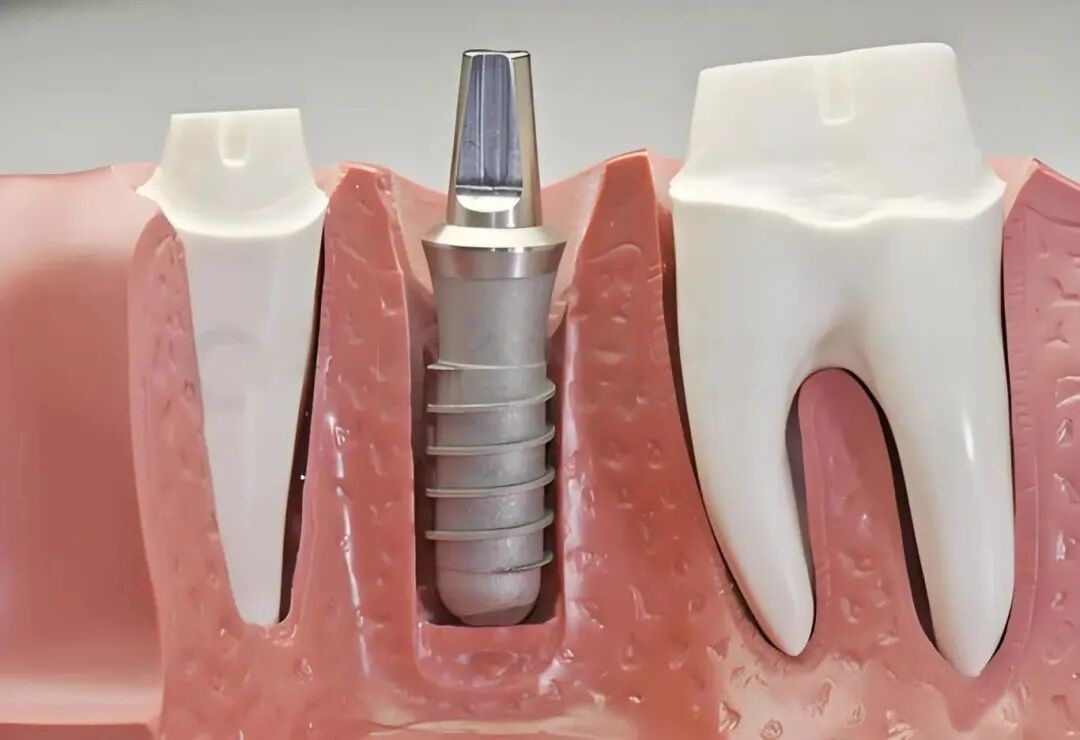
· Inner voice: “I won’t carry the heaviest loads, but I’m incredibly friendly to the human body and won’t trigger rejection.”
· Typical forms: CP Ti in annealed condition as titanium sheet for stamped parts, titanium bar for small machined fasteners, and micro-gauge tubing for minimally invasive devices.
· Why choose GR1: Maximum corrosion resistance (chlorides, body fluids), lowest yield strength for easy forming, excellent weldability with clean, stable TiO2 passive film.
1.2 GR2 — The Steady, Seasoned “Professional”
· Core traits: A pragmatic balance of strength and ductility with excellent corrosion resistance and cost effectiveness—often the best total value from titanium material suppliers.
· Workplace fit: Chemical processing equipment, seawater desalination systems, condenser tubing, heat exchangers, and cryogenic service where reliability beats raw strength.
· Signature case: In seawater desalination plants, GR2 heat-exchanger Titanium Tube resists pitting and crevice corrosion far better than many stainless steels, extending service intervals and lowering lifecycle cost.
· Typical forms: Titanium Tube for brine/brackish duty, titanium sheet and plate for shells and tube sheets, titanium bar and forgings for flanges and nozzles.
· Why choose GR2: “Right-sized” properties—good strength for thin walls, easy fabrication (rolling, forming, welding), and predictable performance in chlorides, sulfides, and oxidizing media.
1.3 GR3 — The High-Strength “Technical Backbone”
· Core traits: Higher strength than GR1/GR2, with reduced ductility; still maintains CP titanium’s hallmark corrosion resistance and weldability when procedures are controlled.
· Workplace fit: Pressure-containing components, chemical pipelines, and moderate-pressure vessels that need a margin of strength without sacrificing corrosion performance.
· Quip: “Maybe I’m not the smoothest to form, but when pressure spikes, I’m the one holding the line.”
· Typical forms: Heavier-gauge titanium sheet/plate for shells and heads, titanium bar for flanges and fittings, and structural sections where thin-wall reduction improves heat transfer efficiency.
Note: GR4 (not detailed above) pushes strength higher still with further ductility trade-offs, often used for fasteners and higher-stress CP applications.
2. Common Titanium Alloys — From “Basic Edition” to “Advanced”
If pure titanium is the baseline for corrosion and biocompatibility, Titanium alloy families are the performance upgrades, engineered by alloying elements (Al, V, Mo, Sn, Zr, Nb, etc.) and heat treatments to tune strength, fatigue, fracture toughness, and high-temperature capability. The classic taxonomy: α, β, α+β, and advanced or near-α high-temperature alloys.
2.1 α Alloys (e.g., Grade 6/ Ti-5Al-2.5Sn) — The Heat-Tolerant “Yoga Masters”
· Personality: Excellent creep resistance and weldability, solid notch toughness, and stability at elevated temperatures compared with pure titanium.
· Use cases: Airframe skins, cryogenic tanks, compressor casings, and hot-structure brackets where formability and temperature capability matter more than ultimate strength.
· Processing: Often supplied in annealed condition; good performance in oxidizing environments; retains corrosion resistance akin to pure titanium.
· Product forms: Titanium sheet for skins and fairings, titanium bar/forging stock for brackets, and thin-wall Titanium Tube for heat-affected assemblies.
2.2 α+β Alloys (e.g., Grade 5 / Ti-6Al-4V, TC4) — The “Hexagonal Warriors” of Versatility
· Personality: The all-rounders. High specific strength, strong fatigue and fracture performance, broad temperature range, and excellent strength-to-weight ratio.
· Use cases: Aerospace fasteners, landing-gear components, turbine engine hardware (cool sections), motorsport suspension parts, high-end bicycle frames, medical implants (ELI variants), and industrial blades/impellers.
· Processing: Heat-treatable via solution and aging for tailored strength/toughness; good machinability with the right tooling and coolant strategy; weldable with inert gas shielding.
· Product forms: Titanium bar for fasteners and shafts, titanium sheet/plate for structural panels, and precision Titanium Tube for hydraulic lines and performance frames.
2.3 β and Near-β Alloys (e.g., Ti-10V-2Fe-3Al, Ti-15V-3Cr-3Sn-3Al)
· Personality: High hardenability, deep section heat treat response, excellent cold formability in solution-treated state, and very high strength after aging.
· Use cases: Thick-section forgings, landing-gear beams, springs, and components requiring complex forming followed by high strength.
· Considerations: Careful control of heat treatment and microstructure to balance toughness and stress-corrosion resistance.
2.4 Near-α and Advanced High-Temperature Alloys (e.g., Ti-1100, Ti-6242)
· Personality: Designed for hot sections up to ~500–600°C in aerospace; superior creep and oxidation resistance versus pure titanium.
· Use cases: Compressor wheels, casings, and hot structural elements where pure titanium softens above ~300°C.
· Secret sauce: Alloying stabilizes the oxide scale and lattice, suppressing diffusion and distortion at temperature, preserving dimensional stability and strength.
3. What Makes Titanium Special
3.1 Corrosion Champion — Pure Titanium as the “Born Defender”
Pure titanium self-passivates with a nanometer-scale TiO2 film that rapidly reforms if damaged. This molecular “armor” resists:
· Chloride attack and salt-spray in seawater environments (desalination, offshore).
· Acid/alkali exposure in chemical processing (with noted exceptions in reducing acids).
· Physiological fluids, where chemical inertness underpins unparalleled biocompatibility.
Medical edge: In dental implants, a pure titanium fixture bonds through osseointegration—tissue forms a stable interface with the TiO2 film—minimizing ion release and immune response. Result: durable anchorage, reduced inflammation, and long-term compatibility.
3.2 Titanium Alloys — Balancing Corrosion With Elevated Performance
Titanium alloys inherit pure titanium’s corrosion resistance but require careful design to avoid galvanic or localized issues:
· Example caveat: Cu-bearing alloys may introduce electrode potential differences that promote localized corrosion; mitigation includes optimized alloy balance, vacuum melting (VAR/EB), and protective coatings.
· Thermal advantage: Where pure titanium loses strength beyond ~300°C, near-α and specialty alloys like Ti-1100 operate stably near ~500°C in aero engines. Alloying elements refine the oxide scale and stabilize phases, reducing high-temperature diffusion and lattice distortion.
· Practical takeaway: Choose pure titanium for harsh chemistry at modest temperatures; select Titanium alloy grades when high strength, fatigue life, or temperature capacity dictates.
4. Matching Grades to Applications and Product Forms
Selecting the right combination of grade and product form from titanium material suppliers directly affects cost, manufacturability, and lifecycle performance.
· Titanium Tube (GR2/GR3, Ti-6Al-4V):
o GR2 for seawater/brine heat exchangers and condensers.
o GR3 where pressure margins are tighter.
o Ti-6Al-4V for high-strength, thin-wall hydraulic and structural lines.
· Titanium sheet and plate (GR1–GR3, α and α+β alloys):
o GR1 for deep-drawn chemical linings and medical housings.
o GR2 for vessel cladding and tube sheets in desalination.
o Grade 5 for structural skins, brackets, and high-stiffness panels.
· Titanium bar and forgings:
o GR3/GR4 for flanges, nozzles, and pressure-rated fittings.
o Ti-6Al-4V for high-performance fasteners, shafts, and orthopedic stems (ELI when needed).
· Joining and fabrication:
o All CP grades: excellent weldability with inert shielding (argon backing).
o α+β alloys: weldable; maintain inert atmosphere, control interpass temperature, and post-weld heat treat when specified.
5. Cost, Supply, and Sourcing Considerations
· titanium material cost: CP titanium typically prices lower than aerospace alloys. Expect a spread where GR1/GR2 equalize at the value end, while Grade 5/near-β can be 1.5–3× depending on certification (ASTM/ASME/AMS), NDT, and mill lead time.
· Supply chain: Favor titanium material suppliers with VAR/EB melting routes, full traceability, ultrasonic/eddy current testing for Titanium Tube, and flatness/grain control for titanium sheet.
· Machining and finishing: Titanium’s low thermal conductivity demands sharp tools, aggressive cooling, and controlled feeds; surface finishing (pickling, passivation, PVD) should preserve the passive film.
· Lifecycle economics: Titanium’s corrosion immunity and weight savings reduce maintenance, fouling, and energy costs—critical in desalination, offshore, and chemical services.
6. Selection Framework: From Requirements to Grade
1. Environment:
o Chlorides/oxidizers/biological: pure titanium (GR1–GR3).
o Reducing acids/high temp: consider alloyed grades; validate compatibility charts.
2. Mechanical duty:
o Low stress, high formability: GR1.
o Balanced plate/tube duty: GR2.
o Elevated pressure: GR3 (or GR4), or α+β alloys if strength rules.
3. Temperature:
o ≤300°C: CP often suitable.
o 300–500°C: near-α/advanced alloys (Ti-6242, Ti-1100).
4. Fabrication route:
o Deep drawing/spinning: GR1/GR2 titanium sheet.
o Thin-wall exchangers: GR2 Titanium Tube.
o High-strength machined parts: Ti-6Al-4V titanium bar/forgings.
5. Compliance:
o Specify standards (ASTM B265 sheet/plate, B348 bar, B337/B338 tubing, B381 forgings) and testing to align with design codes (ASME, ISO).
7. Real-World Snapshots
· Desalination heat exchanger: GR2 Titanium Tube ran multiple cycles without pitting where 316L suffered frequent fouling and tube failures; cleaning intervals doubled, pump energy dropped due to sustained heat transfer.
· Chemical reactor cladding: GR1 titanium sheet lining resisted mixed acid attack, enabling thinner wall carbon steel backup and lowering total vessel cost.
· Aerospace bracket: Ti-6Al-4V titanium bar machined and aged delivered >900 MPa tensile at half the density of steel, cutting mass and improving fatigue life.
Conclusion
From the ultra-formable GR1 to the pressure-ready GR3 and the powerhouse α+β alloys like Grade 5/TC4, titanium’s portfolio covers biocompatible implants, corrosion-proof process equipment, and high-performance structures. The right pairing of pure titanium or Titanium alloy with the proper product form—titanium bar, titanium sheet, or Titanium Tube—lets engineers meet aggressive weight, durability, and environmental goals while maintaining manufacturability and value. Partnering early with experienced titanium material suppliers streamlines grade selection, certification, and fabrication, translating titanium’s unique properties into measurable lifecycle gains.
Frequently Asked Questions and Answers
Q1: What grades of titanium materials are there?
A1: Commercially pure titanium includes Grades 1–4 (rising strength with decreasing ductility). Common alloys include Grade 5 (Ti-6Al-4V), Grade 23 (ELI), Grade 6 (Ti-5Al-2.5Sn), near-β alloys (Ti-10V-2Fe-3Al), and high-temperature near-α grades (Ti-6242, Ti-1100), among others.
Q2: Is there a material stronger than titanium?
A2: Yes. Many steels, nickel superalloys, and maraging steels exceed titanium’s absolute strength; carbon fiber composites outperform in specific stiffness/strength; however, titanium alloys excel in strength-to-weight, corrosion resistance, and temperature capability for their mass.
Q3: How is titanium separated from other materials found with it?
A3: Titanium is refined from ilmenite or rutile via the Kroll process: ore → TiO2 → TiCl4 (chlorination) → Mg reduction to sponge → vacuum melting (VAR/EB) into ingots, followed by hot working into titanium bar, titanium sheet, and Titanium Tube with subsequent heat treatment and finishing.