Meet the next step in Food safety: a Pure titanium material cutting board engineered for everyday kitchens and professional prep. Titanium’s naturally inert, non-porous surface denies moisture absorption, helping block mold growth and odor carryover. Unlike porous woods or scar-prone plastics, its dense surface resists knife-groove microhabitats, supporting an antibacterial workflow without chemical coatings.
Antibacterial and mildew-proof performance stems from titanium’s stable oxide film, which is corrosion-resistant in acids and salts from citrus, vinegar, or brines. In routine use, quick rinses and brief sanitizing cycles remove residues efficiently; tests on smooth, non-porous metals show up to 99% reduction in common kitchen bacteria after standard cleaning. With a melting point above 1,660°C and excellent corrosion resistance, the board tolerates hot pots, boiling-water rinses, and dishwasher-like protocols.
Practical advantages stack up: durable edge hardness minimizes scarring; non-reactivity preserves flavors in raw fish, onions, and fruit; and the clean surface helps separate raw and ready-to-eat tasks. At roughly 40–45% lighter than steel of the same size, the board is easy to move yet robust for daily chopping. For homes focused on hygiene and efficiency, a titanium cutting board brings antibacterial assurance, mildew resistance, and long service life to safe food prep.
1. Antibacterial and Mildew Resistant: Blocking Bacterial Growth at the Source
A titanium cutting board establishes a hygienic baseline by denying microbes a place to hide. Its non-porous, ultra-dense surface minimizes moisture retention, which is essential for suppressing biofilm formation and mold. The naturally passive oxide layer on pure titanium supports an antibacterial environment without chemical coatings, helping you safeguard Food safety during raw and ready-to-eat prep. Day to day, quick rinses and brief sanitizing cycles work efficiently because residues stay on the surface rather than sinking into pores. This reduces cross-contamination risk between meats, produce, and pastries, and helps kitchens meet stringent cleanliness standards with less effort.
· Antibacterial and mildew resistant performance is inherent, not painted on.
· Deodorizing, no mold or rust: odors rinse away, and the board won’t rust in humid dish racks or damp cabinets.
· Smooth, low-adhesion surface cleans in seconds, discouraging persistent microbial colonies.
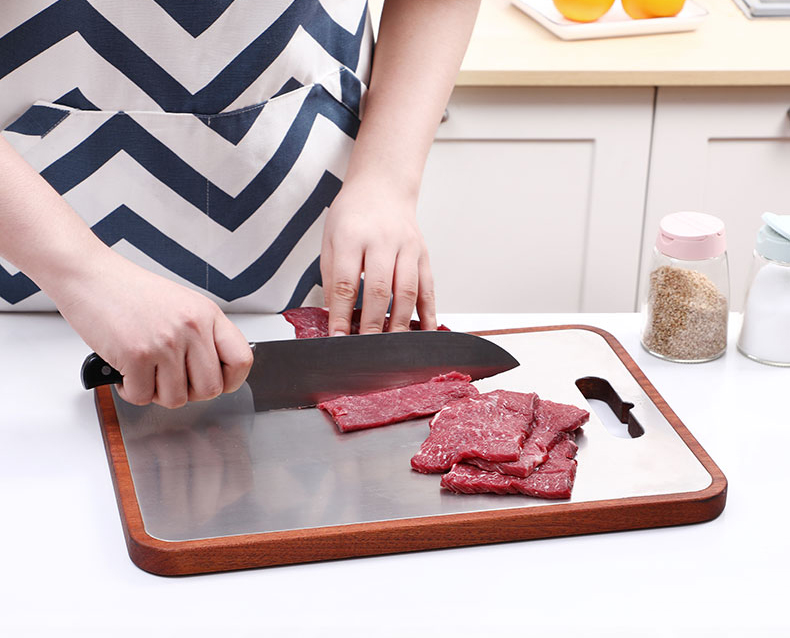
2. Pure Titanium Material: Knife-Resistant Surface, No Metal Debris
Crafted from pure titanium material, the board offers exceptional surface integrity. Everyday kitchen knives cannot meaningfully gouge or flake it in normal use, so it won’t shed metal particles into food. Unlike softer cutting surfaces that scar deeply, titanium’s elastic hardness resists deformation and micro-chipping.
· No metal debris: eliminates a hidden contamination vector common to worn soft-metal boards.
· Stable surface texture: maintains a consistent glide for blades, aiding controlled slicing and dicing.
· Long-term flatness: resists warping from hot rinses, steam, or temperature swings.
Importantly, pure titanium is food-contact safe and non-reactive with acids, salts, and oils. That non-reactivity protects flavors—your citrus, onions, and raw fish taste like themselves, not like the last thing you chopped.
3. Clear Comparison: Wood and Plastic Cutting Boards
· Wood boards
o Porosity invites moisture, fostering bacterial hotspots and mold. In poorly maintained conditions, wooden surfaces can harbor contaminants, and molds such as Aspergillus can produce harmful metabolites under favorable conditions.
o Maintenance-heavy: require thorough drying, periodic oiling, and dedicated sanitation to keep microbes in check.
· Plastic boards
o Durability gaps: repeated knife passes create grooves that darken, smell, and become difficult to sanitize.
o Natural aging leads to yellowing, black stains, and brittleness; cracks can trap residues.
o Plastic shavings: deep scratches can generate plastic debris that may migrate into food during vigorous chopping.
Titanium offers a stable, low-porosity alternative that resists deep scarring and cleans rapidly, reducing the conditions in which mold or bacterial films thrive. Over time, this shift supports Food safety while lowering replacement frequency and maintenance burden.
4. Acid and Alkali Resistant, Corrosion Resistant: The TiO2 Advantage
When titanium meets air, it instantly forms a dense titanium dioxide film (TiO2). This passive layer is the cornerstone of its kitchen performance:
· Acid and alkali resistant: withstands vinegar, lemon juice, tomato acids, soy sauce, brines, and mild alkaline cleaners without pitting or staining.
· Corrosion resistant: no rust, even after repeated dishwasher-like cycles or hot, salty rinses.
· Antibacterial and mildew resistant: the compact oxide and non-porous substrate make it difficult for microbes to anchor, helping suppress mold.
· Deodorizing, no mold or rust: odors have less to cling to; quick cleansing removes residues efficiently.
By reducing microgrooves and blocking chemical attack, the TiO2 surface minimizes conditions favorable to bacterial growth. That’s how a titanium cutting board helps prevent illness at the table—by lowering contamination opportunities from prep to plating.
Practical Use and Care
· Daily cleaning: rinse, apply a small amount of dish soap, wipe with a soft sponge, and rinse again. Towel or air-dry.
· Deep sanitation: safe to rinse with near-boiling water or use food-safe sanitizers. Titanium tolerates heat far beyond kitchen needs.
· Knife compatibility: works well with stainless and carbon-steel blades. For best edge
Who Benefits Most
· Home cooks focused on Food safety and cleanliness with limited time for maintenance.
· Professional kitchens seeking fast turnover between prep tasks without odor carryover.
· Households in humid climates where mold pressure is high—titanium won’t mildew or rust.
· Seafood and raw-prep enthusiasts needing a non-reactive, easy-sanitize surface.
Conclusion
A titanium cutting board leverages the metal’s natural TiO2 passivation to deliver a non-porous, Acid and alkali resistant, corrosion resistant platform for cleaner, safer food prep. Its antibacterial and mildew resistant behavior, deodorizing, no mold or rust performance, and resistance to deep gouging help prevent bacterial buildup while preserving blade control and flavor integrity. Compared with wood and plastic, pure titanium material cuts maintenance, resists aging, and elevates everyday kitchen hygiene.
Frequently Asked Questions and Answers
Q1: Are titanium cutting boards good?
A1: Yes. They provide a non-porous, corrosion resistant surface that’s easy to sanitize, inherently antibacterial and mildew resistant, and highly durable. They resist odors, mold, and deep scarring, supporting long-term Food safety and consistent prep.
Q2: Do titanium cutting boards dull knives?
A2: In normal slicing and push-cut use, titanium is gentle on quality knife edges. Because the surface is hard yet not abrasive like glass or ceramic, it does not rapidly dull blades. As with any board, heavy chopping on hard inclusions (e.g., bones) can wear edges faster.
Q3: Do titanium cutting boards scratch?
A3: They generally will not show damaging scratches in typical kitchen use. Titanium rapidly forms a dense titanium dioxide (TiO2) protective film that helps “heal” fine marks and smooth the surface. This passive layer is stable, does not react with water, and therefore does not trap moisture or generate odors—reducing any risk of mold or off-smells.