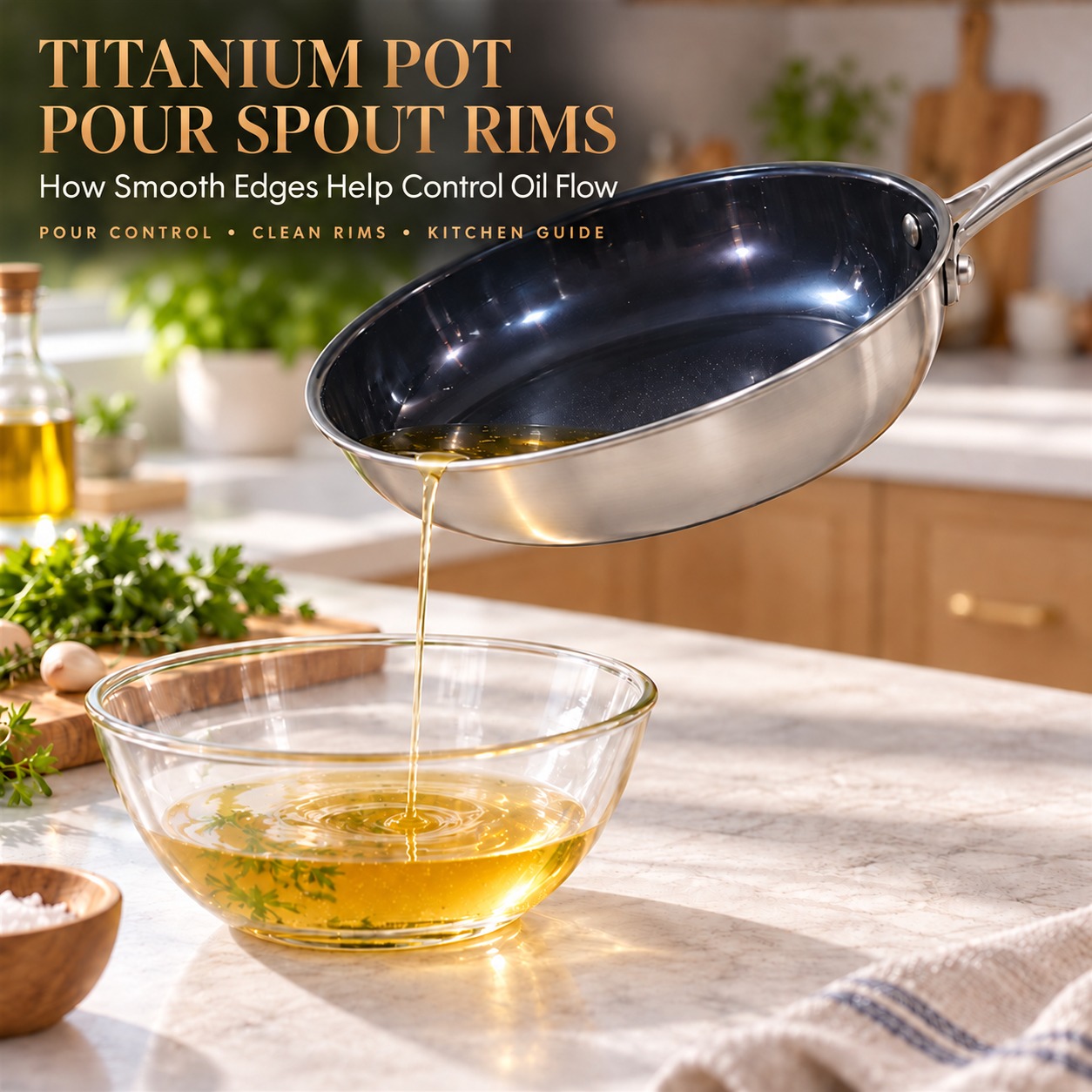
The choice of cookware material directly determines flavor retention, nutritional preservation, and cooking efficiency in every kitchen. Among all metallic materials available today, titanium stands alone as a revolutionary force reshaping how professional chefs and home cooks approach high-quality cooking. From aerospace engineering to everyday kitchens, titanium cookware delivers an exceptional combination of lightweight handling, corrosion resistance, and thermal conductivity that no other material can match. This comprehensive guide explores the technological innovations, performance advantages, and scientific principles behind titanium cookware, offering procurement specialists and cooking enthusiasts alike a detailed understanding of why titanium has become the preferred material for premium cookware in commercial kitchens and households worldwide.
1. Understanding Titanium Metal: The Scientific Basis for Its Exceptional Cookware Performance
Titanium possesses a unique combination of physical and chemical properties that make it extraordinarily well-suited for cookware applications. Understanding these properties helps explain why titanium commands premium pricing and why professional chefs consistently choose titanium cookware for demanding kitchen environments.
Fundamental Physical Properties of Titanium
Titanium has a density of approximately 4.5 grams per cubic centimeter, making it roughly 45% lighter than steel and about 60% heavier than aluminum. This exceptional strength-to-weight ratio means titanium cookware provides the durability and thermal stability of heavy-duty stainless steel while remaining light enough for comfortable, extended use during repetitive cooking tasks such as sauting, searing, and stirring. A typical professional-grade titanium skillet weighs 30-40% less than an equivalent stainless steel pan, reducing operator fatigue during long service shifts.
The strength of titanium remains remarkable even at elevated temperatures. While many metals lose structural integrity when heated, titanium maintains its strength at temperatures exceeding 600 degrees Celsius, far beyond any cooking application. This thermal stability ensures that titanium cookware will not warp, sag, or deform during years of heavy daily use, contributing to consistent cooking performance and extended product lifespan.
Corrosion Resistance and Biocompatibility
Titanium forms a stable, self-repairing oxide layer on its surface when exposed to air or moisture. This passive oxide film, primarily composed of titanium dioxide (TiO2), is extraordinarily thin—typically only 1-3 nanometers—but provides exceptional protection against corrosion in both acidic and alkaline environments. Unlike stainless steel, which can corrode under certain conditions, titanium resists attack from saltwater, tomato sauces, wine, vinegar, and virtually all foods commonly prepared in kitchen environments.
The biocompatibility of titanium represents another remarkable characteristic. Medical implants, surgical instruments, and dental devices rely on titanium precisely because the human body does not reject it. When applied to cookware, this biocompatibility ensures that no harmful metal ions leach into food during cooking, preserving the pure taste of ingredients while eliminating health concerns associated with other reactive cookware materials.
Thermal Conductivity and Heat Distribution
Titanium's thermal conductivity of approximately 21.9 watts per meter-kelvin is lower than aluminum or copper but significantly higher than cast iron. This moderate thermal conductivity, when combined with proper cookware construction techniques, produces excellent heat distribution across the cooking surface without the hot spots characteristic of poor-quality materials. Professional titanium cookware manufacturers address conductivity limitations through multi-layer clad construction, incorporating aluminum or copper cores that compensate for titanium's moderate heat spreading capabilities.
2. Manufacturing Processes: How Titanium Cookware Is Transformed from Raw Metal to Precision Cooking Tool
The transformation of aerospace-grade titanium into professional cookware requires sophisticated manufacturing processes adapted from aerospace, automotive, and medical device industries. Each step in the production chain influences the final performance characteristics of the cookware.
Material Selection: Decoding Titanium Grades for Cookware Applications
Not all titanium is created equal for cookware applications. The titanium industry classifies titanium into grades based on chemical composition and interstitial element content. Grade 1 pure titanium represents the highest purity commercially available, containing minimal oxygen, nitrogen, carbon, and iron. This exceptional purity produces the most formable and corrosion-resistant titanium, making it the preferred choice for premium cookware cooking surfaces.
Grade 2 titanium offers slightly higher strength through controlled interstitial element additions while maintaining excellent formability and corrosion resistance. Many manufacturers use Grade 2 for structural components where its additional strength allows for thinner wall sections and reduced overall weight. Understanding these grade distinctions helps procurement specialists evaluate quality claims and make informed purchasing decisions when selecting titanium cookware for commercial or household use.
Deep Drawing and Precision Forming Techniques
Creating the curved shapes of cookware from flat titanium discs requires deep drawing, a metalforming process where a flat circular blank is pressed into a die cavity by a punch. Titanium's combination of strength and formability makes deep drawing challenging compared to aluminum or mild steel. Manufacturers use specialized lubricants, multiple draw stages with intermediate annealing, and precisely controlled tooling to achieve complex cookware shapes without cracking or thinning the material excessively.
The deep drawing process for titanium cookware typically involves several stages. Initial blanking cuts titanium sheet into precise circles. First draw forms the basic bowl shape. Intermediate annealing restores ductility. Subsequent draws refine the geometry. Final sizing ensures dimensional accuracy. Each stage requires careful control of force, speed, and lubrication to maintain material integrity and achieve the wall thickness distribution required for optimal thermal performance.
Welding and Component Joining Methods
Assembling multi-component titanium cookware requires welding techniques that preserve the corrosion-resistant properties of the base material. Tungsten inert gas (TIG) welding represents the most common method, using a non-consumable tungsten electrode to produce welds with excellent strength and corrosion resistance. The critical challenge in titanium welding is preventing oxidation of the weld zone, which requires inert gas shielding during the welding process and until the metal cools below the temperature where oxidation becomes rapid.
Many premium titanium cookware pieces featureforge-welded construction where handles are attached through a solid-state welding process rather than mechanical fastening. This eliminates gaps, crevices, and potential failure points associated with riveted or screwed handle construction. The result is a seamless, hygienic cooking vessel that resists bacterial growth and is easy to clean thoroughly.
3. Surface Engineering Technologies: Advanced Treatments That Define Premium Titanium Cookware
The raw surface of titanium, while naturally corrosion-resistant, requires additional engineering to achieve the exceptional cooking performance expected of premium cookware. Several advanced surface treatment technologies transform ordinary titanium into a superior cooking surface.
Physical Vapor Deposition (PVD) Coating Technologies
Physical vapor deposition encompasses a family of technologies that apply thin film coatings to titanium cookware surfaces through physical rather than chemical processes. Magnetron sputtering, cathodic arc evaporation, and ion plating represent the most common PVD methods used in cookware manufacturing. These processes create hard, wear-resistant surfaces with excellent adhesion to the titanium substrate.
PVD coatings for titanium cookware typically consist of titanium nitride (TiN) or titanium carbonitride (TiCN) compounds that provide a golden or bronze appearance along with exceptional hardness and wear resistance. These ceramic-metallic coatings maintain their appearance and performance characteristics for years of heavy use, resisting scratches from metal utensils and cleaning implements that would damage conventional non-stick surfaces.
Plasma Electrolytic Oxidation (PEO) for Enhanced Surface Properties
Plasma electrolytic oxidation, also called micro-arc oxidation (MAO), represents an advanced surface treatment specifically suited for titanium and aluminum substrates. Unlike conventional anodizing, which produces a relatively smooth oxide layer, PEO creates a rough, porous ceramic coating with excellent adhesion to the base metal. The process involves immersing the titanium cookware in an electrolyte solution while applying high voltage, causing plasma discharges that locally melt and transform the surface into a hard ceramic compound.
The resulting PEO coating on titanium typically consists of titanium dioxide in its anatase and rutile crystalline forms, mixed with other compounds from the electrolyte. This coating demonstrates remarkable hardness, wear resistance, and thermal stability while providing a degree of natural non-stick property due to its low surface energy characteristics. The porous structure also serves as an excellent primer for subsequent coating layers, improving adhesion of additional surface treatments.
Surface Hardening Through Thermal Diffusion Processes
Thermal diffusion processes represent another category of surface engineering used to enhance titanium cookware performance. These methods involve diffusing additional elements into the titanium surface at elevated temperatures to create hardened zones with improved wear resistance. Nitriding, carbonitriding, and boriding treatments create surface layers significantly harder than the underlying titanium while maintaining the corrosion resistance and biocompatibility that make titanium attractive for cookware applications.
The nitriding process, for example, involves heating titanium cookware in a nitrogen-containing atmosphere at temperatures between 700 and 900 degrees Celsius. Nitrogen atoms diffuse into the titanium lattice, forming titanium nitride compounds that dramatically increase surface hardness. The treated surface maintains its corrosion resistance and gains wear properties approaching those of hardened tool steels, making the cookware suitable for the most demanding professional kitchen environments.
4. Structural Innovation: Multi-Layer Clad Construction for Optimal Thermal Performance
The exceptional properties of titanium must be carefully integrated into cookware construction to maximize thermal performance. Multi-layer clad construction represents the industry-standard approach for creating titanium cookware that combines the benefits of multiple materials.
The Three-Layer Principle: Combining Materials for Superior Results
Premium titanium cookware typically employs a three-layer construction that strategically places each material where it performs best. The inner cooking surface features pure titanium bonded directly to the food, leveraging its biocompatibility and corrosion resistance. The middle core consists of aluminum or an aluminum alloy, chosen for its exceptional thermal conductivity that ensures rapid, uniform heat distribution. The outer wall and base incorporate430 ferritic stainless steel, providing magnetic properties for induction cooktop compatibility along with durability and aesthetic appeal.
This three-layer construction resolves the fundamental limitation of pure titanium cookware—its moderate thermal conductivity—by encapsulating a thick aluminum core that rapidly distributes heat from the heat source across the entire cooking surface. The result combines titanium's culinary advantages with thermal performance matching or exceeding that of premium all-stainless-steeld cookware constructions.
Heat Spreading Analysis in Clad Titanium Cookware
Understanding heat distribution in clad titanium cookware requires analyzing how thermal energy flows from the heat source through the multi-layer structure to the cooking surface. Induction coils or gas flames deliver heat to the outer stainless steel layer, which then transfers energy to the aluminum core. Aluminum's high thermal conductivity spreads this energy laterally within milliseconds, ensuring that the entire cooking surface reaches the target temperature simultaneously.
Finite element analysis and experimental thermal imaging reveal that properly designed three-layer titanium cookware achieves temperature uniformity within 5 degrees Fahrenheit across the cooking surface when properly preheated. This uniformity eliminates hot spots that cause uneven browning, burning, and inconsistent cooking results—problems endemic to poor-quality single-material cookware constructions.
Thickness Optimization for Domestic and Commercial Cooking Applications
Manufacturers optimize layer thicknesses based on intended use cases. Commercial kitchen cookware intended for high-volume rapid cooking typically features thicker aluminum cores (3-4 millimeters) to provide greater heat storage and more stable temperatures during extended cooking cycles. Household cookware may use thinner constructions (2-2.5 millimeters) to reduce weight and cost while maintaining adequate thermal performance for typical home cooking patterns.
The titanium inner layer typically ranges from 0.3 to 0.5 millimeters—thick enough to provide a durable cooking surface that will last for decades, but not so thick as to add unnecessary weight or cost. These thickness ratios represent decades of engineering refinement and testing to achieve optimal balance between performance, weight, durability, and manufacturing cost.
5. Titanium vs. Other Materials: A Technical Comparison for Informed Purchasing Decisions
Understanding how titanium cookware compares to alternatives helps procurement specialists and consumers make informed decisions based on their specific requirements, budget constraints, and performance priorities.
Thermal Conductivity Comparison Across Cookware Materials
Thermal conductivity determines how quickly and evenly a pan responds to temperature changes during cooking. Copper leads all cookware materials at approximately 401 watts per meter-kelvin, followed by aluminum at 237 W/(m-K). Cast iron provides 80 W/(m-K), while titanium offers approximately 22 W/(m-K). Stainless steel ranges from 15-20 W/(m-K) depending on the specific alloy composition.
These raw conductivity numbers can mislead without considering construction context. A thin aluminum pan may perform worse than a thick titanium pan despite aluminum's higher conductivity because thin pans lose heat rapidly to surrounding air. Multi-layer clad titanium cookware, with its thick aluminum core, actually outperforms single-layer aluminum cookware and matches or exceeds the thermal performance of many copper and all-stainless-steel constructions.
Durability and Longevity Assessment
Titanium cookware demonstrates exceptional durability when properly manufactured. The metal resists denting, warping, and corrosion under conditions that would damage lesser materials. Properly maintained titanium cookware routinely lasts 20-30 years or longer in commercial kitchen environments, representing excellent return on investment despite higher initial purchase prices.
Comparing longevity across materials reveals titanium's advantages. Non-stick coated aluminum typically requires replacement every 2-5 years as coatings degrade. Stainless steel cookware may last 10-20 years before showing significant wear. Cast iron, if properly seasoned and maintained, can last generations but requires ongoing maintenance. Titanium occupies the premium longevity segment alongside high-quality stainless steel while offering superior corrosion resistance and lighter weight.
Maintenance Requirements and Total Cost of Ownership
The total cost of cookware ownership extends far beyond initial purchase price to encompass maintenance requirements, replacement frequency, and performance consistency over time. Titanium cookware requires minimal maintenance compared to alternatives—no seasoning like cast iron, no special utensils like non-stick coatings, no polished finish restoration like some stainless steels. Simple dishwashing or hand washing with mild detergent maintains the cooking surface in excellent condition indefinitely.
This maintenance simplicity translates directly to operational cost savings in commercial environments. Staff training time decreases when cookware requires no special handling procedures. Replacement costs decrease as equipment lasts longer. Food quality benefits from consistent cooking surface characteristics that do not degrade over time.
| Material | Thermal Conductivity (W/m·K) | Density (g/cm³) | Corrosion Resistance | Longevity (Years) | Maintenance |
|---|---|---|---|---|---|
| Grade 1 Titanium | 21.9 | 4.5 | Excellent | 20-30+ | Minimal |
| Aluminum (Pure) | 237 | 2.7 | Good | 5-10 | Low |
| Cast Iron | 80 | 7.2 | Good (seasoned) | 50+ | High (seasoning) |
| 18/10 Stainless Steel | 15-20 | 7.9 | Excellent | 15-25 | Moderate |
| Copper | 401 | 8.9 | Good (lined) | 25-40 | High (polishing) |
Multi-layer clad titanium cookware combines the corrosion resistance and biocompatibility of titanium with the thermal conductivity of aluminum cores, delivering superior performance compared to single-material alternatives across virtually all relevant parameters for professional kitchen applications.
6. Applications and Best Practices: Maximizing Titanium Cookware Performance in Professional and Home Kitchens
Understanding optimal use cases and cooking techniques helps users extract maximum value from titanium cookware investments while ensuring years of trouble-free service.
Ideal Cooking Applications for Titanium Cookware
Titanium cookware excels in applications requiring precise temperature control, rapid heat response, and durability. Searing meats, sauting vegetables, deglazing pan sauces, and preparing acidic foods like tomato-based dishes represent ideal uses where titanium's combination of thermal properties, corrosion resistance, and non-reactive cooking surface deliver outstanding results.
The material's exceptional corrosion resistance makes titanium particularly suitable for preparing seafood, ceviche, and other dishes involving saltwater or citrus juices that would damage lesser cookware materials. Professional sushi kitchens and seafood operations increasingly adopt titanium cookware specifically for these demanding applications where corrosion resistance directly impacts food quality and equipment longevity.
Temperature Control Techniques and Preheating Protocols
Proper preheating technique unlocks titanium cookware's full thermal potential. Unlike non-stick surfaces that require minimal preheating, titanium cookware benefits from the same preheating protocols used for professional stainless steel. Begin with medium heat for 1-2 minutes to allow the aluminum core to saturate with thermal energy, then increase to desired cooking temperature. The cookware will maintain stable temperatures throughout the cooking cycle without the temperature fluctuations common with thinner cookware constructions.
Temperature management during cooking differs from non-stick cookware expectations. Titanium surfaces develop natural non-stick properties when properly preheated and oiled, allowing cooking techniques that would damage conventional non-stick coatings. High-heat searing, aggressive deglazing, and metal utensil use cause no harm to properly treated titanium surfaces, opening cooking possibilities unavailable with conventional non-stick alternatives.
Cleaning Procedures for Long-Term Care
Cleaning titanium cookware requires no special procedures beyond standard kitchen hygiene practices. Allow the cookware to cool before washing to prevent thermal shock that could affect surface treatments. Use soft sponges or cleaning pads to preserve surface finishes. Mild dishwashing detergent removes food residues effectively without damaging titanium surfaces or their treatments.
For stubborn residues, soaking in warm water with dishwashing detergent for 15-30 minutes softens deposits for easy removal. Baking soda paste provides gentle abrasive cleaning for burnt-on residues without scratching most surface treatments. Avoid chlorine bleach and highly acidic cleaners that could potentially affect surface treatments over extended exposure, though brief contact with such cleaners typically causes no lasting damage.
7. Market Applications: Why Commercial Kitchens Choose Titanium Cookware
Commercial kitchen operators increasingly specify titanium cookware for demanding service environments where durability, performance, and longevity directly impact operational efficiency and food quality consistency.
High-Volume Restaurant Applications
Restaurant kitchens operating at capacity during peak service periods demand cookware that maintains consistent performance throughout extended cooking cycles. Titanium cookware's thermal stability ensures that cooking surface temperatures remain constant even when consecutive dishes require the same pan, eliminating the recovery-time problems that plague thinner cookware materials.
The durability of titanium cookware directly impacts restaurant economics. Equipment failures during service create cascading problems—delayed orders, compromised food quality, staff frustration, and customer dissatisfaction. Titanium cookware's resistance to denting, warping, and surface degradation under restaurant use conditions significantly reduces emergency equipment replacements and associated operational disruptions.
Institutional Catering and Food Service Operations
Institutional food service operations—hospital cafeterias, university dining halls, hotel banquet kitchens—face unique challenges including high-volume production, diverse menu requirements, and cost containment pressures. Titanium cookware addresses these challenges through its versatility across cooking applications, exceptional durability under continuous use, and minimal maintenance requirements that reduce labor costs.
The biocompatibility of titanium provides additional reassurance for institutional applications where food safety concerns extend beyond immediate health risks to long-term exposure considerations. Parents, patients, and guests can be confident that titanium cookware introduces no harmful metal ions or reactive compounds into prepared foods, supporting institutional food service operators' commitments to health and wellness.
Professional Chef Preferences and Kitchen Standards
Professional chefs consistently identify titanium cookware as representing the professional kitchen standard for demanding applications. The combination of precise temperature control, durability under continuous use, and minimal maintenance requirements aligns perfectly with professional kitchen operational priorities.
Leading culinary schools increasingly incorporate titanium cookware into their training programs, exposing emerging chefs to the material's characteristics and performance capabilities. Students learning on titanium cookware develop cooking techniques and temperature management skills that transfer directly to professional kitchen environments where titanium cookware dominates high-end installations.
8. Quality Verification: How to Authenticate Premium Titanium Cookware
Market differentiation between genuine titanium cookware and inferior products claiming titanium content requires understanding authentication methods and quality indicators.
Material Certification and Grade Verification
Reputable titanium cookware manufacturers provide material certification documentation verifying titanium grades used in their products. Grade verification through spectrometry testing confirms actual titanium content and identifies any alloying elements present. Procurement specialists should request this documentation when specifying titanium cookware for commercial applications.
Visual inspection provides additional authentication indicators. True titanium surfaces have a characteristic matte gray appearance distinct from the bright reflective surfaces of polished aluminum or stainless steel. Weight comparisons against known genuine titanium products help identify underweight imposters using aluminum with titanium-colored coatings rather than actual titanium construction.
Construction Quality Indicators
Examination of handle attachment points, base flatness, and wall uniformity provides quality indicators beyond material verification. Seamless constructions without visible rivets, screws, or weld seams indicate advanced manufacturing techniques associated with premium producers. Flat bases that sit level on countertops without rocking indicate proper manufacturing tolerance control.
Clad construction quality reveals itself through edge examination. Three-layer clad cookware should show consistent layering at the rim and base edges, with no delamination gaps or inconsistencies visible where layers meet. Any separation, bubbling, or inconsistency at these critical junction points indicates manufacturing defects that will compromise long-term performance.
Performance Testing Protocols
Standardized performance testing provides definitive quality verification. Thermal imaging during preheating reveals heat distribution uniformity. Scratch resistance testing using metal implements under controlled pressure demonstrates surface durability. Acid immersion testing following ASTM standards verifies corrosion resistance and biocompatibility claims.
Professional buyers should insist on performance documentation from independent testing laboratories rather than relying solely on manufacturer claims. Third-party verification provides objective confirmation of quality indicators and performance characteristics essential for informed purchasing decisions in commercial procurement contexts.
9. Future Developments: Emerging Technologies in Titanium Cookware Innovation
The titanium cookware industry continues evolving through ongoing research, manufacturing innovations, and surface engineering advances that promise enhanced performance capabilities in future product generations.
Advanced Surface Treatment Research
Research institutions and cookware manufacturers continue developing new surface treatment technologies to enhance titanium cookware performance. Nanostructured surface modifications, advanced ceramic coating formulations, and hybrid treatment combinations promise improvements in non-stick properties, wear resistance, and cleaning convenience beyond current commercial offerings.
Emerging plasma treatment technologies offer potential for creating ultra-hydrophobic and oleophobic surface structures that dramatically enhance natural non-stick properties without chemical coatings. These biomimetic surfaces, inspired by lotus leaf structures, could provide permanent non-stick characteristics achievable through surface texturing rather than chemical treatments.
Manufacturing Process Innovations
Advances in metalforming technology continue improving titanium cookware manufacturing efficiency and quality consistency. Laser cutting, robotic welding, and automated quality inspection systems reduce manufacturing costs while improving precision and consistency. These innovations make premium titanium cookware increasingly accessible to broader market segments without compromising the quality characteristics that define the material category.
Additive manufacturing techniques, commonly called 3D printing, offer potential for creating titanium cookware with complex geometries impossible through conventional manufacturing. Lattice structures within cookware walls could provide thermal insulation properties, while optimized internal geometries might enhance heat distribution beyond current clad construction capabilities.
Sustainability and Environmental Considerations
Environmental sustainability increasingly influences material selection across consumer and commercial product categories. Titanium cookware's exceptional longevity directly addresses sustainability concerns by reducing replacement frequency and associated waste generation. A single high-quality titanium pan replacing five or more non-stick alternatives over its operational lifetime represents meaningful environmental impact.
Titanium's recyclability further enhances its environmental profile. Unlike non-stick coatings that contaminate scrap metal streams, clean titanium cookware enters standard metal recycling streams without special handling. The material's inertness also means no chemical coatings to release during disposal, addressing concerns about environmental contamination from abandoned cookware.
Conclusion
Titanium cookware represents the culmination of materials science innovation applied to the fundamental human need for preparing food. Its exceptional combination of lightweight handling, corrosion resistance, biocompatibility, and thermal performance addresses limitations that have challenged cookware designers for generations.
From aerospace engineering to professional kitchens, titanium has proven its value in the most demanding applications. Multi-layer clad constructions resolve thermal conductivity limitations while preserving titanium's unique advantages. Advanced surface treatments unlock performance capabilities that rival and exceed conventional non-stick coatings without their environmental and health concerns.
For procurement specialists evaluating cookware investments, titanium cookware offers compelling economic arguments beyond its premium performance characteristics. Extended service life, minimal maintenance requirements, and consistent cooking results deliver value that amortizes higher initial costs over years of trouble-free service.
As manufacturing technologies continue improving and production costs decline, titanium cookware's accessibility will expand to serve broader market segments seeking the exceptional performance and durability that only titanium delivers.
Frequently Asked Questions
Is titanium cookware safe for everyday household use?
Yes, titanium cookware is exceptionally safe for everyday household cooking. The titanium dioxide surface that forms naturally on titanium cookware is chemically inert and FDA-approved for food contact. No harmful metal ions leach into food during cooking, and the surface produces no toxic fumes at any cooking temperature. Families can cook with confidence knowing titanium cookware introduces no health risks under any normal or accidental misuse conditions.
How does titanium cookware compare to cast iron for everyday cooking?
Titanium cookware and cast iron serve different cooking needs despite both offering excellent heat retention. Cast iron excels for slow cooking and炖煮 where its massive thermal mass provides stable temperatures over extended periods. Titanium offers faster heat response, lighter weight, and corrosion resistance that cast iron cannot match. Many professional kitchens use both materials strategically based on specific cooking applications.
Can metal utensils damage titanium cookware surfaces?
Premium titanium cookware with proper surface treatments withstands metal utensil use without damage. Unlike non-stick coatings that fail immediately when scratched by metal implements, treated titanium surfaces resist scratching from stainless steel, metal spatulas, and wire whisks. While avoiding extreme abuse, everyday metal utensil use causes no harm to properly manufactured titanium cookware.