1.2 Challenges and Considerations
3. Mechanical Polishing Method
4. Best Practices for Polishing Titanium Bars
4.2 Select the Right Polishing Media
4.3 Ensure Proper Post-Polishing Treatment
4.4 Use Specialized Polishing Pastes
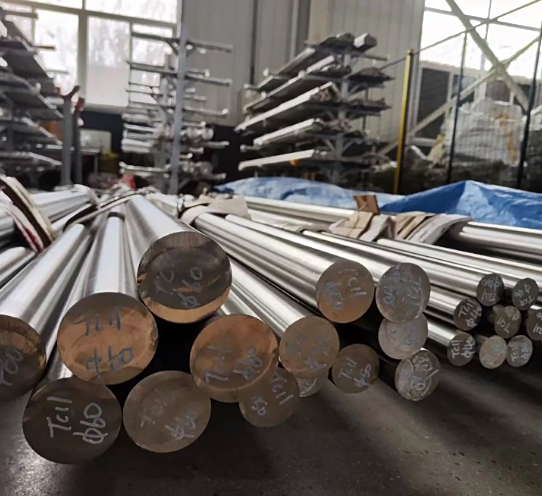
Polishing titanium bars and titanium alloys is a critical process to achieve smooth, flat, and aesthetically pleasing surfaces. Due to titanium's unique properties, such as its low thermal conductivity and reactivity, specific polishing methods must be employed to avoid overheating and surface damage. This article explores the key polishing techniques for titanium bars, including fine grinding, barrel polishing, and mechanical polishing, along with their processes, characteristics, and best practices.
1. Fine Grinding
Fine grinding is a conventional polishing method that uses rubber grinding wheels embedded with diamond abrasives to polish the surface of titanium bars and titanium alloy castings.
1.1 Process and Key Points:
Use various grades of diamond abrasive rubber wheels to carefully grind the surface.
The goal is to achieve a flat and smooth finish without causing overheating or surface damage.
Focus on maintaining consistent pressure and avoiding abrasive scratches on the surface.
1.2 Challenges and Considerations:
Titanium has low thermal conductivity, which leads to localized heat buildup during grinding. Overheating can cause surface oxidation or deformation, so grinding should be performed with caution.
It is essential to ensure the entire surface is evenly polished to achieve a uniform finish.
The barrel polishing method involves placing titanium castings into a rotating and vibrating barrel along with grinding media, water, and additives. The friction between the castings and the grinding media smooths and polishes the surface.
2.1 Process and Features:
2.1.1Materials Used:
Titanium castings.
Grinding media (PK series, SA series, B series).
Water and polishing additives.
2.1.2Working Mechanism:
The barrel rotates and vibrates, creating friction between the grinding media mixture and the titanium castings.
Over time, this friction polishes the castings to a smooth and uniform surface.
2.2 Advantages:
No Dust Pollution: The closed barrel design eliminates dust and airborne particles, providing a cleaner working environment.
Low Labor Intensity: The automated process reduces manual effort.
No Heat Generation: The wet polishing process prevents heat buildup, avoiding oxidation or deformation of the titanium surface.
2.3 Grinding Media Types:
PK Series: Offers the highest grinding efficiency but leaves a rougher surface.
SA and B Series: Lower grinding efficiency than PK, but produces the smoothest and most refined surface finish, ideal for high-precision applications.
3. Mechanical Polishing Method
Mechanical polishing uses soft cloth wheels or black bristle brushes, combined with specialized polishing pastes, to achieve a mirror-like finish on titanium bars and alloys.
3.1 Process and Techniques:
3.1.1 Polishing Materials
Use polishing pastes specifically designed for titanium and titanium alloys.
Green polishing paste has been tested and proven effective for titanium polishing.
3.1.2 Polishing Methodology
Employ high-speed rotation and light pressure to avoid overheating or work hardening of the titanium surface.
Completely remove the surface contamination layer while preventing the formation of a new hardened layer.
3.2 Key Considerations:
Surface Contamination: Ensure that the polished surface is free from contamination and work-hardened layers to achieve the desired finish.
Post-Polishing Treatment:
After polishing, allow the titanium surface to form a stable oxide film before washing.
Immediate water washing can darken the surface by disrupting the oxide layer formation.
| Comparison of Polishing Methods | ||
| Polishing Method | Advantages | Disadvantages |
| Fine Grinding | Achieves a flat and smooth surface finish. | Requires careful control to avoid overheating and surface scratches. |
| Barrel Polishing | Dust-free, low labor intensity, and no heat generation. | May require additional steps for high-precision finishing. |
| Mechanical Polishing | Produces a mirror-like finish with precise control. | Requires specialized polishing pastes and careful handling to avoid contamination or oxidation. |
4. Best Practices for Polishing Titanium Bars
4.1 Prevent Overheating:
Always use light pressure, high-speed tools, and maintain proper cooling to avoid overheating.
4.2 Select the Right Polishing Media:
Choose grinding media that balances efficiency and surface smoothness based on your requirements.
4.3 Ensure Proper Post-Polishing Treatment:
Allow the oxide film to fully form before washing or additional processing to avoid discoloration.
4.4 Use Specialized Polishing Pastes:
Employ pastes specifically designed for titanium to achieve optimal results.
Conclusion
Polishing titanium bars requires specialized techniques to address the unique properties of titanium, such as its low thermal conductivity and susceptibility to oxidation. Whether using fine grinding, barrel polishing, or mechanical polishing, careful process control is essential to achieve smooth, uniform, and high-quality surfaces.
By following best practices and using the appropriate polishing method, manufacturers can enhance the performance and aesthetics of titanium products for applications in aerospace, medical, and other high-performance industries.
Looking for polished titanium bar stock? Contact us today to learn more about our titanium processing services and premium-quality titanium products.