Titanium anode have emerged as critical components in a broad spectrum of modern industries, thanks to their outstanding corrosion resistance, conductivity, and durability. The use of titanium anode technology has revolutionized processes where traditional materials fail to withstand aggressive environments or require frequent replacement. Applications in the chlor-alkali industry, chemical industry, metallurgy, electroplating, water treatment, environmental protection, ocean engineering, cathodic protection, and other fields all benefit from the unique properties of titanium anodes. Their ability to provide stable and uniform current distribution, along with a long operational lifespan, significantly reduces maintenance costs and improves process efficiency. In sectors such as water treatment and environmental protection, titanium anodes support cleaner, more sustainable practices by enabling advanced electrochemical reactions with minimal environmental impact. This article explores the key applications, benefits, and top use cases of titanium anodes in industry, highlighting how their implementation leads to enhanced industrial efficiency, greater product reliability, and long-term economic advantages for manufacturers and operators alike.
1. Titanium Anodes in the Chlor-Alkali and Ammonia-Soda Industries
1.1 Chlor-Alkali Industry
The chlor-alkali industry is a cornerstone of the chemical sector, producing essential chemicals such as chlorine and caustic soda through the electrolysis of brine. Traditional electrode materials such as graphite and lead alloys have significant drawbacks, including rapid degradation, high maintenance needs, and environmental hazards from toxic residues. The introduction of titanium anode cells has changed the landscape.
Titanium anodes, often coated with precious metal oxides (such as ruthenium, iridium, or platinum), offer outstanding corrosion resistance even in the aggressive conditions of concentrated brine electrolysis. These anodes maintain stable electrochemical performance over extended periods, drastically reducing downtime and maintenance costs. The high oxygen evolution efficiency of titanium anodes also ensures lower cell voltages and energy consumption, directly improving productivity and reducing operational expenses.
1.2 Ammonia-Soda Industry
Similar to their role in chlor-alkali production, titanium anodes are widely used in the ammonia-soda process (Solvay process) for the electrolysis of brine solutions. Titanium electrode cells provide consistent performance, enhanced safety, and minimal environmental impact compared to traditional materials. Their durability and resistance to chloride-induced corrosion make them the default choice for modern ammonia-soda plants.
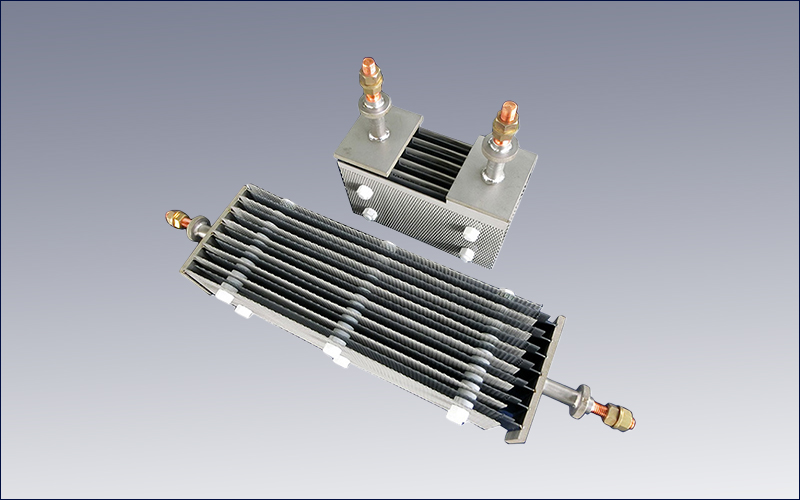
2. Titanium Anodes for Electrodeposition of Non-Ferrous Metals
2.1 Electrowinning and Electrorefining
Electrodeposition is a primary method for extracting and refining non-ferrous metals such as zinc (Zn), cadmium (Cd), copper (Cu), manganese (Mn), cobalt (Co), and chromium (Cr). In these processes, the choice of anode material is critical to product purity, process efficiency, and operational stability.
Titanium anodes, especially those with mixed metal oxide (MMO) coatings, serve as dimensionally stable, insoluble anodes. During metal extraction, the titanium anode remains inert, providing a stable platform for the electrochemical reduction of metal ions onto the cathode. This enables the production of high-purity metals, reduces contamination risks, and eliminates issues associated with soluble anodes, such as sludge formation and frequent anode replacement.
2.2 Advantages in Hydrometallurgy
In hydrometallurgical operations, titanium anodes enable continuous, large-scale production with minimal maintenance. Their high electrocatalytic activity reduces overpotential at the anode, thus lowering cell voltage and energy consumption. The robust corrosion resistance of titanium anodes ensures long service life even with aggressive electrolytes, while their stability maintains consistent product quality and process control.
3. Titanium Anodes in Ionized Water Production
Electrolyzed water, including alkaline ionized water and acidic ionized water, has found increasing acceptance in medical, food, and domestic applications. The quality of ionized water depends heavily on the performance of the electrolytic cell, especially the anode material.
3.1 Role in Health and Nutrition
The human body requires a tightly regulated acid-base balance (pH 7.36–7.4) for optimal metabolism. Modern diets often skew acidic, which is linked to a range of health concerns. Alkaline ionized water, produced via electrolysis with high-performance titanium anodes, has demonstrated benefits in alleviating chronic diarrhea, indigestion, excessive gastric acidity, and intestinal fermentation disorders.
3.2 Why Titanium Anodes?
Titanium anodes provide the necessary durability, chemical stability, and electrochemical efficiency for long-term production of ionized water. Their resistance to corrosion in both acidic and alkaline environments ensures product purity and minimizes maintenance. The use of precious metal coatings further enhances their catalytic activity, enabling efficient and reliable water splitting.
4. Titanium Anodes in the Electroplating Industry
Electroplating is an essential process for imparting desired surface properties such as conductivity, reflectivity, corrosion resistance, and wear resistance to metal components.
4.1 Gold Plating
Historically, gold plating relied on platinum-plated titanium electrodes. While effective, these electrodes were costly, required importation, and presented several technical challenges. For example, they could facilitate the undesirable oxidation of monovalent gold ions to trivalent states, reducing current efficiency and destabilizing the bath’s citrate buffer.
The development of precious metal-modified titanium anode plates resolved these issues. These advanced anodes stabilize the plating bath, maintain consistent chemical balance, and produce gold-plated components indistinguishable from those produced using platinum-titanium electrodes, but at a lower cost and with greater reliability.
4.2 Chromium Plating
Chromium plating, particularly for hard, wear-resistant coatings, is one of the most demanding electroplating environments. Traditional lead-based anodes are gradually passivated by the formation of lead chromate, which increases cell voltage, decreases current efficiency, and requires regular cleaning—posing both operational and environmental hazards.
Titanium anodes with MMO coatings withstand the highly corrosive sulfuric and chromic acid baths used in chromium plating. They maintain stable conductivity and high current density tolerance (up to 50 A/dm²), reducing downtime, improving safety, and delivering consistent surface quality on plated components.
5. Titanium Anodes in Water Treatment and Environmental Protection
5.1 Industrial and Municipal Water Treatment
High-performance titanium anodes are crucial in treating industrial process water, hospital wastewater, electroplating effluents containing cyanides, and power plant cooling water. Their advanced coatings enable efficient electrochemical oxidation of organic and inorganic contaminants, helping facilities comply with stringent discharge regulations.
5.2 Key Performance Metrics
Titanium anodes used in water treatment achieve scale removal rates above 94%, decontamination rates above 94%, sterilization rates over 97%, and complete algal removal. This performance fully meets or exceeds industrial and municipal wastewater discharge standards. The high stability and service life of these anodes (often exceeding 10 years of continuous operation) bring significant cost savings and reliability to treatment systems.
5.3 Environmental Benefits
Unlike lead or graphite electrodes, titanium anodes produce no toxic sludge or hazardous byproducts. Their use reduces environmental liability, simplifies waste management, and supports broader sustainability goals.

6. Other Industrial Applications of Titanium Anodes
6.1 Marine Engineering and Cathodic Protection
Titanium anodes are the preferred material for impressed current cathodic protection (ICCP) systems used in ships, offshore platforms, pipelines, and harbor structures. Their resistance to seawater corrosion, biofouling, and mechanical stress ensures long-term protection of metal structures in harsh marine environments. Titanium anodes also tolerate high current densities without passivation, maintaining consistent protection over decades.
6.2 Environmental Monitoring and Specialty Electrolysis
Titanium anodes are increasingly used in specialized electrochemical applications such as electro-synthesis of fine chemicals, environmental monitoring sensors, and advanced oxidation processes for contaminant removal. Their versatility and reliability make them ideal for next-generation technologies aiming at higher efficiency and lower environmental impact.
7. Key Benefits of Titanium Anodes
· Exceptional Corrosion Resistance: Titanium anodes withstand aggressive acids, alkalis, and saline environments, ensuring long service life.
· Excellent Electrochemical Performance: Low overpotential and high current efficiency improve process productivity and reduce energy costs.
· Stability and Purity: Non-soluble, inert anodes prevent contamination of products and baths, supporting consistent quality.
· Reduced Maintenance and Downtime: Extended operational lifespans and minimal cleaning requirements translate to lower operating expenses.
· Environmental Safety: Absence of toxic byproducts or electrode degradation supports regulatory compliance and sustainability.
Frequently Asked Questions and Answers
1. What are the key performance advantages of titanium anodes in water electrolysis for green hydrogen production, and how do they impact system efficiency and long-term stability?
Titanium anodes provide superior corrosion resistance and long-term electrochemical stability in the harsh environments of water electrolysis. Their inertness prevents contamination of the electrolyte and hydrogen product, while their low overpotential for oxygen evolution reduces cell voltage and energy consumption. As a result, titanium anodes enhance overall system efficiency, minimize maintenance, and enable the long operational cycles demanded by green hydrogen production.
2. How do titanium anodes enhance electrochemical oxidation performance in industrial wastewater treatment, particularly in terms of corrosion resistance and contaminant degradation efficiency under high-voltage conditions?
In industrial wastewater treatment, titanium anodes—especially those coated with precious metal oxides—exhibit exceptional corrosion resistance even under high-voltage, highly oxidizing conditions. This allows them to efficiently generate reactive oxygen species for the rapid degradation of organic and inorganic contaminants. Their stability ensures consistent performance, prolonged service life, and high contaminant removal rates, even as process demands fluctuate.
3. What makes titanium anodes the preferred material for impressed current cathodic protection (ICCP) in marine engineering, and what critical performance metrics (e.g., current density tolerance, lifespan) influence their application in harsh saltwater environments?
Titanium anodes are favored in ICCP systems due to their resistance to seawater corrosion, mechanical robustness, and ability to operate at high current densities without passivation or degradation. Key performance metrics include high current density tolerance (often up to 100 A/m² or more), operational lifespans exceeding 20 years, and minimal maintenance requirements. These properties ensure reliable, cost-effective protection for marine structures exposed to severe environmental stresses.