With the rapid development of the electronic and information industry—encompassing integrated circuits, information storage, LCD displays, laser memory, and electronic controllers—magnetron sputtering technology has progressed from laboratory research into large-scale industrial production. At the core of this process is the cathode sputtering phenomenon, where charged particles bombard a target material, causing atoms to be ejected and deposited as a thin film on a substrate.
Target material is the basic consumable during magnetron sputtering. Not only is the amount used substantial, but the quality of the target material directly influences the performance of the resultant metal film. As a result, the target material serves as a key factor in the magnetron sputtering process, determining the uniformity, conductivity, and adhesion of the coating.
Among various target materials, titanium targets are widely used due to their excellent properties and versatility. The classification and practical application of magnetron titanium sputtering targets have become critical topics in both research and industrial fields, impacting product quality in advanced electronics manufacturing. This article explores the types of titanium sputtering targets and their essential roles in modern magnetron sputtering technology.
1. Classification of Sputtering Targets
Sputtering targets can be classified according to different criteria, including material composition, shape, and application field. This classification helps sputtering target manufacturers and users select the optimal target for specific industrial and research needs.
1.1 Material Classification
Depending on the material, sputtering targets are generally divided into:
Metal Targets:
Pure metals such as titanium, aluminum, copper, gold, and silver are commonly used. Titanium sputtering targets, in particular, are valued for their light weight, high strength, and corrosion resistance.
Alloy Targets:
These are composed of two or more metals (e.g., Ti-Al, Ni-Cr) to achieve specific thin-film properties or to enhance coating performance.
Inorganic Non-Metal Targets:
Such targets include ceramics and oxides (e.g., SiO₂, Al₂O₃, TiO₂) that are essential for optical and dielectric film applications.
Composite Targets:
These may be a combination of metals, alloys, or even non-metals, tailored for specialized applications requiring multifunctional coatings.
1.2 Shape Classification
Sputtering targets are manufactured in various shapes to accommodate different sputtering systems:
Rectangular (or Cuboid) Targets:
Widely used in large-area coating applications, such as architectural glass or flat-panel displays.
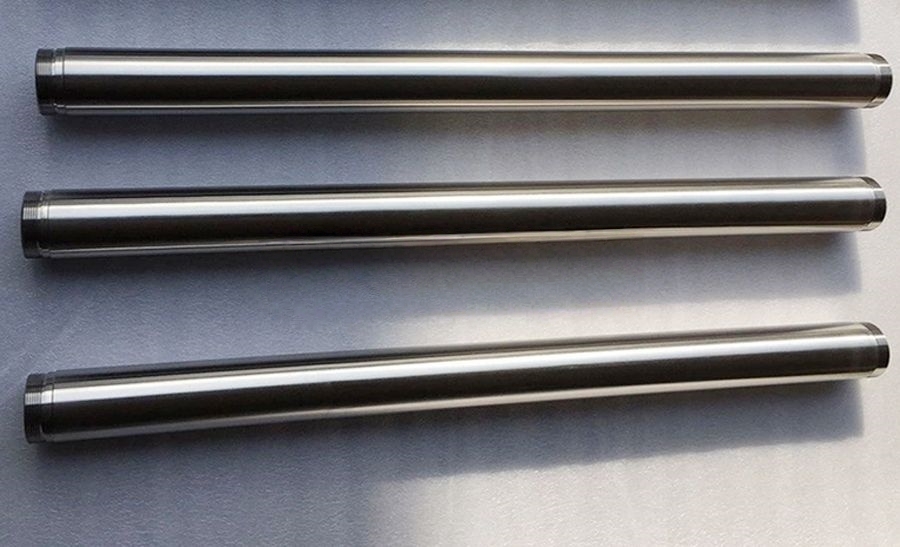
Cylindrical Targets:
Common in rotary magnetron systems, these targets offer uniform erosion and longer life spans.
Irregular-Shaped Targets:
Designed for custom or highly specialized coating equipment and unique deposition requirements.
1.3 Application Field Classification
Depending on their end-uses, sputtering targets are classified as:
Semiconductor Targets:
Used in integrated circuits for interconnects, electrode films, diffusion barriers, and capacitors.
Data Storage Targets:
Essential for producing thin films in hard disks, magnetic heads, optical discs (CD-R, DVD), and magneto-optical memory.
Display Film Targets:
Applied in manufacturing thin films for LCD, PDP, E-L, and FED displays, with LCDs currently dominating the market.
Optical Targets:
Used in producing coatings for optical components and architectural glass.
Superconducting and Advanced Material Targets:
Employed in the development of superconductors and other high-performance thin films.
2. Application Fields of Sputtering Targets
Sputtering targets, especially titanium sputtering targets, play a vital role across a wide range of industries. Their primary applications are concentrated in the electronic and information sectors, but their use is expanding rapidly.
2.1 Information Storage Industry
With the continual growth of the IT industry, the demand for data storage media is soaring. The research and production of sputtering targets for recording media have become focal points worldwide. In this field, thin-film products manufactured using sputtering targets include:
· Hard disks
· Magnetic heads
· Optical discs (CD-R, CD, DVD)
· Magneto-optical phase-change disks (MO, CD-RW)
Here, the quality of the sputtering target is directly linked to the reliability and storage density of these products.
2.2 Integrated Circuit Industry
The integrated circuit sector commands a significant share of the global sputtering target market. Sputtering targets are indispensable for producing:
· Electrode interconnect films
· Barrier layer films
· Contact films
· Optical disk masks
· Capacitor electrodes
· Thin-film resistors
The microstructure and purity of the target material directly impact the device’s electrical performance and longevity.
2.3 Flat Panel Display Industry
Flat panel displays include LCDs, PDPs, E-L, and FEDs. Among these, LCDs account for about 80% of the market. Sputtering targets are used to deposit transparent conductive films, dielectric layers, and other functional coatings critical to display performance.
2.4 Optical Thin Film Industry
Magnetron sputtering is currently the leading method for fabricating architectural and optical coatings. Titanium sputtering targets are commonly used for high-quality, durable, transparent, or reflective films on glass and other substrates.
2.5 Metal Foam Material Industry
In the battery sector, the traditional method of producing nickel foam is being phased out in favor of magnetron sputtering. High-purity nickel targets are crucial for this new process, directly determining the quality and performance of foam nickel products used in advanced batteries.
3. Technical Requirements for Sputtering Targets
To enhance sputtering efficiency and ensure the quality of deposited thin films, strict standards are imposed on the manufacture of sputtering targets. The main factors affecting target quality include purity, impurity content, density, grain size and distribution, crystallographic orientation, and geometric accuracy.
3.1 Purity
The higher the purity of the sputtering target, the better the performance of the resulting thin film. For example, high-purity aluminum targets yield films with superior corrosion resistance, electrical, and optical properties. However, different applications have different purity requirements. For semiconductor devices, extremely high purity is critical, while for general coatings, slightly lower purities may suffice.
3.2 Impurity Content
As the cathode source during sputtering, the target material’s impurities and trapped gases (such as oxygen and moisture) are major contaminants for the deposited film. Specific applications have strict requirements for certain impurities. For example, tungsten, molybdenum, and titanium targets used for semiconductor wiring must contain uranium and thorium levels below 3×10⁻⁹, while alloy targets for optical disc reflective layers require oxygen content below 2×10⁻⁴.
3.3 Density
High density is essential to reduce porosity in the target, thereby improving the performance of the sputtered film. Greater density increases the deposition rate, improves film particle packing, and reduces discharge anomalies during sputtering. For titanium sputtering targets, high density also enhances electrical and optical properties of the thin films.
3.4 Grain Size and Distribution
Finer grain sizes in the target usually lead to higher sputtering rates. Uniform grain size distribution enables more even film thickness and better film properties. Sputtering targets with consistent, small grains are preferred for applications demanding highly uniform and reproducible coatings.
3.5 Crystallographic Orientation and Uniformity
Target materials should exhibit homogeneous crystal orientation and structure to avoid unpredictable variations in sputtering rates and film properties, ensuring reproducible and high-quality thin films.
3.6 Geometric Shape and Size
Sputtering targets must be manufactured to precise geometric specifications to fit various magnetron sputtering systems. Accurate dimensions help guarantee even erosion and stable deposition conditions throughout the target’s lifespan.
Conclusion
The classification and practical application of sputtering targets—especially titanium sputtering targets—are pivotal to the continued advancement of electronics, optics, and energy storage technologies. The rapid shift of the electronic and information industry from laboratory-scale development to large-scale industrial production has made the role of sputtering targets more central than ever. As the basic consumable in magnetron sputtering, the target’s quality defines the performance, durability, and efficiency of the final film. With continual improvements in purity, microstructure, and manufacturing precision, sputtering targets will remain at the heart of innovation for thin-film industries. As demands for higher quality and more specialized coatings increase, both the sputtering target manufacturer and end-user must carefully select and control target characteristics to achieve optimal industrial and scientific results.
Frequently Asked Questions and Answers
1. Titanium Targets Classification: What Are the Main Types Based on Purity, Microstructure, and Coating Requirements?
Titanium targets can be classified by purity (e.g., 99.5%, 99.9%, 99.99% and above), microstructure (fine or coarse grain, single or multi-phase), and coating requirements (for semiconductors, optics, or data storage). The specific classification chosen depends on the desired thin-film properties and the application’s technical demands.
2. What Are the Key Applications of Titanium Targets? Industrial Uses and Performance Benefits in Thin-Film Deposition & Electronics
Titanium sputtering targets are widely used in integrated circuits, data storage media, flat panel displays, optical coatings, and specialty glass. Their high strength, corrosion resistance, and excellent film-forming ability enable high-performance, uniform coatings essential for electronics, optics, and energy devices.
3. Titanium Targets vs. Other Metal Targets: How Classification Impacts Application Suitability and Cost-Efficiency in Manufacturing
Compared to other metal targets, titanium targets often offer superior corrosion resistance and light weight, making them ideal for many advanced thin-film applications. The correct classification—by purity, microstructure, and form—ensures suitability for specific tasks and can lead to greater cost-efficiency, higher yields, and improved device reliability in manufacturing.