Titanium is widely regarded for its No magnetism in everyday conditions—it is non-ferromagnetic and exhibits only very weak paramagnetism, making it ideal near sensitive instruments and MRI environments. Beyond magnetism, titanium combines High strength, stiffness, toughness, low density and good corrosion resistance, delivering exceptional specific performance for aerospace, marine, biomedical, and chemical applications. With a Melting point of about 1,668°C and a density near 4.5 g/cm³ (roughly 60% of steel), it enables lightweight, high-temperature-capable structures. The passive TiO2 film grants outstanding resistance to chlorides, acids, and seawater; alloying can further tailor behavior. Small additions of Palladium (Pd), ruthenium (Ru), nickel (Ni) and (Mo) are used to enhance corrosion resistance (e.g., crevice and reducing-acid environments) and adjust phase stability. Commercially pure grades (CP-Ti) prioritize ductility and corrosion performance, while α+β alloys like Ti-6Al-4V deliver higher strength—often 800–1,000 MPa tensile—with good fatigue properties. Titanium’s low elastic modulus (~105–115 GPa) relative to steels aids vibration management but requires thoughtful design for stiffness. Its biocompatibility, excellent weldability, and compatibility with advanced forming (forging, superplastic forming) broaden its utility. In short, titanium’s unique blend—non-magnetic behavior, high specific strength, and robust corrosion resistance—underpins its role in critical, high-performance systems.
1. Why titanium shows no magnetism while many stainless steels do
· Electronic structure and phases:
o Titanium is not ferromagnetic. At room temperature it is either hexagonal close-packed α-Ti or an α+β mixture; both are non-ferromagnetic and display only weak paramagnetism. There is no long-range alignment of magnetic moments as found in ferromagnets.
· Stainless steel contrast:
o Austenitic stainless steels (e.g., 304, 316) are nominally non-magnetic in solution-annealed condition due to their face-centered cubic (FCC) austenite; however, cold work can induce martensite, introducing slight magnetism.
o Ferritic and martensitic stainless steels (BCC/BCT) are ferromagnetic. Hence, “stainless steel” can be magnetic or not, depending on grade and processing.
· Practical outcome:
o Commercially pure titanium (CP-Ti) and most Ti alloys remain functionally non-magnetic in service. They will not stick to common magnets, and their tiny paramagnetic response is negligible for most instruments, including MRI compatibilities of well-designed devices.
2. Types of titanium alloys and their characteristics
Titanium exhibits two allotropic forms: α-Ti (HCP) below 882.5°C and β-Ti (BCC) above 882.5°C. Alloying with α- or β-stabilizers shifts phase stability and allows wide property tuning.
2.1 Commercially pure titanium (CP-Ti)
· Composition and processing:
o Non-alloyed titanium with about 99–99.5% Ti; iron is the principal metallic impurity, while carbon, oxygen, nitrogen, and hydrogen are interstitial elements.
o Not heat-treatable for strength (in the precipitation-hardening sense) but readily weldable and formable.
· Properties:
o Medium strength that depends strongly on interstitial content; oxygen content in particular sets grade and strength.
o Excellent corrosion resistance due to rapid formation of a protective TiO2 film in oxygen- or moisture-bearing environments.
o Non-magnetic and highly Biocompatibility, widely used for implants where ductility and corrosion performance are paramount.
2.2 α titanium alloys
· Definition and alloying:
o Based on α-Ti stabilized by α-stabilizers (e.g., aluminum) and interstitials (oxygen, nitrogen); neutral elements such as tin and zirconium also appear.
· Processing/traits:
o Not heat-treatable for precipitation strengthening; easy to weld; medium strength with good notch toughness and high-temperature creep resistance.
· Applications:
o Preferred for elevated-temperature service where dimensional stability and creep performance matter, while retaining non-magnetic behavior.
2.3 β titanium alloys
· Definition and alloying:
o Contain substantial β-stabilizers (>17% in many compositions), such as molybdenum (Mo), vanadium (V), niobium (Nb), and others.
· Processing/traits:
o Retain β phase upon rapid cooling from above the β-transus; heat-treatable to high strength with lower ductility; weldability can be challenging depending on composition and procedure.
· Applications:
o High-strength structural parts, springs, and fasteners where very high specific strength is needed. Despite alloying, they remain effectively non-magnetic in service.
2.4 α+β titanium alloys
· Definition and alloying:
o Mixtures of α and β phases, typically with β below ~30%, and containing ~4–6% β-stabilizers such as molybdenum, vanadium, tungsten, or tantalum.
· Processing/traits:
o Heat-treatable and weldable; good formability and creep resistance with balanced strength/toughness—Ti-6Al-4V is the archetype.
· Applications:
o The most widely used class for aerospace structures, pressure housings, and biomedical implants due to balanced properties and reliable processing windows.
Note on alloying for corrosion: Small additions of Palladium (Pd), ruthenium (Ru), nickel (Ni) and (Mo) can dramatically improve resistance in reducing acids or crevices by promoting and stabilizing the passive film—critical in petrochemical and marine service—without introducing ferromagnetism.
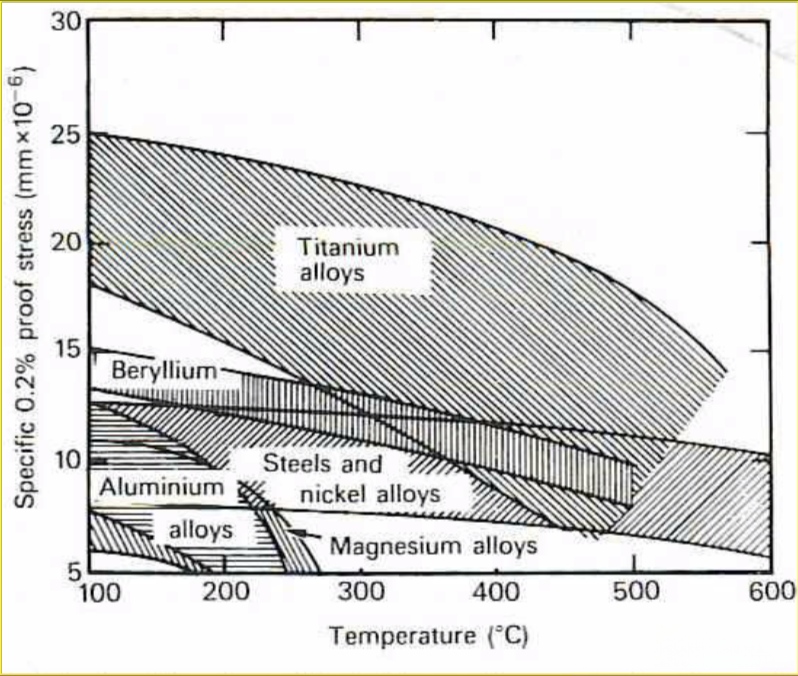
3. General performance of titanium and its alloys
3.1 Excellent corrosion resistance
Titanium’s high reactivity and affinity for oxygen are assets: when a fresh surface contacts air or moisture, an adherent, stable TiO2 oxide forms. If scratched, the oxide self-repairs rapidly as long as trace oxygen or water is present. This passive film underlies titanium’s durability in chlorides, seawater, oxidizing acids, and many mixed environments.
3.2 Low weight with high specific strength
Titanium’s density is about 4.5 g/cm³—roughly 45% lighter than typical steels of similar strength. This high strength-to-weight ratio enables lighter structures that maintain stiffness and toughness when properly designed. Its melting point near 1,668°C preserves mechanical integrity at temperatures that would soften many aluminum alloys, broadening the usable thermal envelope.
3.3 Tensile strength range
Titanium and its alloys span tensile strengths from roughly 130 MPa (very soft, highly ductile CP grades) to beyond 1,300 MPa (heat-treated β or α+β alloys). Most commercial α+β grades cluster around 400–1,000 MPa, with Ti-6Al-4V commonly engineered in the 800–1,000 MPa range for structural duty.
3.4 Poor electrical conductivity
Titanium is a poor electrical conductor: taking copper as 100% IACS, titanium is roughly 3% IACS. This low conductivity is acceptable for structural and biomedical roles but is a consideration in electrical applications. Thermal conductivity is similarly low, affecting heat flow during fabrication; careful process control mitigates gradients.
3.5 Non-toxic and Biocompatibility
Titanium is non-toxic and highly biocompatible with human tissue and bone. Its passive oxide promotes osseointegration and long-term stability in implants. Non-magnetic behavior further reduces interference with imaging systems.
3.6 No magnetism
Commercially pure titanium and all common titanium alloy families are effectively non-magnetic at room temperature. They do not exhibit ferromagnetic attraction, which is a key reason implants and instruments based on titanium often qualify for MRI environments when designed and tested to applicable standards.
4. Magnetism, Biocompatibility, and MRI: practical implications for implants
· Implants and MRI:
o Patients with titanium implants undergo MRI examinations routinely; titanium’s lack of ferromagnetism minimizes magnetic forces and torque. Device safety still depends on full system design (geometry, fixation, conductive loops) and testing per ASTM/ISO standards, but the base metal’s non-ferromagnetic nature is a strong enabler.
· Corrosion-resistant alloying in medical devices:
o Pd, Ru, Ni, and Mo may be used in small amounts to enhance corrosion resistance in specific fluids without introducing problematic magnetism. Strict biocompatibility evaluation ensures safe ion release profiles.
· Surgical tools and fixtures:
o Non-magnetic titanium tools reduce the risk of magnetic interference in MRI-guided procedures. They also reduce eddy-current heating because of lower conductivity and non-ferromagnetic response.
5. Where titanium excels because it’s non-magnetic
· Biomedical implants and instruments:
o Artificial joints, bone screws, dental fixtures, and surgical tools exploit non-magnetism, Biocompatibility, and corrosion resistance, enabling safe imaging and long service lives.
· Precision devices and sensors:
o Non-magnetic housings avoid biasing magnetometers or compasses; titanium’s strength preserves mechanical alignment.
· Marine and chemical plants:
o Corrosion resistance in chloride-rich environments, coupled with non-magnetic behavior, suits sonar housings, pump shafts, heat exchangers, and valves.
Frequently Asked Questions and Answers
Q1: Is titanium magnetic in medical implants like artificial joints or bone screws, and does this affect MRI safety for patients with titanium implants?
A1: Titanium and its common alloys are effectively non-magnetic, so they do not experience strong magnetic attraction or torque in MRI fields. As a result, many titanium implants are labeled MR Safe or MR Conditional after standardized testing. Patients with titanium implants undergo MRI examinations routinely; always follow the device’s specific MRI labeling and clinical guidelines.
Q2: Is titanium magnetic in everyday items like titanium watches or jewelry, and will it stick to common magnets (e.g., fridge magnets) in daily life?
A2: No. Titanium in watches or jewelry is non-ferromagnetic and will not stick to common magnets. Any magnetic response is so weak (paramagnetic) that it is imperceptible in everyday use.
Q3: Is titanium magnetic in medical tools such as scalpels or surgical clamps, and could this magnetism interfere with precision during magnetic resonance-guided surgeries?
A3: Titanium surgical tools are chosen precisely because they are non-magnetic and have low electrical conductivity. They minimize magnetic attraction and reduce the risk of imaging artifacts or induced forces during MRI-guided procedures. Proper tool design and certification ensure compatibility and precision in the MR environment