Walking down the kitchenware aisle or browsing online, you are instantly bombarded with an overwhelming array of shiny pots and pans. They all look remarkably similar on the surface, but their performance in the kitchen can be worlds apart. This brings up a common frustration for home cooks: How do you actually tell the difference between a high-quality pan that will last a lifetime and a cheap imitation that will scorch your dinner? What exact features determine the durability, safety, and cooking performance of these kitchen essentials?
To answer these questions, we need to look beyond the polished exterior. Identifying top-tier cookware comes down to understanding 10 key features spread across material grades, structural design, thermal conductivity, handle ergonomics, and safety certifications.
In this comprehensive guide, we are pulling back the curtain on the cookware industry. Combining manufacturing standards, laboratory test reports, and real-world culinary cases, we’ve put together a practical roadmap to help you choose the best pots and pans for your kitchen.
1. Stainless Steel Grades: 304 vs 316 vs 201 – Which Is Best?
Not all steel is created equal. The numbers you see stamped on the bottom of a pan refer to the metallurgical composition of the metal, specifically the percentages of chromium and nickel. These elements dictate the pan's rust resistance and overall shine.
① 304 Stainless Steel (18/8): This is the most common food-grade stainless steel on the market. It contains 18% chromium and 8% nickel. It offers excellent corrosion resistance and durability, making it the sweet spot for daily cooking and moderate budgets.
② 316 Stainless Steel (18/10): If you are looking for premium quality, 18/10 stainless steel cookware is the gold standard. It contains 16-18% chromium, 10-14% nickel, and crucially, 2-3% molybdenum. This addition makes it highly resistant to corrosion, especially when cooking highly acidic foods (like tomato sauces) or if you live in a humid, coastal environment. Naturally, this premium grade comes at a higher price point.
③ 201 Stainless Steel: This is the budget-friendly, economy option. It contains about 17% chromium but only 4.5% nickel, often substituting manganese for nickel. Because of this, its corrosion resistance is significantly lower. It is prone to rusting and is generally not recommended for long-term, heavy-duty cooking.
The Lab Data:
Laboratory tests show that the pitting resistance of 316 stainless steel is 2 to 3 times higher than that of 304. In a controlled saltwater immersion test lasting 100 hours, standard 304 stainless steel began to show faint signs of surface rust, whereas the 316 stainless steel emerged completely unchanged.
2. Cookware Construction: Tri-Ply vs Clad vs Single-Ply
Stainless steel is incredibly durable, but it is actually a terrible conductor of heat. To fix this, manufacturers bond (or "clad") stainless steel with highly conductive metals like aluminum or copper. TITAUDOU manufacturer
① Tri-Ply Construction: This is the hallmark of high-quality cookware. It features a core of aluminum sandwiched between two layers of stainless steel (Stainless + Aluminum + Stainless). The aluminum core provides rapid, even heat distribution, while the outer steel layers offer durability and non-reactive cooking surfaces.
② Multi-Clad (5-Ply or 7-Ply): These pans feature even more layers, often incorporating copper alongside aluminum. They offer unparalleled heat control and responsiveness, favored by professional chefs. However, they are considerably heavier and much more expensive.
③ Single-Ply (Disc-Bottom): Cheap pans are often just a single, thin layer of steel with a small conductive disc glued to the bottom. They heat unevenly, creating severe hot spots where the disc ends and the thin steel sides begin.
Real User Case:
Consider the classic test of searing a steak. A home cook using a fully clad Tri-Ply skillet will find that the pan holds its temperature beautifully when the cold meat hits the metal. The heat distributes evenly across the entire surface, resulting in a flawless, edge-to-edge caramelized crust. Conversely, a cook using a single-ply pan will often end up with a steak that is burnt on the edges where the hot spots are, yet gray and undercooked in the center.
3. Thickness Matters: How to Choose the Right Gauge
Even with a tri-ply construction, the actual thickness (or gauge) of the metal plays a massive role in how the pan performs and how long it lasts.
① Body Thickness: High-quality stainless steel cookware typically features a wall thickness between 1.0mm and 2.0mm. The thicker the walls, the better the pan will retain heat and resist warping over time.
② Base Thickness: The bottom of the pan takes the brunt of the thermal shock. Ideally, the base should be 0.5mm to 1.0mm thicker than the side walls. This extra reinforcement prevents the pan from bowing or warping when exposed to high heat.
The Tap Test:
If you are shopping in-store, give the side of the pan a firm tap with your knuckle. A high-quality, thick-gauge pan will produce a dull, heavy, and solid "thud." A cheap, thin pan will produce a high-pitched, tinny ringing sound.
A quick note on usability: While thicker is generally better for cooking performance, it also adds significant weight. If you have wrist issues or prefer lightweight tools, a massive 5-ply copper-core pan might be too cumbersome for daily flipping and tossing.
4. Heat Distribution: The Key to Even Cooking
Why do we care so much about cladding and thickness? It all comes down to heat distribution. Uneven heating is the number one cause of scorched sauces, burnt garlic, and stubbornly stuck-on food.
The structural integrity, the materials used, and the thickness of the pan all work together to move heat from your burner evenly across the cooking surface.
The Oil Test:
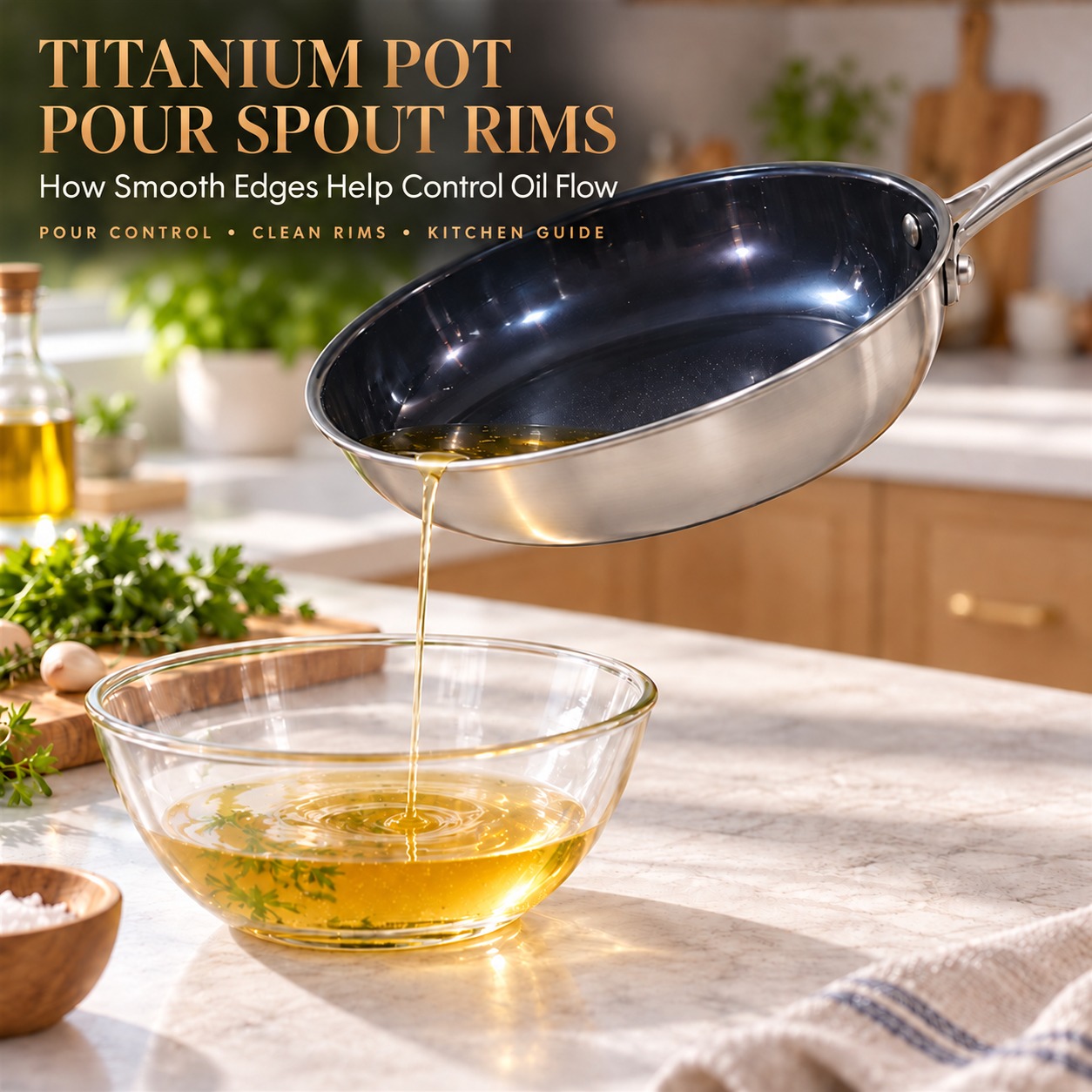
You can easily test a pan's heat distribution at home. Pour a thin, even layer of cooking oil into the pan and place it on medium heat. In a high-quality pan, the oil will heat up uniformly, shimmering across the entire surface at the same time. In a poor-quality pan, you will see the oil start to smoke in one specific spot while remaining relatively cool elsewhere.
The Lab Data:
Thermal imaging tests reveal staggering differences. When heated to searing temperatures, a premium Tri-Ply pan showed a temperature variance of only 5°C from the center to the edge. In stark contrast, a cheap single-ply pan exhibited a massive temperature variance of over 20°C, practically guaranteeing uneven cooking.
5. Handle Design: Comfort, Safety, and Durability
A pan is only as good as your ability to hold it. The handle is a critical safety feature that is often overlooked until you are trying to lift a boiling pot of pasta water.
① Materials: Premium handles are cast from solid stainless steel. Some brands incorporate high-quality silicone grips or heat-resistant phenolic resins for added comfort, though pure stainless steel is best for oven use.
② Connection Method: Look for handles that are securely riveted or heavy-duty spot-welded to the body of the pan. Rivets are the traditional standard for absolute security, ensuring the handle will never snap off.
③ Ergonomic Design: A good handle should feature a "stay-cool" design—often a V-shaped split where the handle meets the pan to disperse heat. It should fit naturally in your hand, offering a secure grip that prevents the pan from rotating when you pour.
Warning: Avoid cheap plastic handles at all costs. Not only do they prohibit the pan from being used in the oven, but they can also melt, degrade, and release toxic fumes if exposed to the high heat of a gas burner.
6. Lids: Tempered Glass vs Stainless Steel
The lid you choose depends entirely on your cooking style, but both options have indicators of high quality.
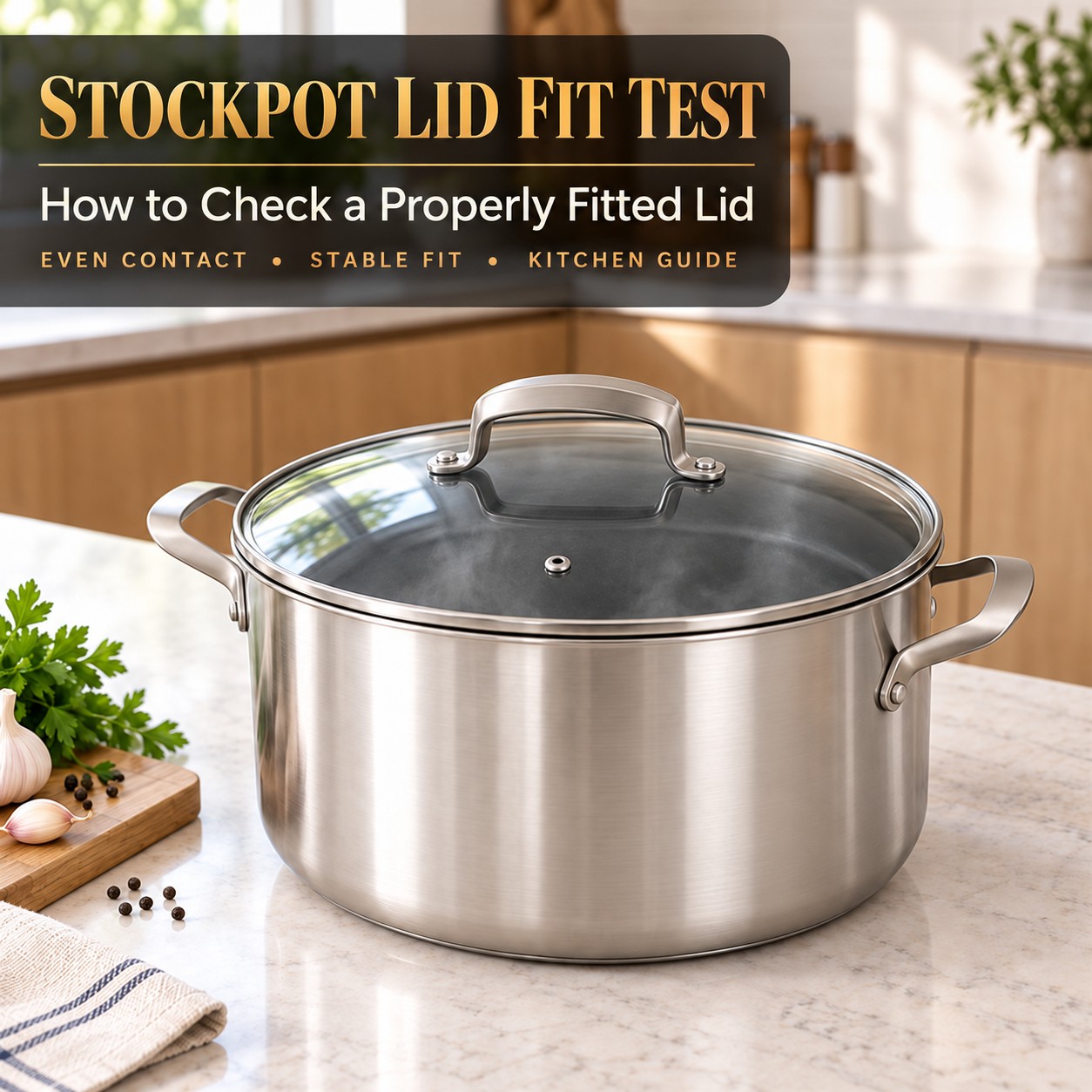
① Tempered Glass Lids: These are fantastic for everyday cooking because they allow you to monitor your food without lifting the lid and releasing heat and moisture. High-quality glass lids should feature a stainless steel rim or a food-grade silicone seal for a tight fit. They must be made of thermal-shock-resistant tempered glass capable of withstanding at least 180°C (350°F).
② Stainless Steel Lids: Favored by professionals, solid steel lids are practically indestructible. They trap heat slightly better than glass and are fully oven-safe at much higher temperatures.
Recommendation: For braising, roasting, or oven-finishing, go with stainless steel. For stovetop simmering where visibility is key, tempered glass is the winner.
7. Safety Certifications: What to Look For
Many consumers ask: is stainless steel cookware safe? The short answer is yes, absolutely—provided it comes from a reputable manufacturer that adheres to strict safety standards. Cheap, unbranded cookware can sometimes leach heavy metals into your food. To ensure safety, look for the following certifications on the packaging:
① Food Contact Certifications: Look for compliance with the US FDA (Food and Drug Administration), the German LFGB (which has some of the strictest food safety testing in the world), or the Chinese GB4806 standard. These guarantee the metal will not leach harmful toxins into your meals.
② Quality Management: An ISO9001 certification indicates that the manufacturer maintains strict, consistent quality control over their production lines. CE marks also indicate compliance with European health and safety standards.
③ Environmental Standards: Brands holding an ISO14001 certification are committed to eco-friendly manufacturing processes, ensuring your cookware doesn't come at the cost of the environment.
Never buy cookware that lacks clear branding, material grading, or safety certifications.
8. Final Verdict: How to Choose High-Quality Stainless Steel Cookware
To summarize, identifying high-quality stainless steel cookware comes down to checking off these vital boxes:
① Premium Material: Made of 304 or 316 (18/10) stainless steel.
② Multi-Ply Construction: Tri-ply or fully clad bodies for optimal heat transfer.
③ Proper Thickness: 1.0mm - 2.0mm body thickness to prevent warping.
④ Reinforced Base: A thicker bottom for thermal shock resistance.
⑤ Even Heat Distribution: Proven ability to eliminate hot spots.
⑥ Ergonomic Handles: Comfortable, stay-cool designs.
⑦ Secure Attachments: Riveted or heavily welded handles.
⑧ Durable Lids: High-heat tempered glass or solid steel.
⑨ Safety Certifications: FDA, LFGB, or equivalent food-safe marks.
⑩ Appropriate Weight: Heavy enough to perform, balanced enough to handle.
Actionable Advice: When upgrading your kitchen, prioritize your budget on the pieces you use most—like a 10-inch skillet or a versatile sauté pan. Stick to reputable brands that proudly display their material grades and certifications.
A Quick Note on a Modern Alternative: Titanium Cookware
While high-quality, tri-ply stainless steel is the undisputed workhorse of the culinary world, it does have one drawback: weight. 3-layer titanium cookware If you find heavy pans difficult to maneuver, or if you have a nickel allergy, you might want to explore titanium cookware.
Titanium offers an incredible strength-to-weight ratio, making it significantly lighter than multi-clad stainless steel. It is also 100% biocompatible, meaning it is entirely non-toxic and highly resistant to corrosion from acidic foods. While pure titanium doesn't conduct heat quite as well as aluminum-clad steel, modern manufacturers are now creating titanium-clad aluminum pans that offer the best of both worlds: the lightweight, indestructible nature of titanium with the flawless heat distribution of an aluminum core. It is a premium alternative worth considering if weight and absolute chemical inertness are your top priorities.
For post-purchase care, see how to remove water spots on stainless steel cookware.
Frequently Asked Questions (FAQ)
Q: Is stainless steel cookware safe for everyday cooking?
A: Yes. As long as you are purchasing high-quality 304 or 316 grade steel with proper food-safety certifications (like FDA or LFGB), stainless steel is one of the safest, most non-toxic cooking surfaces available. It does not contain PFOA, PTFE, or other chemicals found in traditional non-stick coatings.
Q: Does "stainless steel non stick cookware" actually exist?
A: Pure stainless steel is not inherently non-stick. However, the term stainless steel non stick cookware usually refers to one of two things:
① Hybrid pans that feature a raised stainless steel mesh pattern over a non-stick coating, offering the searing power of steel with the easy cleanup of non-stick.
② The culinary technique of making a standard steel pan non-stick. By preheating your stainless steel pan properly (until a drop of water dances across the surface like a mercury bead—known as the Leidenfrost effect) and adding oil right before the food, you create a naturally non-stick surface perfect for sliding eggs and delicate fish.
Q: What is the exact difference between 18/8 and 18/10 stainless steel cookware?
A: The numbers refer to the chromium and nickel content. 18/8 contains 18% chromium and 8% nickel (Grade 304), while 18/10 contains 18% chromium and 10% nickel (often Grade 316 if molybdenum is added). The higher nickel content in 18/10 provides a slightly brighter, more polished finish and offers superior resistance to rust and corrosion, making it the preferred choice for high-end culinary tools.