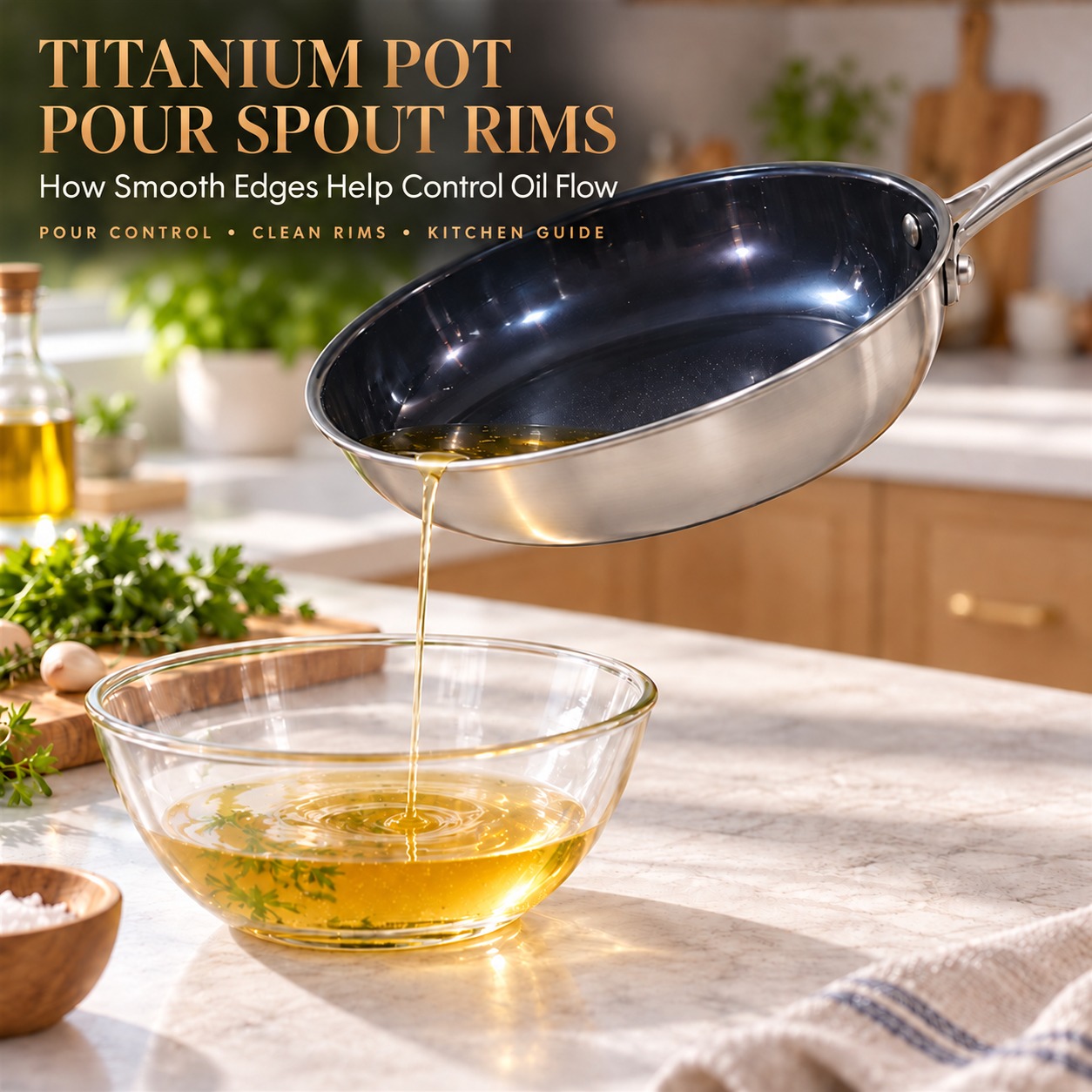
The cookware industry is undergoing a profound transformation driven by regulatory pressure, consumer health awareness, and materials science innovation. Traditional fluoropolymer-based non-stick coatings, dominant for decades, face increasing restrictions due to environmental and health concerns surrounding PFAS compounds. Ceramic cookware technology has emerged as the leading PFAS-free alternative, offering genuine non-stick performance through material science rather than synthetic chemical coatings. This comprehensive exploration examines the technological evolution, manufacturing processes, performance characteristics, and market positioning of ceramic cookware as the cookware industry navigates its most significant transition in over half a century.
1. The Chemistry of Ceramic Coatings: Understanding Sol-Gel Technology for Cookware Applications
Ceramic coatings for cookware represent a fundamentally different approach to non-stick performance compared to traditional fluoropolymer surfaces. Understanding the chemistry behind these coatings helps procurement specialists and consumers appreciate why ceramic technology delivers comparable non-stick results through inherently safer mechanisms.
Sol-Gel Process Fundamentals
The sol-gel process describes a wet-chemical method for producing ceramic materials from molecular precursors. For cookware applications, the most common chemistry involves silicon alkoxides, particularly tetraethyl orthosilicate (TEOS), as the primary film-forming component. When mixed with water and an acid or base catalyst, these precursors undergo hydrolysis and condensation reactions that transform the liquid solution into a solid ceramic network upon drying and thermal treatment.
The hydrolysis reaction cleaves alkoxy groups from the silicon center, replacing them with hydroxyl groups that subsequently condense to form siloxane (Si-O-Si) bonds. This polymerization builds an interconnected three-dimensional network—the gel—that, upon further drying and curing, becomes a glass-like ceramic coating. The entire process occurs at temperatures far below those required for traditional ceramic firing, enabling application to metal cookware substrates without damaging underlying materials.
Film Formation Mechanisms on Metal Substrates
Applying ceramic coatings to metal cookware requires careful attention to adhesion mechanisms. The metal substrate—typically aluminum, aluminum alloy, or steel—must be thoroughly cleaned and surface-prepared before coating application. Common preparation steps include alkaline cleaning to remove oils and contaminants, acid etching to create micro-roughness for mechanical adhesion, and rinse cycles to ensure no cleaning residue remains.
The sol coating adheres to prepared metal surfaces through a combination of mechanical interlocking and chemical bonding. Surface roughness provides mechanical attachment points where the cured ceramic locks into microscopic valleys and features on the metal surface. Chemical bonding occurs through reactions between the sol components and metal surface oxides, creating covalent attachments that supplement mechanical adhesion.
Silica-Based Coating Composition
The primary component of ceramic cookware coatings is silicon dioxide (SiO2), the same compound found naturally in sand, quartz, and glass. This abundance and chemical simplicity represents one of ceramic technology's major advantages—no exotic or environmentally persistent raw materials enter the formulation. Additional components may include metal oxide nanoparticles that modify coating properties such as hardness, color, and thermal stability.
Color pigments in ceramic coatings consist of metal oxide compounds approved for food contact, including iron oxide for red and brown tones, chromium oxide for green hues, and titanium dioxide for white and cream colors. These pigments integrate permanently into the coating matrix during curing, becoming indistinguishable from the base ceramic material and maintaining color stability throughout the coating's operational lifetime.
2. PFAS-Free Regulatory Landscape: Why the Cookware Industry Is Transitioning Away from Fluoropolymers
The shift toward ceramic cookware technology is driven primarily by regulatory action against per- and polyfluoroalkyl substances (PFAS), the chemical family that includes PTFE and related compounds used in traditional non-stick coatings. Understanding this regulatory environment clarifies why ceramic technology represents the industry's future direction rather than merely an alternative option.
Understanding PFAS Compounds and Their Properties
PFAS encompasses over 12,000 synthetic chemicals characterized by strong carbon-fluorine bonds—the strongest in organic chemistry. These bonds confer exceptional chemical stability, oil and water resistance, and thermal resistance that made PFAS ideal for non-stick coating applications. However, this same stability means PFAS compounds resist natural degradation, persisting in the environment for decades or centuries after release.
The term "forever chemicals" has entered public vocabulary to describe PFAS compounds' environmental persistence. These substances accumulate in soil, waterways, and living organisms, with documented presence in human bloodstreams, wildlife populations, and remote ecosystems far from any industrial source. Scientific studies link PFAS exposure to various health effects, though regulatory agencies continue evaluating specific exposure thresholds and causation relationships.
Global Regulatory Actions and Restrictions
Regulatory responses to PFAS contamination have accelerated dramatically in recent years. The European Union is developing comprehensive restriction proposals that would eliminate PFAS manufacture and use across most applications, with implementation timelines extending toward the end of this decade. Denmark, Germany, and the Netherlands have been particularly active in advancing EU-level restrictions.
In the United States, California leads state-level action with Assembly Bill 1200, which prohibits intentionally added PFAS in cookware sold within the state and requires product labeling disclosure. Maine has enacted even more comprehensive restrictions covering all PFAS in products by 2030. Multiple additional states are developing similar legislation, creating a complex patchwork that cookware manufacturers must navigate for national distribution.
The Stockholm Convention on Persistent Organic Pollutants continues evaluating PFAS compounds for global elimination listing. Such listings would trigger international obligations affecting cookware trade across virtually all world markets, making PFAS-free formulation a strategic necessity rather than merely a regional compliance issue.
Supply Chain Implications for Cookware Manufacturers
Major chemical manufacturers have announced plans to exit PFAS production, signaling fundamental supply chain disruptions ahead. These announcements represent business decisions responding to regulatory trends, litigation risks, and reputational concerns—not merely temporary adjustments. Cookware brands relying on fluoropolymer coatings face genuine supply uncertainty for their core non-stick technologies.
Ceramic coating technology offers a stable, sustainable alternative that avoids these supply chain vulnerabilities entirely. Silicon-based raw materials for ceramic coatings are abundant, geographically distributed, and produced by multiple suppliers globally. This supply diversity provides manufacturing flexibility and pricing stability that fluoropolymer coatings cannot match as regulatory pressures intensify.
3. Performance Characteristics: How Ceramic Cookware Compares in Real-World Cooking Applications
Beyond regulatory compliance, ceramic cookware must deliver genuine cooking performance that satisfies professional and household users. Understanding actual performance characteristics helps buyers evaluate products beyond marketing claims and make informed purchasing decisions.
Non-Stick Performance and Food Release Properties
Properly formulated and applied ceramic coatings achieve genuine non-stick performance for most cooking applications. Standardized egg-release testing—placing eggs in preheated pans without oil and evaluating sticking behavior—demonstrates that quality ceramic surfaces release eggs completely after brief heating, performance comparable to new PTFE-coated surfaces.
However, ceramic non-stick performance follows different degradation patterns than PTFE coatings. Rather than gradually losing non-stick properties through surface wear, ceramic coatings may maintain their initial performance characteristics and then experience more sudden performance loss if the surface becomes damaged. Understanding this difference helps users set appropriate maintenance expectations and identify when coatings require replacement.
Thermal Stability and Operating Temperature Limits
Ceramic coatings demonstrate excellent thermal stability compared to traditional non-stick surfaces. While PTFE begins degrading at temperatures around 260 degrees Celsius and releases toxic decomposition products above 350 degrees Celsius, ceramic coatings remain stable at temperatures exceeding 450 degrees Celsius. This thermal margin provides substantial safety buffers for high-heat cooking techniques.
The critical thermal consideration for ceramic coatings involves crystallization behavior. The amorphous silica matrix in as-cured ceramic coatings is thermodynamically metastable. When heated above approximately 250-300 degrees Celsius for extended periods, the coating structure transitions toward crystalline forms, which increases surface roughness and reduces non-stick performance. This crystallization is irreversible—once it occurs, the coating cannot return to its original non-stick state.
Durability and Scratch Resistance Testing
Scratch resistance represents an area where ceramic coatings have historically underperformed compared to some alternatives. While the silica matrix creates a hard surface, it also produces brittleness that can lead to crack propagation under concentrated point loads. Metal utensils, abrasive cleaning pads, and stacked storage can all cause microscopic damage that accumulates over time.
Advanced ceramic formulations address these durability concerns through nanoparticle reinforcement and gradient composition strategies. Nanoparticles of aluminum oxide, titanium dioxide, or other ceramics distributed throughout the matrix improve fracture toughness and crack resistance. Gradient compositions create softer底层 that absorbs stress concentrations while maintaining hard, smooth top surfaces.
4. Manufacturing Excellence: Production Processes That Define Premium Ceramic Cookware
Quality ceramic cookware results from precise manufacturing processes at every stage, from substrate preparation through final curing. Understanding these processes helps buyers identify products manufactured to professional standards versus cost-reduced alternatives.
Substrate Preparation and Surface Treatment
The substrate—the metal foundation beneath the ceramic coating—determines cookware's thermal performance, durability, and cooking characteristics. Premium ceramic cookware typically uses cast or forged aluminum alloy substrates that provide excellent thermal conductivity and can be shaped with precise, consistent wall thicknesses. The aluminum undergoes machining and polishing to achieve smooth surfaces free from die lines, pits, or other defects that would telegraph through the ceramic coating.
Surface preparation for ceramic coating application follows a multi-stage protocol. Alkaline cleaning removes all organic contaminants including machining lubricants, handling oils, and any residual soils. Acid etching, typically using weak nitric or phosphoric acid solutions, micro-roughens the aluminum surface to improve mechanical adhesion. Deionized water rinsing removes all traces of cleaning agents and etchants. Immediate drying prevents water spotting or oxidation before coating application.
Multi-Layer Coating Application Techniques
Industrial ceramic cookware coatings are applied in multiple layers rather than single thick applications. This layer-by-layer approach is essential for achieving defect-free, uniform coatings with proper adhesion and performance characteristics. Each layer is applied, partially cured, and inspected before the next layer begins.
Application methods include spray coating, dip coating, and flow coating, each offering different advantages for specific production scenarios. Spray coating provides excellent control over film thickness and coverage, particularly for complex shapes with varying contours. Dip coating ensures complete coverage including edges and interiors but offers less thickness control. Flow coating combines advantages of both methods for certain product geometries and production volumes.
Each coating layer undergoes intermediate curing—typically at temperatures between 150 and 250 degrees Celsius—to partially densify the ceramic network before subsequent layers apply. This staged curing prevents cracking and delamination that would occur if all layers were applied wet and cured together. The final total coating thickness ranges from 20 to 40 micrometers across the complete layer stack.
Curing Processes and Quality Control
Final curing completes the ceramic coating transformation from gel to glass-like solid. Temperature profiles typically ramp from ambient to 250-400 degrees Celsius depending on specific formulation requirements, hold at peak temperature for predetermined durations, then cool at controlled rates to prevent thermal shock. The curing process completes condensation reactions, drives off residual solvents and water, and develops the final coating hardness and adhesion properties.
Quality control throughout manufacturing includes visual inspection for coverage defects, thickness measurement using magnetic or eddy current gauges, and adhesion testing using standardized tape pull or cross-hatch procedures. Batch testing verifies that critical performance characteristics including scratch resistance, chemical resistance, and non-stick performance meet specification requirements before products proceed to packaging and shipment.
5. Care and Maintenance: Extending the Service Life of Ceramic Cookware
Proper care practices significantly extend ceramic cookware service life and maintain optimal cooking performance. Understanding appropriate maintenance procedures helps users maximize their investment while avoiding common mistakes that accelerate coating degradation.
Cleaning Procedures for Daily Maintenance
Daily cleaning of ceramic cookware requires gentler approaches than traditional metal utensil cleaning. Allow cookware to cool before washing to prevent thermal shock that could cause coating chipping or cracking. Use soft sponges, silicone cleaning pads, or soft nylon brushes rather than abrasive scrubbers that can damage ceramic surfaces.
Mild dishwashing detergent in warm water removes most cooking residues effectively. For stubborn deposits, soaking in warm soapy water for 15-30 minutes softens residues for easier removal. Baking soda paste applied with soft cloths provides gentle abrasive cleaning for burnt-on foods without scratching most ceramic surfaces. Avoid harsh alkaline or acidic cleaners that could degrade coating performance over extended exposure.
Storage Best Practices and Surface Protection
Proper storage prevents the surface damage that accelerates coating degradation. Stack ceramic cookware with protective barriers such as paper towels, soft cloths, or specifically designed cookware protectors between pieces. Contact between bare ceramic surfaces—even soft contact—can cause microscopic chipping that compromises coating integrity over time.
Alternative storage approaches include hanging cookware using lid-mounted hooks, using vertical storage racks that keep pieces separated, or dedicating cabinet space to single-layer storage. Whatever method employed, preventing direct surface-to-surface contact significantly extends coating service life.
Avoiding Common Damage Mechanisms
Thermal shock from dramatic temperature changes causes coating damage that compromises performance and longevity. Never immerse hot cookware in cold water or place hot ceramic-coated items on cold surfaces. Allow gradual cooling to room temperature before washing or stacking. Similarly, avoid preheating empty pans to high temperatures—moderate preheating with small amounts of oil provides adequate preparation without thermal stress.
Metal utensils, while less damaging to modern ceramic coatings than to traditional non-stick surfaces, still cause cumulative wear over time. Using silicone, wooden, or plastic utensils for everyday cooking preserves coating surfaces for situations where metal performance genuinely matters. When metal utensils are necessary for specific techniques, avoid aggressive scraping or cutting motions that concentrate stress on small surface areas.
6. Market Analysis: Commercial Adoption and Consumer Trends in Ceramic Cookware
Ceramic cookware has transitioned from niche alternative to mainstream cookware category as regulatory pressures, consumer awareness, and product quality improvements converge. Understanding market dynamics helps industry participants anticipate trends and identify opportunities.
Commercial Kitchen Adoption Patterns
Professional kitchens initially adopted ceramic cookware primarily for specific applications where PFAS concerns outweighed performance trade-offs. Health-focused restaurants, childcare facilities, and institutional kitchens serving vulnerable populations have been early adopters responding to regulatory guidance and customer expectations. These applications valued ceramic technology's environmental and health profile over marginal performance differences.
As ceramic coating technology has improved, commercial adoption has broadened to include mainstream professional kitchen applications. High-volume restaurants appreciate ceramic cookware's consistency across production volumes and menu diversity. Professional catering operations value the ease of cleaning and minimal maintenance requirements. Hotel breakfast kitchens benefit from ceramic surfaces that clean quickly between successive services without the careful handling non-stick coatings demand.
Consumer Market Segmentation
Consumer ceramic cookware markets segment across quality tiers, price points, and usage occasions. Premium consumer segments—willing to pay higher prices for superior performance and durability—drive innovation and establish quality benchmarks that cascade to lower market tiers over time. These consumers research purchasing decisions carefully and evaluate products based on long-term value rather than initial price.
Mass-market ceramic cookware serves value-oriented consumers seeking practical solutions for everyday cooking needs. Products in this segment emphasize ease of use, cleaning convenience, and acceptable performance at accessible price points. Competition among mass-market producers has driven quality improvements even at entry-level price tiers, benefiting consumers across all market segments.
Regional Market Variations and Growth Patterns
Emerging market growth represents significant opportunity as global cookware consumption patterns evolve. Rising household incomes, urbanization, and kitchen modernization in developing economies create new demand for cookware products incorporating current technologies rather than legacy alternatives. Ceramic cookware positions well for this growth given its alignment with sustainability trends and performance capabilities.
7. Comparative Analysis: Ceramic Cookware vs. Alternative Non-Stick Technologies
Understanding how ceramic cookware compares to available alternatives helps buyers select appropriate products for their specific requirements and usage patterns.
Ceramic vs. PTFE Non-Stick Performance
Comparing ceramic and PTFE non-stick coatings reveals distinct performance profiles across multiple dimensions. Non-stick effectiveness is comparable for new products in controlled testing, though PTFE coatings typically demonstrate marginally better initial release for challenging foods like eggs without oil. Over time, PTFE degrades gradually through use while ceramic maintains performance before potentially more sudden decline if damaged.
Temperature capability significantly favors ceramic coatings, with ceramic demonstrating safe operating temperatures exceeding 450 degrees Celsius versus PTFE's approximately 260-degree maximum. This margin enables high-heat techniques like searing and stir-frying that approach or exceed PTFE temperature limits. Thermal degradation behavior differs fundamentally—ceramic fails gracefully by losing function while PTFE can release toxic fumes when overheated.
Ceramic vs. Hard-Anodized Aluminum
Hard-anodized aluminum cookware offers an alternative approach to durable cooking surfaces without organic coatings. The anodizing process creates a thick aluminum oxide layer on the aluminum substrate, providing hardness, corrosion resistance, and moderate non-stick properties without any organic or ceramic coatings. Comparison with ceramic-coated aluminum reveals distinct trade-offs.
Hard-anodized surfaces typically demonstrate superior scratch and wear resistance compared to ceramic coatings, making them suitable for metal utensil use and aggressive cleaning. However, anodized surfaces offer less release performance than ceramic coatings for challenging foods like eggs or delicate proteins. Anodized surfaces also cannot achieve the colorful aesthetics available with ceramic coatings.
Ceramic vs. Stainless Steel and Cast Iron
Stainless steel and cast iron represent traditional cookware materials without non-stick coating concerns. These materials offer exceptional durability and heat retention but require more careful temperature management and cleaning practices than ceramic-coated alternatives. Consumers choosing between these materials and ceramic cookware make trade-offs based on cooking style, maintenance preferences, and specific application requirements.
Professional chefs often prefer stainless steel for specific applications where fond development, deglazing, and sauce preparation benefit from direct metal contact cooking surfaces. Cast iron excels for extended cooking sessions where massive thermal mass provides stable temperatures. Ceramic cookware occupies the convenience segment, offering modern performance with traditional-ease cleaning.
| Coating Type | Max Temperature (°C) | Non-Stick Duration | Scratch Resistance | Environmental Impact | PFAS-Free |
|---|---|---|---|---|---|
| Sol-Gel Ceramic | 450+ | 3-5 years | Good | Low | Yes |
| PTFE (Teflon) | 260 | 1-3 years | Low | High | No |
| Hard-Anodized | 400 | 5-8 years | Excellent | Low | Yes |
| Cast Iron (seasoned) | 500+ | Indefinite | Excellent | Low | Yes |
| Enameled Cast Iron | 400 | 10-15 years | Good | Low | Yes |
For commercial kitchens and institutional food service operations prioritizing PFAS-free cooking surfaces, sol-gel ceramic coatings represent the optimal balance of non-stick performance, thermal stability, and environmental responsibility. The absence of fluoropolymer compounds eliminates regulatory compliance concerns while delivering genuine cooking performance suitable for high-volume professional applications.
8. Quality Assessment: Identifying Premium Ceramic Cookware Among Market Offerings
Market proliferation of ceramic cookware products at widely varying price points makes quality assessment increasingly important. Understanding quality indicators helps buyers distinguish products manufactured to professional standards from cost-reduced alternatives that may disappoint.
Coating Thickness and Layer Count Indicators
Coating thickness directly correlates with durability and service life in ceramic cookware. Quality products typically specify total coating thickness between 20 and 40 micrometers for multi-layer systems. Thinner coatings may represent cost-reduced formulations with compromised durability. Total thickness specifications, while rarely advertised, may appear in product technical documentation or be confirmable through retail product specialists.
Layer count provides additional quality indication. Multi-layer systems—typically three to five layers—represent professional-grade formulations where each layer serves specific functions: base adhesion promotion, middle-layer strength, and top-surface release properties. Single-layer coatings, while potentially adequate for light-duty applications, cannot match the performance and durability of properly designed multi-layer systems.
Substrate Quality and Construction Methods
Aluminum substrate quality varies substantially across ceramic cookware products. Cast aluminum—poured into molds rather than stamped from sheet—typically provides denser, more uniform material with better thermal properties than die-cast or stamped alternatives. Forged aluminum represents the premium construction method, using intense pressure to consolidate aluminum particles into shapes with minimal porosity and excellent structural integrity.
Wall and base thickness affect thermal performance and durability. Quality ceramic cookware features substantial wall and base thickness that store and distribute heat effectively while resisting denting from normal kitchen handling. Thin-walled constructions save material costs but compromise thermal performance and dent resistance.
Visual and Tactile Quality Indicators
Visual inspection reveals quality differences between ceramic cookware products. Premium coatings demonstrate uniform color without patches, streaks, or inconsistency that indicate application problems. Surface finish should appear smooth and consistent across the entire cooking surface and sidewalls. Any roughness, variation, or visible defects suggest manufacturing quality control issues that likely correlate with performance deficiencies.
Tactile evaluation provides additional quality confirmation. Running fingers across surfaces should feel smooth without obvious texture variation or grain. The coating should feel firmly adhered without any soft spots or areas that seem to flex differently than surrounding regions. Handles and hardware should feel solid and securely attached without wobble or movement that indicates inadequate fastening.
9. Environmental Impact and Sustainability: The Life Cycle Analysis of Ceramic Cookware
Environmental considerations increasingly influence purchasing decisions across consumer and commercial markets. Understanding ceramic cookware's environmental profile helps buyers evaluate sustainability claims and make aligned purchasing decisions.
Manufacturing Environmental Footprint
Ceramic coating manufacturing demonstrates significantly lower environmental impact compared to fluoropolymer coating production. Sol-gel processes occur at temperatures between 200 and 400 degrees Celsius versus temperatures exceeding 500 degrees for PTFE application curing. Energy consumption is correspondingly lower, and the processes generate less atmospheric emissions including no persistent organic compounds.
Raw material sourcing for ceramic coatings involves abundant, geographically distributed materials with established supply chains. Silicon, oxygen, and metal oxide components present no supply concentration risks or environmental concerns associated with rare earth elements sometimes used in advanced material applications. This material diversity provides manufacturing resilience against supply disruptions.
Use Phase Environmental Considerations
The use phase of cookware generates the largest portion of environmental impact for most product categories through energy consumption during cooking. Ceramic coatings' thermal properties—particularly in thick, well-designed substrates—provide efficient heat transfer that minimizes energy waste during cooking. Energy-efficient cooking practices benefit from cookware surfaces that deliver heat effectively without excessive temperature overshoot.
Ceramic cookware longevity affects environmental impact through replacement frequency. Products lasting five to ten years under proper care generate significantly less environmental burden than frequently replaced alternatives. Premium ceramic cookware designed for extended service represents environmentally responsible consumption despite higher initial production impacts.
End-of-Life Disposal and Recyclability
End-of-life disposal presents significant environmental differences between cookware categories. Non-stick coated cookware faces disposal challenges because coating removal is required before metal recycling, adding processing costs and potential contamination concerns. Ceramic coatings, being silica-based and fully integrated with aluminum substrates, present fewer separation challenges.
Aluminum recycling is well-established globally, with efficient collection and processing infrastructure. Clean ceramic-coated aluminum—without foreign material contamination—enters standard aluminum recycling streams effectively. The inorganic ceramic coating components remain stable through recycling processing and become integrated into recycled aluminum products without environmental concern.
Conclusion
Ceramic cookware technology has matured from alternative niche offering to mainstream cookware category capable of satisfying demanding professional and household applications. The technological foundation—sol-gel chemistry producing PFAS-free ceramic coatings—aligns perfectly with regulatory trends, environmental concerns, and consumer health awareness that shape future cookware market evolution.
Manufacturing excellence distinguishes premium ceramic cookware from adequate but unexceptional alternatives. Careful substrate preparation, multi-layer coating application, and proper curing produce cookware that delivers genuine non-stick performance, lasting durability, and premium aesthetic qualities. Understanding these manufacturing requirements helps buyers identify products that represent appropriate value for investment levels.
As PFAS restrictions expand globally and consumer awareness continues growing, ceramic cookware positions as the logical successor technology for non-stick cooking surface requirements. The combination of regulatory compliance, environmental responsibility, and genuine cooking performance makes ceramic technology the strategic choice for cookware manufacturers and buyers alike.
Frequently Asked Questions
Is ceramic cookware completely safe for cooking at high temperatures?
Yes, ceramic cookware is safe for high-temperature cooking within its operating limits. The silica-based ceramic coating remains chemically inert at temperatures up to 450 degrees Celsius, far exceeding any cooking application. Unlike PTFE coatings that release toxic fumes when overheated, ceramic surfaces simply remain stable. The primary temperature consideration involves avoiding the crystallization threshold (250-300 degrees Celsius for extended periods) that degrades non-stick performance irreversibly.
How long does ceramic cookware typically last compared to traditional non-stick coatings?
Quality ceramic cookware typically lasts three to five years with proper care and moderate use, significantly outlasting traditional PTFE non-stick coatings that often require replacement after one to three years. Premium products with advanced multi-layer formulations can exceed five years of satisfactory service. Longevity depends heavily on maintenance practices—proper cleaning, careful storage, and avoiding thermal shock and surface damage that accelerate degradation.
Can ceramic cookware be used on induction cooktops?
Ceramic-coated aluminum cookware is not inherently induction-compatible because aluminum is non-magnetic. However, many ceramic cookware products incorporate magnetic stainless steel bases or encapsulated construction that enables induction heating. When selecting ceramic cookware for induction cooktops, verify that the specific product includes induction-compatible base construction. The ceramic coating itself presents no compatibility issues—magnetic base materials enable the induction heating mechanism.