Cast iron is often hailed as the workhorse of the kitchen. From searing steaks to baking cornbread, its heat retention is legendary. However, there is a persistent rumor—backed by science—that cast iron has a weakness: Acid.
If you have ever hesitated before pouring a cup of wine into your skillet or simmering a tomato sauce for hours, you are asking the right question: Is cast iron cookware safe for acidic foods?
The short answer is complex. While it likely won't cause immediate harm to your health, it can ruin the flavor of your food and destroy the surface of your pan. In this comprehensive 3,000-word guide, we will dive deep into the chemistry of reactive metals, analyze the health implications, and explain why modern alternatives like Pure Titanium are revolutionizing how we cook acidic dishes.
1. The Chemistry: Why Acid and Iron Don't Mix
To understand the safety of cast iron, we must first understand the nature of the material. Cast iron is a reactive metal. In chemistry, reactivity refers to how easily a substance undergoes a chemical reaction.
Iron (Fe) is chemically active. When it comes into contact with acids (substances with a pH lower than 7), a chemical reaction occurs known as oxidation-reduction. The hydrogen ions in the acid attack the iron atoms on the surface of the pan.
The Reaction Process
When you pour tomato sauce (pH ~4.0) or vinegar (pH ~2.5) into a hot cast iron skillet, the acid begins to dissolve the iron. This releases ferrous iron molecules directly into your food. This is not a theoretical risk; it is a measurable chemical event.
Unlike inert materials such as glass, ceramic, or titanium, iron does not have a stable, non-reactive oxide layer that is impervious to acid. While stainless steel has chromium to protect it, raw cast iron relies solely on "seasoning" (polymerized oil) for protection. Once the acid penetrates that thin layer of oil, the metal begins to leach.
2. Is Cast Iron Cookware Safe? A Health Analysis
This is the most common query: "Is cast iron cookware safe if it leaches metal?" The answer depends entirely on your specific health profile.
The Good: Iron Supplementation
For centuries, cooking in iron pots was a primary way for humans to get dietary iron. For individuals suffering from iron-deficiency anemia, doctors might actually recommend cooking acidic foods in cast iron to boost intake. A study published in the Journal of the American Dietetic Association found that the iron content in spaghetti sauce increased by over 800% when cooked in cast iron compared to glass.
The Bad: Iron Overload and Toxicity
However, "natural" does not always mean "safe" for everyone.
· Hemochromatosis: This is a genetic disorder where the body absorbs too much iron. For the millions of people with this condition, cooking acidic food in cast iron is dangerous and can lead to organ damage.
· Uncontrolled Dosage: You cannot control how much iron leaches into your food. A highly acidic sauce simmered for two hours might release metallic levels far exceeding the Recommended Dietary Allowance (RDA).
· Heavy Metal Impurities: Not all cast iron is created equal. Cheap, vintage, or uncertified cast iron may contain trace amounts of lead or other heavy metals. When acid dissolves the iron, it also releases these impurities into your meal.
· The Verdict: While generally recognized as safe for the average person, cast iron introduces an uncontrolled variable into your diet. For absolute safety and purity, non-leaching metals like Titanium are preferred by health experts.
3. The Culinary Impact: Taste, Color, and Texture
Even if you are not worried about health, you should be worried about the quality of your dinner. The chemical reaction between acid and iron has disastrous culinary consequences.
The "Metallic" Taste
Have you ever tasted a tomato soup that had a sharp, bloody, or penny-like aftertaste? That is the taste of dissolved iron. Acidic foods are delicate. The brightness of lemon or the richness of wine is easily overpowered by the strong flavor of ferrous metal. Once this flavor infuses your dish, it cannot be removed.
Discoloration (The "Muddy" Look)
Visual appeal is half of the eating experience. Iron reactivity causes oxidation, which darkens food.
· Tomato Sauce: Turns from vibrant red to a dull, muddy brown.
· Cranberry Sauce: Can turn nearly black.
· White Wine Sauces: Can develop a greyish tint.
4. The Science of Seasoning (And How Acid Kills It)
Cast iron enthusiasts often say, "Just season it well, and it will be fine." This is only partially true.
Seasoning is a layer of oil that has been baked onto the iron through a process called polymerization. This creates a natural, plastic-like coating. While this layer is tough, it is not invincible.
Acid acts as a solvent. If you simmer a highly acidic liquid for more than 15-30 minutes, the acid begins to break down the polymer bonds of your seasoning.
The result?
1. Your food tastes like metal.
2 Your pan loses its non-stick properties.
3. You are left with a pan that looks dull, grey, and patchy.
4. You must spend hours re-seasoning the pan (scrubbing, oiling, and baking it again).
5. The "Danger List": 7 Foods to Avoid in Cast Iron
To keep your cookware safe and your food delicious, avoid cooking the following items in raw cast iron for extended periods:
Tomato Sauce / Bolognese: The high acidity and long simmer times are the worst combination for iron.
Wine Reductions: Deglazing with wine is okay if done quickly, but reducing a sauce for 20 minutes will strip the pan.
Vinegar-based Sauces: Adobo, sweet and sour sauce, or balsamic glazes.
Citrus: Lemon chicken or orange glazes.
Cranberries: Highly acidic and prone to turning black.
Rhubarb: Similar to cranberries, it reacts aggressively.
Pickling Liquids: Never boil brine in cast iron.
6. The Time Factor: The 30-Minute Rule
Nuance is important. Asking "is cast iron cookware safe for acid" isn't a simple Yes/No. It is a question of time.
If you are sautéing cherry tomatoes for 5 minutes to toss with pasta, your pan will be fine. The reaction takes time to occur. Most experts agree on the 30-Minute Rule:
The 30-Minute Rule: If the acidic food will be in the pan for less than 30 minutes, a well-seasoned cast iron skillet can handle it. If the cooking time exceeds 30 minutes, use a non-reactive pan (like Titanium).
7. Comparing Alternatives: Stainless Steel vs. Enamel vs. Titanium
If cast iron is out for your Sunday gravy, what should you use? Let's compare the materials.
Material | Reactivity to Acid | Durability | Health Safety |
Raw Cast Iron | High (Leaches Iron) | Very High | Good (unless iron overload) |
Stainless Steel | Low (Can leach Nickel/Chrome) | High | Moderate (Allergen risks) |
Enameled Iron | None (Glass coating) | Moderate (Chips easily) | High (Unless chipped) |
Pure Titanium | Zero (Totally Inert) | Extreme | Best (Biocompatible) |
The Issue with Stainless Steel
Stainless steel is better than iron, but it is not perfect. Under high heat and acidic conditions, lower grades of stainless steel can leach nickel and chromium. Nickel is a common allergen causing contact dermatitis in many people.
The Issue with Enamel
Enameled cast iron (like Le Creuset) solves the acid problem by coating the iron in glass. However, enamel is fragile. It can crack, chip, or craze over time. Once chipped, the iron underneath is exposed, and the pot becomes unsafe.
8. Why Titanium is the Ultimate Solution for Acidic Cooking
At Titaudou, we believe that you shouldn't have to compromise between durability and health. This is why Pure Titanium is rapidly becoming the gold standard for professional and home kitchens alike.
1. 100% Non-Reactive (The "Inert" Advantage)
Titanium is unique among metals because it naturally forms a stable oxide film that regenerates instantly in the presence of oxygen. This makes it chemically inert. You can boil vinegar, reduce lemon juice, or simmer tomato sauce for 24 hours in a Titaudou titanium pot, and there will be absolutely zero reaction. No metallic taste. No color change.
2. Biocompatibility
Titanium is the same material used in pacemakers and joint replacements because the human body does not reject it. It is hypoallergenic. When you ask "is cookware safe," Titanium is the only material that can answer "yes" without any medical caveats.
3. No Seasoning Required
Unlike cast iron, titanium does not require a delicate layer of polymerized oil to be safe. It is naturally rust-proof and corrosion-resistant. You can scrub it, use soap, and cook acidic foods without ever worrying about stripping the pan.
4. Lightweight Strength
Cast iron is heavy. Titanium offers the strength of steel but at roughly half the weight. This makes it easier to handle in the kitchen, especially when pouring hot, heavy sauces.
Stop Eating Metal. Start Eating Food.
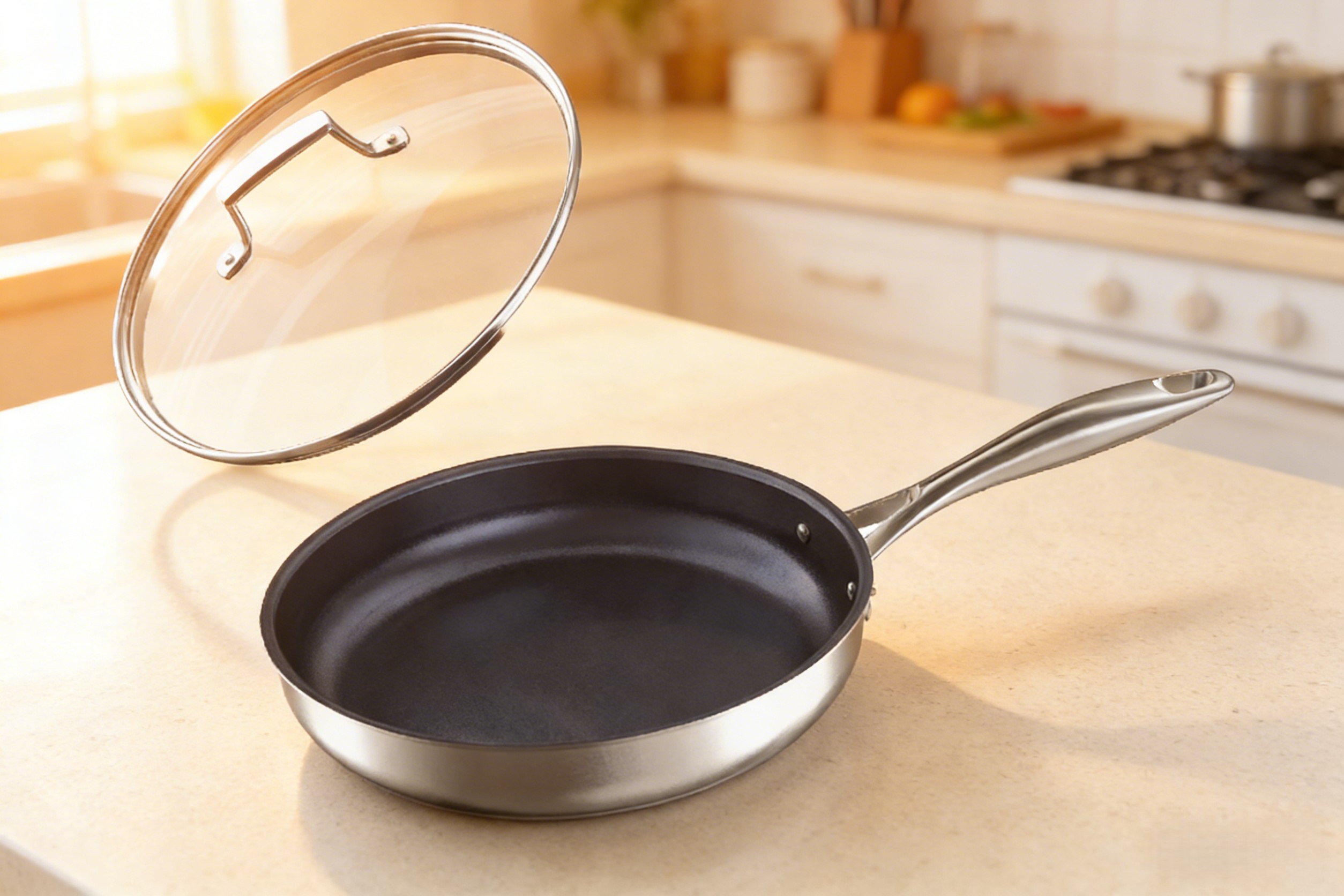
Upgrade your kitchen with Titaudou's Pure Titanium Cookware series. 3-layer titanium cookware The only pan you'll ever need for your tomato sauces, wine reductions, and healthy meals.
Conclusion
So, is cast iron cookware safe for acidic foods?
The nuanced answer is: It is safe for quick cooking if you don't mind a potential iron boost, but it is not recommended for long-simmering acidic dishes due to flavor degradation and damage to the pan's seasoning.
Cooking should be about enhancing flavors, not fighting chemical reactions. While cast iron holds a nostalgic place in history, modern metallurgy offers us better tools. For the health-conscious cook who demands purity of flavor and ease of maintenance, Pure Titanium is the clear winner. It allows you to cook any ingredient, at any temperature, for any length of time, with zero compromise.
Frequently Asked Questions and Answers
Q: Can I cook spaghetti sauce in cast iron if I only do it once?
A: Yes, doing it once likely won't ruin your pan, especially if it is well-seasoned. However, you may notice a metallic taste in the sauce. It is best to wash and re-oil the pan immediately afterward.
Q: Does washing cast iron with soap remove the seasoning like acid does?
A: No. This is a myth. Modern dish soap is gentle enough for seasoned cast iron. Acid is chemically different; it dissolves the metal bond, whereas soap just cleans surface grease.
Q: How do I know if my cast iron is reacting to the acid?
A: Look for three signs: 1) The food tastes metallic. 2) The sauce has turned a darker, muddy color. 3) The pan looks grey or "dry" after cleaning, indicating the seasoning has been stripped.
Q: Is Titanium cookware safe for high heat like cast iron?
A: Yes! Titanium has a melting point much higher than cast iron or steel. It can withstand extreme heat without warping or releasing toxic fumes.