Titanium reducers are increasingly recognized as a superior choice in chemical piping systems, particularly in industries where reliability and longevity are essential. One of the most significant advantages of titanium reducers is their outstanding corrosion resistance, which allows them to withstand harsh chemical environments that would quickly degrade conventional materials. This exceptional property not only extends the lifespan of piping networks but also minimizes maintenance costs and downtime. In addition to being corrosion resistant, titanium reducers are lightweight yet possess high mechanical strength, making installation easier and reducing overall system weight without compromising performance. Their ability to resist scaling, fouling, and chemical attack makes them especially valuable in processes involving aggressive acids, chlorides, or seawater. As environmental and economic demands grow, the use of titanium components in chemical piping systems is expected to increase, providing both operational efficiency and long-term value. This article explores the primary benefits of titanium reducers, highlighting their role in modern, corrosion resistant chemical processing systems.
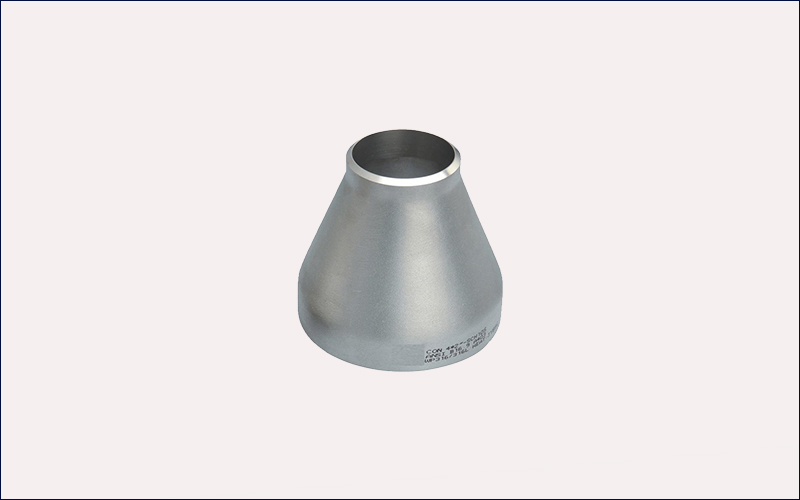
1. Corrosion Tolerance of Titanium Reducers in Extreme Environments
1.1 Comprehensive Corrosion Resistance
Titanium reducers deliver an unparalleled level of corrosion resistance, making them highly suitable for conveying strong acid and alkali media. In the presence of boiling hydrochloric acid, nitric acid, and chlor-alkali solutions, the corrosion rate of titanium pipe and tube is typically less than 0.018 mm/year—over 15 times better than even the best grades of stainless steel. This performance is especially valuable when transporting sulfuric acid, hydrochloric acid, and other aggressive chemicals that rapidly degrade traditional metal reducers.
A fundamental reason for this resistance is titanium’s ability to form a dense, stable, and self-healing surface oxide film. Even if the film is damaged, it quickly regenerates in the presence of oxygen, ensuring continued protection. In chloride-rich environments—a notorious challenge for metal piping—titanium reducers exhibit outstanding resistance to pitting corrosion, greatly reducing the risk of localized perforation or system failure.
1.2 Adaptability to Special Media
Titanium pipe and titanium tube products, including reducers, are also engineered to perform reliably in special chemical environments:
· Dry Chlorine Gas:Titanium is generally stable but requires a water content of at least 0.5% in the gas to prevent the risk of spontaneous combustion. This characteristic must be carefully managed in system design.
· Wet Chlorine Gas:Titanium remains completely stable, making it a preferred material for chlor-alkali and disinfection systems.
· Organic Acids and Hot Alkaline Solutions:Corrosion rates remain low and predictable, provided that strong reducing acids—such as concentrated sulfuric acid—are avoided in long-term contact.
· Mixed or Variable Media:The self-passivating oxide film continues to offer robust protection, ensuring reliability even with fluctuating process conditions.
This chemical adaptability ensures that titanium reducers can handle a broad range of process streams, supporting flexible and future-proof system design.
2. Structural Performance and Lightweight Design
2.1 High-Pressure Endurance
Titanium reducers are engineered for both strength and longevity in high-pressure applications. The conical transition zone of the reducer, which is most exposed to flow turbulence and impact, is often thickened by 20–30%. This ensures resistance to erosive wear and mechanical shock, even when aggressive media are transported at high velocities or pressures.
2.2 Lightweight Construction
The density of titanium is just 4.51 g/cm³—about 57% that of steel. This significant weight reduction brings several key benefits:
· Lower load on pipe supports and hangers
· Easier, safer, and less labor-intensive installation
· Reduced transportation and handling costs
· Potential for greater design flexibility in compact or suspended piping systems
Despite its lightness, titanium’s mechanical strength is excellent, ensuring that reducers retain their shape and structural integrity even in demanding service conditions.
2.3 High-Temperature Stability
Titanium reducers maintain their mechanical properties at elevated temperatures. In continuous service, they are suitable for use up to 300°C, while short-term exposure up to 600°C can be tolerated without significant loss of strength or deformation. This high-temperature performance further expands their versatility in chemical plants where temperature fluctuations and thermal cycling are routine.
3. Longevity and Economic Advantages
3.1 Extended Service Life
In environments that cause rapid degradation of stainless steel or alloys, titanium reducers offer a service life that is typically more than ten times longer. This durability is a result of both their corrosion resistance and their ability to withstand repeated thermal and mechanical stresses.
3.2 Low Maintenance Costs
Titanium pipe and tube components require no additional anti-corrosion coatings or linings, eliminating the costs and downtime associated with periodic recoating or repairs. The naturally clean and smooth surface of titanium also reduces the frequency and intensity of cleaning operations, further lowering long-term maintenance expenses.
3.3 System Reliability
Every titanium reducer is subject to rigorous quality control measures, including 100% eddy current or radiographic inspection. This ensures the early detection and elimination of potential defects, virtually eliminating the risk of sudden leaks or failures during service. As a result, overall system reliability is significantly increased, reducing the likelihood of unplanned shutdowns or environmental incidents.
4. Key Installation Practices
4.1 Structural Reinforcement and Assembly Requirements
· Eccentric Reducers in Horizontal Piping:When using eccentric titanium reducers, it is essential to specify the offset orientation to prevent gas accumulation at high points, which could compromise flow or cause operational issues.
· Welding Compatibility:Titanium welds must always match the grade of the adjoining titanium pipe (for example, TA2 reducers with TA2 pipe) to avoid galvanic corrosion at dissimilar metal interfaces. Precision welding with inert gas shielding is required to maintain corrosion resistance.
4.2 Mandatory Surface Treatments
· Pickling:Acid cleaning with a hydrofluoric/nitric acid blend is used to remove surface contaminants and promote the formation of a uniform, protective oxide film.
· Electropolishing:This technique further improves the passive layer’s integrity, especially in the heat-affected zone of welds, optimizing overall corrosion resistance and ensuring long-term durability.
Proper installation and post-processing are fundamental to realizing the full performance potential of titanium reducers in chemical piping systems.
5. Typical Chemical Industry Applications
5.1 Chlor-Alkali Industry
In chlor-alkali plants, titanium reducers are widely used for transitions between electrolyzers and concentration towers. They must reliably withstand the dual corrosive action of wet chlorine gas and alkaline solutions. Titanium’s stability in these media makes it indispensable for safe and efficient operation.
5.2 Nitric Acid Production
Nitric acid units, especially in concentration sections operating at temperatures up to 200°C, depend on TA2 titanium reducers for their outstanding resistance to both acid attack and thermal stress. Field data confirm corrosion rates below 0.1 mm/year, with exceptionally low failure rates over prolonged service periods.
5.3 Seawater Desalination
Seawater desalination systems utilize titanium reducers at the high-pressure pump inlets and outlets, where exposure to high-velocity, chloride-rich water is extreme. Titanium’s resistance to both chloride ion pitting and erosive wear ensures long-term, reliable operation without costly shutdowns for maintenance or replacement.
Conclusion
Titanium reducers, along with titanium pipe and titanium tube products, deliver unmatched performance advantages in chemical piping systems exposed to aggressive and extreme service conditions. Their exceptional corrosion resistance, lightweight yet robust construction, and long service life provide not just technical superiority but also significant economic and operational benefits. As chemical processes become more demanding and environmental regulations more stringent, the adoption of titanium components will only accelerate, reinforcing their role as a foundation for reliable, efficient, and sustainable chemical manufacturing.
Frequently Asked Questions and Answers
1. What performance advantages do titanium reducers offer in chemical industry environments with strong acids, alkalis, or high temperatures, and how do these properties extend equipment lifespan and reduce operational risks?
Titanium reducers deliver unrivaled corrosion resistance in environments containing strong acids, alkalis, or high temperatures. Their self-healing oxide film prevents both uniform and localized corrosion, dramatically extending the service life of piping components and reducing the risk of leaks, failures, or environmental incidents. This durability minimizes maintenance and replacement frequencies, ensuring safer, more stable operations.
2. In which specific chemical industry scenarios (e.g., corrosive medium processing, high-pressure reaction systems, or fine chemical synthesis) are titanium reducers most effectively applied, and what unique material characteristics make them a preferred choice over traditional metal reducers?
Titanium reducers are most effective in processes involving highly corrosive media, such as chlor-alkali production, nitric acid concentration, and seawater desalination—places where stainless steel and conventional alloys would quickly fail. Their high strength-to-weight ratio, excellent high-temperature performance, and unique resistance to chloride-induced pitting make them the preferred choice for critical, high-risk applications.
3. What technical value do titanium reducers provide to chemical industry operations, particularly in terms of energy efficiency optimization, maintenance cost reduction, and compliance with strict environmental and safety standards for long-term production stability
Titanium reducers’ lightweight and high-strength design reduces structural loads and energy required for support and pumping, increasing overall system efficiency. Their resistance to corrosion and fouling lowers maintenance costs and cleaning frequency. Rigorous quality control and long service life help plants meet stringent safety and environmental standards, ensuring stable, long-term production with minimal unplanned downtime.