1. Introduction: Can You Cook Acidic Foods in Cast Iron? Debunking Myths and Protecting Your Pan
Imagine this scenario: You have spent hours simmering a rich, authentic Bolognese sauce. You taste it, expecting the sweetness of tomatoes and the depth of basil, but instead, you are hit with a sharp, metallic tang that tastes like you are licking a penny. You look at your beloved cast iron skillet, and the smooth, black patina you spent months building is gone, replaced by a dull, grey, and patchy surface.
This is a common pain point for home cooks. The question—"Can You Cook Acidic Foods in Cast Iron?"—is one of the most debated topics in the culinary world.
On one side, traditionalists argue that grandmothers cooked everything in iron for centuries. On the other side, food scientists warn about chemical reactions that strip seasoning and alter flavors. The truth lies somewhere in the middle, governed by chemistry and metallurgy.
In this comprehensive guide, we will move beyond anecdotes. We will explore the mechanism of iron leaching, how modern nitriding technology changes the game, and the specific maintenance steps required to keep your cast iron cookware safe. Furthermore, for those who find the maintenance of iron too demanding for acidic cooking, we will briefly look at why professional kitchens are increasingly turning to inert alternatives like Titanium cookware for these specific tasks. 3-layer titanium cookware
2. The Science: How Acidic Foods React with Cast Iron
To understand why your tomato sauce tastes metallic, we must look at the composition of the pan itself. A standard cast iron skillet is an alloy comprised roughly of 96-98% iron (Fe) and 2-4% carbon (C).
The Chemical Reaction
When you introduce acidic ingredients—such as tomatoes, vinegar, wine, or lemon juice—you are introducing a low pH environment (typically pH < 5). Iron is a reactive metal. When it meets acid and heat, a displacement reaction occurs:
Fe+2H+→Fe2++H2↑Fe + 2H^+ \rightarrow Fe^{2+} + H_2\uparrowFe+2H+→Fe2++H2↑
In this reaction, the iron atoms from your pan are oxidized and released into your food as ferrous ions (Fe2+Fe^{2+}Fe2+).
Visual and Sensory Changes
This chemical exchange results in two distinct phenomena that ruin dinner:
2.1. The "White Bottom" Effect: If you have ever cleaned your pan and found the bottom looks white or hazy, you are seeing the formation of iron salts. The ferrous ions combine with organic acids in the food (like citric acid or acetic acid) to form precipitates like ferrous citrate.
2.2. The Metallic Taste: The ferrous ions (Fe2+Fe^{2+}Fe2+) released into the food can oxidize further into ferric ions (Fe3+Fe^{3+}Fe3+). This is essentially "rust" in a dissolved form. Our tongues are incredibly sensitive to metallic ions, detecting them at very low concentrations, which destroys the delicate flavor profile of acidic dishes.
The Data: Iron Leaching Rates
The concern isn't just theoretical. In controlled food science experiments, simmering a tomato-based sauce in a standard cast iron skillet for just one hour resulted in an iron ion dissolution rate of 2.3mg/kg. To put that in perspective, this is more than 10 times the leaching rate of stainless steel. While this iron is generally not toxic, it fundamentally changes the chemistry of your meal.
3. Common Issues When Cooking Acidic Foods in Cast Iron
If you ignore the science and simmer acidic stews in raw cast iron daily, three primary issues will arise.
3.1 Corrosion and Pitting
The "seasoning" on a cast iron skillet is a layer of polymerized oil. It is tough, but it is not invincible. Acid acts as a solvent. Long-term exposure to acidic foods slowly eats away this polymer chain. Once the seasoning is breached, the acid attacks the raw metal, leading to accelerated rusting and "pitting"—tiny craters in the pan's surface that make food stick.
3.2 Discoloration of Ingredients
Have you ever noticed your bright red tomato sauce turning a muddy brown? Or a white wine sauce turning grey? This is the iron contamination at work. The dissolved iron reacts with the pigments in vegetables (anthocyanins) and sulfur compounds in onions and garlic, darkening the food. While safe to eat, it looks unappetizing.
3.3 Health Considerations
For most people, a little extra iron is harmless or even beneficial. However, the iron leached from cookware is non-heme iron, which is less absorbable than iron from meat.
The Safety Limit: The daily safe intake for iron is roughly 10-18mg for adults. While a single meal won't cause toxicity, the unpredictable nature of leaching makes it a poor method for supplementation.
The Sensitive Group: For individuals with Hemochromatosis (a genetic condition causing iron overload), cooking acidic foods in cast iron is strictly not recommended.
Pro Tip: If you want the durability of metal without the chemical reactivity, this is where Titanium cookware excels. Titanium is biologically inert, meaning it refuses to react with acids, preserving the pure color and taste of your ingredients without any leaching risks.
4. Nitrided Cast Iron: How It Protects Against Acid Corrosion
Not all cast iron is created equal. If you are shopping for a new pan, you may see terms like "Nitrided" or "Gas Nitriding." This is not just marketing fluff; it is a significant metallurgical upgrade.
What is Nitriding?
Nitriding is a heat treatment process where the cast iron skillet is placed in a vacuum furnace and exposed to nitrogen gas at high temperatures. The nitrogen atoms diffuse into the surface of the iron, creating a compound layer of Iron Nitride (Fe3NFe_3NFe3N).
The Hardness and Protection Barrier
This process transforms the surface of the pan:
Thickness: It creates a protective layer 50-100 micrometers thick.
Hardness: The surface hardness jumps to HV800, which is roughly three times harder than untreated cast iron.
Acid Resistance: This is the key metric. In laboratory tests where pans were soaked in a 4% acetic acid solution for 24 hours, nitrided cast iron showed an iron dissolution rate of <0.2mg/kg.
Comparison:
Standard Cast Iron: ~2.3mg/kg leaching.
Nitrided Cast Iron: <0.2mg/kg leaching.
If you plan to cook acidic foods and want to stick with iron, investing in a nitrided pan (usually 30-50% more expensive) is the only way to significantly mitigate the metallic taste and corrosion.
5. Heat Conductivity: How It Affects Acidic Food Cooking in Cast Iron
Many users mistakenly believe cast iron is a great heat conductor. It is not. It is a great heat retainer.
The Thermal Physics
The thermal conductivity of cast iron is approximately 50 W/(m·K). Compare this to aluminum (237 W/(m·K)). This means cast iron heats up unevenly. When placed on a burner, the area directly above the flame gets very hot, while the edges remain cool.
The "Hot Spot" Danger
Why does this matter for acidic foods? Chemical reactions accelerate with heat.
If you have a "hot spot" in your pan that is 80°C hotter than the rest of the surface, the acid reaction in that specific spot will be aggressive. This is often where you will see the seasoning stripped away first—right in the center of the pan.
Cooking Strategy
To mitigate this:
① Use Thick-Bottomed Pans: Look for a cast iron skillet with a base thickness of at least 5mm. This mass helps distribute the heat laterally, reducing the intensity of hot spots.
② Low and Slow: Never blast a cast iron pan on high heat with acidic liquids.
③ The Titanium Alternative: Titanium cookware often utilizes a composite structure or advanced manufacturing to ensure even heating without the reactivity, eliminating the "hot spot corrosion" effect entirely.
6. How to Protect Your Cast Iron Pan When Cooking Acidic Foods
So, Can You Cook Acidic Foods in Cast Iron? Yes, but you must follow the "Rules of Engagement."
6.1 The Pre-Lube Technique
Before adding any acidic ingredients, heat your clean pan to about 150°C and wipe a fresh, thin layer of oil over it. This acts as a sacrificial barrier between the acid and your polymerized seasoning.
6.2 The 30-Minute Rule
Time is your enemy.
Safe: Deglazing a pan with wine for a pan sauce (5-10 minutes).
Safe: Sautéing cherry tomatoes for a quick pasta toss (10-15 minutes).
Unsafe: Simmering a marinara sauce or chili for 2 hours.
If a recipe requires simmering acidic liquid for more than 30 minutes, switch to an enameled pot or Titanium cookware.
6.3 Neutralize the Acid
If you must cook a stew, consider adding fats (butter, oil) or neutralizing agents early in the cooking process. Fat coats the metal and reduces the surface area available for the acid to attack.
6.4 Immediate Evacuation
Never, ever let acidic food cool down in the pan. As the food cools, the sauce thickens and adheres to the metal, and the corrosion continues. Transfer the food to a glass or ceramic serving dish immediately after cooking.
7. Removing Rust and White Stains from Cast Iron Pans
If you broke the rules and your pan is now showing rusty spots or white haze, don't panic. You need to know how to clean cast iron skillet damage effectively.
Method 1: The Potato and Salt Scrub (For Light Rust)
This is a classic method that is gentle on the underlying metal.
①Cut a raw potato in half.
②Sprinkle coarse sea salt generously into the pan.
③Use the cut side of the potato to scrub the salt into the rust. The moisture from the potato reacts with the salt to create a mild abrasive paste, and the oxalic acid in the potato helps break down the rust.
④Rinse and dry immediately.
Method 2: The Vinegar Bath (For White Stains/Heavy Rust)
If you have stubborn white spots (iron salts) or deep rust:
①Mix equal parts white vinegar and water.
②Soak the pan for exactly 30 minutes. Do not leave it longer, or the vinegar will pit the good metal.
③Scrub with steel wool to reveal the grey raw iron.
④Wash with soapy water to neutralize the acid.
⑤Crucial Step: You must re-season immediately, or it will rust within minutes.
8. Daily Maintenance Tips to Extend Cast Iron Pan Lifespan
Knowing how to season cast iron and maintain it is the only way to keep it viable for acidic cooking.
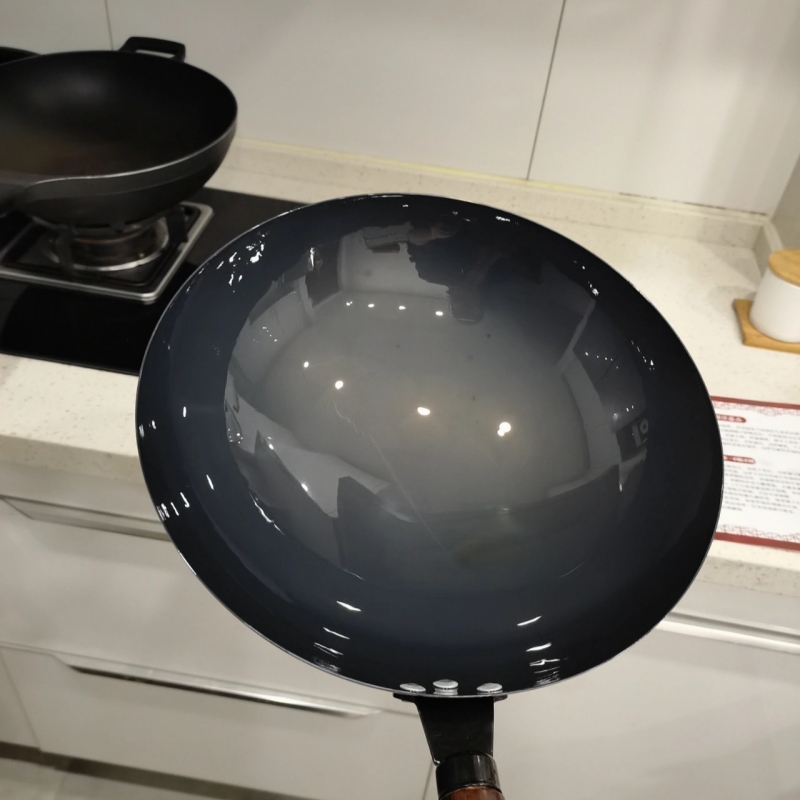
The "Wash, Dry, Oil" Ritual
①Wash: Use warm water and a soft sponge. Contrary to popular belief, a small drop of mild dish soap is fine on a well-seasoned pan, but avoid it if possible. Never use the dishwasher.
②Dry: Towel dry, then place the pan on a low-heat burner for 2 minutes. This evaporates microscopic moisture trapped in the iron's pores.
③Oil: While the pan is still warm, apply a dime-sized drop of flaxseed or grapeseed oil. Rub it all over the interior with a paper towel until it looks dry (no visible oil streaks). This reinforces the polymer layer.
Periodic "Deep" Seasoning
Once a month, or after cooking acidic foods, perform a full oven season:
①Coat the pan in a thin layer of oil.
②Place it upside down in an oven at 200°C (400°F) for one hour.
③Let it cool in the oven.
A Maintenance-Free Alternative:
If this routine sounds exhausting, it is. This is why many home cooks are transitioning to Pure Titanium Cookware. Titanium requires no seasoning, no special drying rituals, and no fear of rust. You can wash it, air dry it, and it’s ready for the next meal—whether it's a steak or a tomato soup.
9. Common Mistakes to Avoid with Cast Iron and Acidic Foods
To ensure longevity, avoid these three common pitfalls:
Mistake #1: The "Invincible" Myth
Thinking "it's iron, it can't be hurt." Iron is durable physically (you can drop it), but chemically fragile. Ignoring the chemistry of acids will ruin the non-stick surface you worked hard to build.
Mistake #2: Aggressive Scouring without Re-Oiling
If you use a chainmail scrubber or steel wool to clean off stuck-on food, you are micro-abrading the seasoning. If you don't apply a fresh coat of oil immediately after, the exposed iron will react with the humidity in the air and rust overnight.
Mistake #3: Storing Food in the Pan
This is the cardinal sin of cast iron cooking. Leaving a tomato pasta bake in the skillet in the fridge overnight will result in a pan that smells like old coins and food that tastes metallic. Always use storage containers.
10. Final Verdict: Enjoy Acidic Foods with Cast Iron Safely
So, Can You Cook Acidic Foods in Cast Iron?
The answer is a qualified YES.
You can cook acidic foods in a cast iron skillet, provided you:
①Ensure the pan is extremely well-seasoned.
②Limit cooking time to under 30 minutes.
③Remove food immediately after cooking.
④Clean and re-oil the pan instantly.
However, if you are a chef who loves slow-simmered tomato sauces, wine reductions, or vinegar-based braises, cast iron is not the optimal tool. The chemical reaction is inevitable, and the maintenance is high.
The Superior Choice for Acids:
For those who want the durability of metal but demand a non-reactive surface, Titanium Cookware is the future. It offers the best of both worlds: the health safety of glass and the durability of metal. With Titanium, you can simmer acidic foods for hours with zero leaching, zero flavor alteration, and zero rust.
By understanding the science and following the maintenance protocols, you can keep your cast iron in rotation for searing steaks, while perhaps reserving the delicate acidic tasks for a vessel better suited to the job.
Frequently Asked Questions
Q: Does cooking tomato sauce in cast iron really help with anemia?
A: It can increase the iron content of the food, but it is uncontrolled. The iron released is non-heme iron, which is difficult for the body to absorb without Vitamin C. It is not a reliable medical treatment for iron deficiency.
Q: How do I know if I have stripped the seasoning off my cast iron skillet?
A: If the pan looks dull, grey, or patchy instead of shiny and black, or if food starts sticking in specific spots, you have likely stripped the seasoning. You will need to learn how to season cast iron again to restore it.
Q: Can I use vinegar to clean my cast iron skillet?
A: Only use vinegar if you are trying to remove rust. Vinegar is an acid and will eat away your seasoning. For regular cleaning, use warm water and coarse salt.
Q: Why is my cast iron pan turning my food black?
A: This is a reaction between the iron and the food's acidity or sulfur compounds. It indicates that your seasoning layer is too thin or the food was cooked too long. It is generally safe to eat but tastes unpleasant.
Q: Is Titanium cookware better than cast iron for everyday cooking?
A: For low-maintenance and health-conscious cooks, yes. Titanium does not require seasoning, does not rust, and is safe for all ingredients (including acids). Cast iron is superior specifically for high-heat searing and heat retention, but requires significantly more labor to maintain.