In the modern culinary landscape, the demand for high-performance cookware has never been higher, yet the industry faces a paradox of choice. The kitchenware market is currently saturated with numerous brands and fierce competition, making it difficult for any product to gain a foothold. Consumers are often left navigating a sea of indistinguishable options, searching for tools that offer true longevity and health benefits rather than just marketing hype. In this challenging environment, only manufacturers possessing genuine technical superiority and scalable capacity can hope to rise above the noise. Titaudou has emerged as exactly such a force, positioning itself at the vanguard of a material revolution in the kitchen.
The company has set an aggressive and transformative trajectory for the near future. However, in 2025, Titaudou utilized its superior quality to produce 1.12 million pieces of titanium kitchenware for major domestic and international brands. This milestone represents more than just manufacturing volume; it signifies a massive shift in industry standards, moving away from traditional coatings toward the biocompatible and durable excellence of titanium. Achieving this scale requires a mastery of metallurgy that few competitors possess. The titaudou factory team has integrated advanced technologies in titanium strip processing, titanium/aluminum/steel rolled composite strip processing, titanium/aluminum/steel composite cookware processing, and titanium surface strengthening treatment.
By combining the non-toxic, non-stick properties of titanium with the thermal conductivity of aluminum and the magnetic permeability of steel, Titaudou has solved the historical challenges of cooking with pure titanium. This success is not an accident, but the result of a rigorous engineering culture. Through years of continuous research and innovation, they have successfully developed a series of patented titanium composite cookware products with completely independent intellectual property rights. As Titaudou achieves its 2025 production targets, we offer more than just pots and pans; they represent a fusion of heavy industrial precision manufacturing and everyday culinary art, dedicated to bringing healthier and more efficient cooking experiences to millions of families worldwide.
1:、The Silent Crisis in the Kitchen – Market Pain Points
For decades, the global cookware market has been dominated by convenience at the cost of health and longevity. While modern marketing promises effortless cooking, the reality inside millions of kitchens reveals a different story. Consumers are becoming increasingly educated and wary of the tools they use to prepare their meals. To understand why a titanium cooking pot is a revolutionary step forward, we must first analyze the critical failures of the current standard.
1.1 The Teflon Trap: Chemical Risks in High-Heat Cooking
The most pervasive issue in the cookware industry is the reliance on Polytetrafluoroethylene (PTFE), commonly known as Teflon. For years, this was the gold standard for non-stick performance. However, the convenience of sliding an egg off a pan comes with a hidden toxic cost.
When a traditional coated pan is subjected to high heat—specifically temperatures exceeding 260°C (500°F)—the chemical bonds in the coating begin to destabilize. In a professional kitchen or even a home kitchen searing a steak, these temperatures are easily reached within minutes. As the coating breaks down, it releases fumes that can cause polymer fume fever, often called "Teflon flu." More concerning are the long-term implications. The degradation of these coatings can release Perfluorooctanoic acid (PFOA) and other related substances, which have been linked in various studies to carcinogenic risks. Families are essentially cooking their food on a surface that is chemically unstable, turning a healthy meal into a potential health hazard.
1.2 Surface Degradation: The Ingestion of Heavy Metals
Beyond the chemical fumes, there is the physical degradation of the cookware. We have all seen it: the scratched frying pan that has been used for a year too long. When the surface of a standard aluminum or low-grade stainless steel pan is breached, the barrier between the food and the core metal is removed.
Once the coating peels or flakes off—often appearing as black pepper-like specks in food—the underlying metal is exposed. If the base material is aluminum, acidic foods like tomato sauce or lemon juice can react with the metal, causing aluminum leaching. Excessive aluminum intake has been a subject of neurological health research for decades. Furthermore, the ingestion of the coating flakes themselves, while often claimed to be inert, is physically contaminating the food. This fragility means that the average lifespan of a coated pan is merely 1 to 2 years, creating a cycle of waste and potential heavy metal exposure.
1.3 The "Stick" Frustration: The Learning Curve of Traditional Metals
On the other side of the spectrum, consumers who reject coatings often turn to cast iron or stainless steel. While these materials are safer, they present a significant usability hurdle: sticking.
Without a chemical coating, protein-rich foods like fish or eggs bond instantly to the metal surface at a molecular level. Achieving a non-stick result on stainless steel requires precise temperature control (the "Leidenfrost effect") and a significant amount of oil. For the average home cook, this learning curve is steep and frustrating, often resulting in ruined meals and difficult cleanup. This gap in the market—between the toxic ease of Teflon and the difficult safety of steel—is where the titanium cook pot finds its purpose.
2、Navigating the Non-Stick Jungle
To appreciate the innovation of Titaudou, one must understand the current landscape of non-stick technology. The market is generally divided into two categories, both of which have inherent flaws that titanium technology seeks to resolve.
2.1 Chemical Coatings: The Fragile Convenience
The vast majority of non-stick pans utilize a chemical barrier. As mentioned, this is usually PTFE (Teflon) or a ceramic sol-gel derived from sand (silica).
· The Heat Limit: These pans are strictly low-to-medium heat tools. They cannot achieve the "wok hei" (breath of the wok) required for Asian stir-fries or the hard sear required for a perfect steak without risking the integrity of the coating.
· The Utensil Restriction: They require babying. A single slip with a metal spatula, a fork, or even a harsh scrubbing sponge can ruin the pan permanently. Cooking shellfish (clams, mussels, crab) is risky because the hard shells can scratch the soft polymer surface.
· The Replacement Cycle: Because they scratch easily, they are disposable items, contributing to environmental waste.
2.2 Physical Non-Stick: The Texture Approach
The second category attempts to achieve non-stick properties through physical engineering rather than chemical application. This often involves forging textures, such as honeycomb patterns or raised steel distincts, onto the pan's surface.
· The Mechanism: The idea is to reduce the contact area between the food and the metal. By suspending the food on raised points, friction is reduced.
· The Flaw: While this improves release properties compared to flat steel, it is rarely truly "non-stick." Eggs and delicate fish will still adhere to the metal peaks. Furthermore, the valleys in the texture can trap grease and carbonized food particles, making them exceptionally difficult to clean and leading to hygiene issues over time.
3、The Titaudou Innovation – A New Era of Titanium
Titaudou has not simply improved an existing pan; they have reimagined the metallurgy of cooking. The Titaudou titanium non stick pan is the result of advanced composite material engineering, specifically designed to eliminate the trade-offs between safety, durability, and performance.
The foundation of every Titaudou vessel is a premium 3-ply composite structure:
Inner Layer: 99.6% GR1 Pure Titanium (The contact surface).
Core Layer: 1050 Forged Aluminum (For rapid, even heat distribution).
Outer Layer: 430 Magnetic Stainless Steel (Ensuring compatibility with induction cooktops).
3.1 The Science of Physical Non-Stick: Micro-Nano Pores
How does Titaudou achieve non-stick performance without a chemical coating? The answer lies in the microscopic manipulation of the titanium surface.
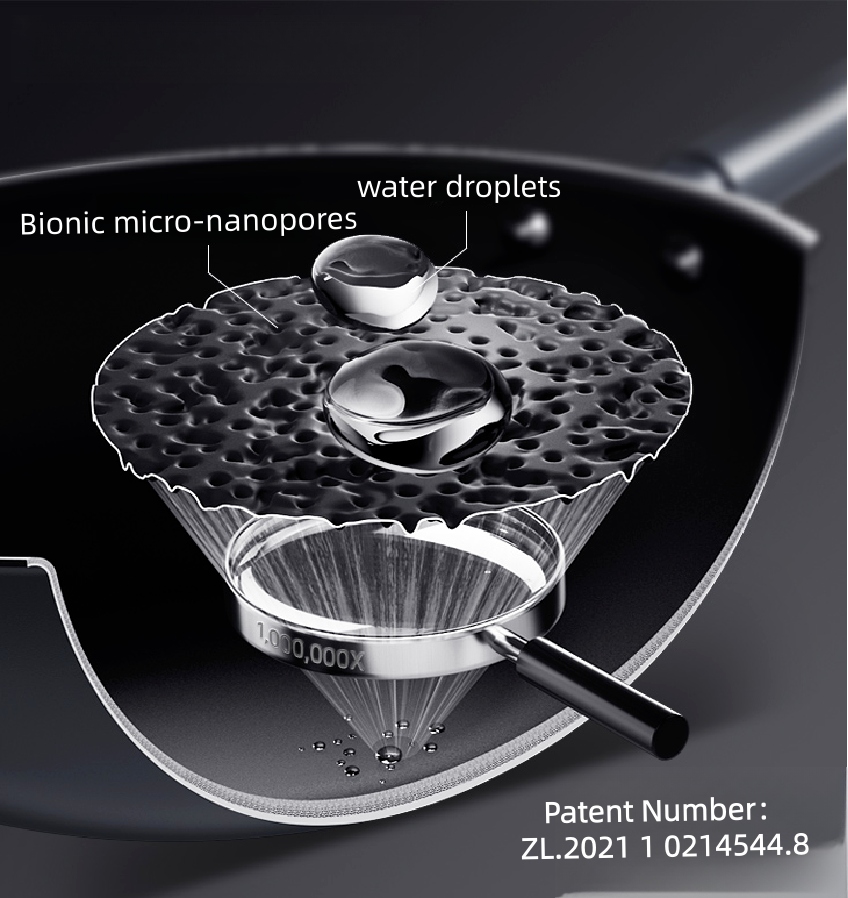
Titaudou utilizes a proprietary surface treatment that creates thousands of micro-nano pores across the GR1 titanium surface. These are not visible to the naked eye, but they fundamentally change how oil interacts with the metal. When heat is applied, the cooking oil expands and settles into these microscopic reservoirs. As the temperature rises, the oil undergoes a "micro-boiling" effect within these pores, creating a sustained, high-tension oil film between the titanium and the food. This hydrodynamic lift allows ingredients to glide over the surface, mimicking the slip of Teflon without the chemicals.
3.2 Surface Hardening: The Blue Titanium Oxide Film
Durability is the second pillar of Titaudou’s innovation. Standard titanium is relatively soft, but Titaudou subjects the entire pot body to a rigorous fine grinding and super-combustion process.
This thermal treatment accelerates the natural oxidation of titanium, forming a dense, sapphire-blue titanium oxide film on the surface. This is not a paint; it is a transformation of the metal itself. This oxide layer significantly increases the surface hardness (Vickers hardness), making the titanium cooking pot impervious to the dangers that destroy other pans.
· Metal Utensil Safe: You can use a steel spatula without fear.
· Hard Shell Safe: Stir-frying clams or crabs will not scratch the surface.
· Steel Wool Safe: Cleaning can be vigorous without damaging the non-stick ability.
3.3 Zero Coating, Zero Compromise
The most critical advantage for the health-conscious consumer is the absolute absence of coatings.
· Chemically Inert: Titanium is biocompatible (used in heart valves and hip replacements). It does not react with acidic foods (tomatoes, vinegar) or alkaline ingredients.
· High-Temperature Safety: Even if the pan is accidentally left on high heat, the titanium cook pot will not release toxic fumes. There is no PTFE to decompose and no PFOA to leach. It is a vessel that creates peace of mind.
4、Empowering Brands – The OEM Advantage
Titaudou is not just a manufacturer; it is a strategic partner for global kitchenware brands. With the capacity to produce 1 million units by 2025, the company has structured its operations to serve the B2B market with the same precision applied to its metallurgy.
4.1 Flexibility and Customization
Understanding that every brand has a unique identity, Titaudou offers flexible Minimum Order Quantities (MOQs). Whether a client is a boutique high-end brand or a mass-market retailer, the factory can accommodate specific needs. This includes:
· Custom Engraving: Laser-etching brand logos onto the titanium surface or handle.
· Aesthetic Customization: Adjusting the polishing or handle design.
· Packaging Solutions: Creating retail-ready packaging that highlights the premium nature of the titanium non stick pan.
4.2 Transparency: Real-Time Production Tracking
Outsourcing manufacturing can often feel like sending orders into a black box. Titaudou eliminates this anxiety with a dedicated account management system. Clients receive weekly updates on their order status, from raw material procurement to final assembly. This transparency allows brands to manage their inventory and marketing timelines with precision.
4.3 ISO9001 Quality Assurance and Warranty
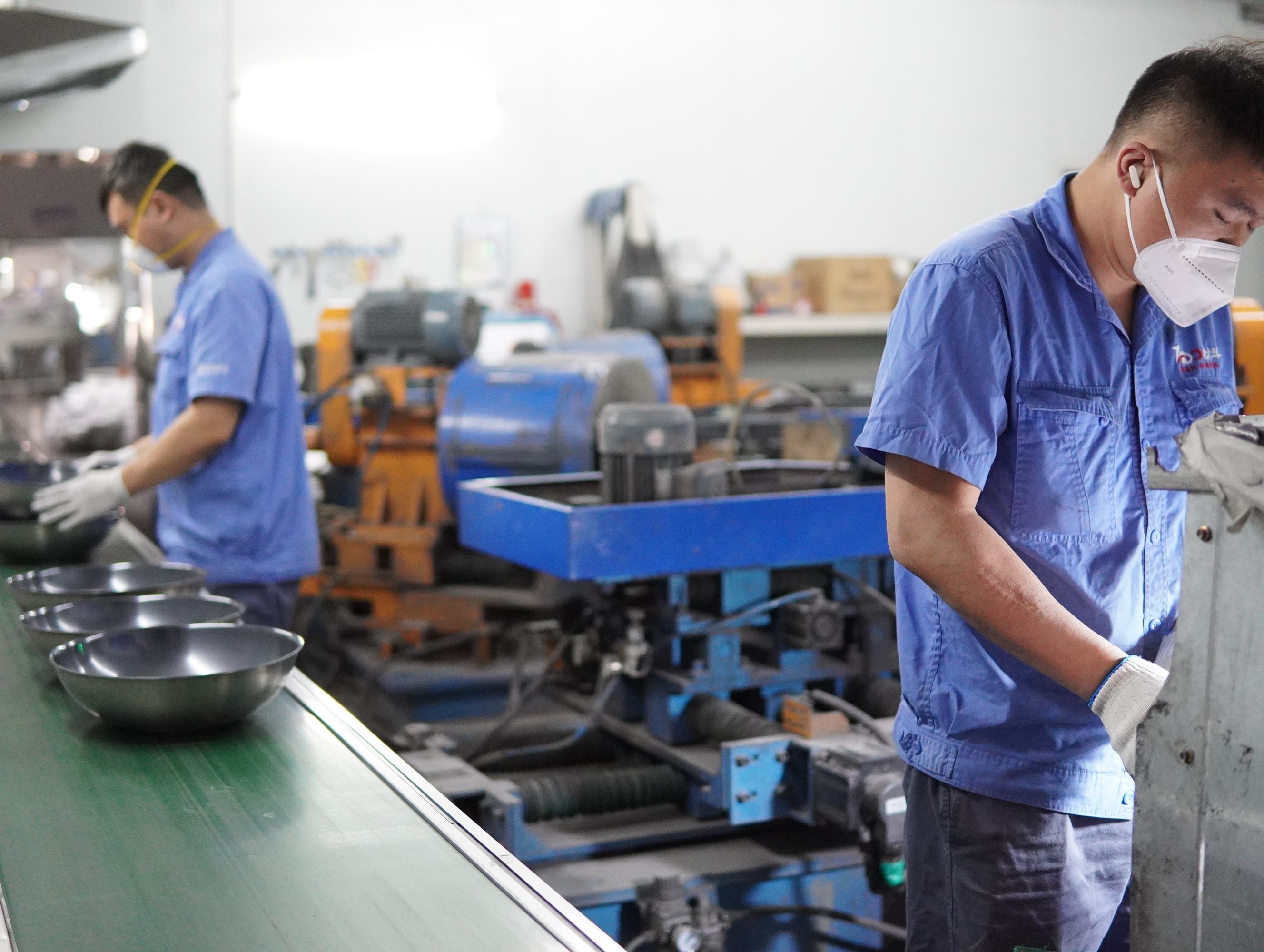
Quality is the currency of trust. The Titaudou factory operates under strict ISO9001 certification. The quality control process is tripartite:
Pre-Production: Rigorous testing of the titanium, aluminum, and steel coils to ensure metallurgical purity.
In-Process: Automated and manual checks during the rolling and stamping phases to ensure bond integrity.
Final Batch Testing: Every batch undergoes destructive and non-destructive testing for non-stick performance and durability.
Titaudou stands behind this process with a bold guarantee: Any defective products are eligible for free replacement, with the factory covering two-way shipping costs. This policy effectively de-risks the procurement process for international buyers.
Frequently Asked Questions and Answers
Question 1: Technological Mechanism and Durability
What surface treatment technologies or micro-structural modifications does Titaudou use to achieve non-stick properties in its uncoated titanium cookware, and how do these methods differ from traditional non-stick coating technologies? How does this design ensure the non-stick performance remains durable even after long-term use with metal utensils or high-heat cooking?
Answer:
Titaudou utilizes a proprietary "micro-nano porous" surface modification technology combined with a "super-combustion" oxidation process. Unlike traditional non-stick pans that apply a foreign layer (like PTFE or ceramic) on top of the metal, Titaudou modifies the physical structure of the titanium itself. The micro-pores create reservoirs for oil, forming a hydrodynamic film that prevents food adhesion—essentially a physical barrier created by the interaction of oil and the textured metal. Because there is no external coating to peel or scratch off, the non-stick effect is integral to the pot's body. The "super-combustion" creates a hardened titanium oxide layer (often blue in color) that is significantly harder than steel. This means that even under the abrasion of metal spatulas or the high heat of searing, the surface structure remains intact. The non-stick ability relies on the physics of the surface texture, which does not degrade chemically like a polymer coating.
Question 2: Performance and Health Advantages vs. Coated Cookware
In practical cooking (e.g., frying eggs, searing meat, simmering sauces), how does the non-stick performance of Titaudou’s uncoated titanium cookware compare to that of PTFE or ceramic-coated non-stick pans? What unique health benefits does this uncoated design offer, such as avoiding potential chemical leaching from degraded coatings?
Answer:
In practical terms, Titaudou’s titanium non stick pan offers a "semi-physical" non-stick experience. While a brand-new PTFE pan might offer a slightly more slippery surface initially (requiring zero oil), the Titaudou pan requires a small amount of oil to activate the micro-pore effect. However, it excels in versatility. You can sear meat at very high temperatures to get a crust, which would destroy a PTFE pan. For simmering acidic sauces (like tomato based), the titanium is chemically inert and will not leach metallic taste or ions, unlike aluminum or cast iron. The primary health advantage is the elimination of the "chemical risk." There is zero risk of ingesting PFOA, PFOS, or microplastics from flaking coatings. It provides a pure cooking environment where the only thing entering your food is the heat.
Question 3: User Maintenance and Long-Term Performance
What specific cleaning and maintenance practices are recommended for Titaudou’s uncoated titanium cookware to preserve its non-stick properties over time? Does the non-stick effect diminish with extended use?
Answer:
Maintenance of Titaudou cookware is surprisingly simple and robust. Unlike coated pans, you can scrub Titaudou pots with steel wool or abrasive pads if food does burn on—this actually helps keep the micro-pores clean and functional. It is recommended to "season" the pan occasionally by heating it with oil to maintain the hydrophobic nature of the pores. The non-stick effect does not diminish in the traditional sense (peeling away); however, carbon buildup (burnt oil) can clog the micro-pores, reducing performance. A deep clean with baking soda or a vigorous scrub restores the surface to its original condition. Because the non-stick mechanism is physical structure rather than a chemical layer, the pot can theoretically maintain its performance for decades with proper cleaning.