Shaanxi Shenglian Yijing supplies a comprehensive portfolio of titanium flat products engineered for demanding service across Power station condensers, plate heat exchangers, chemicals, construction, and other industrial sectors. The range spans Hot rolled and cold rolled strips optimized for strength and dimensional accuracy, Titanium foil material tailored for lightweight shielding and precision parts, and Hot rolled coil for efficient downstream cutting, forming, and fabrication. Products are available in commercially pure grades (e.g., GR1–GR4) for superior corrosion resistance in seawater and chlorides, and alloyed grades (e.g., Ti-6Al-4V, GR5) where higher strength-to-weight ratios and fatigue performance are critical. Consistent surface finish, tight thickness tolerances, and low interstitial content help ensure reliable welding, forming, and long service life. With process routes that balance ductility for deep drawing against rigidity for structural panels, Shenglian Yijing’s titanium plates support applications from condenser tube sheets and exchanger plates to architectural façades and chemical reactor internals. Technical support includes material selection guidance, test certification, and customized widths and tempers to streamline fabrication and reduce waste, enabling end users to meet stringent performance and compliance requirements while minimizing lifecycle costs.
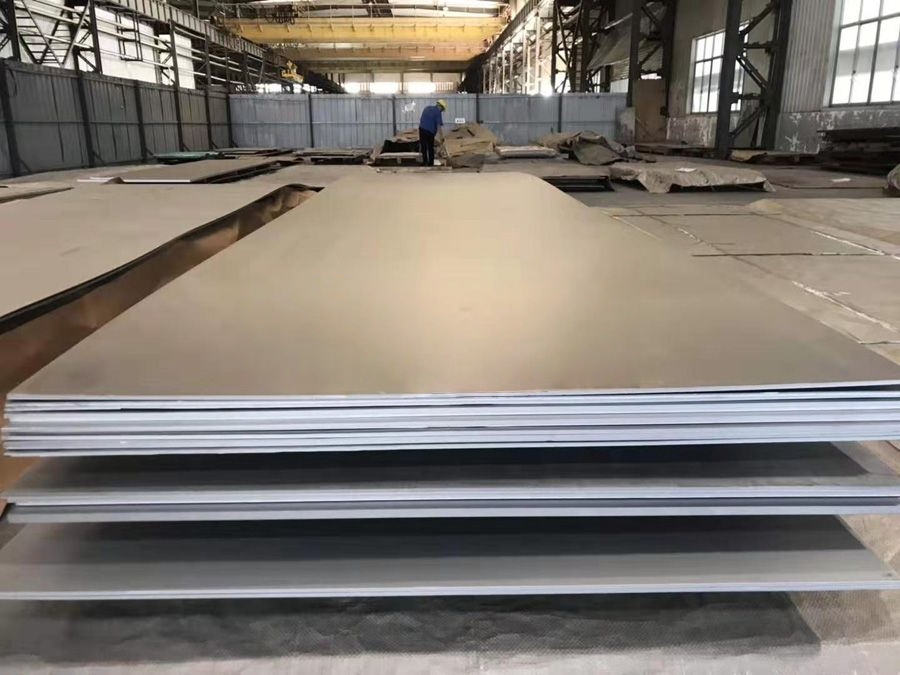
1. Hot rolled strip and coil
1.1 Process route and rolling parameters
Titanium hot rolled strip is produced from the same slab or plate-billet stock as thick plate. To balance rollability with minimal surface reaction, hot rolling typically uses two-stand or four-stand coiler mills with the lowest practical reheating setpoint that still ensures stable threading and tension control. Typical furnace-coiler rolling temperatures for titanium are 750–840 °C, with per-pass reductions of about 25–50%. The final rolling temperature is controlled at 660–730 °C, and coiling is conducted at 640–690 °C to achieve the targeted microstructure and minimize coil-head distortion.
Because titanium has a high melting point, high specific heat, and low thermal conductivity, the strip retains heat and experiences thermal lag. Combined with uneven residual stresses from reductions and coiling, this can distort strip flatness. Consequently, hot rolled coil requires a dedicated annealing step to relieve stress, equilibrate microstructure, and improve shape.
1.2 Descaling and removal of reaction layers
Post-anneal, the coil surface usually exhibits:
· Hot-roll and anneal scale
· Imprints of hot-rolling surface defects
· An oxygen-enriched diffusion layer formed during slab reheating
These layers are the root cause of downstream cold-rolled surface defects if not fully removed. The descaling operation therefore targets thorough removal through a combination of mechanical and chemical steps, ensuring a clean substrate for cold reduction and preventing embedded oxide that would degrade finish and fatigue performance.
1.3 Product characteristics and applications
Well-processed hot rolled coil offers:
· Improved thickness control and shape after stress-relief annealing
· Adequate surface for subsequent cold rolling, pickling, or direct industrial use where a matte, descaled finish is acceptable
· Foundational stock for fabricators producing titanium components for condensers, heat exchangers, and structural elements in corrosive settings
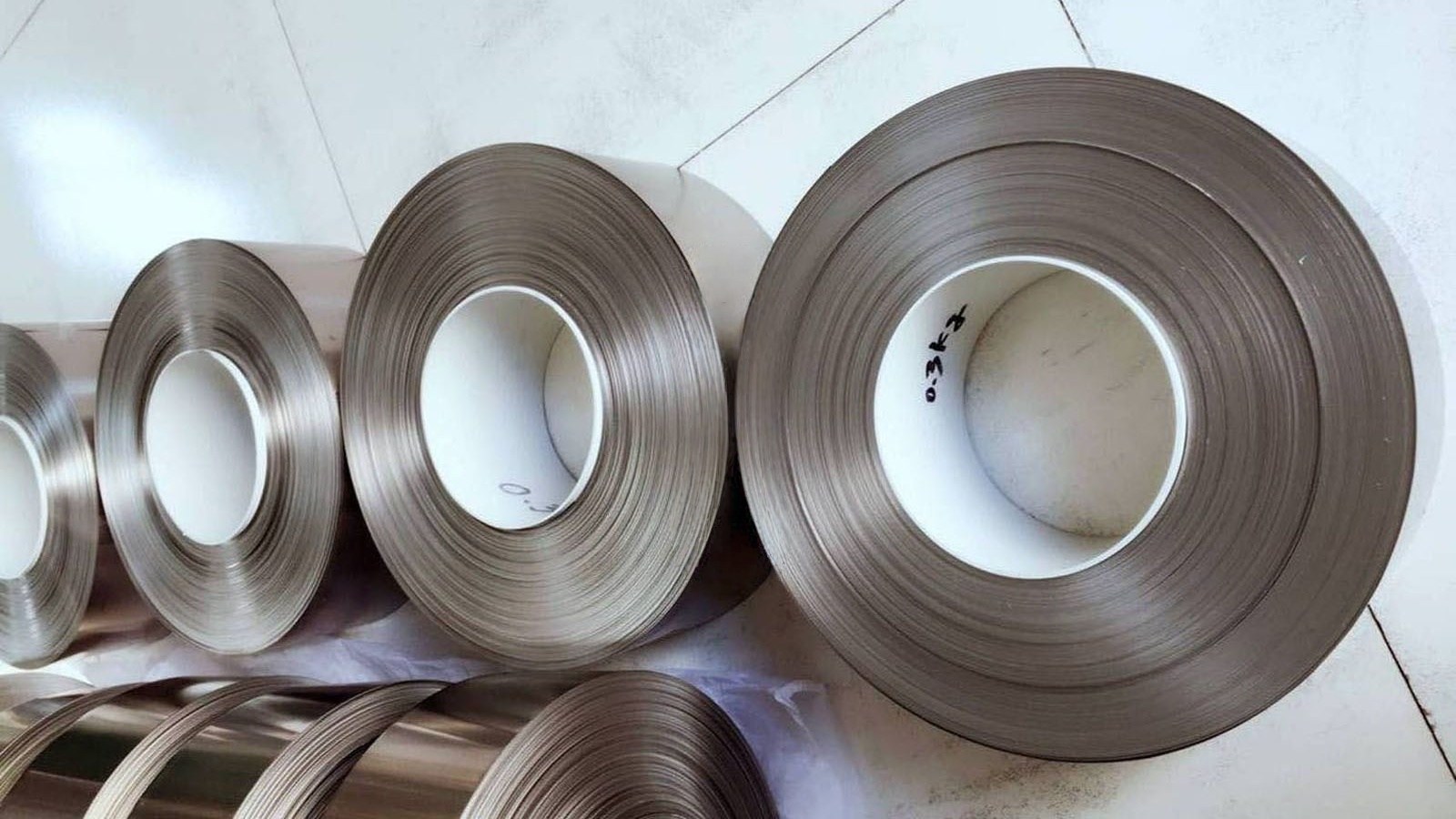
2. Cold-rolled plate and strip
2.1 Input material and production flow
Cold-rolled titanium plate and strip use hot rolled coils of about 3–6 mm thickness, 600–1600 mm width, and single-coil mass typically below 10 t as feedstock. A representative process flow is:
· Annealing (to soften and stabilize the hot band)
· Descaling (removal of scale and oxygen diffusion layer)
· Cold rolling (multiple passes with controlled reductions)
· Cleaning (to remove rolling oils and debris)
· Vacuum annealing (to restore ductility, adjust grain)
· Temper pass/skin pass (to enhance flatness and surface)
· Leveling and finishing (slitting, cut-to-length, edge trimming)
2.2 Oxygen diffusion layer control
The oxygen diffusion layer from hot rolling must be removed to avoid surface defects and embrittlement in the cold product. Commonly, a hybrid route is used:
· Mechanical methods such as shot blasting or light grinding to break and remove brittle oxides
· Pickling in controlled chemistries to dissolve residual oxides and reactively hardened layers
Typical removal is on the order of tens of micrometers. If removal is insufficient, residual oxygen-enriched skin undermines downstream yield by inducing surface roughness, micro-cracking during deformation, and poor finish after final pickling or polishing. Accurate measurement of the diffusion layer thickness and precise inspection of the hot-roll scale morphology are therefore critical to set the correct descaling allowance.
2.3 Rolling strategy and adhesion control
Titanium is chemically active. In the bite zone, excessive per-pass reduction or high rolling speed elevates interface temperature and promotes “hot-sticking” or adhesion phenomena, degrading surface smoothness below the requirements of electronic or precision applications. Micro-wear particles can transfer between work rolls and strip, roughening both surfaces.
To mitigate these issues compared with stainless steel of similar gauges:
· Use lower per-pass reductions and lower rolling speeds
· Increase the number of passes to distribute total deformation
· Select rolling oils with higher viscosity to maintain robust boundary lubrication
· Deploy ceramic work rolls where appropriate to reduce adhesion
2.4 Annealing options for cold-rolled material
Cold-rolled strip and plate require annealing to recover ductility and optimize grain size. Two principal routes are used:
Vacuum annealing (batch): After cold rolling, the strip is cleaned to remove rolling oil, typically by alkaline degreasing. Cleaned coils are vacuum annealed at about 400–500 °C. This promotes clean, bright surfaces, minimizes oxidation, and enables tight control of interstitial pickup.
Vacuum-atmosphere continuous annealing (line): Continuous lines can execute vacuum or controlled atmosphere anneals that enhance surface smoothness, grain-size uniformity, and production throughput. The tradeoff is higher equipment and operating cost. Precise line tension, temperature soak, and rapid cooling modules are used to target specific textures and flatness.
3. Post-anneal forming, leveling, and finishing
3.1 Forming and corrective rolling
After final anneal, material can be given a light temper or corrective pass:
· Skin-pass/planishing to address local wave edges and provide controlled roughness for downstream forming or coating adhesion
· Tension- or roll-leveling to correct shape, reduce coil set, and improve panel flatness
Because titanium exhibits springback, the required leveling strain is higher than for carbon or stainless steels. Process windows must be widened accordingly to achieve permanent shape correction without marking.
3.2 Slitting, shearing, and surface protection
Coils are slit, and plates are cut-to-length per order. To avoid surface scratches, rubber or polymer liners are applied at all strip contact points throughout the line. Titanium’s low thermal conductivity and high chemical reactivity accelerate tool wear during shearing and blanking and can promote burr formation. Optimized tool materials, sharper edges, appropriate rake angles, and specific lubrication strategies are necessary. Process parameters are set tighter than for steels to control edge integrity and burr height.
When uniform properties or higher strength are required in the final product, a light temper cold reduction may be specified to tweak yield strength, surface texture, and flatness.
4. Titanium foil material and ultra-thin strip
4.1 Process architecture
Titanium thin strip and foil production combines major and auxiliary operations:
· Major: hot rolling of feed stock; cold rolling of intermediate strip; multi-roll mill reductions to achieve thin strip and foil gauges
· Auxiliary: pickling, degreasing, heat treatment, precision slitting and trimming
The cold-rolled intermediate strip is the starting material for thin strip and foil. After pickling and annealing, multiple cold reductions are executed, each pass contributing 20–40% total deformation depending on grade and target gauge. Inter-pass degreasing and vacuum anneals restore ductility and maintain a clean, adherent surface. Disc shears are used for high-precision edge trimming when required.
4.2 Precision thickness control
Modern foil mills employ multi-roll clusters with high-stiffness roll stacks and hydraulic gap control. By installing position detectors on the hydraulic pistons of the reduction system, the mill elevates sensitivity to nanometer-scale movements, producing exceptional gauge control. Using this equipment and process control, Shenglian Yijing supplies rolled titanium foil down to 0.04 mm with thickness precision controlled within ±0.001 mm, supporting demanding applications in electronics, aerospace sensors, filtration, and precision shielding.
4.3 Surface and cleanliness
Maintaining foil surface integrity requires:
· Strict oil cleanliness and filtration to avoid streaks
· Low-adhesion roll materials or coatings
· Frequent roll inspection and dressing
· Vacuum anneals to prevent tint, promote brightness, and minimize interstitial uptake
Combined, these measures yield foil with high planarity, minimal pinholes, and surface finishes tailored to customer specifications.
5. Material grades and property tailoring
5.1 Commercially pure vs. alloyed titanium
· Commercially pure (CP) grades (e.g., Grade 1–4): Preferred for corrosion resistance, formability, and weldability. Typical uses include condenser plates, plate heat exchanger components, chemical plant internals, and marine structures.
· Alloyed grades (e.g., Ti-6Al-4V/Grade 5, Ti-3Al-2.5V/Grade 9): Used where higher strength, fatigue resistance, or temperature capability is needed. Representative applications include aerospace skins and stiffeners, high-performance automotive panels, and structural elements that demand elevated specific strength.
5.2 Selecting the processing route by application
· Power station condensers and plate heat exchangers: CP titanium cold-rolled plate and strip with controlled surface finish, tight gauge tolerances, and excellent corrosion performance.
· Chemicals: CP titanium hot rolled coil followed by cold finishing and vacuum anneal for clean surfaces and stable mechanical properties; in more demanding conditions, selected alloys may be used.
· Construction: Architectural panels and façade elements benefit from temper-rolled CP titanium for stiffness, consistent color after finishing, and long-term atmospheric corrosion resistance.
6. Quality assurance and inspection
6.1 Dimensional and shape control
· Thickness: Online X-ray or isotope gauge measurement; off-line micrometers and thickness mapping
· Flatness/shape: I-units or flatness indices recorded; corrective leveling applied as needed
· Width and edge: Precision slitting; burr and edge wave control through optimized knife clearance and tension balance
6.2 Surface integrity and cleanliness
· Visual and automated surface inspection for pits, scratches, and roll marks
· Residual oil and particulate checks following cleaning steps
· Color/tint control post-anneal as an indirect indicator of surface reaction
6.3 Mechanical and corrosion performance
· Tensile testing to verify yield strength, tensile strength, and elongation per grade and temper
· Bend/formability tests for draw-depth capability
· Interstitial analysis (O, N, H) to ensure compliance with grade limits
· Corrosion testing for chloride-rich and industrial environments, aligning with end-use standards
7. Process optimization and equipment choices
7.1 Rolling mills and work rolls
· To-stand/four-stand coiler mills for hot rolling with robust temperature control
· Four-high and cluster mills for cold reduction with high rigidity
· Ceramic work rolls or ceramic-coated rolls to curb adhesion and improve surface finish in titanium service
7.2 Atmosphere and thermal control
· Tight furnace atmosphere management during hot-band reheating and anneals
· Vacuum furnaces for batch anneals; continuous vacuum or controlled-atmosphere lines for high-throughput, uniform results
· Rapid quench or controlled cooling modules to tune texture and strength
7.3 Lubrication and filtration
· High-viscosity rolling oils tailored for titanium to sustain boundary lubrication
· Fine filtration to remove wear particles and prevent streaks or roll pickup
· Degreasing systems that eliminate oil residues prior to annealing, preventing discoloration and carbon pickup
8. From coil to finished sheet: logistics and traceability
· Lot-traceable identification from slab to final sheet/foil
· Coil handling with soft slings, edge protectors, and lined mandrels to safeguard surface
· Packaging in dry, clean conditions to minimize contamination or handling damage
· Certification per customer and industry standards, including chemical composition, mechanical properties, surface finish, and dimensional results
Conclusion
Through carefully engineered sequences—Hot rolled coil production with controlled temperatures and reductions, thorough descaling to remove oxygen diffusion layers, optimized cold rolling with adhesion control, tailored vacuum anneals, and precision finishing—Shaanxi Shenglian Yijing delivers titanium flat products tuned to the needs of power station condensers, plate heat exchangers, chemicals, and construction markets. From robust hot band to ultra-precise foil, every stage is managed to balance mechanical performance, corrosion resistance, thickness precision, and surface integrity.
Titanium hot rolled stripr • Titanium Rolling Technology • Large rolls of heavy titanium • Continuous improvement in equipment and processes to improve production efficiency, material dimensional accuracy and surface quality
Frequently Asked Questions and Answers
Q1: What are the primary types of titanium sheets classified by material grade (e.g., commercially pure titanium vs. titanium alloys like Ti-6Al-4V), and how do their performance characteristics differ?
A1: Commercially pure grades (GR1–GR4) prioritize corrosion resistance, cleanliness, and formability with moderate strength; they are widely used in condensers, heat exchangers, and chemical equipment. Alloyed sheets such as Ti-6Al-4V (GR5) and Ti-3Al-2.5V (GR9) deliver higher strength-to-weight ratios, improved fatigue performance, and better elevated-temperature capability, suited to aerospace, motorsport, and structural applications where load-bearing and durability are critical.
Q2: How are titanium sheets categorized based on processing methods (e.g., cold-rolled, hot-rolled, or annealed), and what structural or surface quality differences exist between these types?
A2: Hot-rolled sheets/coils provide foundational thickness with a coarser surface and require descaling; they exhibit residual stresses that are relieved by annealing. Cold-rolled sheets offer tighter gauge tolerance, improved surface finish, and refined grain, but require careful lubrication and speed control to prevent adhesion. Annealed sheets (vacuum or continuous) show restored ductility, controlled grain size, and cleaner surfaces with minimal tint, enabling high formability and consistent mechanical properties.
Q3: What specialized types of titanium sheets are tailored for specific industries (e.g., aerospace, medical, or marine), and what unique properties (e.g., thickness, finish, or corrosion resistance) define each type?
A3: Aerospace-grade sheets often use alloyed materials (e.g., Ti-6Al-4V) with tight thickness tolerances, controlled textures, and fatigue-critical surface finishes. Medical sheets emphasize biocompatibility and ultra-clean surfaces, frequently in CP titanium with stringent interstitial limits and polished finishes. Marine and desalination sheets typically use CP grades with superior corrosion resistance, provided in cold-rolled, vacuum-annealed conditions for stable mechanical properties and weldability; surface finishes are selected to minimize fouling and facilitate inspection.