Previous
Next
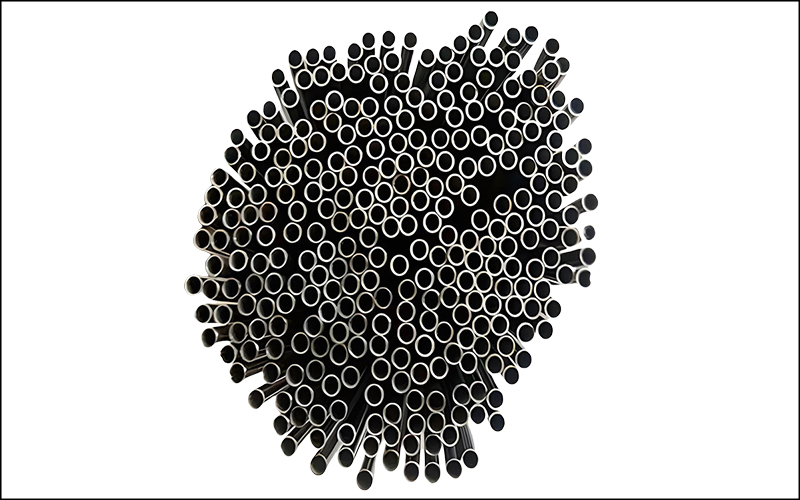
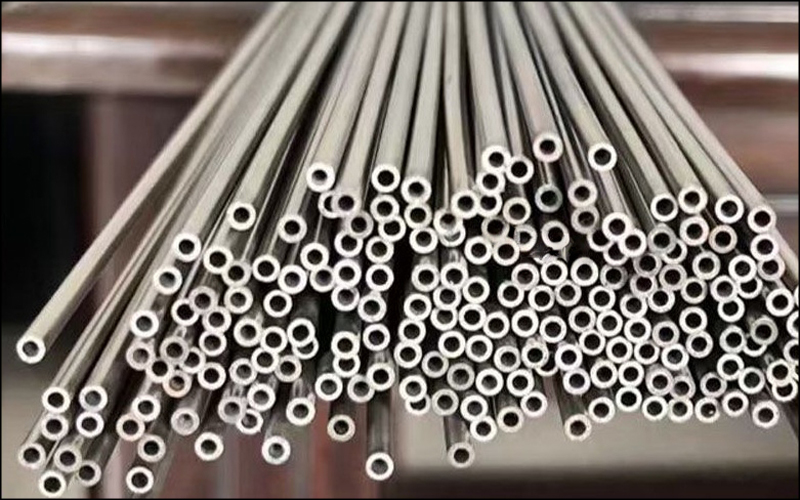
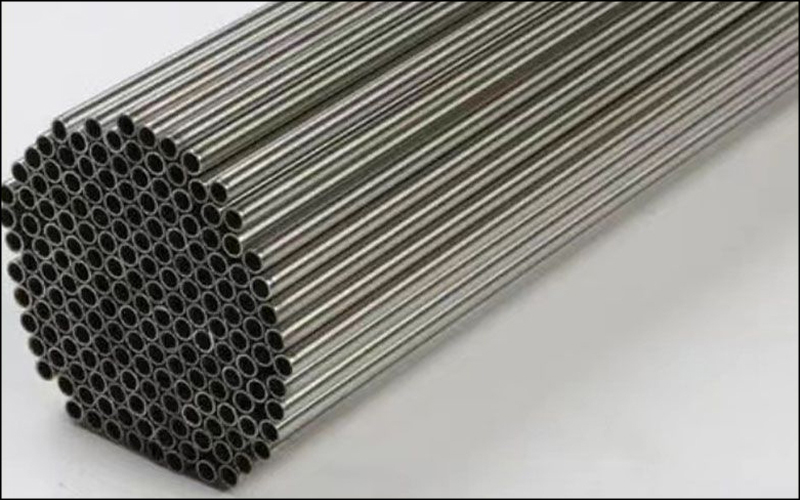
Titanium Capillary Tube
Material properties and classification
Titanium capillaries are made from high-precision industrial-pure titanium and ultrafine-grained titanium alloys. They feature low density (4.51 g/cm³), excellent corrosion resistance (to chloride, acidic and alkaline media), high specific strength, and good biocompatibility.
Common industrial-pure titanium grades include GR1 and GR2, with titanium contents >99.6% and oxygen contents ≤0.2%. They exhibit excellent plasticity (elongation ≥25%) and are suitable for thin-wall precision molding. TA9 (Ti-0.2Pd) offers improved corrosion resistance to reducing acids such as sulfuric acid and hydrochloric acid.
Titanium alloys include Ti-6Al-4V for high-strength applications (tensile strength ≥895 MPa), and Ti-5Al-2.5Sn for ultra-low-temperature environments of -253°C. Vacuum melting is required to control impurity levels (Fe ≤ 0.3%, N ≤ 0.05%)
Production method
Titanium capillaries need to be processed through precision plastic processing to achieve small diameter (φ0.5~10mm) and thin wall (0.1~1mm) characteristics
Precision forming (mainly multi-pass drawing)
Cold Drawing: A fixed mandrel or coreless air drawing process is performed using carbide dies (inner bore finish Ra ≤ 0.4μm). Each pass has a deformation of 8%-15%, for a total deformation of 70%-90%. Vacuum annealing (500-650°C, 1-2 hours) is performed to eliminate work hardening and prevent cracking
In-line Bright Annealing: After drawing, the product is annealed in a continuous protective atmosphere annealing furnace (Ar gas protection) to prevent surface oxidation and ensure an inner wall finish of Ra ≤ 1.6μm.
Titanium capillary product parameters | |
Product Name | Titanium Capillary Tube |
Material | Pure titanium and titanium alloys |
Specifications: | Diameter Ф3-514MM Wall thickness:0.5-10MM length:Within 8M |
Brand | GR1/GR2/GR7/GR12/GR5 |
Standards | ASTM 337 338 |
Core Purpose | Minimally invasive surgical instruments (such as laparoscopic puncture needles, biopsy needles), cardiovascular stents, artificial blood vessels, relying on biocompatibility (non-sensitizing) and thin-wall flexibility |